

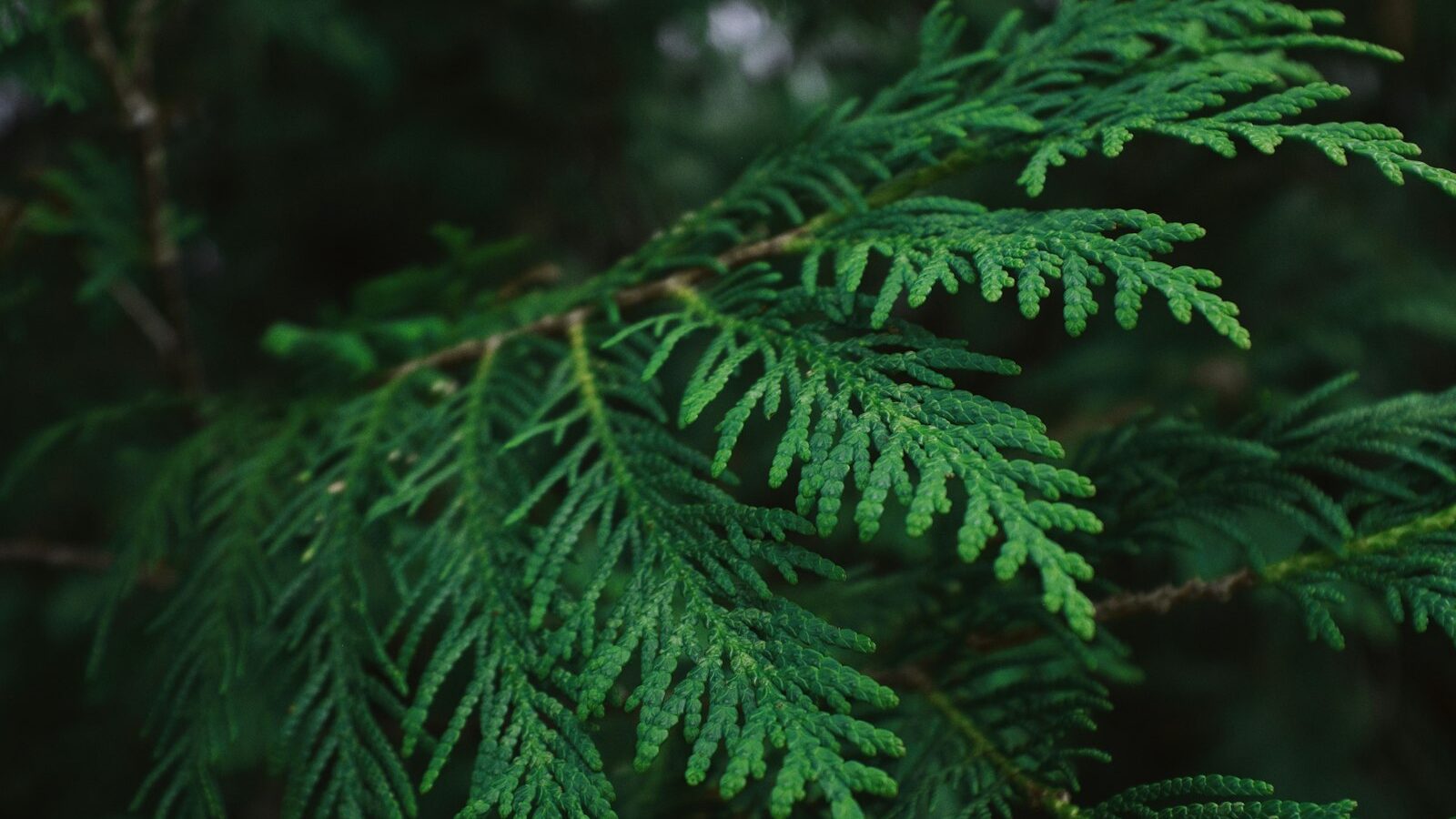
Few trees confuse first-time growers quite like the bald cypress. It is a conifer that drops its needles like a maple drops leaves, a swamp native that shrugs off summer drought, and a giant that somehow makes a tidy street tree. Taxodium distichum earned its common name because it goes “bald” every autumn — the soft, feathery needles turn a glowing russet-copper before raining down, leaving a bare, architectural silhouette all winter. If you have a wet corner of the yard where nothing else thrives, a pond edge, a rain garden, or simply want a long-lived shade tree with four seasons of interest, this is one of the most forgiving and rewarding large trees you can plant. Here is how to grow one well.
Key Takeaways
- Bald cypress is a deciduous conifer, hardy in USDA zones 4–9 (sometimes 10), reaching 50–70 ft tall and 20–45 ft wide, occasionally 100+ ft over centuries.
- It grows in standing water yet is surprisingly drought-tolerant once established — one of the most adaptable large trees for tough urban sites.
- Plant in full sun in moist, acidic soil; it tolerates clay, sand, and wet ground but can yellow (chlorosis) in high-pH alkaline soil.
- The famous woody “knees” appear mainly on trees grown in wet sites; in ordinary lawns they are uncommon, and you cannot safely cut them off without harming the tree.
- Plant in spring or fall, at the correct depth (root flare visible), and water young trees deeply for the first two to three years.
- It is exceptionally pest- and disease-resistant; pruning needs are minimal beyond maintaining a single central leader.
- Expect needle and small cone litter in fall, plus a brilliant orange-brown color show before the tree goes bare.
Meet the Bald Cypress (Taxodium distichum)
Bald cypress is native to the southeastern United States, where it lines slow rivers, blackwater swamps, and floodplains from the Atlantic coast across the Gulf and up the Mississippi valley. In the wild you picture it standing knee-deep in water, draped in Spanish moss, its trunk flaring into a buttressed base. That image is accurate — but it sells the tree short. The same species performs beautifully in dry, compacted, alkaline-leaning urban soils, which is exactly why it has become a popular street and parking-lot tree far outside its swampy homeland.
Botanically it is a member of the cypress family and a true conifer, but unlike pines or spruces it is deciduous. The needles are flat, soft, and arranged in feathery sprays along the twigs, giving the canopy a fine, almost fern-like texture in summer. The tree is pyramidal and narrow when young, then broadens into an irregular, flat-topped crown with age. It is also remarkably long-lived: documented specimens in the wild exceed 1,000 years, so the tree you plant is genuinely a legacy. Mature landscape trees typically settle at 50–70 ft tall with a 20–45 ft spread, though old giants can top 100 ft.
Hardiness, Size, and Where It Fits
Bald cypress is reliably hardy in USDA zones 4 through 9, and it will grow in the warmer parts of zone 10. That wide range — from the upper Midwest down to Florida and Texas — makes it one of the most geographically flexible large trees available. Cold hardiness is excellent; the limiting factor at the warm end is mostly heat-loving humidity, which this tree obviously handles with ease.
Because of its eventual size, give a standard bald cypress room. For a full-size tree, plan on at least 25–30 ft of clearance from buildings, and keep it 8–10 ft back from sidewalks and driveways if you want to limit surface-root and knee conflicts. Its narrow youthful habit means it reads as a fairly tidy column for the first decade or two before the crown fills out. If your space is limited, skip ahead to the cultivar section — there are compact and dwarf forms bred for smaller yards. For ideas on pairing trees with the rest of your landscape, our outdoor living and landscaping guide covers placement, shade planning, and companion planting.
The Famous “Knees” (Pneumatophores)
No discussion of bald cypress is complete without the knees. These are pneumatophores — woody, knobby root projections that push up out of the soil or water around the base of the tree, sometimes forming a ring of rounded, gnarled stumps a few inches to several feet tall. They are one of the most distinctive sights in a southern swamp.
Here is the practical news for home growers: knees are strongly associated with wet sites. Trees standing in water or in chronically saturated soil are the ones that throw up dramatic knees. Bald cypress planted in ordinary, well-drained lawns and dry urban soils usually produce few knees or none at all — which is reassuring if you want the tree for a regular yard. When knees do appear in a mowed lawn, they become a genuine nuisance: they can dull or damage mower blades and create a tripping or maintenance headache.
What are they for? Honestly, nobody is certain. The two leading theories are mechanical support — anchoring a tall tree in soft, muddy ground — and gas exchange (aeration), helping the root system “breathe” in oxygen-poor waterlogged soil. Neither has been conclusively proven, and the aeration idea in particular has held up poorly under testing. The one thing to remember: do not cut the knees off. They are living parts of the root system, and removing them can stress, wound, or even kill the tree. If knees are a problem in turf, the better fixes are to mulch a wide bed around the trunk so you are not mowing over them, or simply choose a drier planting site to begin with.
Light and Soil Requirements
Light
Give bald cypress full sun — at least six hours of direct light daily, and ideally more. It will tolerate light shade but grows thinner, leggier, and slower for it. This is a tree that wants open sky, so plant it where it will not be crowded out by taller neighbors as it matures.
Soil
This is where the tree’s reputation for toughness is earned. Bald cypress tolerates an extraordinary range of soils: acidic, wet, heavy clay, sandy, and seasonally flooded ground are all within its comfort zone. It will literally grow with its roots in standing water, and it will also grow in a dry, baked median strip. Its ideal, if you can offer it, is a moist, slightly acidic soil in the pH 6.0–6.5 range.
The one soil situation to watch is high-pH alkaline soil. In strongly alkaline ground, bald cypress can develop chlorosis — a yellowing of the needles (especially between the veins) caused by iron becoming unavailable to the roots. If you garden over limestone or in arid-region alkaline soils, either choose a different species or be prepared to acidify the soil and supplement iron. In neutral to acidic soils, you will almost never see this problem. If you are weighing this tree against other options for a damp or boggy corner, our roundup at the water gardens & ponds hub compares plants that thrive at the water’s edge.
How to Plant a Bald Cypress
Plant in spring or fall, when temperatures are mild and the tree can settle in before facing summer heat or hard frost. Bald cypress is sold as balled-and-burlapped stock or, more commonly for smaller sizes, in containers. Both establish well. If you are starting from a young whip or bare-root stock, the same depth-and-watering principles apply — see our walkthrough on how to plant a bare-root tree for the step-by-step.
- Dig a wide, shallow hole. Make it two to three times the width of the root ball but no deeper than the root ball itself. A wide hole loosens soil for the spreading roots; a too-deep hole invites settling and rot.
- Do not plant too deep. This is the single most common killer of young trees. Set the tree so the root flare — where the trunk widens into the roots — sits at or slightly above the surrounding grade. On container trees, gently scrape away excess potting mix to find the true flare. Burying the flare suffocates roots and invites disease.
- Free the roots. Loosen circling or matted roots on container stock; cut and remove twine, wire baskets, and as much burlap as you can reach on B&B trees.
- Backfill with native soil. Skip heavy amendments — you want roots to push out into the surrounding ground, not stay coddled in a rich pocket. Firm the soil gently and water it in to remove air pockets.
- Mulch and water. Spread 2–3 inches of mulch in a wide ring, keeping it a few inches off the trunk (no “mulch volcanoes”). Water deeply right after planting.
Watering and Establishment
Young bald cypress trees need consistent moisture while they build a root system. For the first two to three years, water deeply once or twice a week during the growing season, more often in heat or sandy soil. Deep, infrequent soakings encourage roots to grow down and out, building the drought tolerance the tree is known for.
Here is the pleasant surprise: once established, bald cypress is genuinely drought-tolerant. A tree that spent its first years in the wild standing in a swamp will, in your yard, sail through dry urban summers with little supplemental water. This dual tolerance — flooding on one end, drought on the other — is what makes it so valuable for difficult sites like rain gardens that pond up after storms then bake dry between them. It does not need fertilizer in decent soil; if growth is weak, a light spring feeding of a balanced or slightly acidifying fertilizer is plenty.
Pruning and Routine Care
Bald cypress is refreshingly low-maintenance. Its natural pyramidal form needs very little shaping. The main goal is to maintain a single central leader — the dominant upward shoot — especially while the tree is young. If two competing leaders form, prune the weaker one to preserve a strong, straight trunk and good structure. Beyond that, simply remove any dead, damaged, broken, or crossing branches.
Do structural pruning in late winter while the tree is dormant and leafless, which makes the branch architecture easy to read. Avoid heavy pruning of mature trees; they rarely need it, and large cuts on any tree are an entry point for trouble. The lower branches can be limbed up gradually over the years if you want clearance for mowing or walking beneath the canopy.
Pests and Diseases
One of the best things about this tree is how little goes wrong with it. Bald cypress is highly pest- and disease-resistant, and serious problems are rare. The issues you might occasionally encounter are minor:
- Bagworms. These caterpillars build little spindle-shaped bags of needles and twigs and can defoliate branches if numbers get high. Hand-pick and destroy the bags in winter or early spring; large infestations can be treated when larvae are young.
- Spider mites. In hot, dry, dusty conditions, mites may cause stippled, off-color needles. A strong spray of water usually keeps them in check; they rarely threaten tree health.
- Cypress twig gall. A tiny midge causes small, irregular green galls on the twigs and needles. It is essentially cosmetic and does not harm the tree — no treatment is necessary.
The most common “complaint” is not a pest at all but chlorosis from alkaline soil, covered above, and the seasonal litter discussed next. For a tree of this size and lifespan, that is an exceptionally easy care profile.
Fall Color and Litter
The autumn show is a real highlight. As days shorten, the feathery green needles shift to warm shades of russet, copper, and orange-brown before the tree drops them entirely. The fine texture means the fall color reads as a soft glow rather than a flashy blaze, and the bare winter form — with its tapered trunk and fine twiggy crown — has a quiet sculptural beauty.
The trade-off is litter. Because it is deciduous, bald cypress drops all of its needles each fall, plus small round cones (about an inch across) and fine twigs over the season. The needles are tiny and tend to scatter, so they are easy to rake or mow into mulch, but it is worth knowing you will have cleanup near patios, pools, and walks. Sited over a lawn or natural area, the litter is a non-issue and even feeds the soil.
Recommended Cultivars
Breeders have selected forms for better shape, fall color, and — crucially for smaller yards — compact size. A few worth seeking out:
- ‘Shawnee Brave’ (also sold as ‘Mickelson’). A narrow, strongly pyramidal selection with a uniform, symmetrical habit. Excellent as a street tree or for tighter spaces where a standard tree would spread too wide.
- ‘Lindsey’s Skyward’. A compact, columnar form, far smaller and narrower than the species — a good choice for modest yards or vertical accents.
- ‘Peve Minaret’. A true dwarf with dense, fine foliage and a slow, conical growth habit, suitable for large containers, small gardens, and even bonsai.
- ‘Cascade Falls’. A weeping cultivar whose branches tumble downward; usually grafted at a chosen height and trained over a structure for a dramatic, fountain-like specimen.
If you want the classic swamp giant, plant the straight species. If you have a smaller lot or want a focal point, one of the compact or weeping forms gives you bald cypress character at a manageable scale. For more on choosing the right specimen for your space, browse the Plants & Flowers hub.
Best Uses in the Landscape
Bald cypress shines in places that defeat other trees. Its wet tolerance makes it a star of rain gardens, soggy low spots, pond and lake edges, and detention basins that flood and drain repeatedly. Its drought tolerance and clean, pest-resistant nature make it equally at home as a street tree, parking-lot island tree, or specimen in a large lawn, where its fine summer texture and fall color earn their keep. Because it is long-lived and structurally sound, it is also a fine choice for parks and properties where you want a tree that will outlast generations. Whether you are filling a problem wet corner or planting a future shade giant, few trees offer this much adaptability with this little fuss.
Frequently Asked Questions
Does a bald cypress need to grow in water?
No. While it is native to swamps and tolerates standing water better than almost any other tree, it does not require wet soil. Once established it is surprisingly drought-tolerant and grows well in ordinary — even dry — urban soils, which is why it is widely planted as a street and lawn tree.
Will my bald cypress develop knees in my yard?
Probably not, if it is planted in normal, well-drained soil. The woody “knees” appear mainly on trees growing in water or chronically saturated ground. In typical lawns they are uncommon or absent. Where they do appear in turf, they can be a mowing nuisance, but you should never cut them off — doing so can seriously harm the tree.
Why are my bald cypress needles turning yellow?
If the yellowing happens during the growing season (not fall), the likely cause is chlorosis from high-pH alkaline soil, which locks up iron. Test your soil pH; in alkaline ground you may need to acidify the soil and add iron. In autumn, yellowing-to-orange is normal — the tree is simply going dormant and dropping its needles.
How big and how fast does a bald cypress grow?
Expect a mature height of 50–70 ft with a 20–45 ft spread, though old trees can exceed 100 ft over centuries. Growth is moderate to fairly fast in good conditions — often 1 to 2 feet per year when young — slowing as the tree matures. Compact cultivars like ‘Lindsey’s Skyward’ or ‘Peve Minaret’ stay much smaller.
What hardiness zones can grow bald cypress?
Bald cypress is hardy in USDA zones 4 through 9, and it grows in the warmer parts of zone 10. That broad range, from the upper Midwest to the Gulf Coast, makes it one of the most adaptable large deciduous trees for North American landscapes.