

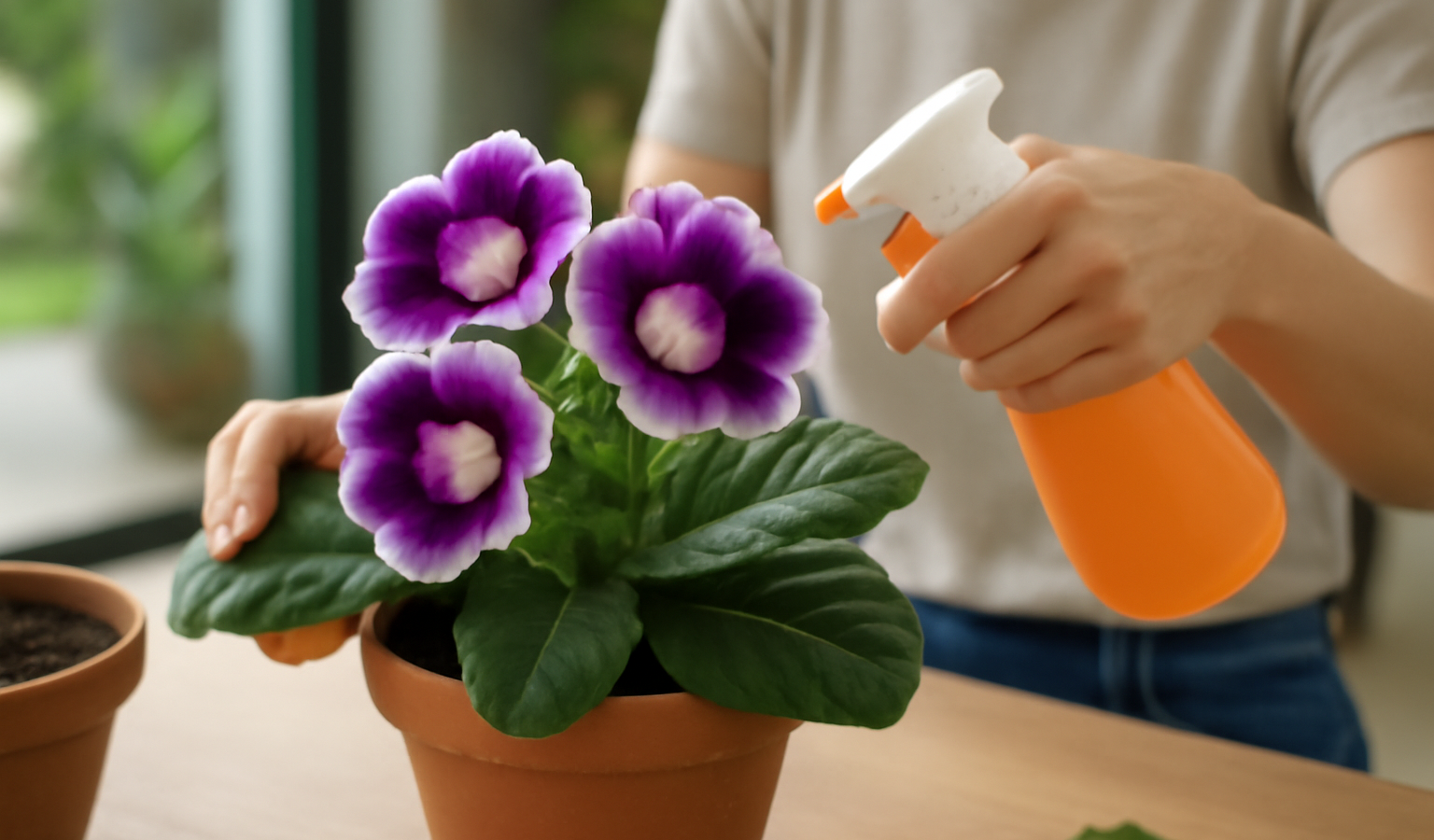
The florist gloxinia (Sinningia speciosa) is one of the most spectacular flowering houseplants you can grow — a low rosette of large, velvety, quilted leaves crowned by huge, bell-shaped blooms in saturated reds, purples, pinks, and whites, often ruffled and frequently bicolored. It is a tuberous relative of the African violet, native to Brazil, and it brings the same plush texture on a much grander scale. The reputation for being “difficult” is largely undeserved; gloxinias are not hard so much as specific. They want bright indirect light, careful watering that never wets the fuzzy leaves, and warmth and humidity. The one quirk that trips up new growers is dormancy: after a long bloom, the plant naturally dies back and rests before reblooming — that is not death, it is the cycle.
Key Takeaways
- Light: bright, indirect light; no direct sun, which scorches the velvety leaves.
- Water: keep evenly moist while growing; water from below to keep leaves and crown dry.
- Soil: light, airy, well-draining mix — African violet mix is ideal.
- Humidity: high, 50%+, but never mist the fuzzy foliage; use a pebble tray instead.
- Temperature: 60–75°F; keep warm and away from cold drafts.
- Pet safety: generally considered non-toxic to cats and dogs, though it may cause mild stomach upset if eaten.
Light: bright but never direct
Gloxinias need plenty of bright, indirect light to fuel their big blooms, but their velvety, sun-sensitive leaves scorch in direct rays. The ideal spot is an east-facing window with gentle morning light, or a few feet back from a south or west window, or behind a sheer curtain that softens the intensity. With enough bright, filtered light the plant blooms generously and keeps a compact, full rosette; in too little light it stretches, the leaves grow large and floppy, and flowering thins out or stops.
Direct sun is the enemy. Hot, unfiltered rays bleach and burn the fuzzy leaves, leaving scorched tan or brown patches that don’t recover. Gloxinias also respond well to artificial light, which is why many growers raise them under fluorescent or LED grow lights for 12–14 hours a day — a setup that produces beautifully even, compact plants and reliable bloom. Rotate the pot regularly for symmetrical growth, since the rosette will lean toward a single light source.
Watering: even moisture, dry leaves
While actively growing and blooming, gloxinias want consistently, evenly moist soil — not soggy, not dry. The critical technique is to keep water off the leaves and crown: the fuzzy foliage holds moisture, and water sitting on the leaves or pooling in the center of the rosette causes spotting and crown rot. The best approach is to water from below — set the pot in a tray of room-temperature water for 20–30 minutes, let the soil wick up moisture, then drain. If you water from above, aim carefully at the soil line and avoid splashing. Always use room-temperature water; cold water spots the leaves of gesneriads like gloxinia and African violet.
Overwatering rots the tuber and crown — the fastest way to lose a gloxinia — so let the very top of the soil begin to dry between waterings, and never leave the pot standing in water after it has finished wicking. Underwatering, by contrast, makes the plant wilt and the buds drop. As the bloom cycle ends and the foliage begins to yellow and flop, that is your cue that dormancy is starting: gradually reduce watering and let the plant die back, which is a natural and necessary rest, not a sign you’ve done something wrong.
Soil, feeding, and dormancy
Use a light, airy, well-draining medium — a commercial African violet mix is perfect, or make your own from equal parts peat or coco coir, perlite, and vermiculite. The mix should be fluffy and fast-draining so the tuber never sits in heavy, wet soil. Plant the tuber with its concave (dished) side up, barely covered with about a half-inch of mix. Always use a pot with drainage holes. While the plant is in active growth and bloom, feed every two weeks with a balanced or bloom-boosting (higher-phosphorus) fertilizer diluted to half strength; a fertilizer formulated for African violets works beautifully.
Dormancy is the part to understand. After several weeks or months of bloom, the gloxinia naturally fades — leaves yellow and collapse. At that point, cut back watering, stop fertilizing, and let the top growth die down. Trim off the spent foliage and store the potted tuber (or the lifted tuber in barely-damp peat) somewhere cool and dim, around 50–60°F, for roughly two to three months, watering only enough to keep the tuber from shriveling. When you see new pink shoots emerge from the tuber, bring it back into warmth and light, resume normal watering and feeding, and it will grow and rebloom. This rest-and-rebloom cycle is what lets a gloxinia live and flower for years rather than ending up in the compost after one show.
Humidity and temperature
As a Brazilian tropical, the gloxinia wants high humidity — ideally 50% or more — to support its lush leaves and big flowers. The challenge is that you cannot raise humidity the usual way, because misting the fuzzy foliage causes spotting and rot. Instead, set the pot on a wide pebble tray topped with water (pot above the waterline), group it with other plants, or run a humidifier nearby. Dry winter heating air below 40% can cause browning leaf edges and dropped buds, so winter humidity support is worth the effort.
Keep temperatures steady between 60 and 75°F during active growth. Gloxinias dislike both cold and sudden swings — chilly drafts, cold windowsills, and the blast of heating or air-conditioning vents all stress them and can damage the foliage. The exception is the dormancy period, when the resting tuber prefers cooler storage around 50–60°F. Avoid temperatures below 50°F at any time outside of controlled dormancy, and never expose the plant to frost.
Propagation
Gloxinias are surprisingly easy to propagate from leaf cuttings, just like their African violet cousins. Choose a healthy, mature leaf, cut it with about an inch of petiole (leaf stem), and insert the petiole into moist, well-draining propagation mix. Keep it warm, humid (a clear cover or bag helps), and in bright indirect light. Over several weeks a tiny new tuber and plantlet form at the base of the petiole, which you can then pot up on its own. You can even take a whole leaf, score the main veins on the underside, lay it flat on moist mix, and get multiple plantlets along the cuts.
You can also propagate by dividing a large, mature tuber — cut it into pieces, each with at least one growth point (eye), dust the cuts with fungicide or cinnamon to prevent rot, and pot them up. Finally, gloxinias grow readily from their dust-fine seed, surface-sown on moist mix under warmth and bright light (don’t cover the seed), though seedlings take several months to reach blooming size. Leaf cuttings are the most popular home method because they’re easy and reliably reproduce the parent plant.
Common problems and fixes
The plant suddenly dies back
Don’t panic — after blooming, gloxinias naturally enter dormancy, with the leaves yellowing and collapsing. This is normal. Reduce watering, let the top growth die down, and rest the tuber cool and dim for two to three months before restarting. If dieback happens with no bloom and the tuber is mushy, that’s rot from overwatering, which is a different problem.
Spotted or scorched leaves
Pale or brown rings and blotches on the velvety leaves usually come from water droplets sitting on the foliage (especially cold water) or from direct sun. Water from below with room-temperature water and keep the plant out of direct rays. Damaged leaves won’t heal, so remove the worst.
Crown and tuber rot
A mushy, collapsing center or a soft tuber means overwatering and water pooling in the crown. Water from below, never wet the crown, let the top of the soil dry between waterings, and ensure fast drainage. Severe rot is often fatal, so prevention is key — when in doubt, water less.
Pests and bud drop
Aphids, thrips, mealybugs, and cyclamen mites can attack gloxinias; treat with insecticidal soap (test on a leaf first, as fuzzy foliage can be sensitive) and isolate affected plants. Buds dropping before opening usually point to low humidity, dry soil, or temperature swings — stabilize conditions and keep moisture and humidity even.
Is the gloxinia toxic to pets?
The florist gloxinia (Sinningia speciosa) is generally regarded as non-toxic to cats and dogs — it does not appear on the ASPCA’s list of toxic plants, and it belongs to the same broadly pet-safe gesneriad family as the African violet. That makes it a reasonable choice for a household with pets. As with any houseplant, though, a pet that eats a large amount of the leaves or flowers may experience mild gastrointestinal upset — drooling or vomiting — simply from the plant fiber, so it’s still wise to keep it out of reach of determined nibblers. One important note: do not confuse it with the unrelated “hardy gloxinia” (Incarvillea) or other look-alikes, and if a pet eats any plant and shows persistent or severe symptoms, contact your veterinarian to be safe.
For more velvet-leaved and flowering houseplants, browse the full Plants & Flowers guides. If you enjoy plush-textured bloomers, our guide on caring for a wax begonia covers another colorful flowering plant, and if your gloxinia ever seems to be failing outside of normal dormancy, how to revive a dying houseplant walks through the triage.
Frequently Asked Questions
My gloxinia died back after blooming — is it dead?
Almost certainly not. Gloxinias naturally go dormant after flowering, with the leaves yellowing and collapsing. Cut back watering, stop feeding, and rest the tuber somewhere cool (50–60°F) and dim for two to three months. When new pink shoots appear, return it to warmth and light and it will regrow and rebloom.
How should I water a gloxinia?
Keep the soil evenly moist while it’s growing, and water from below by setting the pot in room-temperature water for 20–30 minutes, then draining. This keeps water off the fuzzy leaves and crown, which spot and rot when wet. Let the soil surface begin to dry between waterings and never leave the pot in standing water.
Why are there pale spots on my gloxinia’s leaves?
Spotting usually comes from water droplets — especially cold water — sitting on the velvety foliage, or from direct sun scorch. Always water from below with room-temperature water and keep the plant in bright indirect light, never direct sun. Damaged leaves won’t heal, so trim off the worst ones.
Is gloxinia poisonous to cats and dogs?
The florist gloxinia (Sinningia speciosa) is generally considered non-toxic to cats and dogs and isn’t on the ASPCA toxic list. Eating a large amount can still cause mild stomach upset from the plant fiber, so discourage nibbling, and call your vet if a pet shows persistent symptoms after eating any plant.
How do I propagate a gloxinia?
The easiest method is a leaf cutting: insert a healthy leaf’s petiole into moist, well-draining mix, keep it warm, humid, and brightly lit, and a new tuber forms in a few weeks. You can also divide a mature tuber (each piece needs an eye) or sow the dust-fine seed on the surface of moist mix under warmth and light.