

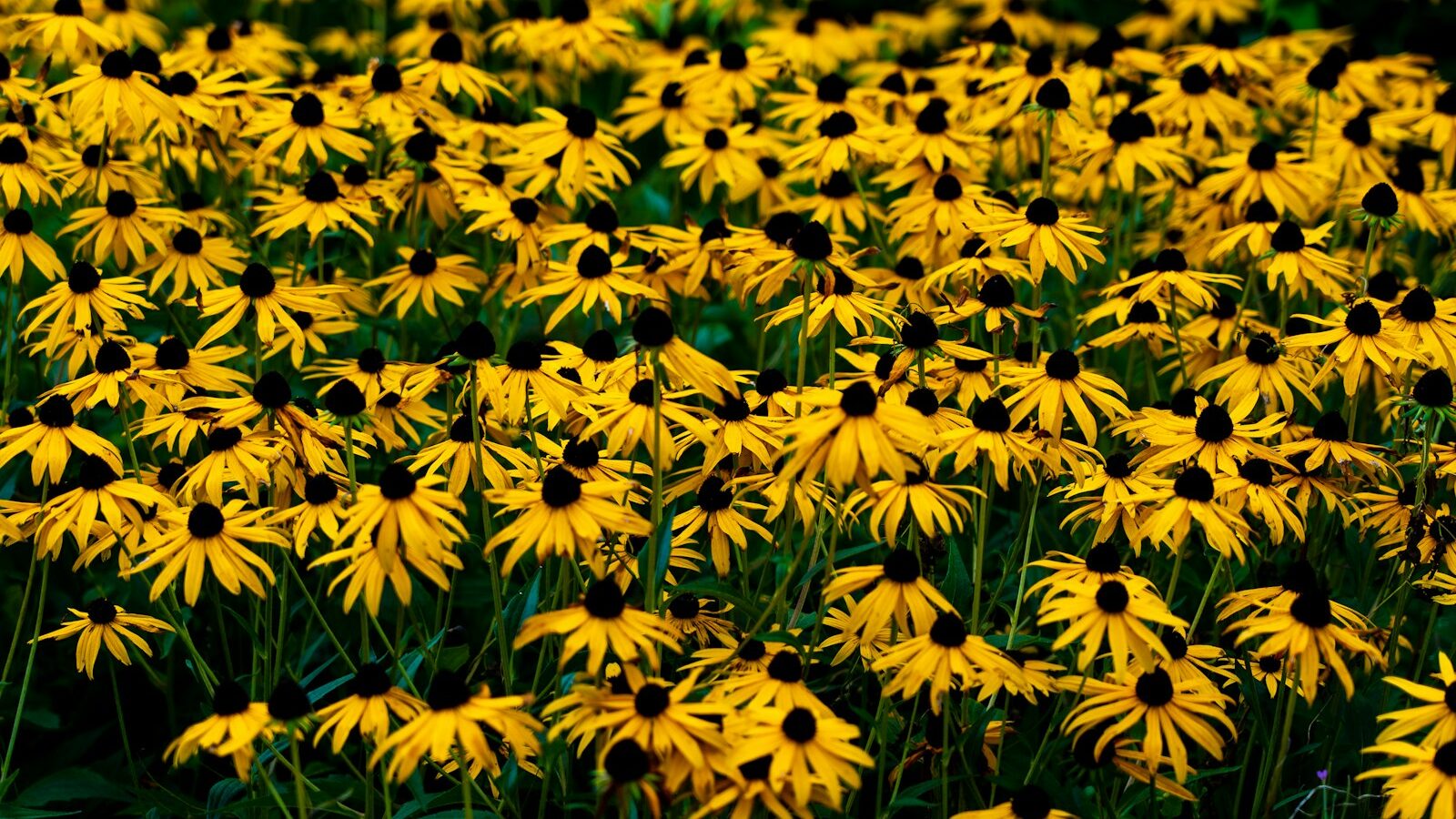
Coneflowers and black-eyed Susans are the dynamic duo of the American prairie garden — tough, sun-loving, pollinator-magnet perennials that bloom together all summer and are constantly mistaken for one another. They do look alike at a glance: both are daisy-form flowers with a prominent central cone or eye, both are native U.S. wildflowers in the aster family, and both are practically indestructible. But once you know what to look for, they’re easy to tell apart. The classic purple coneflower (Echinacea) has pink-to-purple petals that droop downward around a raised, spiky orange-brown cone. The classic black-eyed Susan (Rudbeckia) has flat golden-yellow petals radiating from a domed dark brown-black center. This guide gives you a side-by-side ID checklist, the botanical and growing differences, and the simple field cues — petal color, petal angle, and center shape — that let you name either one in seconds.
Key Takeaways
- Coneflower (Echinacea): pink/purple petals that droop down, around a raised, spiky orange-brown cone you can feel.
- Black-eyed Susan (Rudbeckia): flat golden-yellow petals around a domed, dark brown-to-black center.
- The fastest tells are petal color (purple vs gold), petal angle (drooping vs flat), and center shape (spiky cone vs rounded dome).
- Both are native, drought-tolerant, full-sun prairie perennials beloved by bees, butterflies, and goldfinches.
- Coneflowers are long-lived perennials; many “black-eyed Susans” are short-lived perennials or biennials that self-seed.
| Feature | Coneflower (Echinacea) | Black-Eyed Susan (Rudbeckia) |
|---|---|---|
| Petal color | Pink, purple, white (modern: orange, red) | Golden to orange-yellow |
| Petal angle | Droop downward (reflexed) | Flat, held out horizontally |
| Center | Raised, spiky, orange-brown cone | Rounded dark brown-black dome |
| Leaves | Coarse, lance-shaped, rough | Hairy, narrow, rough to the touch |
| Height | 2–4 ft | 1–3 ft (some taller) |
| Lifespan | Long-lived perennial | Often short-lived perennial/biennial |
| Bloom time | Early summer into fall | Mid-summer into fall |
| USDA zones | 3–9 | 3–9 (varies by species) |
Coneflower (Echinacea)
The purple coneflower (Echinacea purpurea and relatives) is a clump-forming native perennial of the central and eastern U.S. prairies, hardy in USDA zones 3–9. Its signature is a raised, cone-shaped center that’s spiky and bristly to the touch — that prominent dome is exactly what gives the plant its name. The ray petals are classically pink to rosy purple (white forms exist, and modern breeding has added orange, red, yellow, and double forms), and they characteristically droop or sweep downward from the cone, giving the flower a slightly shuttlecock or badminton-birdie silhouette. Plants stand 2–4 feet tall on sturdy stems, with coarse, dark green, lance-shaped leaves that feel rough.
How to identify a coneflower
Three cues nail it. First, petal color: a daisy with pink, rose, or purple petals is almost certainly a coneflower (gold-petaled echinaceas exist but are far less common than the purple). Second, the petals droop away from the center rather than sticking straight out. Third, the center is a tall, spiky cone — run a fingertip over it and it feels prickly and raised, often glowing orange or coppery. Coneflowers are reliable, long-lived perennials that come back bigger each year and can be divided every few years to multiply your stock — see our guide on how to divide coneflowers. Leave the seed heads standing in fall and winter; goldfinches feast on the seeds and the spent cones add architectural interest to the dormant garden.
Black-eyed Susan (Rudbeckia)
Black-eyed Susan (Rudbeckia, most famously Rudbeckia hirta and the long-blooming R. fulgida ‘Goldsturm’) is the other prairie icon — and the state flower of Maryland. Its signature is bright, cheerful golden-yellow petals arranged flat around a dark, rounded, brown-to-black central dome (the “black eye”). Unlike the coneflower’s drooping, spiky look, the black-eyed Susan’s petals are held out flat and horizontal, and its center is a smoother, button-like dome rather than a tall spiky cone. Plants typically run 1–3 feet tall (some species taller), with hairy, rough, narrow leaves and stems — the species name hirta literally means “hairy.”
How to identify a black-eyed Susan
The same three cues, in reverse. First, petal color: bright golden-yellow to orange-yellow petals point to Rudbeckia. Second, the petals lie flat, radiating out like a classic daisy rather than sweeping down. Third, the center is a dark, rounded dome — brown to nearly black, and rounder and less spiky than a coneflower’s cone. One more clue is lifespan and habit: many black-eyed Susans, especially R. hirta, are short-lived perennials or biennials that bloom heavily then fade after a year or two, but they self-seed enthusiastically, so a patch perpetuates itself by reseeding even as individual plants come and go. (The ‘Goldsturm’ selection of R. fulgida is more reliably perennial.) Like coneflowers, they’re pollinator magnets and their seed heads feed birds through winter.
Growing both in the garden
The reason these two are constantly planted together is that their needs are nearly identical, and they bloom in overlapping waves of purple and gold all summer. Both want full sun (at least 6 hours), average to lean well-drained soil, and very little pampering once established — they’re drought-tolerant prairie natives that actually resent rich soil and overwatering, which can make them floppy. Space plants 18–24 inches apart for airflow, water regularly the first season to establish deep roots, then back off. Both are hardy across USDA zones 3–9, attract bees and butterflies in droves, and host beneficial insects; deadheading extends bloom, though leaving late seed heads feeds finches and lets black-eyed Susans reseed. Coneflowers tend to be the longer-lived backbone of the planting, while black-eyed Susans bring shorter-lived but generous gold that may need occasional refreshing or will refresh itself by seed. For a fuller native-perennial palette, see our roundup of pollinator-friendly choices on the Plants & Flowers hub.
A few shared problems to watch: both can develop powdery mildew in humid, crowded conditions (space them out and water at the soil), and Rudbeckia in particular is prone to a fungal leaf spot (Septoria) in wet summers — remove affected foliage and avoid overhead watering. Aster yellows, a less common disease, can deform the flowers of either; pull and destroy any plant with weirdly green, distorted blooms. Otherwise, these are about as carefree as flowering perennials get, which is exactly why they anchor so many low-maintenance and pollinator gardens.
Other look-alikes and color confusion
Modern breeding has muddied the once-simple color rule, so it’s worth knowing the exceptions. Plant breeders have introduced echinaceas in orange, red, yellow, coral, and even green and double pompom forms, so a gold-petaled flower isn’t automatically a black-eyed Susan — check the center and petal angle to be sure. Likewise, some Rudbeckia selections push toward orange, mahogany, and bicolor “Gloriosa daisy” patterns with dark rings near the eye. A few related prairie plants add to the confusion: brown-eyed Susan (Rudbeckia triloba) has smaller, more numerous golden flowers on a branchier plant; cutleaf coneflower and green-headed coneflower (Rudbeckia laciniata) are tall yellow species with greenish centers; and gloriosa daisies are just showy R. hirta selections. The reliable through-line is the center: Rudbeckia centers are rounded domes, while Echinacea centers are taller, spikier cones — feel them with a fingertip if the color leaves you guessing.
Bloom timing offers one more clue if you’re observing a planting over the season. Coneflowers generally open a little earlier, often beginning in early-to-mid summer, while black-eyed Susans tend to peak from mid-summer into fall, with R. hirta in particular putting on its biggest show in July and August. Where both are planted together, you’ll often see the purple coneflowers leading the display and the gold black-eyed Susans surging as the coneflowers begin to fade and set seed — a natural relay that keeps the bed in bloom for months.
How to tell them apart at a glance
When you’re standing in front of an unknown daisy-type flower, run the quick three-part check. What color are the petals? Pink or purple means coneflower; golden-yellow means black-eyed Susan. What angle are the petals? Drooping down and back means coneflower; flat and horizontal means black-eyed Susan. What does the center look and feel like? A tall, spiky, orange-brown cone means coneflower; a rounded, smooth, dark brown-black dome means black-eyed Susan. Those three cues — color, angle, center — settle it nearly every time, even with modern hybrids that blur the petal colors. And if you really can’t decide, take comfort in the fact that it barely matters horticulturally: both are native, sun-loving, drought-tough, pollinator-friendly perennials that look spectacular planted side by side in a meadow, border, or pollinator bed.
Frequently Asked Questions
What is the easiest way to tell a coneflower from a black-eyed Susan?
Look at petal color and center shape. Coneflowers have pink-to-purple petals that droop around a raised, spiky orange-brown cone. Black-eyed Susans have flat golden-yellow petals around a rounded, dark brown-black dome. Color and the cone-versus-dome center settle it almost instantly.
Are coneflowers and black-eyed Susans the same plant?
No. They’re different genera in the aster family — coneflowers are Echinacea, black-eyed Susans are Rudbeckia. They look similar and grow alongside each other in prairies and gardens, but differ in petal color, petal angle, center shape, and lifespan.
Do they grow well together?
Beautifully. Both want full sun, well-drained soil, and minimal water once established, and they bloom in overlapping waves of purple and gold all summer. Plant them 18–24 inches apart, and both will draw bees, butterflies, and seed-eating goldfinches to your garden.
Are black-eyed Susans perennials or annuals?
It depends on the species. Many, like Rudbeckia hirta, are short-lived perennials or biennials that fade after a year or two but reseed prolifically, so the patch persists. The R. fulgida ‘Goldsturm’ selection is a more reliable, longer-lived perennial.
Should I cut back the seed heads in fall?
It’s optional. Leaving the spent cones and domes standing through fall and winter feeds goldfinches and other birds and adds structure to the dormant garden. It also lets black-eyed Susans self-seed. Cut them back in late winter or early spring before new growth begins.