

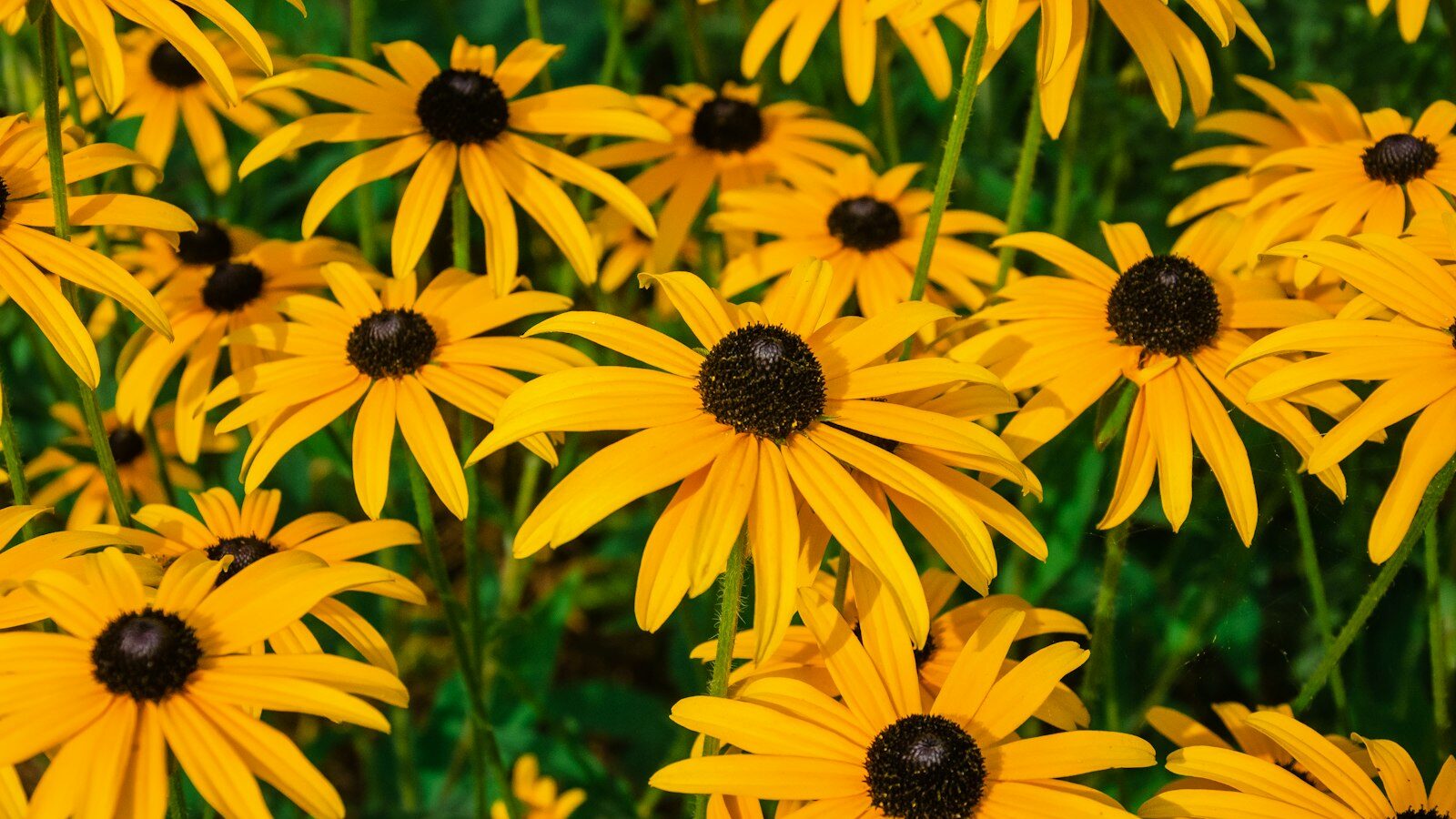
Few flowers say “American summer” quite like the black-eyed Susan, with its golden-yellow petals fanning out around a dark chocolate cone. Native across much of North America, Rudbeckia is tough, drought-tolerant, and beloved by bees and butterflies, making it one of the easiest perennials (or annuals) you can grow. This guide covers everything from choosing annual versus perennial types to deadheading, dividing, and managing the few problems that occasionally crop up.
Black-eyed Susan quick facts
- Light: full sun
- Soil: average, well-drained
- USDA zones: 3-9
- Bloom: summer-fall
- Easy, drought-tolerant, great for pollinators
As an Amazon Associate we earn from qualifying purchases.
Know your Rudbeckia: annual vs perennial types
The name “black-eyed Susan” gets applied to several species, and knowing which one you have changes how you grow it. The two you’ll meet most often behave very differently in the garden, so it pays to read the plant tag or seed packet carefully.
Rudbeckia hirta (the short-lived one)
Rudbeckia hirta is the classic roadside black-eyed Susan and the species behind most colorful cultivars like ‘Indian Summer’, ‘Cherokee Sunset’, and the ‘Cherry Brandy’ reds. It’s technically a short-lived perennial or biennial but is usually grown as an annual because individual plants rarely persist more than a year or two. The upside: it blooms fast from seed, often in the first season, and it self-sows generously to keep itself going.
Rudbeckia fulgida ‘Goldsturm’ (the reliable perennial)
If you want a clump that returns dependably for years and slowly spreads, choose Rudbeckia fulgida, most famously the award-winning cultivar ‘Goldsturm’. It forms tidy, long-lived clumps about 2-3 feet tall, blooms reliably from mid-summer into fall, and is hardy in USDA zones 3-9. This is the workhorse for foundation plantings and pollinator borders. You can find both started plants and seed for various types via this rudbeckia plants search.
Beyond these two, you may run across Rudbeckia laciniata (cutleaf coneflower), a tall back-of-border native that can top six feet, and Rudbeckia triloba (browneyed Susan), a bushy, small-flowered type that blooms for months and reseeds freely. All share the same easygoing temperament, so once you understand the annual-versus-perennial distinction, the care advice in this guide applies broadly across the genus.
Light, soil, and where to plant
Black-eyed Susans are sun lovers. Give them as much direct light as you can and they’ll reward you with denser growth, sturdier stems, and far more flowers.
- Light: Full sun (6+ hours). They tolerate light afternoon shade but get floppy and bloom less in too much shade.
- Soil: Average, well-drained soil. They are not fussy and actually flower best in lean-to-moderate fertility; rich, overly fertilized soil produces leggy, weak plants.
- Drainage: Good drainage matters most in winter. Soggy soil is the fastest way to kill a perennial Rudbeckia clump.
- Spacing: Set plants 18-24 inches apart so air can circulate, which helps prevent foliage disease.
They thrive in the kind of average, slightly dry conditions that defeat fussier plants, which is why they’re a staple of low-maintenance and native gardens. For broader basics on getting any flower established, see our plant & flower care guide.
Planting black-eyed Susans
From seed
R. hirta is easy from seed. Sow outdoors after your last frost, or start indoors 6-8 weeks earlier. The seeds need light to germinate, so press them onto the soil surface and barely cover them. Many gardeners simply scatter them in fall and let cold winter weather do the stratifying. A mixed-meadow approach works beautifully too; browse wildflower seeds that include Rudbeckia alongside other natives.
From plants
For instant impact and guaranteed flower color, buy nursery transplants, especially for perennial ‘Goldsturm’. Plant in spring or early fall, setting the crown at the same depth it sat in the pot. Water in well, then apply 2-3 inches of mulch around (not on top of) the crown to conserve moisture and suppress weeds while roots establish.
Watering, feeding, and seasonal care
Once established, black-eyed Susans are genuinely low-maintenance and drought-tolerant. The most common mistake is overcaring for them.
- Watering: Keep new plants consistently moist for the first few weeks. After that, water deeply only during prolonged drought; established clumps shrug off dry spells.
- Feeding: Little to none. A thin layer of compost in spring is plenty. Avoid high-nitrogen fertilizer, which causes floppy growth and fewer blooms.
- Support: Most stay upright on their own; tall types in rich soil may need light staking.
Deadheading vs. leaving the seedheads
You have a choice here, and it depends on your goal. Deadheading (snipping off spent flowers) encourages more blooms through summer and prevents heavy self-seeding, keeping plants tidy. Alternatively, stop deadheading in late summer and leave the dark seedheads standing into fall and winter. The cones feed goldfinches and other birds, add structure to the winter garden, and drop seed for next year’s volunteers. Many gardeners deadhead early in the season for tidiness, then let the final flush stand for wildlife.
Dividing perennial clumps
Perennial types like ‘Goldsturm’ benefit from division every 3-4 years to keep them vigorous. In early spring or fall, dig the entire clump, then split it into sections with a spade or by gently pulling it apart by hand, making sure each piece has both roots and growing shoots. Discard the woody, less productive center and replant the healthiest outer pieces at the same depth, spacing them well and watering them in. Division rejuvenates aging clumps that have started to bloom less or die out in the middle, and it’s the easiest way to get free plants to spread elsewhere in the garden or share with neighbors.
Self-seeding and spreading
Both seed and clump types can spread. R. hirta reseeds prolifically (a feature in a meadow, a chore in a formal bed), while R. fulgida spreads by short rhizomes into wider clumps. Neither is invasive in the legal sense, but if you want to limit spread, deadhead before seed sets and edge the clumps each spring. To encourage a naturalized drift, do the opposite and let them roam.
Designing with black-eyed Susans
Rudbeckia’s golden color and daisy form make it one of the most versatile plants in the late-summer border. It shines in prairie-style and pollinator gardens, where it mingles naturally with other sun-loving perennials.
- Coneflowers: The classic pairing. Purple Echinacea and golden Rudbeckia bloom together and share the same conditions. See our coneflower care guide to grow them side by side.
- Ornamental grasses: Switchgrass, little bluestem, and fountain grass give airy contrast to the bold flower heads and extend the show into winter.
- Salvia, sedum, and asters: Extend the bloom season from early summer into fall with these reliable companions.
For more sunny color combinations, browse our roundup of cheerful yellow flowers that pair well in beds and borders.
Attracting pollinators and wildlife
Black-eyed Susans are pollinator magnets. The open, flat flowers offer an easy landing pad for native bees, honeybees, butterflies, and beneficial flies and wasps. Because they bloom over a long season, they provide steady nectar when many spring flowers have finished.
- Bees and butterflies: Plant in groups of three or more for a target pollinators can spot from a distance.
- Birds: Leave seedheads standing and goldfinches will work them through fall and winter.
- Skip the pesticides: Rudbeckia rarely needs them, and avoiding sprays keeps the pollinator buffet safe.
Common problems and how to fix them
Black-eyed Susans are remarkably trouble-free, but a few issues show up in humid summers or crowded plantings. Most are cosmetic and preventable with good air circulation.
Powdery mildew
A white, dusty coating on leaves, common in late summer and in plants packed too tightly. It’s largely cosmetic but unsightly. Improve spacing and airflow, water at the base rather than overhead, and remove badly affected foliage. Cleaning up and discarding infected leaves at season’s end reduces the spores that overwinter and reinfect next year. In persistent cases, a horticultural-oil or potassium-bicarbonate spray can help, but for most gardens, better spacing and dividing crowded clumps solves the problem on its own. It rarely kills the plant.
Leaf spot
Fungal leaf spots appear as brown or black blotches, often surrounded by a yellow halo. Remove and discard infected leaves (don’t compost them), clean up debris in fall, and avoid wetting the foliage. Crowded clumps are most susceptible, so divide or thin as needed.
Aster yellows
This is the serious one. Aster yellows is a disease spread by leafhoppers that causes weird, distorted growth, greenish deformed flowers, and stunting. There is no cure. Dig up and destroy affected plants promptly to stop it from spreading, and control weeds that host the pathogen.
Frequently asked questions
Are black-eyed Susans annual or perennial?
It depends on the species. Rudbeckia hirta is usually grown as an annual or short-lived perennial, while Rudbeckia fulgida ‘Goldsturm’ is a reliable, long-lived perennial hardy in zones 3-9.
Do black-eyed Susans come back every year?
Perennial types like ‘Goldsturm’ return for many years. R. hirta often doesn’t survive long but self-seeds so readily that it appears to come back on its own.
Should I cut back black-eyed Susans in fall?
It’s optional. Leaving the seedheads feeds birds and adds winter interest, then you cut back in early spring. If you prefer a tidy bed, cut spent stems back after blooming.
Why are my black-eyed Susan leaves turning black or spotted?
Usually fungal leaf spot or powdery mildew, encouraged by humidity and crowding. Improve air circulation, water at the base, and remove affected leaves. Distorted, deformed growth instead points to aster yellows, which requires removing the plant.
Do black-eyed Susans spread aggressively?
They spread by self-seeding (R. hirta) and short rhizomes (R. fulgida), but they’re easy to control by deadheading before seed sets and dividing clumps every few years. They are not considered invasive.