

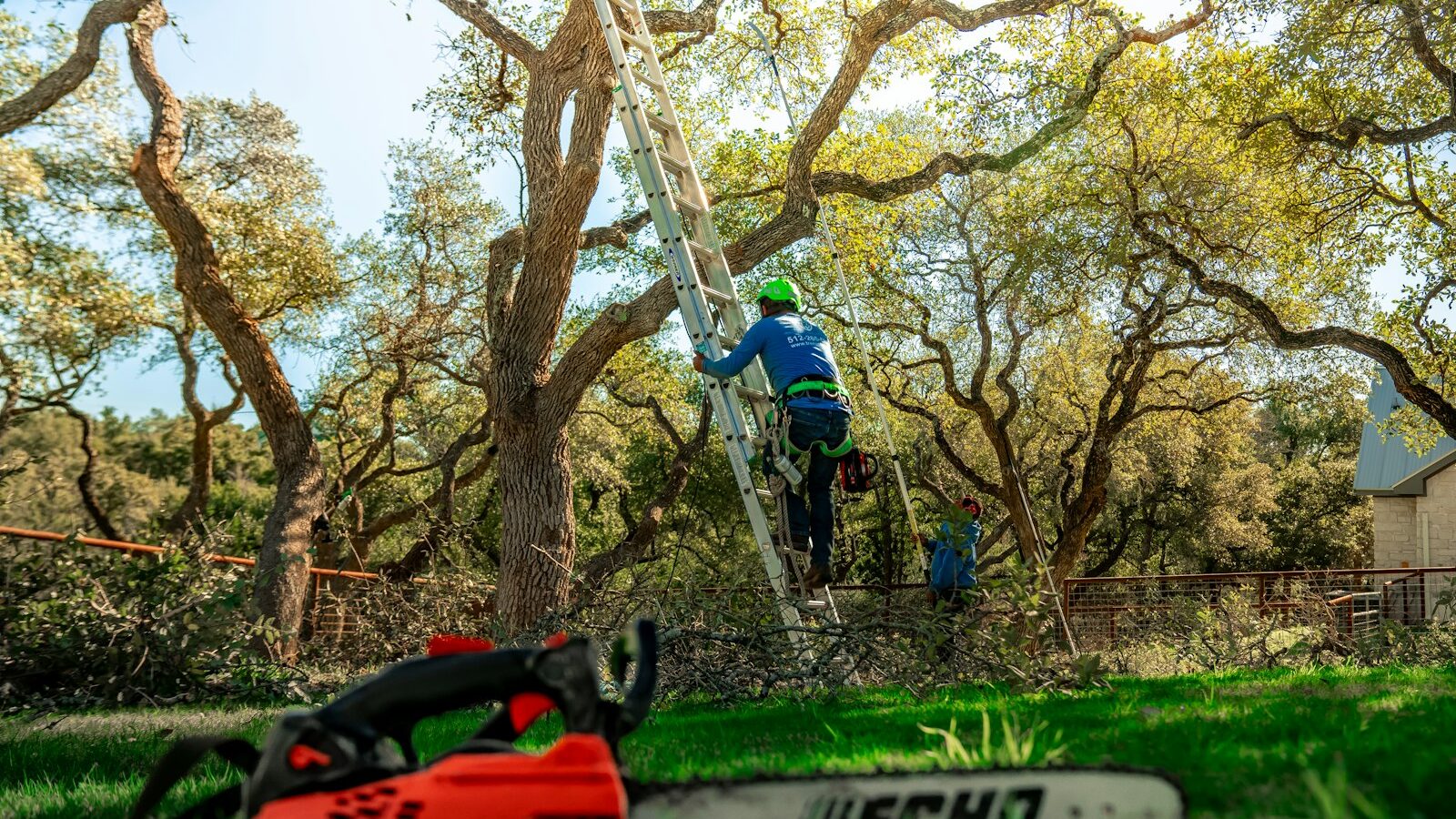
Trimming high branches from the ground is safer, faster, and a whole lot easier on your back than wrestling a ladder and a chainsaw into the canopy. The right pole saw lets you clear deadwood, shape ornamentals, and tame overgrown limbs while keeping both feet planted firmly on the lawn. Below are seven pole saws we recommend for 2026, spanning cordless, corded, gas, and manual designs so you can match the tool to your trees, your budget, and how often you actually prune.
As an Amazon Associate we earn from qualifying purchases.
Our top picks
- Best overall (cordless): EGO Power+ PS1001 56V Pole Saw
- Best corded electric: Sun Joe SWJ803E 8-Amp
- Best gas: Echo PPT-2620 25.4cc
- Best manual / extendable: Fiskars Extendable Pole Saw & Pruner
- Best for high branches (long reach): Silky Hayauchi 179-39 Telescoping
- Best 2-in-1 (saw + hedge trimmer): DeWalt DCKO86M1 20V MAX Combo
- Best budget: Greenworks 40V PS40B210
| Model | Power | Reach | Best for |
|---|---|---|---|
| EGO Power+ PS1001 | 56V battery | ~10 ft tool, ~15 ft cut | Best overall cordless |
| Sun Joe SWJ803E | 8-amp corded | ~9 ft tool, ~15 ft cut | Steady all-day corded use |
| Echo PPT-2620 | 25.4cc gas | ~12 ft cut | Heavy, frequent pruning |
| Fiskars Extendable | Manual | Up to ~12 ft cut | Quiet, no-power pruning |
| Silky Hayauchi 179-39 | Manual | Up to ~21 ft cut | Tallest reach |
| DeWalt DCKO86M1 | 20V MAX battery | ~15 ft saw / ~12 ft trimmer | Saw + hedge trimmer combo |
| Greenworks PS40B210 | 40V battery | ~8 ft tool, ~13 ft cut | Budget cordless kit |
The 7 best pole saws of 2026
EGO Power+ PS1001 — best overall (cordless)
If you want one pole saw that simply works without gas, cords, or fuss, the EGO Power+ PS1001 is the one we steer most homeowners toward. It runs on EGO’s 56-volt arc-lithium battery platform, which is genuinely class-leading among consumer cordless outdoor tools, and that voltage translates into chainsaw-like cutting confidence on limbs that would bog down a weaker saw. The 10-inch bar and chain power through 6-inch hardwood branches without stalling, and the auto-oiler keeps the chain lubricated so you spend more time cutting and less time fiddling.
The standout feature is the LED cut-line indicator, which projects a guide so you can see exactly where the chain will bite even when a branch is buried in shade up in the canopy. The telescoping shaft extends to roughly 10 feet, giving most users around 15 feet of effective overhead reach. Battery run time is strong for a homeowner’s pruning session, and because it shares batteries with EGO’s mowers, blowers, and trimmers, the ongoing value gets better the deeper you go into the system. It is one of the heavier cordless options, but the balance is good and the power justifies it.
Pros
- Class-leading 56V power cuts thick limbs
- LED cut-line indicator for shaded branches
- Auto chain oiler and tool-free chain tensioning
- Shares batteries across the EGO lineup
Cons
- Heavier than budget cordless models
- Premium price, especially as a kit
Sun Joe SWJ803E — best corded electric
For homeowners with trees close to the house and an outlet within extension-cord range, a corded pole saw eliminates the two biggest cordless and gas headaches: dead batteries and fuel mixing. The Sun Joe SWJ803E pairs an 8-amp motor with an 8-inch bar and chain spinning at roughly 6,000 RPM, which is plenty of steady power for routine limbing and storm cleanup. As long as you are plugged in, it never runs out of charge, so you can work through a long pruning day without interruption.
What sets the SWJ803E apart from cheaper corded saws is its adjustable cutting head, which pivots so you can attack awkward angles and tight crotches that a fixed head would miss. It also includes an automatic lubrication system to keep the chain running smoothly. The telescoping pole pushes effective reach to around 15 feet, and at under 10 pounds it is light enough to maneuver overhead without burning out your arms. The only real limitation is the obvious one: you are tethered to a cord, so it is best for trees near the house rather than the back corner of a large property.
Pros
- Never runs out of power while plugged in
- Adjustable head reaches awkward angles
- Automatic chain oiler included
- Lightweight and affordable
Cons
- Cord limits range and freedom of movement
- 8-inch bar caps the size of limbs you can cut
Echo PPT-2620 — best gas
When you are pruning mature trees regularly, working far from any outlet, or powering through dense hardwood, gas still wins on raw endurance. The Echo PPT-2620 is a homeowner-to-prosumer workhorse built around a 25.4cc two-stroke engine that delivers genuine cutting power. It handles repeated cuts through thick limbs in a way most cordless saws simply cannot match over a full work session, and refueling takes seconds versus recharging a battery.
The trade-off is the one every gas tool makes: it is heavier, louder, and requires you to mix two-stroke fuel and handle routine engine maintenance. The PPT-2620 excels for typical homeowner pruning on established trees, though it can struggle if you ask it to chew through the densest hardwood or tackle multiple thick-limbed trees back-to-back without a break. Reach lands around 12 feet, and the build quality is exactly what you would expect from Echo’s reputation for reliable, long-lived outdoor equipment. If you own acreage or prune often, the power and runtime are worth the extra weight and upkeep.
Pros
- Strong, sustained cutting power for mature trees
- Refuels in seconds for all-day work
- Durable, reliable Echo build quality
- No batteries or cords to limit range
Cons
- Heavier and noisier than electric options
- Requires fuel mixing and engine maintenance
Fiskars Extendable Pole Saw & Pruner — best manual / extendable
Not every job needs a motor. For light, occasional pruning, a manual pole saw is quieter, cheaper, lighter, maintenance-free, and far safer for the smaller cuts that make up most home tree care. The Fiskars Extendable Pole Saw & Pruner is our pick for the homeowner who prunes a few times a season and does not want to deal with batteries, fuel, or a power cord. The lightweight aluminum pole telescopes to about 12 feet of reach, and a 15-inch saw blade handles branches up to roughly 1.25 inches thick.
This is really two tools in one head: a hooked saw blade for larger cuts and a built-in pruner with a rope-pull mechanism that snips smaller stems cleanly without sawing. That makes it ideal for precise, controlled pruning where you actually want to slow down and place each cut, exactly the kind of work covered in our guide on when to prune trees and shrubs. Fiskars backs the tool with a lifetime warranty, and the steel blade holds an edge well. The obvious limit is muscle power and that 1.25-inch cut capacity, but for deadheading, thinning, and shaping, it is the right tool.
Pros
- No power, fuel, or charging ever required
- Combined saw blade and rope-pull pruner
- Lightweight aluminum pole, easy to handle
- Lifetime warranty
Cons
- Limited to roughly 1.25-inch branches
- Slower and more tiring on bigger cuts
Silky Hayauchi 179-39 — best for high branches (long reach)
When the branch is genuinely high and you refuse to climb a ladder, reach becomes the most important spec, and nothing in this roundup stretches like the Silky Hayauchi 179-39. This professional-grade telescoping manual pole saw extends to roughly 21 feet, giving you arborist-level overhead access from solid ground. Silky’s reputation among tree-care pros is built on its blades, and the Hayauchi’s curved, hard-chrome-plated, taper-ground blade slices through surprisingly thick limbs with smooth, fast strokes that put battery saws to shame on a per-cut basis up high.
The three-stage telescoping pole locks securely at multiple lengths, so you can dial in just enough extension for the job rather than wrestling the full 21 feet every time. There is real skill to controlling a saw at maximum reach, and the tool is more demanding to handle than a short pole saw, but the cut quality and the sheer height it unlocks are unmatched without power. If your problem branches are simply too high for everything else on this list, the Silky Hayauchi is the answer. Pair it with the right technique from our best pruning saws guide for clean cuts that heal well.
Pros
- Reaches roughly 21 feet, the tallest here
- Legendary Silky blade quality and cut speed
- Three-stage pole locks at multiple lengths
- No power needed, near-silent operation
Cons
- Premium price for a manual saw
- Demands skill and effort at full extension
DeWalt DCKO86M1 — best 2-in-1 (saw + hedge trimmer)
If your yard work involves both overhead limbs and tall hedges, a combo kit saves money and storage space versus buying two separate tools. The DeWalt DCKO86M1 pairs the DCPS620 pole saw head with the DCPH820 pole hedge trimmer head, both running on DeWalt’s widely owned 20V MAX battery platform. The pole saw uses an 8-inch low-kickback bar and chain with brushless power, delivering up to about 96 cuts per charge and a 15-foot maximum reach for a 6-foot user.
Swap heads and you get a pole hedge trimmer that articulates through 7 positions across a 180-degree range, reaching up to 12 feet so you can square off the tops of tall hedges and shape topiary without a ladder. The brushless motors keep both tools efficient and minimize kickback on the saw. For anyone already invested in DeWalt’s 20V MAX cordless ecosystem, this kit is a no-brainer because the batteries cross over to your drills and other tools. The 8-inch bar is the practical ceiling on limb size, so this is a maintenance combo rather than a heavy-felling setup, which is exactly what most homeowners need.
Pros
- Two tools from one battery platform
- Articulating hedge head reaches up to 12 ft
- Brushless motors, low-kickback saw bar
- Batteries shared with DeWalt 20V MAX tools
Cons
- 8-inch bar limits maximum limb size
- Best value only if you already own 20V MAX gear
Greenworks PS40B210 — best budget
You do not have to spend top dollar to get a capable cordless pole saw, and the Greenworks PS40B210 is the easiest way into battery-powered pruning without overpaying. This complete kit ships with a 40V battery and charger, comes essentially ready to go out of the box, and includes practical features that cheaper saws skip, most notably an automatic oiler that keeps the 8-inch bar and chain running smoothly. With guaranteed instant electric start, there is no pull cord and no fuel, just squeeze the trigger and cut.
The telescoping pole delivers around 13 feet of cutting reach, which covers the majority of homeowner pruning, and because it is lighter and quieter than any gas model it is genuinely pleasant to use for an afternoon of cleanup. It will not match the EGO’s voltage or the Echo’s endurance, and the 40V battery has its limits on thick hardwood, but for the price it is hard to beat as a first pole saw or for light, occasional use. The bundled battery also works across the broader Greenworks 40V lineup if you decide to expand later.
Pros
- Budget-friendly complete kit with battery
- Automatic oiler at a low price point
- Instant start, no fuel or pull cord
- Light, quiet, and easy for beginners
Cons
- Less power than premium 56V/60V saws
- Battery runtime limited on thick hardwood
Free, no-obligation quote · Connect with a local pro
How to choose a pole saw
Cordless vs corded vs gas vs manual
This is the first and biggest decision, and it comes down to how much you prune and where. Cordless battery saws are the sweet spot for most homeowners: no cords, no fuel, low noise, and instant start, with enough power for routine limbing. The catch is run time, so heavy users may want a spare battery. Corded electric saws never run out of power and cost the least to run, but the cord tethers you within extension-cord range of the house. Gas saws offer the most sustained power and unlimited range with quick refueling, making them the choice for large properties and frequent, demanding work, at the cost of weight, noise, and engine maintenance. Manual pole saws are the lightest, quietest, cheapest, and safest option for light or occasional pruning, and they go where no power tool can, but every cut is muscle-powered.
Reach and extension
Measure the height of the branches you actually need to reach before you shop. Manufacturers quote pole length and total reach differently, but a rough rule is that your effective overhead reach is the tool’s extended length plus your own arm and shoulder height, usually adding about 4 to 5 feet for an average adult. Telescoping poles let you dial in the right length and lock it; longer is not always better, since a fully extended pole is heavier and harder to control. If your problem branches are genuinely high, prioritize reach above almost everything else, which is why a long manual saw like the Silky can beat a powered saw for the tallest cuts.
Bar length and cut capacity
For powered saws, the bar length, typically 8 to 10 inches on pole saws, sets the maximum diameter you can comfortably cut in a single pass. An 8-inch bar handles most homeowner pruning; a 10-inch bar gives you margin for thicker limbs. Manual saws are rated by the branch diameter the blade can practically cut, often around 1 to 1.5 inches for lighter models, though pro-grade Silky blades cut considerably thicker. Match the capacity to your trees: do not buy a heavy 10-inch gas saw if you only ever cut wrist-thick branches.
Weight and balance
You are holding this tool overhead, so weight and balance matter as much as raw power. A saw that feels fine on the bench can become exhausting and unsafe after ten minutes pointed at the sky. Gas saws are heaviest, premium cordless saws are mid-weight, and manual and corded saws tend to be lightest. Look at where the weight sits, too: a head-heavy saw is harder to control than one with balanced mass. If you have limited upper-body strength, lean toward a lighter corded or budget cordless model.
Safety
Pole saws keep you off the ladder, which is their single biggest safety advantage, but cutting overhead carries its own risks. Always wear a helmet or hard hat, eye protection, and gloves, and never cut a branch directly above your head, since limbs fall unpredictably. Watch for overhead power lines, clear the drop zone of people and pets, and keep a stable, balanced stance. A pole saw is part of a complete kit; see our essential garden tools guide for the protective gear and companion tools every gardener should own.
Frequently asked questions
How thick a branch can a pole saw cut?
It depends on the bar length and power. Most powered pole saws have an 8- to 10-inch bar and comfortably cut branches up to about 6 inches in diameter, though staying under the bar length is best for clean, safe cuts. Manual pole saws typically handle 1 to 1.5 inches, with pro-grade Silky blades cutting noticeably thicker. For anything much larger or for felling, step up to a dedicated chainsaw.
Cordless, corded, or gas — which should I buy?
Most homeowners are happiest with a cordless saw for its balance of power, convenience, and low noise. Choose corded if your trees are near the house and you want unlimited run time for less money. Choose gas if you have a large property, prune frequently, or cut dense hardwood and need maximum sustained power. Choose manual for light, occasional pruning or the very highest branches.
How high can a pole saw reach?
Most powered pole saws give about 13 to 15 feet of effective overhead reach once you add your own height to the extended pole. Manual telescoping saws go higher, with models like the Silky Hayauchi reaching roughly 21 feet. Remember that a fully extended pole is heavier and harder to control, so only extend as far as the job requires.
Do pole saws need oil or fuel?
Powered pole saws use bar-and-chain oil to lubricate the cutting chain, and many include an automatic oiler so you just keep the reservoir topped up. Gas models additionally need a two-stroke fuel-and-oil mix and routine engine maintenance. Manual pole saws need no oil or fuel at all, though wiping the blade and keeping it sharp extends its life.
When is the best time to prune with a pole saw?
For most trees and shrubs, late winter to early spring while the plant is dormant is ideal, since cuts heal quickly and you can see the branch structure clearly. Always remove dead, damaged, or diseased wood whenever you spot it. Timing varies by species, so check our full guide on when to prune trees and shrubs before you start cutting.
Bigger job? Hire a pro.
For large, tall or hazardous work, compare free, no-obligation quotes from vetted local tree pros near you.