

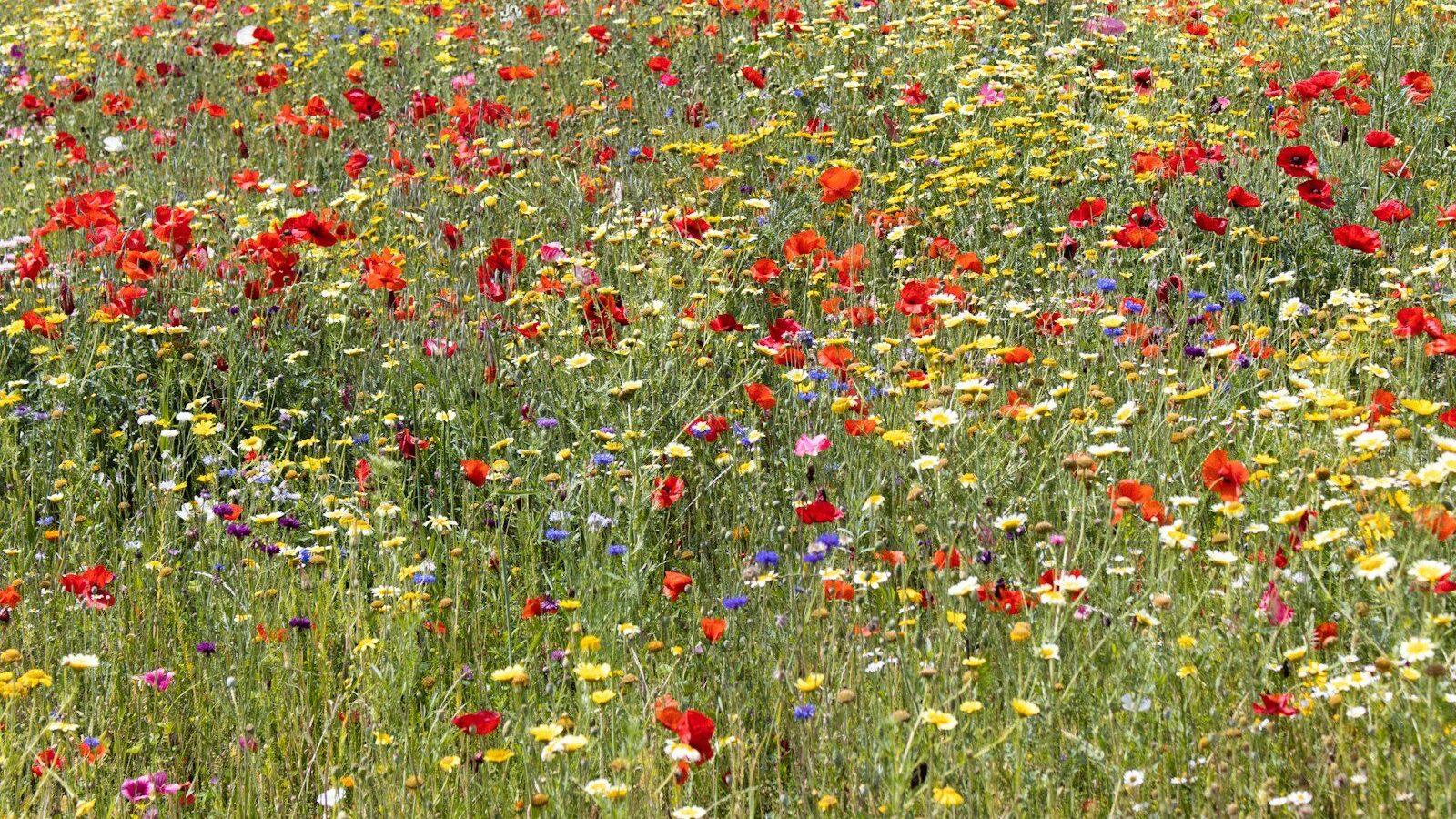
The best perennial wildflower seed mix is one built mostly from tough, sun-loving perennials such as coneflower, black-eyed Susan, coreopsis, blanket flower and blue flax, sold as pure seed without filler, and matched to your region and planting season. For most US gardens our top pick is the Eden Brothers All Perennial Wildflower Mix, 1 lb: the listing names 19 species, states zones 3 to 10 and up to 4,500 square feet of coverage. For a monarch-focused pollinator plot, the HOME GROWN Monarch Butterfly Mix adds two milkweeds, and in Texas and the Southern Plains the HOME GROWN Texas Wildflower Mix brings bluebonnets and native primroses. Below are seven mixes from current Amazon listings, compared on species, stated zones, coverage and how they are likely to establish where you live.
Part of our Flowers & Perennials guide →
In this guide
- 1. Eden Brothers All Perennial Wildflower Mix, 1 lb — Best Overall
- 2. HOME GROWN 19 Wildflower Variety Mix — Best for Small Pollinator Beds
- 3. HOME GROWN Monarch Butterfly Wildflower Mix — Best for Monarchs
- 4. HOME GROWN Texas Wildflower Mix — Best for Texas and the Southern Plains
- 5. Burpee Wildflower 25,000 Seeds — Best for First-Year Color
- 6. Eden Brothers All Perennial Wildflower Mix, 5 lb — Best for Large Meadows
- 7. GevaGrow Perennial Wildflower Seed Shaker — Best Shaker Applicator
- What to Look For in a Perennial Wildflower Seed Mix
- Frequently Asked Questions
Disclosure: Urban Lotus Project earns a commission from qualifying Amazon purchases made through links on this page, at no extra cost to you.
How we compared: we compared 7 current Amazon listings on what each listing states about species, perennial versus annual content, USDA zones, seed count and coverage. We did not test or handle the products, and availability changes.
Key Takeaways
- Perennial wildflowers spend their first season building roots; expect modest bloom in year one and a real show in years two and three.
- Mixes that include some annuals give first-year color while the perennials establish.
- Fall or late-fall sowing works best in most of the US, because many perennials need winter cold and moisture to germinate.
- Site prep matters more than the seed: remove existing grass and weeds and get seed in firm contact with bare soil.
- For the strongest long-term meadow, favor mixes heavy in species native to North America and check local invasive lists.
| Product | Best for | Key features | Buy |
|---|---|---|---|
| Eden Brothers All Perennial Mix 1 lb | Best overall perennial mix |
| Buy now →Check current price |
| HOME GROWN 19 Wildflower Variety Mix 4 oz | Best for small pollinator beds |
| Buy now →Check current price |
| HOME GROWN Monarch Butterfly Mix 2 oz | Best for monarchs |
| Buy now →Check current price |
| HOME GROWN Texas Wildflower Mix 3 oz | Best for Texas and Southern Plains |
| Buy now →Check current price |
| Burpee Wildflower 25,000 Seeds | Best for first-year color |
| Buy now →Check current price |
| Eden Brothers All Perennial Mix 5 lb | Best for large meadows |
| Buy now →Check current price |
| GevaGrow Perennial Wildflower Shaker 1 lb | Best shaker applicator |
| Buy now →Check current price |
Prices change often; check Amazon for today’s price. As an Amazon Associate we earn from qualifying purchases.
Planning the whole planting rather than just buying seed? Our guide on how to grow a wildflower meadow covers site prep, seeding rates and mowing in detail, and the flowers and perennials guide links to care guides for many of the species in these mixes.
1. Eden Brothers All Perennial Wildflower Mix, 1 lb — Best Overall

All-perennial, filler-free blend of 19 species for zones 3 to 10; one pound covers up to 4,500 sq ft.
Check price on AmazonWhy We Like It
- All-perennial blend with no filler, per listing.
- Clear zone range: 3 to 10.
- Species list published with botanical names.
- Spring or fall planting.
| Specification | Details |
|---|---|
| Species | 19, incl. coneflower, black-eyed Susan, coreopsis, blanket flower, lupine, gayfeather |
| Seed count | 480,000+ |
| Coverage | Up to 4,500 sq ft |
| Zones | 3–10 |
| Sun | Full sun |
| Planting season | Spring or fall |
Eden Brothers All Perennial Mix 1 lb — compressed specs
This is the mix we would hand to most people starting a perennial wildflower patch. The listing lists every species with botanical names: Siberian wallflower, Shasta daisy, lance-leaf coreopsis, foxglove, purple coneflower, blanket flower, blue flax, perennial lupine, Mexican hat, black-eyed Susan, gayfeather and more. Many are proven, drought-tolerant prairie and garden perennials that persist across a wide range of US climates.
Be aware that “all perennial” includes some short-lived perennials and biennials (Sweet William, foxglove, wallflower) that bloom in year two and then reseed. Foxglove is toxic if eaten, which matters if livestock or pets graze. Compared with the HOME GROWN 19-variety mix, this has more coverage per package and a broader zone claim.
Pros
- Detailed species list
- Wide zone range
- Good coverage per pound
Cons
- Little first-year bloom
- Includes toxic foxglove
- Mix of native and non-native species
Check Eden Brothers All Perennial Mix 1 lb price on Amazon
2. HOME GROWN 19 Wildflower Variety Mix — Best for Small Pollinator Beds

4 oz perennial wildflower mix with yarrow, columbine, New England aster, coneflower and gayfeather.
Check price on AmazonWhy We Like It
- Includes New England aster for fall nectar.
- Honest year-1 roots, year-2 bloom guidance.
- Columbine and yarrow for spring and early summer.
- U.S.-sourced seed per listing.
| Specification | Details |
|---|---|
| Species | 19, incl. yarrow, columbine, New England aster, coneflower, gayfeather, blue flax |
| Seed count | 63,200+ (4 oz) |
| Coverage | not stated in listing |
| Zones | not stated in listing |
| Bloom | Mainly from year two |
| Non-perennial content | Tall trailing nasturtium listed |
HOME GROWN 19 Wildflower Variety Mix — compressed specs
The listing is refreshingly direct about how perennials behave: establish roots in year one, bloom from year two. Its species list spans the season, from spring columbine and yarrow through summer coneflower and gayfeather to fall-blooming New England aster, a key late-season nectar plant for bees and migrating butterflies that many mixes omit.
The 4 oz pouch suits beds, borders and small pollinator patches rather than acreage. Its list also includes chicory and nasturtium, which are not North American natives; if a native-only planting matters to you, the Monarch mix leans more native.
Pros
- Season-long bloom sequence
- Includes New England aster
- Clear expectations on bloom timing
Cons
- No coverage figure
- No zone range stated
- Some non-native species
Check HOME GROWN 19 Wildflower Variety Mix 4 oz price on Amazon
3. HOME GROWN Monarch Butterfly Wildflower Mix — Best for Monarchs

Pollinator mix with butterfly milkweed, common milkweed, aster, coneflower and gayfeather for zones 3 to 9.
Check price on AmazonWhy We Like It
- Contains butterfly milkweed and common milkweed.
- Native nectar plants: aster, coneflower, gayfeather, vervain.
- Annuals for first-year color.
- Zones 3 to 9 stated.
| Specification | Details |
|---|---|
| Key species | Butterfly milkweed, common milkweed, smooth blue aster, coneflower, gayfeather, hoary vervain |
| Annuals included | Cosmos, larkspur, marigold, Mexican sunflower, zinnia |
| Seed count | 20,000+ (2 oz) |
| Zones | 3–9 |
| Germination | 7–14 days stated |
| Heights | 6 in to 6 ft |
HOME GROWN Monarch Butterfly Mix — compressed specs
Monarch caterpillars eat only milkweed, so a butterfly plot without it is a nectar bar with no nursery. This mix includes two milkweeds plus native nectar perennials like smooth blue aster, purple coneflower, gayfeather and hoary vervain, and annual cosmos, zinnia and Mexican sunflower that bloom the first summer while perennials build roots.
Milkweed seed usually germinates best after cold, moist stratification, so fall sowing outdoors gives it the best start. Common milkweed spreads by rhizomes and can wander in a small bed; give it room. This is the best pick on our list for pollinator plots specifically aimed at butterflies.
Pros
- Host plants plus nectar plants
- First-year annual color
- Strong native component
Cons
- Smallest package on our list
- Common milkweed spreads
- Annual share fades after year one
Check HOME GROWN Monarch Butterfly Mix 2 oz price on Amazon
4. HOME GROWN Texas Wildflower Mix — Best for Texas and the Southern Plains

22-variety Texas blend with bluebonnet, Indian blanket, primroses, coneflowers and lemon mint; covers about 250 sq ft.
Check price on AmazonWhy We Like It
- Texas bluebonnet and Indian blanket included.
- Showy and Missouri evening primrose.
- Lemon mint and scarlet sage for pollinators.
- Clear height range: 24 to 36 inches.
| Specification | Details |
|---|---|
| Species | 22, incl. Texas bluebonnet, Indian blanket, clasping coneflower, showy primrose, lemon mint |
| Seed count | 131,200+ (3 oz) |
| Coverage | About 250 sq ft |
| Height | About 24–36 in |
| Mix type | Perennials and annuals |
HOME GROWN Texas Wildflower Mix — compressed specs
Generic national mixes often struggle in Texas heat and alkaline soils. This blend is built around species associated with Texas roadsides and prairies — bluebonnet, Indian blanket, Drummond phlox, clasping coneflower, lemon mint and evening primroses — mixed with perennials like purple coneflower and Mexican hat. It suits Texas, Oklahoma and similar Southern Plains climates.
Many of these, including bluebonnet, are reseeding annuals rather than true perennials, so the meadow persists by reseeding: let plants set seed before mowing in early summer. Sow in fall (September to November) so seeds get winter rains. Coverage is modest at about 250 square feet per pouch.
Pros
- Regionally appropriate species
- Strong spring display
- Clear coverage and height
Cons
- Many reseeding annuals
- Small coverage
- Less suited to cold, wet regions
Check HOME GROWN Texas Wildflower Mix 3 oz price on Amazon
5. Burpee Wildflower 25,000 Seeds — Best for First-Year Color

Early-blooming wildflower blend with cornflower and zinnia; covers up to 1,000 sq ft in most soil types.
Check price on AmazonWhy We Like It
- Early-blooming blend for first-season flowers.
- Covers up to 1,000 sq ft.
- Listed as suitable for most soil types.
- Established seed company.
| Specification | Details |
|---|---|
| Varieties | Listing cites 14 and 18 varieties, incl. cornflower and zinnia |
| Seed count | 25,000 |
| Coverage | Up to 1,000 sq ft |
| Planting | Sunny area after danger of heavy frost |
| Zones | not stated in listing |
Burpee Wildflower 25,000 Seeds — compressed specs
If you need flowers this summer, not in two years, Burpee’s early-blooming blend is the practical choice. It includes fast annuals like cornflower and zinnia that bloom within weeks, alongside perennials that take over in later years. The listing recommends sowing in a sunny area after the danger of heavy frost, so it is a spring-sown mix.
The trade-off is that the long-term perennial content is lower than the Eden Brothers or HOME GROWN 19 mixes, and the listing is inconsistent on variety count and does not publish a full species list. Consider it a starter or a companion to a slower, all-perennial mix.
Pros
- Fast first-year bloom
- Good coverage per bag
- Simple spring sowing
Cons
- Full species list not given
- Fewer long-lived perennials
- Variety count inconsistent in listing
Check Burpee Wildflower 25,000 Seeds price on Amazon
6. Eden Brothers All Perennial Wildflower Mix, 5 lb — Best for Large Meadows

Bulk 5 lb pack of the 19-species all-perennial blend, 2,400,000+ seeds for 5,000 to 10,000 sq ft.
Check price on AmazonWhy We Like It
- Largest coverage on our list.
- Same filler-free 19-species blend.
- Zones 3 to 10 stated.
- Spring or fall sowing.
| Specification | Details |
|---|---|
| Species | 19 perennials |
| Seed count | 2,400,000+ |
| Coverage | 5,000–10,000 sq ft |
| Zones | 3–10 |
| Weight | 5 lb |
Eden Brothers All Perennial Mix 5 lb — compressed specs
For converting a section of lawn, a field edge or a large slope into meadow, the 5 lb bag of our top pick covers a stated 5,000 to 10,000 square feet. The range reflects seeding density: sow at the heavier rate for faster fill and fewer weeds, the lighter rate for a sparser, more natural look. Mix the seed with dry sand for even broadcasting.
Everything said about the 1 lb version applies here, including slow first-year bloom. On large areas, consider overseeding with a nurse crop of annuals or a little of the Burpee mix for first-year color and weed suppression.
Pros
- Covers large areas
- Detailed species list
- Flexible seeding density
Cons
- Overkill for small beds
- Slow first-year display
- Contains non-native species
Check Eden Brothers All Perennial Mix 5 lb price on Amazon
7. GevaGrow Perennial Wildflower Seed Shaker — Best Shaker Applicator
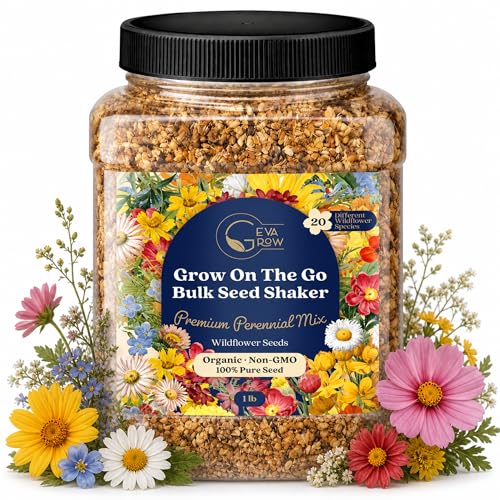
1 lb shaker tub of perennial wildflower seed, 900,000+ seeds of 20 species for full-sun sites.
Check price on AmazonWhy We Like It
- Shaker tub spreads seed evenly by hand.
- 900,000+ seeds in a pound.
- Clear full-sun requirement: 6+ hours.
- Honest about slow perennial bloom.
| Specification | Details |
|---|---|
| Species | 20 stated (full list not given) |
| Seed count | 900,000+ |
| Package | 1 lb shaker tub |
| Sun | 6+ hours direct sun |
| Coverage | not stated in listing |
| Zones | not stated in listing |
GevaGrow Perennial Wildflower Shaker — compressed specs
Even distribution is one of the hardest parts of sowing tiny wildflower seed, and GevaGrow’s shaker tub makes it easier for beginners. The listing is candid that its perennials may not bloom until the third year while they build roots, which is a useful reality check.
The listing does not give a species list, coverage or zones, and it mentions sunflowers and callistephus, which are annuals, so the “perennial” label is loose. Choose it for convenience; choose Eden Brothers when you want to know exactly what you are planting.
Pros
- Easy shaker application
- High seed count
- Realistic bloom timeline
Cons
- No species list
- No coverage or zones stated
- Mentions annuals despite perennial label
Check GevaGrow Perennial Wildflower Shaker 1 lb price on Amazon
What to Look For in a Perennial Wildflower Seed Mix
A published species list
The best mixes name every species, ideally with botanical names. That lets you check for natives, avoid plants that are invasive in your state, and know what to expect each season. Look for reliable perennial backbones: purple coneflower, black-eyed Susan (often a short-lived perennial or biennial), lance-leaf coreopsis, blanket flower, gayfeather, Mexican hat, blue flax, yarrow, asters and, for butterflies, milkweed.
Regional fit
| Region | When to sow | Mix notes |
|---|---|---|
| Northeast, Midwest, Great Lakes | Late fall dormant seeding, or early spring | Prairie perennials, asters, milkweed; good fit for Eden Brothers and Monarch mixes |
| Southeast | Fall, September to November | Heat- and humidity-tolerant species: coreopsis, blanket flower, black-eyed Susan |
| Texas and Southern Plains | Fall, September to November | Bluebonnet, Indian blanket, primroses; the Texas mix |
| Mountain West and High Plains | Late fall or very early spring | Drought-tolerant species: blue flax, blanket flower, Mexican hat, gayfeather |
| Pacific Coast and Southwest | Fall, ahead of winter rains | Drought-adapted mixes; irrigation needed in arid areas |
Perennial vs annual content
All-perennial mixes build a long-lived meadow but give little first-year show. Mixes with annuals deliver color quickly but thin out unless annuals reseed. A practical approach is a perennial base with a modest annual nurse crop.
Coverage and seeding rate
Check how many square feet the package claims and buy enough for the denser end of the range; thin seeding invites weeds. Mix seed with sand or vermiculite, broadcast half the seed walking one direction and half walking crosswise, then press it in with a roller or by walking over it. Most wildflower seed should not be buried more than about 1/8 inch.
Site prep
No mix can beat existing turf. Remove grass by smothering, solarizing or stripping sod, keep tillage shallow to avoid bringing up weed seed, and plan to mow the first-year planting to about 6 inches whenever weeds reach 12 inches. For pollinator-focused layouts and plant lists, see our guide to creating a pollinator garden, and for a single-species planting, our roundup of the best columbine seeds.
Frequently Asked Questions
Do perennial wildflowers bloom the first year?
Usually only a little. Most spend year one building roots and bloom well from year two. Mixes with annuals give first-year color.
When is the best time to plant perennial wildflower seeds?
In most of the US, late fall is best, since many perennials need winter cold and moisture to germinate. Early spring sowing also works in cold regions.
Can I just throw wildflower seeds on my lawn?
Rarely successfully. Grass outcompetes seedlings. Remove turf and weeds first and press seed into bare soil.
How much wildflower seed do I need?
Follow the package coverage claim and buy for the denser end of the range. Heavier seeding fills in faster and resists weeds better.
Do wildflower mixes contain invasive plants?
Some mixes include non-native species that can be weedy in certain regions. Check the species list against your state’s invasive plant list before sowing.