

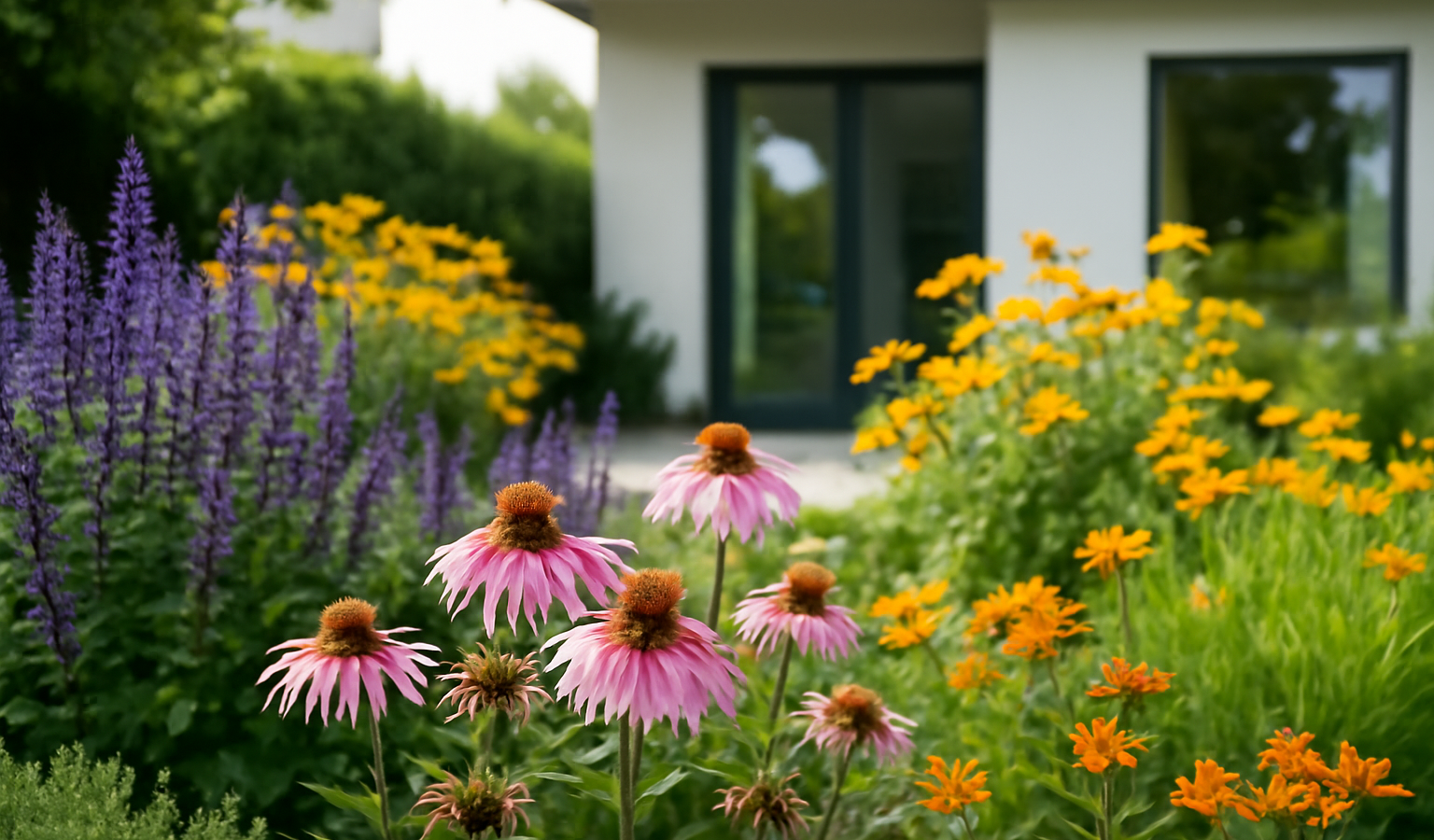
A pollinator garden is one of the most rewarding things you can plant, because it does real ecological work while looking beautiful. Bees, butterflies, moths, hummingbirds and countless beneficial insects are in decline, and a well-designed planting of native nectar and pollen plants gives them food, shelter and breeding habitat across the whole season. The recipe is straightforward: choose the right plants (mostly natives), make sure something is always blooming from early spring to fall, provide water and shelter, and — non-negotiably — stop using pesticides. Do that and within a single season you’ll see the garden hum with life. Here’s how to build one that supports pollinators from March through October.
Key Takeaways
- Prioritize native plants — they coevolved with local pollinators and support far more species than exotics.
- Plan for bloom succession so nectar and pollen are available continuously from early spring through late fall.
- Plant in drifts of at least 3–5 of the same species so pollinators can forage efficiently.
- Provide a shallow water source and undisturbed shelter (bare ground, leaf litter, hollow stems) for nesting and overwintering.
- Never use pesticides — including neonicotinoids — and tolerate some leaf damage; caterpillars become butterflies.
What Makes a Garden a Pollinator Garden
A pollinator garden is defined less by a particular look than by how well it meets the needs of pollinating animals. Four things matter. First, food: a diversity of nectar-rich flowers (for energy) and pollen-rich flowers (protein for bee young), ideally with a range of flower shapes so short-tongued bees, long-tongued bumblebees, butterflies and hummingbirds can all feed. Second, continuity: blooms that overlap across the entire season, with no hungry gaps. Third, host plants: many pollinators, especially butterflies and moths, need specific plants to lay eggs on and feed their larvae — milkweed for monarchs is the famous example, but native trees and many perennials host dozens of species. Fourth, safe habitat: water, shelter, nesting sites, and the absence of pesticides.
The single most important design principle is to favor native plants. Natives coevolved with local pollinators and typically support many times more insect species than ornamental exotics, which often offer little usable nectar or pollen. A garden of native flowers, even a small one, becomes a genuine refuel station and nursery rather than just a pretty bed.
Signature Plants: Native Nectar and Host Plants
Choose plants native to your region for the biggest impact — your local native plant society or extension office can give you a regional list — but the following genera are widely valuable across much of North America.
Bee Magnets
Echinacea (coneflower), Rudbeckia (black-eyed Susan), Monarda (bee balm), Agastache (anise hyssop), Salvia, Penstemon, Solidago (goldenrod — a critical late-season source, and it does not cause hay fever), asters, and native sunflowers feed bees abundantly. Spring-blooming natives like wild geranium, golden Alexanders and native willows are vital early forage when little else is open.
Butterfly and Caterpillar Plants
Milkweed (Asclepias — tuberosa, incarnata, and your regional species) is the sole host for monarch caterpillars and a top nectar source; plant several. Liatris (blazing star), Eupatorium/Eutrochium (Joe Pye weed), Verbena bonariensis, zinnias and phlox are butterfly nectar favorites. Remember host plants beyond milkweed: native violets host fritillaries, dill/fennel/parsley host swallowtails, and many native trees (oaks, willows, cherries) host hundreds of moth and butterfly species.
Hummingbird Plants
Hummingbirds favor tubular, often red or orange flowers: cardinal flower (Lobelia cardinalis), native honeysuckle (Lonicera sempervirens), bee balm, salvia, penstemon and trumpet vine. Including these adds another whole class of pollinator to your garden.
Hardscape, Water and Shelter
Pollinators need more than flowers. Water is essential: provide a shallow dish or birdbath with stones or marbles for insects to land on and drink without drowning, or a damp “puddling” patch of sand and mud that butterflies use to sip minerals. Refresh it regularly so it doesn’t breed mosquitoes. Shelter and nesting sites are just as important — roughly 70% of native bees nest in the ground, so leave some patches of bare, undisturbed, mulch-free soil in a sunny spot. The remaining cavity-nesters use hollow stems and dead wood, so leave standing dead stems over winter, keep a small log or brush pile, or add a simple bee house in a sheltered spot.
Other helpful features: a few flat warm stones where butterflies can bask in the sun, a windbreak (a hedge or fence) so pollinators can forage out of strong wind, and a layer of leaf litter left in beds over winter, which shelters overwintering bees, butterfly chrysalises and beneficial insects. Hardscape should be kept simple and permeable — gravel or stone paths, natural materials — and you can skip rich amendments; many native wildflowers actually bloom better in lean soil.
Layout Principles
Two design rules make a garden far more effective for pollinators. First, plant in drifts: group at least 3–5 (ideally more) of the same species together rather than dotting single plants around. Large blocks of one flower color and shape are easier for foraging bees to find and work efficiently, and they create a stronger visual display. Second, design for bloom succession: deliberately map out plants so that something is flowering in every part of the season — early spring (willows, wild geranium, golden Alexanders), late spring and early summer (penstemon, salvia, baptisia), midsummer (coneflower, bee balm, milkweed, liatris), and crucially late summer and fall (goldenrod, asters, Joe Pye weed) when pollinators are fueling up for winter or migration.
Place taller plants (Joe Pye weed, ironweed, sunflowers) at the back, mid-height perennials in the middle, and low growers and groundcovers at the front. Site the garden in full sun where possible, since most nectar plants and basking insects prefer it. Aim for high diversity — a wide range of flower shapes, colors and bloom times — and don’t worry about a manicured look; a slightly wild, full planting is both more attractive to pollinators and easier to maintain. Even a few containers of native flowers on a balcony genuinely help.
Step-by-Step: How to Create Your Pollinator Garden
- Pick a sunny site. Choose a spot with at least 6 hours of sun and some shelter from harsh wind. Even a 4-by-8-foot bed or a cluster of pots works.
- Get a regional native list. Contact your local native plant society or cooperative extension for plants native to your area, and select for all four bloom seasons plus host plants like milkweed.
- Prep the ground simply. Clear weeds and turf; you usually don’t need to enrich the soil. Leave a sunny patch of bare ground for ground-nesting bees.
- Plant in drifts. Set out groups of 3–5+ of each species, arranged by height, with early, mid and late bloomers spread through the bed so there’s always food.
- Add water and shelter. Install a shallow water dish with landing stones, leave some bare soil and standing stems, and optionally add a bee house and brush pile.
- Go pesticide-free and water in. Commit to zero pesticides, water new plants until established, then maintain with minimal intervention.
Many classic pollinator plants are easy to raise from a small start — see our guides on growing echinacea (coneflower) and other nectar-rich perennials. A pollinator border also layers beautifully into a looser planting style; the tips in our cottage garden guide and the outdoor living hub pair well with this approach.
Maintaining a Pollinator Garden
The golden rule is no pesticides — and that includes “bee-safe” insecticidal soaps used carelessly, and especially systemic neonicotinoids, which persist in nectar and pollen and harm the very insects you’re trying to help. Check that nursery plants haven’t been pre-treated with neonics. Tolerate some chewed leaves and aphids; caterpillars eating your milkweed and parsley are the future butterflies, and aphids feed ladybugs and lacewings. A healthy, diverse garden keeps its own pests in check.
Maintenance is otherwise minimal and a little “messy” on purpose. Leave the garden standing over winter — don’t cut back perennials in fall; the seed heads feed birds, the hollow stems shelter native bees, and leaf litter protects overwintering insects. Do your cleanup in mid-to-late spring once temperatures are reliably warm (above about 50°F for several days) so emerging insects have left their winter quarters. Water during establishment and droughts, deadhead only if you want to extend bloom (leave some seed heads for birds and self-sowing), and divide vigorous perennials every few years. Each season, fill any bloom gaps you noticed by adding plants for that period. The less you tidy and spray, the more life your garden will support.
Frequently Asked Questions
What plants attract the most pollinators?
Region-appropriate natives like coneflower, bee balm, milkweed, goldenrod, asters, salvia and liatris are top performers. Variety matters most: a mix of flower shapes, colors and bloom times across the season supports the widest range of bees, butterflies and hummingbirds. Native milkweed is essential for monarchs.
Do I really have to avoid all pesticides?
Yes. Insecticides — including systemic neonicotinoids that contaminate nectar and pollen — kill the pollinators you’re trying to attract, and even organic sprays harm beneficial insects. A diverse, healthy garden balances its own pests. Also confirm nursery plants weren’t pre-treated with neonics before buying.
How small can a pollinator garden be?
Any size helps — even a few containers of native flowers on a balcony provide real forage. A 4-by-8-foot bed with a handful of species across the bloom seasons makes a meaningful difference. Pollinators travel, so small gardens link up into vital habitat corridors.
Should I cut back my garden in fall?
No — leave it standing through winter. Seed heads feed birds, hollow stems shelter native bees, and leaf litter protects overwintering butterflies and beneficial insects. Wait until mid-to-late spring, when temperatures are reliably above about 50°F, to do your cleanup so insects have emerged.
Why plant in groups instead of single plants?
Pollinators forage far more efficiently on large blocks of a single flower than on scattered individuals. Planting in drifts of 3–5 or more of the same species makes the food easier to find and work, increases visits, and also creates a stronger, more attractive display.