

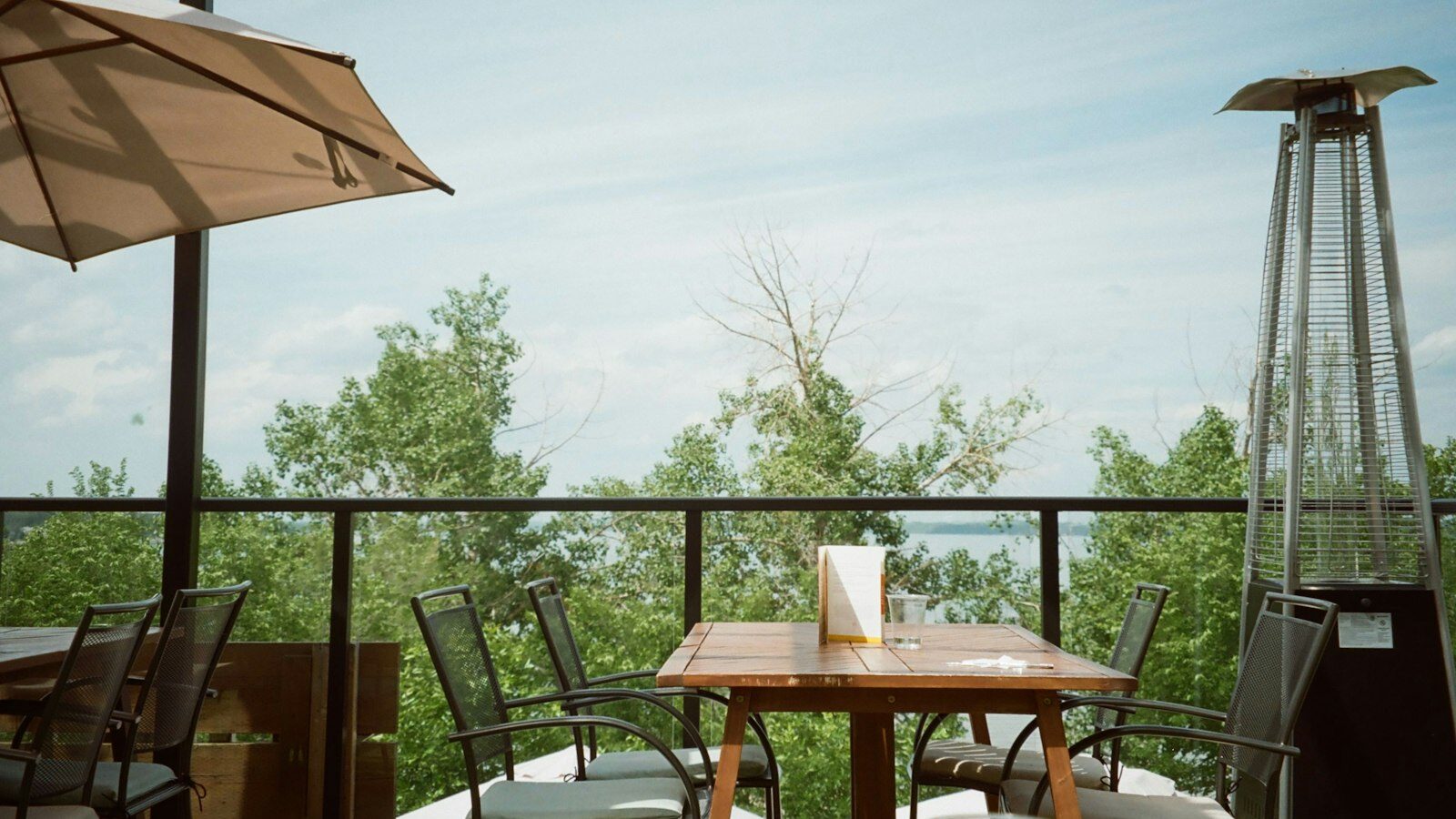
A good patio heater turns a chilly evening into bonus outdoor living time, stretching your patio season from early spring through late fall. Whether you want a towering propane tower that warms the whole yard, a sleek infrared unit you can bolt to a wall, or a compact tabletop heater for a balcony, the right pick depends on your space, your fuel access, and how much heat you actually need. Below are seven of the best patio heaters you can buy in 2026, tested categories and real models, plus a buying guide to help you choose with confidence.
As an Amazon Associate we earn from qualifying purchases.
Our top picks
- Best overall (propane): Hampton Bay 48,000 BTU Stainless Steel Patio Heater
- Best electric / infrared: Dr. Infrared Heater DR-238 Wide-Angle Patio Heater
- Best tabletop: Hampton Bay 11,000 BTU Tabletop Propane Patio Heater
- Best wall & ceiling mounted: Heat Storm Tradesman HS-1500-OTR Infrared Heater
- Best for small spaces: Mr. Heater Portable Buddy MH9BX Radiant Propane Heater
- Best high-output: Westinghouse 50,000 BTU Propane Patio Heater with Wheels
- Best budget: Amazon Basics 46,000 BTU Outdoor Propane Patio Heater
| Model | Fuel | BTU/Watts | Best for |
|---|---|---|---|
| Hampton Bay 48,000 BTU Stainless Steel | Propane (20 lb) | 48,000 BTU | Best overall freestanding |
| Dr. Infrared Heater DR-238 | Electric (120V) | 1,500W / 5,200 BTU | Best electric / infrared |
| Hampton Bay 11,000 BTU Tabletop | Propane (1 lb) | 11,000 BTU | Best tabletop |
| Heat Storm Tradesman HS-1500-OTR | Electric (120V) | 1,500W / 5,200 BTU | Best wall & ceiling mounted |
| Mr. Heater Portable Buddy MH9BX | Propane (1 lb) | 4,000–9,000 BTU | Best for small spaces |
| Westinghouse 50,000 BTU with Wheels | Propane (20 lb) | 50,000 BTU | Best high-output |
| Amazon Basics 46,000 BTU | Propane (20 lb) | 46,000 BTU | Best budget |
The 7 best patio heaters of 2026
Hampton Bay 48,000 BTU Stainless Steel Patio Heater — best overall
If you want one heater that simply works for almost any patio, the Hampton Bay 48,000 BTU Stainless Steel Standing Patio Heater (model NCZH-G-SS) is the easiest recommendation to make. It is a commercial-grade tower that runs on a standard 20-pound propane tank tucked into its weighted base, and it puts out a generous 48,000 BTU with an adjustable range down to about 34,000 BTU when full blast is more than you need. That output covers a heating radius of roughly 215 square feet, which is plenty for a typical dining set or a small gathering.
The stainless steel construction is the headline feature here: it shrugs off rain and snow without rusting or tarnishing, so you can leave it on the patio year-round (a cover still helps). The bottom-heavy, stackable design houses the tank securely and resists tipping in a breeze, and the included wheels make it easy to roll out of the garage when guests arrive. Assembly takes about an hour, and the piezo ignition lights reliably. In testing, the high setting genuinely runs hot, so most people end up dialing it back to medium or low for comfortable, all-evening warmth. For the price, it punches well above similar towers from premium brands.
Pros
- Strong 48,000 BTU output covers ~215 sq. ft.
- Rust-proof stainless steel survives year-round weather
- Weighted, stackable base resists tipping
- Wheels and one-touch ignition make it easy to use
- Great value versus premium-brand towers
Cons
- High setting can be too intense for small patios
- Roughly one hour of assembly required
- Propane tank not included
Dr. Infrared Heater DR-238 — best electric / infrared
If you would rather skip propane tanks entirely, the Dr. Infrared Heater DR-238 is our favorite plug-in option. This wide-angle infrared heater is built for both indoor and covered-outdoor use and produces about 5,200 BTU from a 1,500-watt element on a standard 120-volt outlet. Because infrared heat warms people and objects directly rather than heating the air, it feels effective almost instantly and is not blown away by a light breeze the way convection warmth can be.
The DR-238 offers three heat levels and ships with a remote so you can adjust output without leaving your seat. It mounts to a wall or sits on an optional tripod, which makes it flexible for a covered porch, pergola, or garage workshop. There are no fumes, no refueling, and no carbon monoxide concerns, so it is the safer choice for semi-enclosed spaces where a propane flame would be a non-starter. The main trade-off is reach: like all 1,500-watt electric heaters, it warms a focused zone rather than a whole open yard, so plan to point it where people actually sit.
Pros
- No fuel tanks, fumes, or carbon monoxide
- Instant, breeze-resistant infrared warmth
- Three heat levels plus a handy remote
- Wall-mount or tripod flexibility
- Safe for covered and semi-enclosed areas
Cons
- 1,500W output heats a focused zone, not a big yard
- Needs a nearby outdoor-rated outlet
- Tripod is sold separately
Hampton Bay 11,000 BTU Tabletop Propane Patio Heater — best tabletop
For a bistro table, balcony, or intimate seating area, a full-size tower is overkill. The Hampton Bay 11,000 BTU Tabletop Propane Patio Heater delivers focused warmth at a fraction of the footprint. It stands a little over three feet tall, runs on a disposable 1-pound propane cylinder hidden in the base, and pushes out 11,000 BTU—enough to take the edge off the cool air for two to four people gathered close.
Available in stainless steel and a powder-coated bronze finish, it looks at home on a patio table rather than dominating it. Critically for a tabletop unit, it includes an anti-tilt safety switch that shuts off the gas if the heater is bumped or knocked over—an essential feature when a heater is sitting at elbow height. It is lightweight and portable enough to bring inside a covered porch or move from table to table. Just remember that a 1-pound cylinder has a limited runtime, so keep a spare or two on hand if you entertain late.
Pros
- Compact, table-friendly footprint
- 11,000 BTU warms a close-knit group
- Anti-tilt auto shut-off for safety
- Attractive stainless or bronze finishes
- Lightweight and easy to move
Cons
- Short runtime on a 1 lb cylinder
- Limited reach beyond the immediate table
- Disposable cylinders add ongoing cost
Heat Storm Tradesman HS-1500-OTR — best wall & ceiling mounted
When floor space is at a premium—or you simply want a clean, permanent install—the Heat Storm Tradesman HS-1500-OTR is a standout. This 1,500-watt infrared quartz heater (about 5,200 BTU) is designed to mount on a wall or ceiling, freeing up the patio below and directing warmth down onto your seating from above. It plugs into a standard 120-volt outlet and uses durable infrared quartz elements that warm people directly, so the heat is felt right away.
The Tradesman is weather-resistant and rated for outdoor use under cover, making it a great fit for a covered patio, pergola, or garage. Heat Storm sells a version with a tripod and remote (HS-1500-OTR-R) if you want the option to move it or skip drilling, but the core appeal is its mounting versatility. Because it is electric, there is no fuel storage, no flame, and no exhaust—ideal for semi-enclosed spaces. As with any single 1,500-watt unit, it is best thought of as a spot heater for a defined area rather than a whole-yard solution; larger covered patios may benefit from two units.
Pros
- Wall or ceiling mount reclaims floor space
- Instant infrared quartz heat
- Weather-resistant for covered outdoor use
- No fuel, fumes, or open flame
- Optional tripod-and-remote version available
Cons
- Mounting requires hardware and a nearby outlet
- One unit covers a limited area
- Directional heat needs careful aiming
Mr. Heater Portable Buddy MH9BX — best for small spaces
The Mr. Heater Portable Buddy (MH9BX) is the most popular portable propane heater in North America, and it shines in tight spots—a balcony, a small deck, a screened porch, or even a chilly garage. It runs on a screw-on 1-pound propane cylinder and offers two settings, 4,000 and 9,000 BTU, enough radiant warmth for up to roughly 225 square feet. At a few pounds with a fold-down handle, it is genuinely grab-and-go.
What sets the Buddy apart for small, partially enclosed areas is its safety stack: a low-oxygen depletion sensor (ODS), an accidental tip-over shut-off, and a thermal shut-down system. That makes it one of the few propane heaters rated for indoor-safe use, though you should still follow the manufacturer’s ventilation guidance. A single control knob and piezo igniter make startup painless, and you can connect a 20-pound tank with an optional hose and filter for longer runtimes. On a 1-pound cylinder, expect roughly 2.4 hours on high and 5.4 hours on low.
Pros
- Compact and genuinely portable
- 4,000/9,000 BTU heats up to ~225 sq. ft.
- Indoor-safe rating with ODS sensor
- Tip-over and thermal shut-off protection
- Optional hose connects to a 20 lb tank
Cons
- Short runtime on 1 lb cylinders
- Radiant heat is directional and short-range
- Still requires good ventilation
Westinghouse 50,000 BTU Propane Patio Heater — best high-output
Need to warm a big open patio, a deck full of guests, or a restaurant-style seating area? The Westinghouse Outdoor Propane Patio Heater with Wheels delivers up to 50,000 BTU—one of the highest outputs you will find in a residential-friendly tower. That extra muscle translates into a wider, warmer coverage circle, so people sitting farther from the unit still feel it, and the heater holds its own on colder nights when a 40,000-BTU model would feel marginal.
It runs on a standard 20-pound propane tank housed in the weighted base, and the built-in wheels make repositioning a 50,000-BTU tower far less of a chore. Like the best commercial-grade heaters, it includes an auto shut-off and tip-over protection for peace of mind around guests. The flip side of all that output is fuel consumption: a high-BTU heater run on full will empty a propane tank faster, so factor in refills if you entertain often. For sheer warming power on large, open spaces, though, it is hard to beat.
Pros
- Big 50,000 BTU output for large areas
- Wide, warm coverage on cold nights
- Wheels make a tall tower easy to move
- Auto shut-off and tip-over protection
- Uses an affordable 20 lb tank
Cons
- Burns through propane faster on high
- Large footprint stores like a furniture piece
- Overkill for a small balcony or bistro set
Amazon Basics 46,000 BTU Outdoor Propane Patio Heater — best budget
The Amazon Basics 46,000 BTU Outdoor Propane Patio Heater proves you do not have to overspend to get serious warmth. For well under the price of premium towers, it delivers 46,000 BTU of adjustable heat across an 18-foot diameter, comfortably covering a typical patio dining area. It stands about seven feet tall on a round steel base that houses a 20-pound tank, and the Havana Bronze powder-coated finish resists rust for life outdoors.
Despite the budget price, it does not skimp on the essentials: one-touch piezo ignition for easy starts, wheels on the base for mobility, a securing chain for the tank, and a tilt safety auto shut-off valve. A handy water-fill box in the base adds ballast for extra stability on windy days. It is a no-frills design—you will not get a digital display or fancy flame window—but for reliable, large-area warmth at the lowest cost, it is the smart value pick. The propane tank is sold separately.
Pros
- Excellent value for 46,000 BTU output
- Covers an ~18-foot diameter
- Rust-resistant powder-coated finish
- Tip-over shut-off and water-ballast base
- Wheels and one-touch ignition included
Cons
- Basic, no-frills feature set
- Tall footprint needs storage space
- Propane tank not included
Free, no-obligation quote · Connect with a local pro
How to choose a patio heater
Propane vs. electric vs. natural gas
Propane is the most popular choice for open patios. It is portable (no wiring or plumbing), puts out high BTUs, and works anywhere—but you have to buy, refill, and store 20-pound or 1-pound tanks. Electric infrared heaters are cleaner and simpler: no fuel, no fumes, and no carbon monoxide, with instant warmth that resists wind. They are the safest choice for covered or semi-enclosed spaces, but each 1,500-watt unit heats a focused zone and needs an outdoor-rated outlet. Natural gas heaters offer endless fuel and the lowest running cost since they tie into your home’s gas line, but they require professional installation and are fixed in place—best for a permanent setup rather than a heater you move around.
BTU, wattage, and coverage
BTU (British Thermal Units) measures a fuel-burning heater’s output; watts do the same for electric models. As a rough guide, a 40,000–48,000 BTU tower covers a standard dining set, while 50,000 BTU and up suits large, open, or breezy areas. A 1,500-watt electric heater (about 5,200 BTU) is a focused spot heater for two to four people. Tabletop propane units (around 10,000–11,000 BTU) are for an intimate group right beside the heater. When in doubt, size up—you can always run a powerful heater on a lower setting, but you cannot squeeze more heat out of an undersized one.
Freestanding vs. tabletop vs. mounted
Freestanding towers deliver the most heat and coverage and are easy to roll out as needed—ideal for open patios and entertaining. Tabletop models are compact and portable, perfect for balconies, bistro tables, and small decks where a tower would crowd the space. Wall- and ceiling-mounted heaters (usually electric infrared) reclaim valuable floor space and give a clean, built-in look, making them the best fit for covered patios and pergolas where you want directional warmth from above without anything underfoot.
Indoor, covered use, and safety
Most freestanding propane towers are rated for outdoor use only and need open-air ventilation—never run them inside a garage or enclosed room. Electric infrared heaters are the safe pick for covered patios, pergolas, and semi-enclosed spaces because they produce no exhaust. A few radiant propane units like the Mr. Heater Buddy carry an indoor-safe rating thanks to a low-oxygen sensor, but you should still follow ventilation guidance. Whatever you choose, prioritize tip-over protection (an auto shut-off that cuts the gas or power if the unit is knocked over), keep heaters several feet from furniture, fabrics, and overhead structures, and never leave one running unattended.
Want to round out your outdoor setup? See our guides to essential garden tools, browse our patio ideas for layout inspiration, and explore our fire pit ideas if you want a flame to gather around as well as a heater to keep everyone warm.
Frequently asked questions
How many BTUs do I need for my patio?
As a rule of thumb, a 40,000–48,000 BTU tower comfortably warms a standard patio dining area, while 50,000 BTU and up is better for large, open, or windy spaces. For a small balcony or a close-knit table, a 9,000–11,000 BTU compact or tabletop heater is plenty. You can always run a higher-output heater on a lower setting, so sizing up gives you flexibility.
Are propane patio heaters safe to use under a covered patio?
Most freestanding propane towers are rated for outdoor use only and require open-air ventilation, so they are not appropriate for fully enclosed spaces. Under an open-sided covered patio or pergola with good airflow, many work fine—but always check the manufacturer’s clearance and ventilation requirements. For tightly covered or semi-enclosed areas, an electric infrared heater is the safer choice because it produces no exhaust.
Are electric or propane patio heaters cheaper to run?
It depends on local energy prices. Electric infrared heaters convert nearly all their electricity into usable heat and have no fuel to buy in tanks, which can make them economical for small, focused areas. Propane heaters cost more per hour to run at high output but deliver far more total heat, making them better value when you need to warm a large space. Natural gas, if you have a line, is usually the cheapest to operate.
What is tip-over protection and do I need it?
Tip-over protection is a safety switch that automatically shuts off the gas or power if the heater is knocked over or tilted too far. It is essential—especially for tall towers and tabletop units around children, pets, or crowds—because it prevents a fallen heater from continuing to burn. Every heater on this list includes some form of tip-over or anti-tilt shut-off.
Can I leave a patio heater outside year-round?
Stainless steel and powder-coated models resist rust and can stay outdoors, but a weatherproof cover greatly extends their life and keeps moisture out of the burner and controls. For propane units, disconnect and store the tank properly in the off-season, and bring electric heaters’ remotes and any non-weatherproof accessories inside. Covering and occasional cleaning will keep any heater looking and working its best.
Rather hire a pro?
Prefer to skip the DIY and have it done right? Compare free, no-obligation quotes from vetted local landscaping pros near you.