

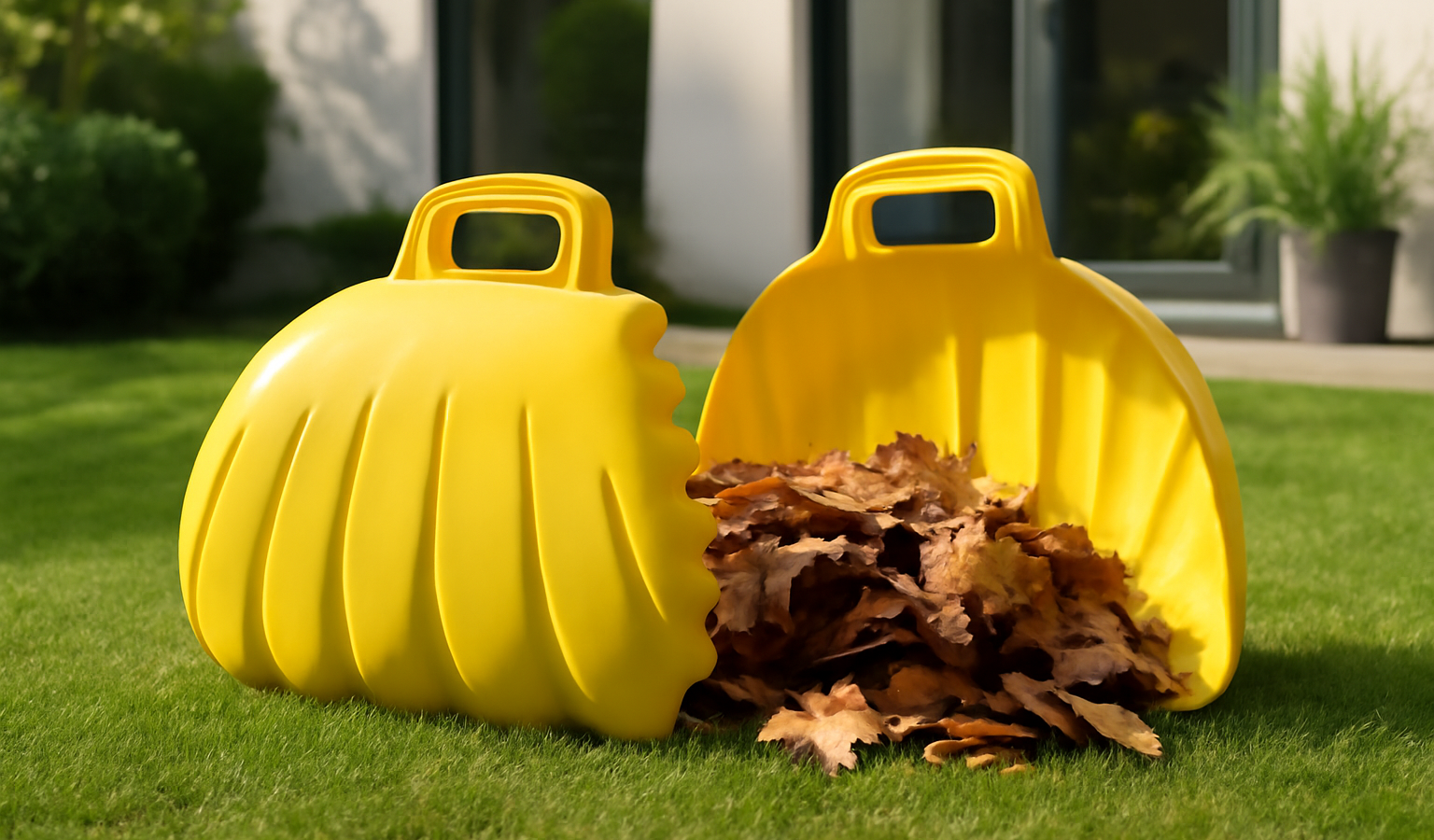
Bending over to scoop wet leaves by hand is how a one-hour cleanup turns into a sore back and a ruined Saturday. Leaf grabbers fix that, but the category is full of flimsy plastic that cracks the first cold morning. There are really two tools hiding under the name “leaf grabber”: big hand-held scoop paddles you wear like oversized claws to gather raked piles, and long-handled grabber tools that let you snag debris without stooping. This guide covers both, plus the leaf rakes that feed them, with seven products I would actually keep in the shed. I have weighted the picks toward durability and grip width, because the cheapest scoops are exactly the ones that snap.
As an Amazon Associate we earn from qualifying purchases. This page contains affiliate links at no extra cost to you.
Key Takeaways
- Hand scoop paddles (worn like big claws) are fastest for transferring raked piles into bags or carts — get the widest pair your hands can drive.
- Long-handled grabbers save your back for picking debris out of beds, gutters, and tight corners without bending.
- Look for impact-resistant polypropylene, not brittle thin plastic — the cheap ones crack in cold weather.
- Pair scoops with a wide leaf rake (24–30 in.) to make piles; the scoop is only as good as the pile it grabs.
- For wet, heavy leaves, prioritize tine strength and grip texture over how big the claw looks in photos.
| Product | Best For | Key Spec |
|---|---|---|
| Ames Ergo Leaf Scoops | Best overall hand scoops | Pair, large claw, ribbed grip |
| Ames Jackson Leaf Grabber Hands | Big-pile transfer | Oversized paddle pair |
| Fiskars Pro Garden Claws | Most durable | Reinforced polypropylene |
| Unger Nifty Nabber Pro | Long-handle pickup | 36 in. reach, lock trigger |
| RAKEMAN Telescoping Grabber | Gutters & high reach | Extends ~40 in. |
| Gardenite 30 in. Leaf Rake | Building piles | 30 in. poly head, 24 tines |
| EZ Leaf Hauler Tarp | Hauling to curb | 57 in. handled tarp |
1. Ames Ergo Leaf Scoops — Best Overall Hand Scoops
The Ames Ergo leaf scoops are the pair I hand to anyone who asks what to buy. Worn like oversized claws, they let you grab a basketball-sized armful of raked leaves and drop it straight into a bag or cart, doubling the volume of each pass compared with bare hands. The ribbed inner grip and contoured handle keep them from twisting out of your grasp when the leaves are damp and heavy, which is where flimsy scoops fail.
What sells me is the balance of size and control: big enough to move real volume, not so wide that you cannot close them on a pile. They are still plastic, so they will not survive being driven over or used to pry rocks, but for their intended job — clearing raked piles fast — they are the standard. Keep them out of direct sun storage and they last many seasons.
Pros
- Great size-to-control balance for fast pile clearing
- Ribbed grip holds wet, heavy leaves without slipping
- Trusted Ames brand, widely available and affordable
Cons
- Plastic — not for prying or heavy abuse
- Can become brittle if stored in freezing temps long-term
- You still have to make the piles first
2. Ames Jackson Leaf Grabber Hands — Best for Big Piles
If your yard produces leaf piles the size of beanbag chairs, the oversized “grabber hands” style paddles move more per scoop than the standard Ergo. These are the wide, flat-faced claws designed to slap together around a tall pile and lift it whole. For a big maple or a long hedge line dropping leaves all October, the extra surface area genuinely cuts the number of trips to the bag.
The trade-off is leverage. Wider paddles mean more leaves catch air on the way to the bag, and small hands can struggle to close them fully on a dense, wet pile. They shine on dry, fluffy leaves and on cleanup where speed beats precision. For finicky work in beds, the smaller Ergo is easier to control.
Pros
- Large paddle face moves big volume per scoop
- Fewer trips to the bag on dry fluffy leaves
- Light enough to use for long stretches
Cons
- Harder to close fully on dense wet piles
- Less precise than smaller scoops in tight beds
- Wide face lets some leaves escape mid-lift
3. Fiskars Pro Garden Claws — Most Durable
Fiskars built its reputation on tools that do not break, and its garden claw scoops carry that through with reinforced, impact-resistant polypropylene that holds up better than the bargain pairs in cold weather. If you have snapped a cheap set of scoops on a frosty November morning, the upgrade in material here is the reason to spend a little more. The tines are stiffer, so they bite into a packed pile rather than flexing and sliding off.
They run a touch heavier than the Ames scoops because of that extra material, which is a fair trade for longevity. The grip is comfortable and the build feels like it will outlast several seasons of hard fall use. If durability is your top priority and you do not mind paying for the brand, these are the pair to get.
Pros
- Reinforced polypropylene resists cracking in cold
- Stiff tines bite into packed and wet piles
- Fiskars build quality and warranty backing
Cons
- Heavier than basic plastic scoops
- Costs more than no-name pairs
- Still a seasonal-use tool, not for general prying
4. Unger Nifty Nabber Pro — Best Long-Handle Grabber
Not every leaf job is a big pile. For picking debris out of flower beds, snagging leaves wedged behind a downspout, or clearing a corner you cannot rake into, a long-handled pickup tool saves your back entirely. The Unger Nifty Nabber Pro is a commercial-grade reach tool with a roughly 36-inch handle and a wide rubberized claw that closes with a comfortable trigger and a lock to hold a grip. It is the same tool litter crews use, which tells you it survives daily abuse.
It will not move a whole pile, and it is slow if you try to use it for bulk cleanup. But for picking up wet clumps without stooping, fishing leaves out of a window well, or grabbing trash and sticks mixed into the leaves, it is the right tool. People with back or knee trouble often find it the single most useful item on this list.
Pros
- Commercial-grade build that lasts
- Saves your back picking debris from beds and corners
- Locking trigger holds a grip on awkward clumps
Cons
- Too slow for bulk pile cleanup
- Small grab area — one clump at a time
- Fixed length; no high gutter reach
5. RAKEMAN Telescoping Leaf Grabber — Best for Gutters & High Reach
When the leaves you need to grab are above your head — in a gutter, on a low roof, or deep in a tall window well — a telescoping grabber that extends to around 40 inches keeps you off the ladder for the easy spots. A tool like RAKEMAN’s adds reach without the full ladder setup, and the longer jaw is shaped to scoop loose leaf clumps rather than pick up a single object.
Telescoping handles always trade a little rigidity for that reach, so this is not the tool for dragging heavy wet mats out of a clogged gutter — it flexes under real load. Use it for clearing loose accumulation and finishing what a gutter scoop started. For ground-level work, the fixed Unger is sturdier; this one earns its place purely on the extra length.
Pros
- Extends to roughly 40 in. for overhead reach
- Keeps you off the ladder for light gutter work
- Jaw shaped to scoop loose leaf clumps
Cons
- Flexes under heavy wet loads
- Telescoping joint is the weak point over time
- Less sturdy than a fixed-length grabber
6. Gardenite 30-Inch Leaf Rake — Best Rake to Pair
Scoops are only as good as the pile you give them, so a wide, springy leaf rake is the other half of the kit. A 30-inch poly-head rake with roughly two dozen flexible tines pulls a broad swath of leaves into tidy piles fast without raking up gravel and mulch the way a metal garden rake does. The wide head means fewer passes, and the flex lets the tines ride over uneven lawn and bed edges.
A poly head shrugs off moisture and will not rust, and a cushioned grip cuts hand fatigue over a long cleanup. If your yard is mostly lawn, a wide poly rake like this plus a pair of scoops is the entire toolkit you need. Pair it with our advice on seasonal cleanup in the outdoor living section to time the work right.
Pros
- Wide 30 in. head clears leaves in fewer passes
- Flexible poly tines ride over uneven ground
- Rust-proof head and cushioned grip
Cons
- Poly tines flex too much for matted wet leaves
- Wide head is awkward in narrow beds
- Not for heavy thatch or soil work
7. EZ Leaf Hauler Tarp — Best for Hauling to the Curb
Once you have scooped the leaves, you still have to move them. A handled leaf-hauling tarp — around 57 inches square with sewn corner handles — turns three trips with a bag into one drag to the curb or compost pile. You rake or scoop straight onto the tarp, gather the handles, and pull. For big yards this is the unsung hero that makes the scoops worth using, because the bottleneck is usually transport, not gathering.
It is only as strong as its stitching and fabric, so look for a heavy woven tarp rather than a thin sheet that tears when you drag a loaded pile over a rough driveway. It will not stand up like a leaf bag for curbside collection if your town requires bags, but for moving leaves to a compost area or a single pickup spot, nothing is faster.
Pros
- Hauls huge volumes in one drag to the curb
- Corner handles make gathering and pulling easy
- Folds flat for off-season storage
Cons
- Thin versions tear under heavy wet loads
- Does not satisfy bag-only curbside rules
- Awkward to drag up steps or over rough ground
How to Choose a Leaf Grabber: What to Look For
Scoops vs long-handled grabbers. Decide what you are actually doing. Hand scoop paddles are for transferring raked piles into bags or a tarp quickly — they are about volume and speed. Long-handled grabbers are for picking individual clumps and debris out of beds, corners, and gutters without bending — they are about reach and your back. Most yards benefit from owning one of each.
Material quality. The single biggest difference between scoops that last and scoops that crack is the plastic. Look for impact-resistant or reinforced polypropylene rather than thin, brittle plastic. Cold weather makes cheap plastic shatter, and fall cleanup happens in exactly that weather. Spending a few dollars more on a Fiskars-grade pair usually pays off over a single season of snapped bargain scoops.
Size vs control. Bigger claws move more leaves but are harder to close on dense, wet piles and harder for smaller hands to drive. If your leaves are usually dry and fluffy, go big. If you deal with wet, packed leaves or want precision in beds, a mid-size scoop with a strong grip texture will frustrate you less.
Grip and ergonomics. Ribbed or textured inner surfaces keep wet leaves from sliding out, and a contoured handle reduces wrist strain over a long session. For long-handled grabbers, a locking trigger lets you hold a grip without constant squeezing, which matters when you are reaching overhead.
Build the whole kit. A grabber is one part of a system: a wide leaf rake to build piles, scoops to gather them, and a tarp or bags to haul them away. Buying just the scoops and skipping the rake or the haul method leaves you with a bottleneck. For more buyer guides on yard tools, browse our tools and gear hub.
Frequently Asked Questions
Are leaf scoops actually worth it?
Yes, if you bag or haul leaves by hand. A pair of scoops lets you grab a basketball-sized armful per pass instead of small handfuls, roughly doubling how fast you fill bags and saving a lot of bending. They are inexpensive and pay for themselves in time and back strain on the first big cleanup. They are less useful if you mulch leaves with a mower instead of bagging them.
What is the difference between a leaf scoop and a leaf grabber?
The terms overlap, but generally a leaf scoop is a pair of large hand-worn paddles for gathering raked piles, while a long-handled leaf grabber is a reach tool with a trigger-operated claw for picking debris out of beds, corners, and gutters without bending. Scoops are about moving volume fast; long-handled grabbers are about reach and saving your back. Many people own both.
What material should I look for in leaf scoops?
Choose impact-resistant or reinforced polypropylene rather than thin, brittle plastic. Fall cleanup happens in cold weather, and cheap plastic cracks in the cold and snaps on packed wet piles. A textured inner grip surface also matters so wet leaves do not slide out. Brands like Fiskars and Ames use sturdier plastics that survive multiple seasons.
Can a leaf grabber pick up wet leaves?
Yes, but wet leaves are heavier and slipperier, so grip and tine stiffness matter more. Hand scoops with stiff tines and ribbed inner surfaces handle wet clumps best; flimsy scoops flex and let the leaves slide out. Long-handled telescoping grabbers can flex under heavy wet loads, so use a sturdy fixed-length grabber for the heaviest wet material.
What else do I need besides leaf scoops?
Think of leaf cleanup as a system. You need a wide leaf rake (24–30 inches) to build piles, scoops to gather them, and a way to haul them — a handled tarp or yard-waste bags. A leaf rake plus scoops plus a hauling tarp covers most yards. If you have gutters or high spots, add a telescoping grabber. Skipping the haul method usually becomes the bottleneck.