

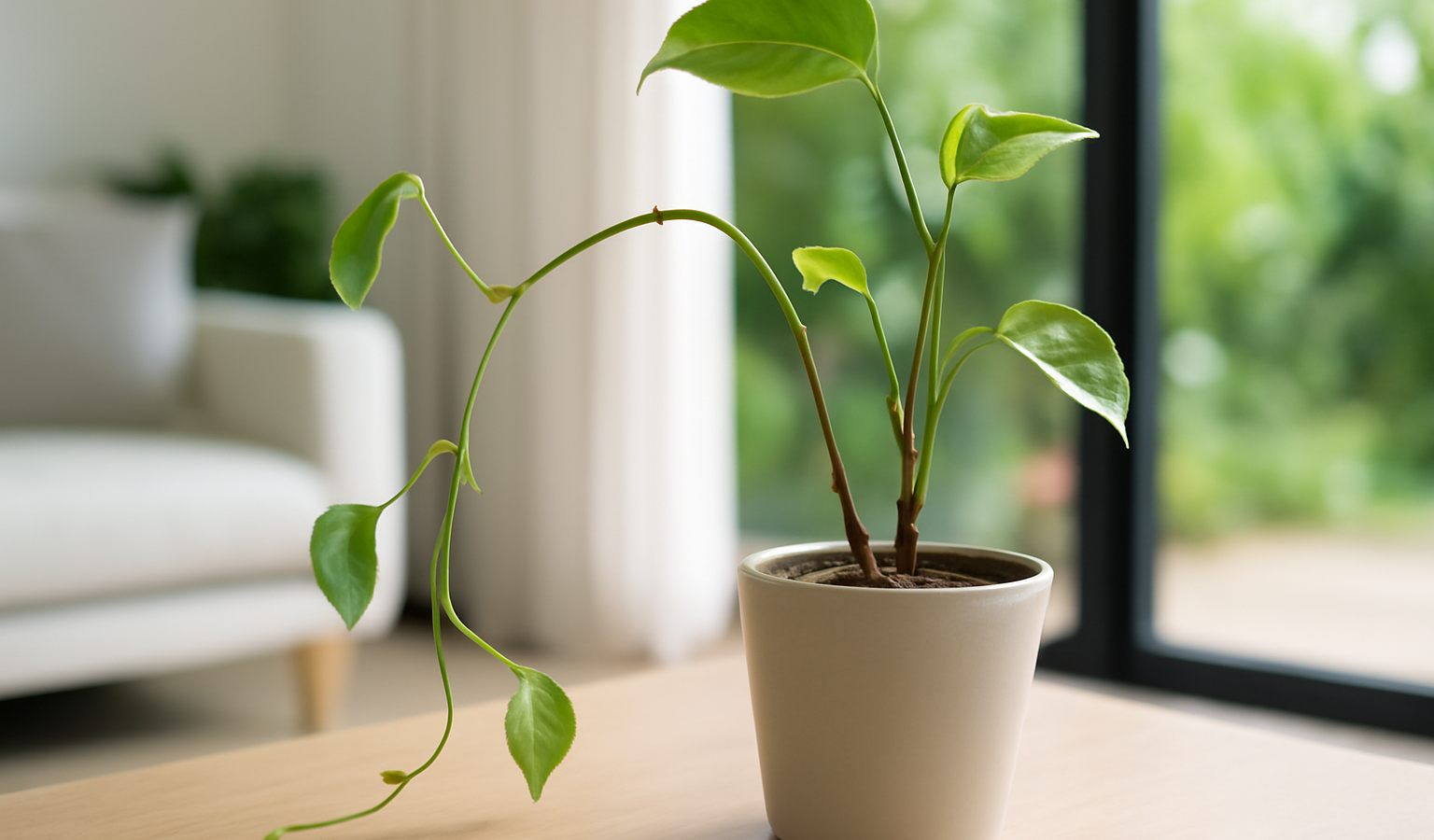
A pothos is supposed to be a lush waterfall of heart-shaped leaves, so it’s disheartening when yours stretches into long, bare vines with leaves spaced inches apart and a thinning, sparse look at the base. That stretchy, gappy growth is called legginess, and on pothos it almost always traces back to one thing: not enough light. The good news is that legginess is one of the most fixable houseplant problems. With a brighter spot and a little strategic pruning, you can turn a straggly vine back into a full, bushy plant — and even multiply it for free. This guide explains why pothos goes leggy and exactly how to fix and prevent it.
Key Takeaways
- Leggy pothos — long bare stems with widely spaced leaves — is overwhelmingly caused by too little light.
- In low light, vines stretch toward the nearest window, producing long internodes and small, sparse leaves.
- Fix it by moving the plant to bright, indirect light, then pruning leggy vines back to encourage branching.
- Every cut just above a node triggers new growth, making the plant fuller and bushier.
- Don’t toss the prunings — pothos cuttings root easily in water and can be planted back to fill out the pot.
What “Leggy” Actually Means
On a healthy pothos, the leaves grow close together along the stem, so the vine looks dense and full. The spacing between leaves is called the internode. When a plant is leggy, those internodes get long — sometimes three or four inches of bare stem between leaves — and the leaves themselves are often smaller than normal. The result is a stringy, see-through vine with lots of stem and little foliage. Recognizing legginess as a light symptom rather than a watering or feeding problem is the key to fixing it, because the most common mistake is to fertilize or water more, which does nothing for stretch.
Cause 1: Not Enough Light (the main reason)
Pothos tolerates low light, which is exactly why it gets leggy in it. “Tolerates” is not the same as “thrives.” In dim conditions the plant stretches, reaching for any available light source by elongating its stems and putting energy into length rather than leaves. This is a survival behavior called etiolation. Plants in a dark corner, several feet from a window, or in a north-facing room with little natural light are the usual victims.
How to diagnose
Look at the direction of growth and the leaf size. Vines that all lean or grow toward one window, long bare internodes, and noticeably smaller new leaves than older ones are textbook signs of insufficient light. If your pothos is more than five or six feet from a window or in a room you’d describe as “dim,” light is almost certainly the cause. Variegated varieties give an extra clue: golden, marble queen, and other variegated pothos lose their pattern and revert toward solid green in low light, because the plant maximizes green chlorophyll to capture what little light it gets.
How to fix it
Move the plant to a brighter spot with bright, indirect light — near an east or west window, or a few feet back from a bright south-facing one. Avoid harsh direct midday sun, which can scorch the leaves, but otherwise more light is better. If your home simply doesn’t have a bright spot, a basic LED grow light on a timer for 10–12 hours a day will keep growth compact. Better light alone won’t repair the already-stretched vines, but it stops new growth from stretching and sets the plant up to fill in once you prune.
Cause 2: No Pruning, So No Branching
Left alone, a pothos vine tends to grow as a single long strand rather than branching. Without pruning, the plant pours its energy into extending existing vines, so the base thins out and the whole plant looks sparse even in decent light. Pruning is what tells the plant to branch and bush out.
How to diagnose
If your pothos has a few very long vines but a bare, empty-looking center and crown, and you’ve never trimmed it, lack of pruning is contributing. The plant has all its leaves out at the ends of long runners with nothing filling in near the soil.
How to fix it
Prune the leggy vines. Using clean scissors, cut each long vine back, making the cut just above a node — the little bump on the stem where a leaf meets it and where aerial roots form. Cutting above a node prompts the plant to push out new growth from that point, usually two new shoots, which makes the vine fuller and the whole plant bushier. Don’t be timid: you can cut a vine back by a third to half. For a very sparse plant, prune hard and the regrowth will come in much denser. Spread cuts across the plant so it fills out evenly rather than just at the tips.
Cause 3: Rootbound, Overgrown, or Sparse Potting
Sometimes a pothos looks leggy because the pot was started with only one or two cuttings, so there were never enough stems to look full. Other times an old, rootbound plant runs out of steam and produces weak, stretchy growth. Both leave you with a thin-looking plant.
How to diagnose
Count the stems emerging from the soil. If there are only one or two, the plant was simply planted sparse. If the plant is years old, dries out very fast after watering, and has roots circling out the drainage hole, it may be rootbound and struggling to support healthy growth.
How to fix it
Increase the number of stems. The easiest path is to root your prunings (below) and plant the rooted cuttings back into the same pot, instantly making it fuller. If the plant is rootbound, repot it one size up in fresh potting mix to restore vigor. The combination of more light, regular pruning, and a denser planting is what transforms a stringy pothos into a full one.
Bonus: Propagate Your Prunings for a Fuller Plant
Never throw away the vines you cut off. Each cutting with a node and a leaf or two can become a new plant. Place the cuttings in a glass of water with at least one node submerged, set it in bright indirect light, and refresh the water weekly. In two to four weeks you’ll see white roots emerge from the nodes. Once the roots are an inch or two long, pot the cuttings up — planting several back into the parent pot is the fastest way to make a leggy pothos look lush again.
Preventing Leggy Pothos
Keep your pothos in consistently bright, indirect light so it never has to stretch. Prune it lightly two or three times a year, always cutting above a node, to keep it branching and dense rather than running into long bare strands. Rotate the pot a quarter turn every week or two so all sides get even light and the plant doesn’t lean. Water when the top inch or two of soil is dry, and feed with a diluted balanced houseplant fertilizer monthly during spring and summer to fuel that full, leafy growth. With good light and a habit of pruning, your pothos will stay bushy instead of leggy. For more on technique, see our guides on pruning houseplants for bushier growth and cleaning houseplant leaves, and explore more care guides in Plants & Flowers.
Frequently Asked Questions
Will a leggy pothos fill back in on its own?
Not without help. The existing stretched vines stay bare. You need to improve the light and prune above nodes to trigger new branching growth that fills the plant in. Rooting the cuttings back into the pot speeds it up dramatically.
Where should I cut a leggy pothos vine?
Always cut just above a node — the small bump where a leaf attaches and aerial roots appear. The plant pushes out new shoots from below the cut, making it bushier. Avoid cutting in the middle of a bare internode.
How much light does a pothos need to stay bushy?
Bright, indirect light is ideal — near an east or west window, or a few feet from a south one. It survives low light but gets leggy there. A grow light works well if your home lacks a bright spot.
Can I cut my pothos all the way back?
Yes. Pothos is very forgiving and responds to hard pruning with vigorous, dense regrowth. Cutting it back by a third to half (or more for a very straggly plant) is a great way to rejuvenate it, as long as you leave nodes for it to regrow from.
Why are my new pothos leaves smaller and less variegated?
Both are low-light symptoms. In dim conditions the plant produces smaller leaves and reverts variegated patterns toward solid green to capture more light. Move it brighter and new growth will improve.