

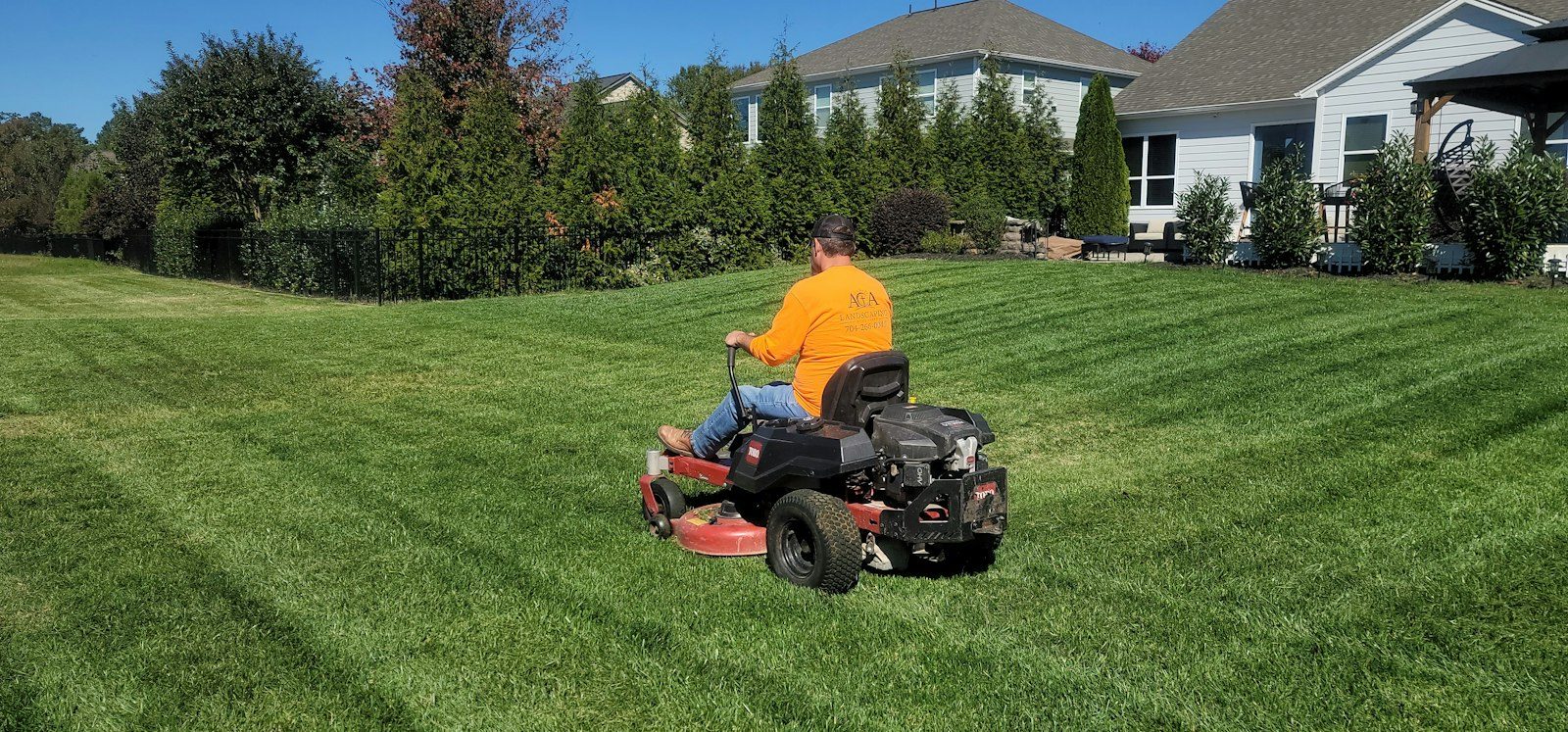
A zero-turn mower steers with its rear wheels: each lap bar controls the wheel on its side, so pushing both bars forward evenly drives straight, pushing one further than the other turns, and pulling them back reverses. That is simple to describe and awkward for the first hour, because the machine responds to small hand movements and has no steering wheel to anchor your instincts. Most new owners are comfortable after a few practice sessions in an open area. The bigger learning curve is safety and turf care: zero-turns are less stable on slopes than lawn tractors, and careless pivot turns tear up grass. This guide covers the controls, a practice routine, turning without scuffing, slope rules and how to get clean stripes.
Part of our Lawn Care guide →
In this guide
Key Takeaways
- Small, smooth lap-bar movements; jerky inputs cause jerky driving.
- Practice at low engine speed with the blades off in a flat, open area before mowing.
- Avoid spinning in place on turf; keep the inside wheel moving slowly forward for turf-friendly turns.
- Check your manual’s slope limit (commonly around 15 degrees or less), mow up and down slopes, and stay away from drop-offs and water.
- Keep the ROPS bar up and wear the seat belt; slow down before turns, not during them.
Know the Controls Before You Start
Controls vary by brand, but most residential zero-turns share the same layout. Read the operator’s manual first and identify each one before turning the key. A zero-turn is a mowing tool, not a lawn program; for feeding, watering and mowing heights by season, see our lawn care guide.
- Lap bars (motion control levers): push forward to go forward, pull back to reverse. Swing them outward to the neutral “park” position to start the engine and to get on and off.
- Parking brake: usually a lever or pedal. Set it before starting and whenever you dismount.
- Throttle: sets engine speed. When the blades are running, most manufacturers want the engine at full throttle for proper blade tip speed and clean cutting.
- Blade engagement (PTO): a pull knob or switch that starts the blades. Many manuals call for engaging it at partial throttle, then advancing to full.
- Deck height lever or pedal: sets cutting height; lift to transport height when crossing driveways or rough ground.
- Seat safety switch: stops the engine or blades if you leave the seat with the blades engaged or the brake off.
- ROPS (rollover protection) bar and seat belt: keep the bar raised and locked and the belt fastened.
A First-Hour Practice Routine
Choose a flat, dry, open patch of lawn or a large driveway well away from people, pets, cars and obstacles. Leave the blades off for this whole routine.
- Start at low throttle. Lower engine speed means slower, gentler response while you learn.
- Go straight. Bring both lap bars to center, release the brake and push both forward an inch or two together. Stop by easing them back to neutral. Repeat until you can drive a straight line by keeping the bars level.
- Gentle turns. While moving forward, push one bar slightly further than the other. The mower curves toward the slower side. Practice wide figure eights.
- Reverse. Look behind you first, then pull both bars back slowly. Zero-turns reverse quickly; keep it slow.
- Pivot turn. Stop, hold one bar in neutral and push the other forward slightly. The mower turns around the stationary wheel. Then try holding one bar slightly back and the other slightly forward — the true “zero turn” spin.
- Raise the throttle to the mowing setting once the low-speed moves feel natural and repeat the drills.
Rest your forearms or wrists against the lap bars’ padded section if your mower allows, so bumps do not translate into accidental steering inputs. Many new owners find that steering with relaxed wrists rather than gripping hard smooths everything out.
Turning Without Tearing Up the Lawn
Spinning one wheel forward and one back pivots the mower in its own length, which is the point of a zero-turn — but on soft or damp turf it twists the tires against the grass and leaves crescent-shaped scuffs and torn sod. Use these instead for routine turns at the end of each pass:
- Rolling turn: slow down near the end of the pass, keep the inside wheel creeping forward slowly and swing the outside wheel around. Both tires keep rolling, so neither scrubs.
- Three-point (K) turn: at the end of a pass, turn about 90 degrees, back up a few feet, then turn into the next pass. Slower, but very gentle on turf.
- Loop turn: on large, open areas, swing a wide loop into the next row. You may miss a small strip at each end, which the headland passes clean up.
Save true spin turns for hard ground, dry conditions and tight spots around trees. Slow down before the turn, not in the middle of it. Fast turns throw the mower outward and are a common cause of scuffing and loss of control.
Slope Safety
This is the part that matters most. Zero-turns steer and brake with the rear drive wheels only; the front wheels are free-swiveling casters. On a slope, if the rear wheels lose traction, you lose both steering and braking at the same time. That is why manufacturers publish a maximum slope rating — commonly around 15 degrees for residential zero-turns, and lower for some models — and why slopes cause most serious zero-turn accidents.
- Know your limit. Find the slope rating in your manual. Many manuals include a slope gauge you can sight against a pole or tree. A phone inclinometer app placed on a straight board laid on the slope gives a quick reading.
- Mow up and down, not across, unless your manual says otherwise. Mowing across a slope shifts weight to the downhill side and can cause sliding or rollover.
- No sudden moves. Avoid starting, stopping or turning sharply on a slope. Make turns on flat ground at the top or bottom.
- Stay away from edges. Keep a wide margin from drop-offs, ditches, retaining walls, ponds and steep banks. Many manuals call for a buffer of at least the mower’s width or more; mow those areas with a walk-behind or string trimmer.
- Dry grass only. Wet grass dramatically reduces traction, even on gentle slopes.
- If you start to slide, do not panic-steer. Ease off the bars and steer gently downhill toward level ground if you can.
If much of your yard is sloped beyond your mower’s rating, a zero-turn is the wrong tool for that area. Our roundup of remote-control lawn mowers covers slope mowers that keep you off the machine entirely.
ROPS and Seat Belt Rules
The ROPS bar is designed to protect you only if you are held in the seat. Keep it up and locked and wear the belt whenever it is up. If you must fold the ROPS down to pass under a low branch or into a shed, unbuckle the belt for that maneuver only and raise the bar again as soon as you are clear. Never mow slopes with the bar folded down.
Mowing Pattern and Technique
- Walk the yard first. Pick up sticks, toys, rocks and hoses. Zero-turn blades throw debris hard.
- Mow the perimeter. Make two or three laps around the edge with the discharge chute pointed toward the lawn, not into beds, the street or the house. These laps create a headland for turning.
- Cut around obstacles. Circle trees and beds once or twice. This is where zero-turns shine; take tight curves slowly.
- Mow straight rows. Fix your eye on a landmark at the far end and drive toward it rather than looking at the front of the deck. Overlap each pass by 3–4 inches.
- Finish with a final perimeter lap to clean up the turn marks.
Ground speed matters for cut quality. Running flat out in thick or tall grass leaves uncut tufts and uneven height. Slow down in heavy growth, on bumpy ground and when bagging. Follow the one-third rule — never cut more than a third of the blade height at once — and see our guide on how often to mow for seasonal timing.
How to Stripe with a Zero Turn
Stripes come from bending grass blades in alternate directions; light reflects off them differently. Zero-turns are good at stripes because they hold a straight line easily once you are used to them.
- Mow in straight, parallel passes, alternating direction each row.
- Keep the overlap consistent so stripes are even widths.
- A striping kit (a roller or flap behind the deck) bends the grass more for sharper stripes.
- Cool-season grasses like Kentucky bluegrass and tall fescue, mowed a bit higher, stripe best.
- Change the stripe direction each week (straight, then diagonal, then the other diagonal) to avoid ruts and grain.
For checkerboards and diamond patterns, see our guide on how to stripe a lawn.
Common Beginner Mistakes
- Over-steering: moving the bars too far, then correcting. Smaller inputs fix it.
- Mower pulls to one side: often uneven tire pressure. Check all four tires; if it still drifts, adjust the tracking per the manual.
- Mowing wet grass: clumping, ruts and slipping.
- Reversing without looking: always look behind before pulling the bars back, especially near children and pets. Many mowers stop the blades in reverse unless you override it; do not override it casually.
- Leaving the seat with the engine running: stop the blades, set the brake and shut off the engine before dismounting.
- Dull blades: a dull blade tears grass tips, which brown within a day. Sharpen blades two or three times a season; see how to sharpen lawn mower blades.
Transporting and Loading
Raise the deck to its highest setting when crossing curbs, gravel or driveways. Loading onto a trailer is one of the riskiest maneuvers because ramps create steep, short slopes; follow your manual’s instructions on loading direction, use ramps rated for the mower’s weight and set at a gentle angle, and never load on wet ramps. Secure the mower with straps at the points the manufacturer specifies, not around the deck.
Still choosing a machine? Compare models in our list of the best zero-turn mowers.
Frequently Asked Questions
Is a zero-turn mower hard to drive?
It feels unusual at first because the lap bars control each rear wheel separately. Most people are comfortable after an hour or two of practice at low speed in an open, flat area with the blades off.
Can you use a zero-turn mower on hills?
Only on gentle slopes within the manufacturer’s rating, which is often around 15 degrees or less for residential models. Mow up and down, avoid sharp turns on slopes, stay well back from drop-offs and never mow slopes when the grass is wet.
How do I stop my zero-turn from tearing up the grass?
Avoid counter-rotating spin turns on turf. Slow down before the end of each pass and use rolling or three-point turns where both tires keep moving. Do not mow soft or wet ground.
Should I mow at full throttle on a zero-turn?
Most manufacturers want full engine throttle while the blades are engaged so the blades spin at proper speed. Control ground speed with the lap bars, slowing down in thick grass for a clean cut.
Why does my zero-turn pull to one side?
Uneven tire pressure is the most common cause. Check and match the pressures in both rear tires. If it still drifts, adjust the tracking according to the operator’s manual.