

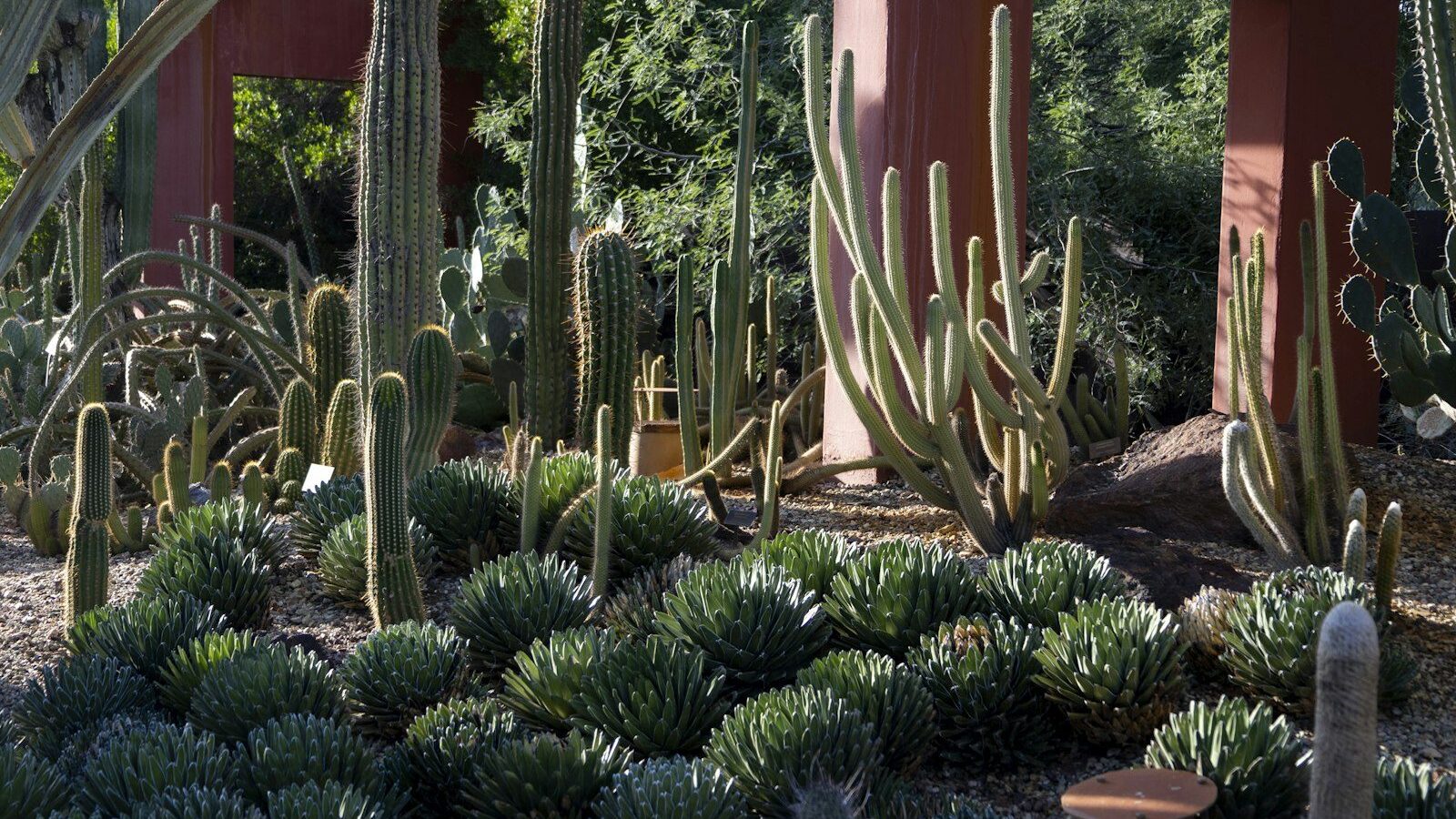
Converting a lawn to a drought-tolerant xeriscape typically runs about $5 to $20 per square foot with a landscape contractor, and roughly $1 to $5 per square foot if you do the work yourself. A simple gravel-and-shrub front yard sits at the low end; a designed yard with flagstone paths, boulders, drip irrigation and larger plants pushes into the upper range or beyond. For a typical 1,000-square-foot front lawn, that works out to somewhere around $5,000 to $20,000 professionally installed. In much of the West, a water utility turf-replacement rebate can take a meaningful bite out of that, and the reduced water bill keeps paying you back. Here is what drives the number and how to keep it down.
Part of our Landscaping & Hardscaping guide →
In this guide
Key Takeaways
- Typical professional range: about $5–$20 per sq ft; DIY with mostly small plants and rock: about $1–$5 per sq ft.
- Hardscape (stone paths, patios, walls, boulders) is what pushes projects past $20 per sq ft.
- Lawn removal, soil prep and converting sprinklers to drip are line items people forget.
- Western utilities often offer per-square-foot turf rebates — almost all require approval before you remove grass.
- Planting small (1-gallon) plants and letting them fill in is the single biggest DIY saving.
Xeriscaping Cost at a Glance
Xeriscaping is not one product, so cost depends on how much of the yard becomes rock, mulch and hardscape versus planting. These are typical US ranges rather than quotes; prices vary by region, access and material availability.
| Project style | DIY (per sq ft) | Professional (per sq ft) |
|---|---|---|
| Basic: lawn removal, wood or rock mulch, small native plants | $1–$3 | $5–$10 |
| Mid-range: drip irrigation, decomposed granite paths, mix of 1- and 5-gallon plants, a few boulders | $3–$6 | $10–$20 |
| High-end: designed plan, flagstone or paver patio, retaining walls, specimen plants, lighting | $6–$12+ | $20–$35+ |
A front yard of 500 square feet in the mid-range would therefore land around $5,000 to $10,000 with a contractor. A full 3,000-square-foot backyard with a patio could exceed $50,000. Small, focused projects often cost more per square foot because the contractor’s mobilization, design time and equipment delivery are spread over less area.
Cost Breakdown by Line Item
| Item | Typical range | Notes |
|---|---|---|
| Design plan | $300–$5,000 | Simple planting plan to full scaled design; some nurseries offer free or low-cost layouts |
| Lawn removal | $1–$3 per sq ft | Sod cutting and haul-away; sheet mulching costs less but takes months |
| Soil prep and grading | $0.50–$2 per sq ft | Loosening compacted soil, shaping swales and berms |
| Drip irrigation conversion | $1–$4 per sq ft | Capping spray heads, new valves or a retrofit kit, drip line and emitters |
| Plants | Roughly $8–$20 per 1-gal, $25–$75 per 5-gal | Larger box-size shrubs and trees cost much more |
| Rock or gravel mulch | $1–$4 per sq ft installed | Depends on rock type, depth and delivery distance |
| Decomposed granite paths | $2–$6 per sq ft installed | Stabilized DG at the high end |
| Flagstone or paver patio | $15–$40 per sq ft | Usually the largest single expense |
| Boulders | $100–$800+ each installed | Size and equipment access drive price |
Notice how much of the budget is not plants at all. In most pro quotes, labor, hauling, irrigation and hardscape outweigh the plant material. That is good news for DIYers, because the plants and mulch are the parts you can most easily install yourself.
What Drives the Price Up or Down
How much hardscape you add
A planted bed with mulch is cheap per square foot. A flagstone patio set on a compacted base is expensive per square foot. If budget matters, cover the large areas with organic or rock mulch and plants, and limit stone and pavers to the paths and seating areas you will actually use.
Plant size
A 5-gallon shrub can cost three to five times as much as the same shrub in a 1-gallon pot, yet drought-adapted natives grown from small containers often establish faster and catch up within two or three seasons. Contractors frequently price in larger material for instant impact. Ask for a quote with 1-gallon plants as an alternate. Many tough perennials, such as salvia, penstemon, yarrow and blanket flower, are inexpensive in small pots and fill in quickly; our flowers and perennials guide covers how to space them.
Lawn removal method
Cutting sod and hauling it off is fast but adds labor and dump fees. Sheet mulching — smothering the lawn under cardboard and 3–4 inches of wood chips — costs far less but needs two to four months before planting. Bermuda grass and other running grasses usually need to be dug out or killed with repeated treatment, because they creep back through mulch.
Irrigation
Xeriscape plants still need regular water for their first one to two summers. Converting existing spray zones to drip is usually cheaper than installing a new system, because valves and supply lines are already in place. If you have no system, budget for one or plan to hand-water carefully during establishment.
Site and access
Slopes, poor drainage, narrow side-yard access that rules out machinery, and heavy clay all add labor. Gravel and boulders are heavy; if crews must wheelbarrow tons of rock through a gate, expect it in the price.
Region
Labor rates in coastal California, Colorado’s Front Range and big Texas metros run well above those in smaller markets. Local stone is usually cheaper than imported stone, which is one reason desert-region projects lean on decomposed granite and native rock.
DIY Xeriscaping: Where You Can Save
Most homeowners can handle the planting, mulching and drip installation themselves, which removes the biggest share of labor cost. A realistic DIY plan looks like this:
- Check for rebates first and get pre-approval if required.
- Remove the lawn by sheet mulching in fall or rent a sod cutter for a weekend.
- Convert irrigation using a drip retrofit kit on existing valves; put a pressure regulator and filter at each valve.
- Plant in fall where winters are mild, or in spring in colder zones, using mostly 1-gallon natives and adapted perennials.
- Mulch with 2–3 inches of wood chips around most plants, or gravel for cacti, agave and Mediterranean herbs.
- Hire out only the heavy parts — boulders, patios and retaining walls — if you want them.
Free or low-cost wood chips from local arborists can replace bagged mulch, and many cities give away mulch at their green-waste facilities. Our step-by-step guide on how to xeriscape your yard walks through planning zones, soil and plant placement in detail.
Three Example Budgets
- DIY parkway strip, 200 sq ft: sheet mulch the grass, cap two spray heads, plant about 20 one-gallon natives and cover with free arborist chips. Typically a few hundred dollars, mostly plants and a drip kit.
- Contractor front yard, 800 sq ft, mid-range: sod removal, drip conversion on two zones, a decomposed granite path, three boulders and mixed 1- and 5-gallon plants. Often lands around $8,000 to $16,000.
- Designed backyard, 2,000 sq ft: full plan, flagstone patio, a short seat wall, new drip system, specimen trees and lighting. Commonly $40,000 and up.
These are illustrations of how line items add up, not quotes; local labor rates can swing every figure.
Turf Rebates and Incentives
Water agencies in dry states have paid homeowners to remove lawns for years. Well-known examples include the Southern Nevada Water Authority’s Water Smart Landscapes program, the Metropolitan Water District of Southern California’s turf replacement program (often stacked with local agency add-ons), and programs run by many utilities in Arizona, Utah, Colorado and Texas. Most pay a set amount per square foot of grass removed, sometimes with a cap.
The rules matter more than the dollar amount. Common requirements include:
- Pre-approval and “before” photos before any grass is removed.
- Grass must be living (or recently living) at the time of the inspection.
- A minimum percentage of the converted area covered by plants at maturity, not just rock.
- Drip or no irrigation in the converted area; spray heads capped.
- A permeable surface — artificial turf and solid concrete are often excluded.
- A completion deadline, often within 90 to 180 days of approval.
Rebate amounts and eligibility change from year to year, so check your water provider’s website before you design anything. Removing the grass first and asking later is the most common way homeowners lose a rebate.
Xeriscaping vs Lawn vs Artificial Turf
A new sod lawn is cheaper to install than most xeriscapes, but it carries ongoing water, mowing and fertilizer costs; see our guide to sod installation cost for comparison. Artificial turf is typically more expensive per square foot than a basic xeriscape, gets hot in direct sun, and is excluded from many rebate programs. A planted xeriscape costs the most during establishment and then tends to be the cheapest to maintain: occasional pruning, mulch top-ups every few years and a fraction of the water a lawn uses.
Ongoing Maintenance Costs
Xeriscapes are low-maintenance, not no-maintenance. Budget for:
- Weeding in the first two years until plants fill in. Landscape fabric under rock reduces weeds at first but often traps blown-in soil and weed seeds over time.
- Mulch refresh every two to three years for wood chips; gravel lasts much longer.
- Drip system checks each spring for clogged emitters and chewed lines.
- Annual pruning of ornamental grasses and perennials in late winter.
- Plant replacement — plan on losing a few plants in the first year.
If you pay a maintenance crew, a mature xeriscape usually needs visits less often than a lawn that is mowed weekly in season.
How to Get an Accurate Quote
- Measure the area and mark which parts are planting, paths and patio.
- Ask for line-item pricing: removal, irrigation, soil prep, plants, mulch and hardscape separately.
- Request plant sizes and species on the quote so you can compare apples to apples.
- Confirm the contractor knows your rebate program’s requirements and will provide the paperwork.
- Ask about a plant warranty, commonly 30 days to one year, and what voids it.
- Get at least three quotes; designs and prices vary widely for the same yard.
For planting ideas that fit your budget, browse xeriscaping ideas and our list of drought-tolerant plants.
Frequently Asked Questions
Is xeriscaping cheaper than grass?
Not up front: a sod lawn usually costs less to install than a planted xeriscape. Over time, xeriscaping typically costs less because it uses far less water and needs no weekly mowing or regular fertilizing, especially in dry Western climates.
How much does it cost to xeriscape a front yard?
A typical 500 to 1,000 sq ft front yard often runs about $2,500 to $20,000 with a contractor, depending on hardscape and plant size. Doing the planting and mulching yourself can bring it to a fraction of that.
Does xeriscaping add home value?
A well-designed, healthy xeriscape can improve curb appeal, especially in water-restricted regions where buyers value low water bills. A bare gravel yard with few plants does not have the same effect.
Do I need permission to remove my lawn for a rebate?
Usually yes. Most water utility turf rebates require an application, pre-inspection or photos before any grass is removed. Starting work first often disqualifies the project.
When is the best time to install a xeriscape?
In mild-winter areas, fall is best so roots establish over the cool, wetter season. In colder zones, plant in spring after the last frost. Lawn removal by sheet mulching should start two to four months before planting.