

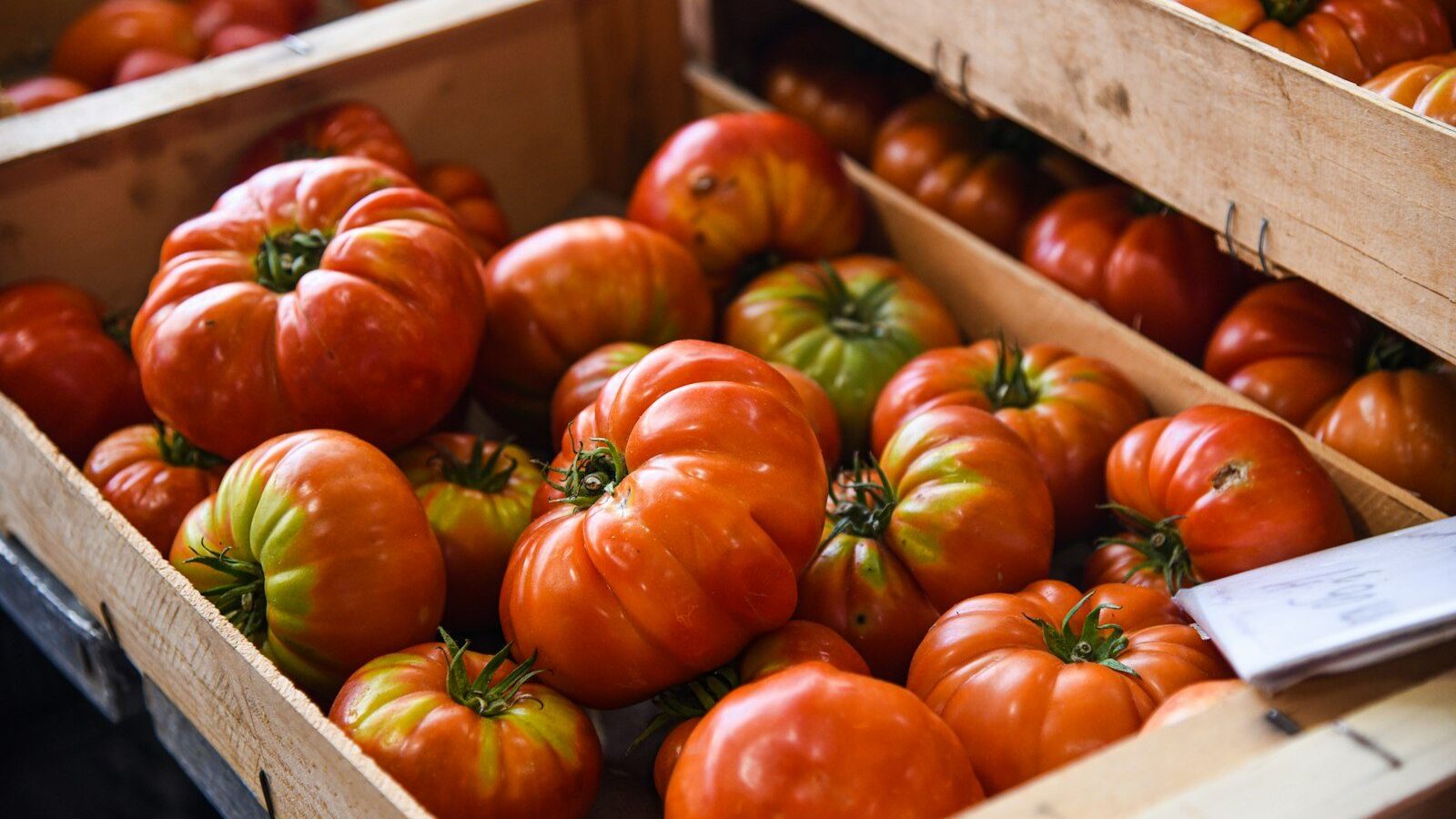
If you grow only a few heirloom tomatoes, start with Cherokee Purple for rich, smoky flavor, Brandywine for the classic big pink slicer, Black Krim or Green Zebra for something different, Amish Paste for sauce, and Black Cherry for snacking. In short-season northern gardens, swap in Stupice or Glacier for early fruit; in hot, humid southern gardens, Arkansas Traveler and Costoluto Genovese keep setting fruit when others stall. Heirlooms trade some disease resistance and uniformity for flavor, so the way you grow them matters: steady water, good air flow, mulch and early staking prevent most of the cracking and leaf diseases that give them a reputation as finicky. Below are the heirloom tomato varieties worth growing, sorted by type and climate, followed by growing tips.
Part of our Vegetable Gardening & Raised Beds guide →
In this guide
- What Makes a Tomato an Heirloom?
- Heirloom Tomato Varieties at a Glance
- Best Heirloom Slicers and Beefsteaks
- Best Heirloom Paste Tomatoes
- Best Heirloom Cherry Tomatoes
- Heirlooms by Climate
- Starting Heirlooms From Seed vs Buying Plants
- How to Grow Heirloom Tomatoes Successfully
- Saving Seed From Heirlooms
- Frequently Asked Questions
Key Takeaways
- Heirlooms are open-pollinated varieties passed down for generations; seeds saved from them grow true to type.
- Most are indeterminate, growing 6 to 8 feet tall, and need sturdy cages or stakes.
- Large beefsteak heirlooms take 80 to 100 days from transplant; in short seasons choose varieties under 70 days.
- Cracking comes from uneven watering; mulch and deep, regular watering are the fix.
- Plant at least one disease-tolerant or early variety alongside your favorite beefsteaks as insurance.
What Makes a Tomato an Heirloom?
An heirloom tomato is an open-pollinated variety that has been grown and saved for decades, often 50 years or more, by families, communities or seed companies. Because it is open-pollinated rather than a first-generation hybrid, seeds you save produce plants just like the parent. Hybrids are bred for disease resistance, uniform fruit and shipping; heirlooms were usually selected for flavor and local adaptation. Our comparison of heirloom vs hybrid tomatoes explains the trade-offs in detail.
Heirloom Tomato Varieties at a Glance
| Variety | Type | Days to maturity | Fruit | Best for |
|---|---|---|---|---|
| Cherokee Purple | Beefsteak | About 80 | Dusky purple-red, 10–12 oz | Flavor; most climates |
| Brandywine (Sudduth’s) | Beefsteak | 85–100 | Pink, 1–1.5 lb | Classic flavor; long seasons |
| Mortgage Lifter | Beefsteak | About 85 | Pink-red, 1–2 lb | Big yields; Southeast |
| Black Krim | Beefsteak | 70–80 | Dark red-brown, 8–12 oz | Rich, salty flavor |
| Green Zebra | Salad | About 75 | Green with yellow stripes, 3–4 oz | Tangy flavor, color |
| Pineapple | Beefsteak | 85–95 | Yellow-red marbled, 1–2 lb | Sweet, low-acid |
| Amish Paste | Paste | About 80 | Red, 8–12 oz | Sauce and canning |
| San Marzano | Paste | About 80 | Red, elongated, 3–4 oz | Sauce; few seeds |
| Black Cherry | Cherry | About 65 | Mahogany, 1 inch | Snacking; productive |
| Matt’s Wild Cherry | Currant/cherry | About 60 | Red, tiny | Very disease tolerant |
| Stupice | Early salad | 55–65 | Red, 2 oz | Short, cool seasons |
| Arkansas Traveler | Slicer | About 80 | Pink, 6–8 oz | Heat and humidity |
| Costoluto Genovese | Ribbed slicer | About 80 | Red, ribbed, 8 oz | Hot climates; sauce |
Days to maturity are counted from transplanting a 6- to 8-week-old seedling, and they vary by weather and region. Seed catalogs list slightly different figures for the same variety.
Best Heirloom Slicers and Beefsteaks
Cherokee Purple
If you grow one heirloom, make it this one. Cherokee Purple produces medium-large, dusky purple-pink fruit with green shoulders and a deep, sweet, slightly smoky flavor that regularly tops taste tests. It is more productive and more adaptable than Brandywine, ripens about two weeks earlier, and handles a range of climates from the Northeast to the South.
Brandywine
The best-known heirloom has huge pink fruit with a balanced sweet-tart flavor and potato-leaf foliage. It is also one of the slowest and least productive, and its yields fall off in very hot weather when nights stay above 75°F. Choose a named strain such as Sudduth’s for consistency, and give it the longest, sunniest spot you have.
Mortgage Lifter
Developed in West Virginia in the 1930s, Mortgage Lifter produces very large, meaty pink fruit with few seeds and good crack resistance for its size. It is a heavy producer, adapts well to the humid Southeast and Mid-Atlantic, and is a good choice if you want big slicing tomatoes without Brandywine’s sulkiness.
Black Krim and Pineapple
Black Krim, from the Crimean peninsula, has dark, juicy fruit with a rich, slightly salty flavor and ripens earlier than most beefsteaks. Pineapple is a huge bicolor tomato marbled yellow and red inside, very sweet and low in acidity, but it needs a long, warm season and is prone to cracking.
Best Heirloom Paste Tomatoes
For sauce, salsa and canning, paste heirlooms have thick walls, less juice and fewer seeds. Amish Paste produces large, oxheart-shaped fruit that are good fresh as well as cooked. San Marzano is the classic Italian sauce tomato, with long fruit and dense flesh. Both are indeterminate, so harvest comes over several weeks; plant six to ten plants if you want enough for a canning session.
Best Heirloom Cherry Tomatoes
Cherry heirlooms are the easiest heirlooms to grow, because their small fruit ripens quickly and cracks less. Black Cherry has a complex, sweet flavor similar to the big black tomatoes in snack size. Matt’s Wild Cherry produces hundreds of tiny, intensely flavored fruit and shows good tolerance to early blight and late blight. Yellow Pear is a mild, prolific, pear-shaped cherry that has been grown since the 1800s. If you are torn between sizes, our guide to cherry vs grape tomatoes may help.
Heirlooms by Climate
Short-season and cool climates
In zones 3 to 5, the Pacific Northwest and high-elevation gardens, choose varieties that set fruit in cool nights and ripen in under 70 days: Stupice, Glacier, Siberian, Black Krim and most cherry heirlooms. Start seeds indoors 6 to 8 weeks before your last frost, warm the soil with black plastic before planting, and add one or two early varieties so you get tomatoes even in a cool summer.
Hot and humid climates
Most tomatoes drop blossoms when days exceed 90°F and nights stay above about 75°F. In the South and Southeast, choose heat-tolerant heirlooms such as Arkansas Traveler, Costoluto Genovese, Cherokee Purple and Mortgage Lifter, and plant early so the main fruit set happens before midsummer. Afternoon shade cloth (30 to 40 percent) helps in July and August. A second planting in midsummer often produces a strong fall crop.
Starting Heirlooms From Seed vs Buying Plants
Garden centers usually stock only a handful of heirlooms, typically Brandywine, Cherokee Purple and a cherry or two. To grow anything else, you will need to start from seed, which is easy and gives you far more choice. Sow seeds a quarter inch deep in seed-starting mix 6 to 8 weeks before your last frost date, keep them at 70 to 80°F until they sprout in five to ten days, then move them under bright light for 14 to 16 hours a day. Pot them up into 3- or 4-inch pots once they have their first true leaves, and harden them off outdoors over a week before transplanting when nights stay above 50°F.
If you buy transplants, choose stocky plants 6 to 10 inches tall with dark green leaves and no flowers or fruit yet. Avoid tall, pale, leggy seedlings and any with spotted lower leaves, which can carry disease into your garden. A good plan for a first heirloom garden is six to eight plants: two large beefsteaks, one early variety, one or two paste plants and two cherries. That spread gives you something ripe from midsummer to frost even if one variety struggles in your conditions.
How to Grow Heirloom Tomatoes Successfully
- Sun: at least 8 hours of direct sun for beefsteaks; 6 is the bare minimum for cherries.
- Spacing: 24 to 36 inches between plants and 4 feet between rows. Crowded heirlooms are much more prone to leaf disease.
- Planting: bury transplants deep, up to the first true leaves, so roots form along the buried stem.
- Support: indeterminate heirlooms need 6-foot stakes, strong cages or a trellis set at planting time. Our guide on how to stake tomatoes compares methods.
- Soil and feeding: mix 2 to 3 inches of compost into the bed. Use a balanced fertilizer at planting, then a low-nitrogen, higher-phosphorus feed once flowers appear.
- Mulch: 2 to 3 inches of straw or shredded leaves keeps soil moisture even and stops soil splashing onto leaves.
Preventing cracking
Large heirlooms crack when a dry spell is followed by heavy rain or watering; the fruit swells faster than the skin can stretch. Water deeply once or twice a week, giving about 1 to 1.5 inches total including rain, and keep mulch in place. Pick fruit at the first blush of color before a forecast downpour and let it finish ripening indoors. See why tomatoes split for more detail.
Preventing disease
Early blight, Septoria leaf spot and late blight are the main threats to heirlooms. Remove the lowest leaves up to about 12 inches above the soil once plants are established, water at the base rather than overhead, rotate where you plant tomatoes on a three-year cycle, and clear all plant debris in fall. If late blight is common in your area, grow at least a few plants of tolerant varieties such as Matt’s Wild Cherry.
Saving Seed From Heirlooms
One of the joys of heirlooms is that you can save seed from your best plants and grow them again next year. Choose fully ripe fruit from healthy plants, scoop the seeds into a jar with a little water, and let them ferment for two to four days to remove the gel coating. Rinse, dry on a plate and store in a cool, dry place. Tomatoes rarely cross-pollinate, but separating varieties by 10 feet or more helps keep them pure. For the full method see how to save tomato seeds, and for planning the rest of your beds, start with our vegetable gardening guide.
Frequently Asked Questions
What is the best-tasting heirloom tomato?
Cherokee Purple and Brandywine are the most often cited for flavor, with Black Krim and Pineapple close behind. Taste is personal, so grow two or three and compare; the same variety also tastes different in different soils and summers.
What is the easiest heirloom tomato to grow?
Cherry heirlooms such as Black Cherry and Matt’s Wild Cherry are the easiest. Among larger tomatoes, Cherokee Purple and Mortgage Lifter are more forgiving and productive than Brandywine.
Why do heirloom tomatoes crack so much?
Large heirloom fruit has thin skin that splits when the plant takes up a lot of water quickly after dry weather. Consistent deep watering, mulch, and picking ripening fruit before heavy rain reduce cracking.
Are heirloom tomatoes determinate or indeterminate?
Most are indeterminate, growing and fruiting until frost and reaching 6 to 8 feet. A few, such as some paste and early varieties, are determinate or semi-determinate and stay more compact.
Can I grow heirloom tomatoes in containers?
Yes, in large containers of at least 15 to 20 gallons with a sturdy cage. Cherry heirlooms and compact varieties are best suited to pots. Containers dry quickly, so check moisture daily in summer to avoid cracking and blossom-end rot.