

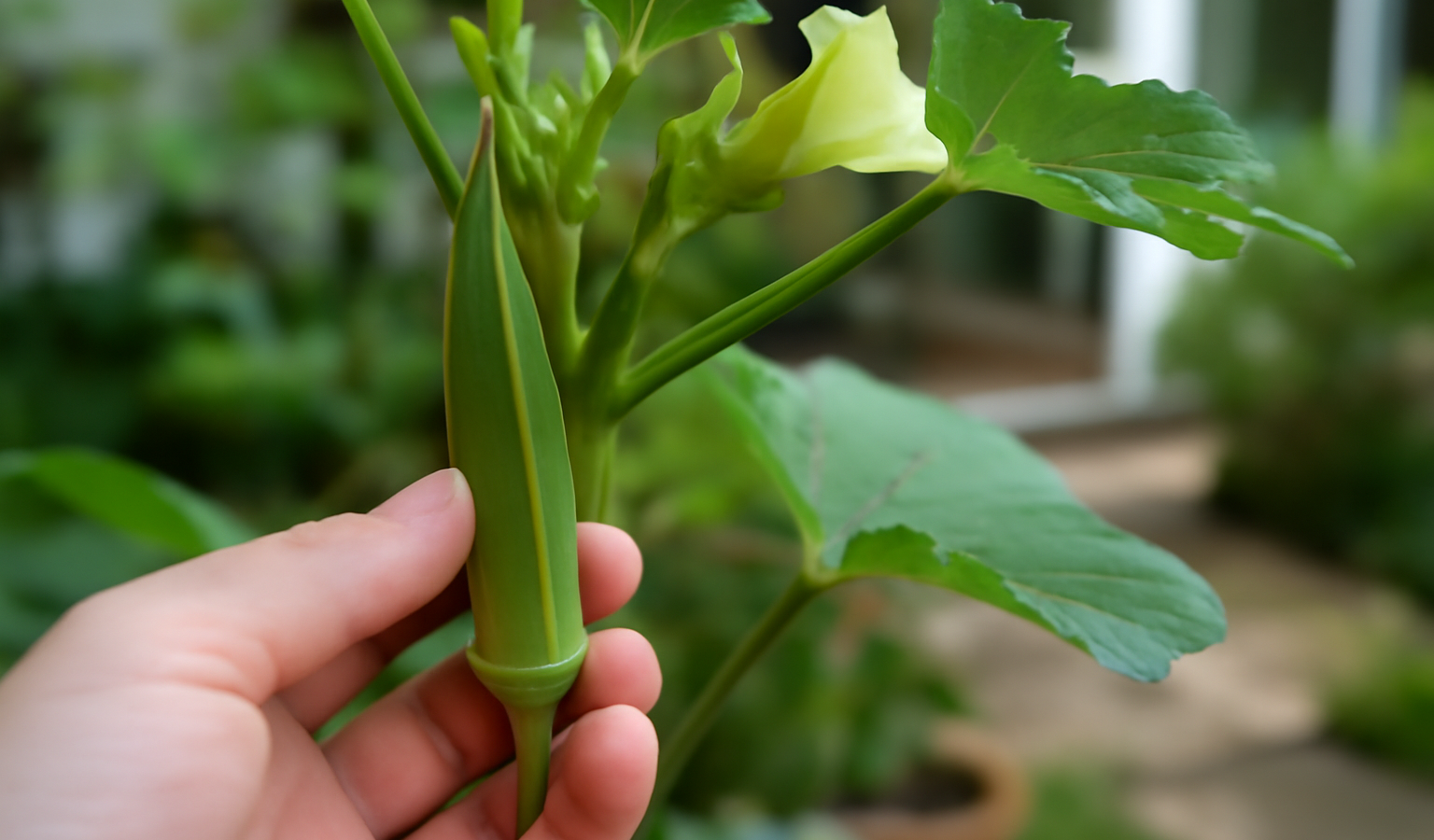
Okra has a reputation as a bulletproof Southern crop, so it’s especially baffling when your plants grow into tall, leafy, healthy-looking towers and produce barely a pod — or flower beautifully and then drop those blossoms without setting fruit. Okra is a warm-season member of the hibiscus family, and it is genuinely easy to grow once a few conditions line up. When it refuses to produce, the cause almost always traces back to one of four things: the flowers aren’t getting pollinated, the plants are crowded or stressed, the weather is too cool, or the planting was simply too early or too late for your season.
The encouraging part is that okra responds fast once you correct the problem. A plant sulking in cool weather can switch to heavy production within days of a heat wave, and a regular picking routine can turn a stalled plant into a daily producer. This guide breaks down each cause, shows you how to tell which one is affecting your patch, gives you an immediate fix, and lays out how to set the crop up for a heavy harvest next time. Let’s get those pods coming.
Key Takeaways
- Okra needs real heat — soil above 65°F and days in the 80s–90s°F — to flower and set pods.
- Blossom drop usually points to poor pollination or temperature/water stress, not a sick plant.
- Crowded plants and too much nitrogen produce lush leaves at the expense of pods.
- Picking pods every 1–2 days keeps the plant in production; letting pods over-mature shuts it down.
- Plant well after the soil warms and you’ll get weeks of steady harvest in the heat of summer.
Cause 1: Poor Pollination and Blossom Drop
Okra flowers are self-fertile and largely self-pollinating, but that doesn’t make them immune to pollination failure. When a plant flowers freely yet the blossoms wither and fall without leaving a pod behind, something is interrupting fertilization. The most common culprits are temperature extremes — very high heat above the mid-90s°F or an unexpected cool night — which can make pollen sterile or sticky, plus a lack of pollinator activity and water stress that causes the plant to abort flowers it can’t support. Heavy rain at flowering can also wash or clump pollen and reduce set.
How to diagnose it
Watch the flowers. If you’re getting plenty of the pretty pale-yellow, dark-centered blooms but they drop off after a day or two with no tiny pod forming at the base, you have a set problem rather than a flowering problem. Note the weather around the drop: a string of 95°F-plus afternoons, a cold snap, or a stretch where the bed went dry all point to pollination stress. Few bees around the patch is another clue, especially in an isolated or heavily sprayed garden.
How to fix it
Keep moisture steady — deep watering of about an inch per week prevents the stress-driven flower drop, and it’s the single most impactful thing you can do during a heat wave. Because okra is self-fertile, you can hand-pollinate when bees are scarce: in mid-morning, dab the inside of each open flower with a small soft brush or cotton swab, or simply flick the blooms with a finger to dislodge pollen onto the stigma. Avoid spraying insecticides while flowers are open so you don’t drive off the bees that do help. Extreme-heat-driven drop usually corrects itself as soon as temperatures ease back into the 80s.
Cause 2: Crowding, Shade, and Too Much Nitrogen
Okra plants that are jammed too close together, shaded by neighbors, or pumped full of nitrogen will pour their energy into leaves and height instead of pods. This is the “all plant, no fruit” scenario: six-foot-tall, dark-green, beautiful okra that never fills a basket. Crowded plants compete for light and root space, shade slows flowering, and excess nitrogen — from over-feeding or a too-rich bed — actively signals the plant to keep growing foliage rather than reproduce.
How to diagnose it
Look at spacing and vigor. If your plants are closer than about 12 to 18 inches apart, their canopies are touching and shading the lower flower buds, that’s crowding. If the plants are unusually tall and lush with thick, dark foliage but sparse flowering, suspect too much nitrogen — think back to whether you used a high-N lawn-type fertilizer or fresh manure. Also check sun: okra demands full sun, at least 6 to 8 hours, and plants in partial shade flower poorly no matter what else you do.
How to fix it
Give each plant room — thin or space to 12 to 18 inches apart in rows about 3 feet apart so light reaches every flower. If crowding is severe, sacrifice every other plant; the survivors will out-yield the whole crowded row. Cut back on nitrogen and switch to a fertilizer higher in phosphorus and potassium (the second and third numbers, such as a 5-10-10) to encourage flowering and fruiting. If your plants are sited in shade, that’s a next-season fix — move the patch to the sunniest spot you have, because okra simply will not produce well without strong, direct sun.
Cause 3: Weather Too Cool for Okra
Okra is a true heat lover, and cool weather brings it to a dead stop. It originated in hot climates and refuses to flower or grow meaningfully until both soil and air are warm. In a cool spring, a cool summer, or a cold-soil planting, the plants just sit there — small, sulking, and barren — sometimes for weeks. Even established plants will pause production during an unseasonable cool spell and resume only when the heat returns.
How to diagnose it
Check your temperatures. Okra wants soil above 65 to 70°F to even germinate and grow, and it produces best when daytime highs sit in the 80s and 90s°F. If your plants are stunted, slow, and yellowish, and nights are still dipping into the 50s or days struggle to reach the upper 70s, cold is the problem. A telltale sign is a plant that’s been static for weeks then suddenly takes off the moment a heat wave arrives — that confirms it was waiting on warmth all along.
How to fix it
You mostly have to wait for heat, but you can nudge things along. Mulch with black plastic or a dark fabric to warm the soil, and use floating row covers on cool nights to trap daytime heat around young plants (remove them once flowering starts so pollinators can reach the blooms). Site okra against a south-facing wall or fence that radiates stored heat. Long-term, the real fix is timing — don’t plant until the weather is reliably warm, which leads us to the final cause.
Cause 4: Wrong Planting Timing
Planting too early is the most common timing mistake. Gardeners eager to get going sow okra alongside their cool-season crops, the seeds sit in cold soil and rot or barely sprout, and the survivors limp along stunted. Planting too late at the other extreme — in regions with short seasons — means the plants don’t reach productive size before cool fall weather shuts them down again. Either way, the plant never gets a long enough run of heat to do what it does best.
How to diagnose it
Compare your planting date to your last frost and soil temperature. If you sowed okra around your last-frost date when the soil was still cool, it likely went in too early and never thrived. If you’re in a short-season northern area and only set plants out in midsummer, they may simply run out of warm weather. Spotty, weak germination is itself a clue that the soil was too cold when you sowed.
How to fix it
Plant okra two to four weeks after your last frost date, once soil temperatures are reliably 65°F or warmer — okra likes it even hotter than tomatoes. Soaking seeds overnight before sowing speeds germination in warm soil. In short-season climates, start seeds indoors three to four weeks before transplanting, or choose a fast-maturing variety so the plants reach production before fall cools off. Get the timing right and most of the other problems on this list never appear.
Prevention: Keep the Pods Coming
The best preventive measure for low production is also the simplest: pick constantly. Okra pods go from tender to woody fast, and a plant that’s allowed to mature even a few pods reads that as “mission accomplished” and slows or stops flowering. Harvest pods when they’re 2 to 4 inches long and snap easily — that usually means picking every one to two days at the height of summer. Frequent picking keeps the plant in reproductive overdrive and can extend your harvest for many weeks. Wear gloves and long sleeves, as the plants and pods have irritating spines on many varieties.
Pair that with full sun, warm soil, even watering, sensible spacing, and a phosphorus-forward feed, and okra becomes one of the most generous crops in the summer garden. If midsummer heat eventually slows an older planting, you can cut the plants back by about a third to force a fresh flush of growth and pods for fall. Many of these warm-season fundamentals apply across your hottest-loving crops; our guide on warm-season vs cool-season vegetables will help you slot okra into the right window. If you’re also fighting fruit-set issues elsewhere, the pollination advice in why zucchini rots on the vine covers the same flower-to-fruit dynamics, and the timing lessons in why sweet corn isn’t sweet reinforce how much harvest timing matters.
Frequently Asked Questions
Why is my okra flowering but not making pods?
That’s blossom drop, usually caused by temperature extremes (very high heat or a cold snap), water stress, or sparse pollination. Keep the soil evenly moist, avoid spraying open flowers, and hand-pollinate with a brush in mid-morning if bees are scarce. Set typically improves as soon as temperatures settle into the 80s°F.
My okra is tall and leafy with no pods — what’s wrong?
That “all plant, no fruit” look almost always means too much nitrogen, crowding, or shade. Switch to a lower-nitrogen, higher-phosphorus fertilizer, thin plants to 12–18 inches apart so light reaches the buds, and make sure they get 6–8 hours of direct sun.
How warm does it need to be for okra to produce?
Okra needs soil above 65–70°F to grow and produces best with daytime highs in the 80s and 90s°F. In cool weather it stalls completely. Plant 2–4 weeks after your last frost once the soil is reliably warm, and use black mulch or row covers to push soil temperature up in cooler regions.
How often should I pick okra?
Every one to two days during peak summer. Harvest pods at 2–4 inches long while they still snap easily. Letting pods over-mature signals the plant to stop flowering, so frequent picking is the key to a long, heavy harvest.
Can I revive an okra plant that stopped producing in late summer?
Often, yes. Cut the plants back by about one-third, water and lightly feed them, and they’ll usually push out fresh growth and a new flush of pods for fall before frost. This “ratooning” trick works best while the weather is still warm.