

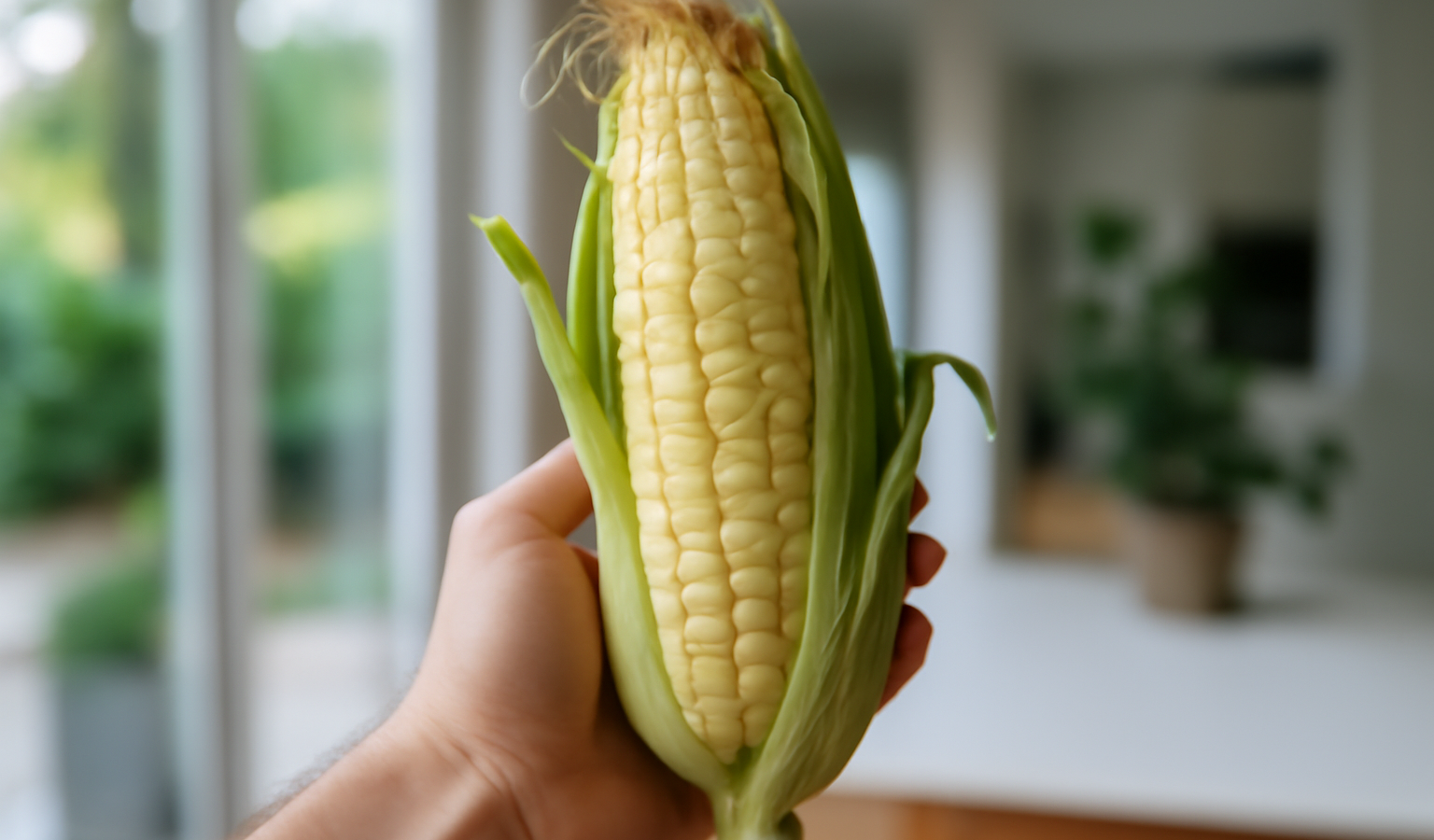
There is a special letdown in shucking an ear of corn you grew yourself, biting in, and tasting… cardboard. Not the explosive sugar you were promised, but something bland, chewy, even starchy. Sweet corn is one of the most rewarding crops a home gardener can grow precisely because fresh-picked sweetness is impossible to buy, yet it is also one of the easiest to get wrong on the eating end. The plants can look textbook-perfect, the ears can fill out beautifully, and the kernels can still disappoint — because corn’s sweetness is governed by genetics, timing, and chemistry that all have to line up at once.
The reasons your corn tastes flat almost always come down to four things: you picked it at the wrong moment, the sugars had already converted to starch before you cooked it, the patch cross-pollinated with the wrong type of corn, or you simply grew a variety that was never very sweet to begin with. Each of these has a clear diagnosis and a concrete fix, and once you understand the sugar-to-starch clock that ticks inside every kernel, you can time everything so your corn hits the table at peak sweetness. This guide walks through each cause and how to nail sweet, tender ears every season.
Key Takeaways
- Pick at the milk stage. Corn is sweetest when a punctured kernel squirts milky juice; clear juice is too early, doughy is too late and starchy.
- Sugar turns to starch fast. After harvest, sugars convert to starch within hours on older varieties — cook or chill ears immediately for peak sweetness.
- Cross-pollination ruins flavor. Sweet corn pollinated by field, pop or ornamental corn turns starchy. Isolate your sweet corn by distance or timing.
- Variety determines the ceiling. Sugary-enhanced (se) and supersweet (sh2) types are far sweeter and hold their sugar longer than old standard (su) corn.
- Harvest about 20 days after silking. Ears are typically ready roughly three weeks after the silks emerge, when silks brown and kernels plump.
Cause 1: You Harvested at the Wrong Time
Sweet corn has a remarkably narrow harvest window — often just a few days — when the kernels are at their peak of sugar and tenderness. This is called the milk stage. Pick too early, before the kernels have filled and built up their sugars, and the corn is watery and bland. Pick too late and the kernels keep maturing on the plant, converting their sugars into starch as they head toward the dry, seed-making stage, so the corn turns tough and starchy. Miss the window in either direction and even a great variety tastes mediocre.
How to diagnose it
Do the kernel test. Peel back a small section of husk and press a thumbnail into a kernel near the middle of the ear. If clear, watery juice comes out, the ear is immature — wait a few more days. If thick, doughy paste or no juice comes out, you are past prime and the sugars have turned to starch. The sweet spot is when the juice is milky white. Bland-but-watery corn means you picked too early; bland-but-chewy-and-starchy corn means you picked too late.
The fix
Time your harvest by the silks. Ears are generally ready about 18–24 days after the silks first emerge, which lines up with the silks turning brown and dry while the husk is still tight and green and the ear feels full and rounded to the tip. Start checking with the kernel test as that window approaches, and check daily, because in warm weather corn can move from perfect to starchy in just two or three days. When in doubt, pick on the early side of milky rather than the late side. Picking in the cool of early morning, when sugar levels are highest, gives you the sweetest possible ear.
Cause 2: The Sugars Converted to Starch After Picking
Here is the chemistry behind the old farmer’s saying that you should put the pot of water on to boil before you go pick the corn. The moment an ear is harvested, the kernels begin converting their sugars into starch, and on older standard varieties this happens shockingly fast — a significant share of the sugar can be lost within a day, and the process speeds up at warm temperatures. So even a perfectly timed harvest tastes flat if the ears sat on the counter for two days, rode home warm in a hot car, or were picked in the afternoon heat. The corn was sweet on the plant; it just did not stay that way.
How to diagnose it
If your kernel test showed milky juice at harvest but the cooked corn still tasted bland, post-harvest sugar loss is your culprit. Ask how long the ears sat, and how warm they were, between the garden and the pot. Corn that was picked midday, left out at room temperature, or stored several days before eating will have shed much of its sweetness regardless of how good it was on the stalk.
The fix
Get the ears cold or cooked as fast as possible. Ideally, cook sweet corn within an hour of picking. If you cannot, plunge the unshucked ears straight into the refrigerator or an ice-water bath, because cold dramatically slows the sugar-to-starch conversion and preserves sweetness for a day or two. Pick in the cool of the morning rather than the afternoon, keep the ears shaded and cool on the way inside, and never let harvested corn sit warm on the counter. If post-harvest holding matters to you — for sharing or selling — grow a sugary-enhanced or supersweet variety (see Cause 4), which hold their sugar far longer than standard corn.
Cause 3: Cross-Pollination Spoiled the Sweetness
Corn is wind-pollinated, and the type of pollen that fertilizes your sweet corn directly affects the kernels you eat that same season — a quirk called xenia. If your sweet corn is pollinated by field corn, popcorn, ornamental “Indian” corn, or even a different sweetness class of sweet corn, the resulting kernels can turn starchy, tough and bland instead of sweet. This is one of the sneakiest causes because the plants look completely normal; the damage is invisible until you taste it. A neighbor’s field corn a few hundred feet away, or two different corn types planted side by side in the same garden, is enough to do it.
How to diagnose it
Think about what else was tasseling nearby when your sweet corn was silking. Did you grow more than one corn variety, or popcorn, or ornamental corn? Is there a farm field or a neighbor’s corn patch upwind within a few hundred feet? Cross-pollination is especially likely if you grew a supersweet (sh2) variety next to standard or sugary-enhanced corn — mixing those classes makes both starchy. Patchy, randomly starchy kernels on otherwise normal ears are a classic xenia signature.
The fix
Isolate your sweet corn from incompatible corn by distance or by timing. The reliable approach for a home garden is to grow only one type of corn, or to stagger plantings so that different types tassel and silk at least two weeks apart and their pollen never overlaps. If you must grow types simultaneously, separate them by as much distance as you can — ideally a few hundred feet, with a tall barrier crop or a building between them helps. Supersweet (sh2) varieties in particular must be isolated from all other corn classes to taste right. Plant sweet corn in blocks of at least four short rows rather than one long row, which also improves pollination so ears fill completely.
Choosing the right type up front prevents most of these problems — our guide to hybrid versus heirloom seeds explains why corn is a crop where modern hybrids genuinely earn their keep.
Cause 4: You Grew a Variety That Was Never Very Sweet
Not all sweet corn is created equal, and the variety you choose sets the ceiling on how sweet your corn can ever be. There are three broad classes. Standard or “normal sugary” (su) types are the old-fashioned corns — pleasant, classic corn flavor, but moderate sweetness that converts to starch within hours of picking. Sugary-enhanced (se) types are noticeably sweeter and more tender, and hold their sugar a day or two. Supersweet (sh2) types are the sweetest of all and stay sweet for days, though the kernels are a bit crisper and the seed is finickier to germinate. If you planted a standard su variety, or saved seed from a hybrid, modest sweetness may simply be what you signed up for.
How to diagnose it
Check what you planted. Look up the variety name on the seed packet and find its sweetness class — su, se, or sh2. If it is an older standard type, or an heirloom, the corn was bred for traditional corn flavor rather than intense sweetness, and that is exactly what you will taste even with perfect timing. Likewise, if you saved seed from a hybrid and grew it out, the offspring will not come true and often taste starchy and uneven.
The fix
Choose your variety for the sweetness you want. For dependable, forgiving sweetness and tenderness, sugary-enhanced (se) varieties such as ‘Bodacious’ or ‘Ambrosia’ are an excellent all-round home-garden choice. For maximum, candy-like sweetness that holds for days, grow a supersweet (sh2) type like ‘Honey Select’ — just remember to isolate it from other corn and plant it in warm soil, since sh2 seed rots easily in cold ground. Always buy fresh hybrid seed each year rather than saving your own, and read the packet for the sweetness class so you know what you are getting before it ever reaches the kitchen.
Prevention: A Sweet Harvest Every Time
Sweet corn rewards a little planning. Start by choosing a sugary-enhanced or supersweet variety so the genetic sweetness is there to begin with, and plant it in a warm-soil block of at least four short rows for good pollination. Isolate it from field, pop, ornamental or other-class sweet corn by distance or by staggering planting dates two weeks apart so cross-pollination never ruins the kernels. As silking finishes, count forward about three weeks and start the thumbnail kernel test daily, harvesting the moment the juice runs milky. Then move fast: pick in the cool morning and cook within the hour, or chill the ears immediately to lock in the sugar. Do all four — right variety, no cross-pollination, milk-stage harvest, instant cooling — and your homegrown corn will taste the way sweet corn is supposed to. For more on getting the most from your warm-season patch, see the Plants & Flowers section.
Frequently Asked Questions
How do I know exactly when sweet corn is ready to pick?
About three weeks after the silks emerge, the silks turn brown and dry and the husk feels full and rounded to the tip. Confirm with the kernel test: puncture a kernel and look for milky white juice. Clear juice means wait; doughy juice means you are too late.
Why did my corn taste starchy even though I picked it on time?
The sugars likely converted to starch after harvest. On standard varieties this happens within hours, especially in warm weather. Cook the ears within an hour of picking, or chill them immediately, and consider growing a sugary-enhanced or supersweet variety that holds its sugar longer.
Can my corn cross-pollinate with my neighbor’s field corn?
Yes. Corn is wind-pollinated and pollen can travel a few hundred feet, and pollen from field, pop or ornamental corn turns your sweet kernels starchy in the same season. Isolate by distance or stagger planting so your sweet corn silks at a different time than nearby corn.
What is the sweetest type of corn to grow?
Supersweet (sh2) varieties are the sweetest and hold their sugar for days, though they need warm soil to germinate and must be isolated from other corn. Sugary-enhanced (se) types are a slightly less sweet but more forgiving and tender choice for most home gardens.
Does picking corn in the morning really make it sweeter?
Yes, modestly. Sugar levels in the kernels are highest in the cool of the morning and the ears are cooler, which slows the sugar-to-starch conversion after picking. Harvesting in the morning and cooling or cooking the ears quickly gives you the sweetest result.