

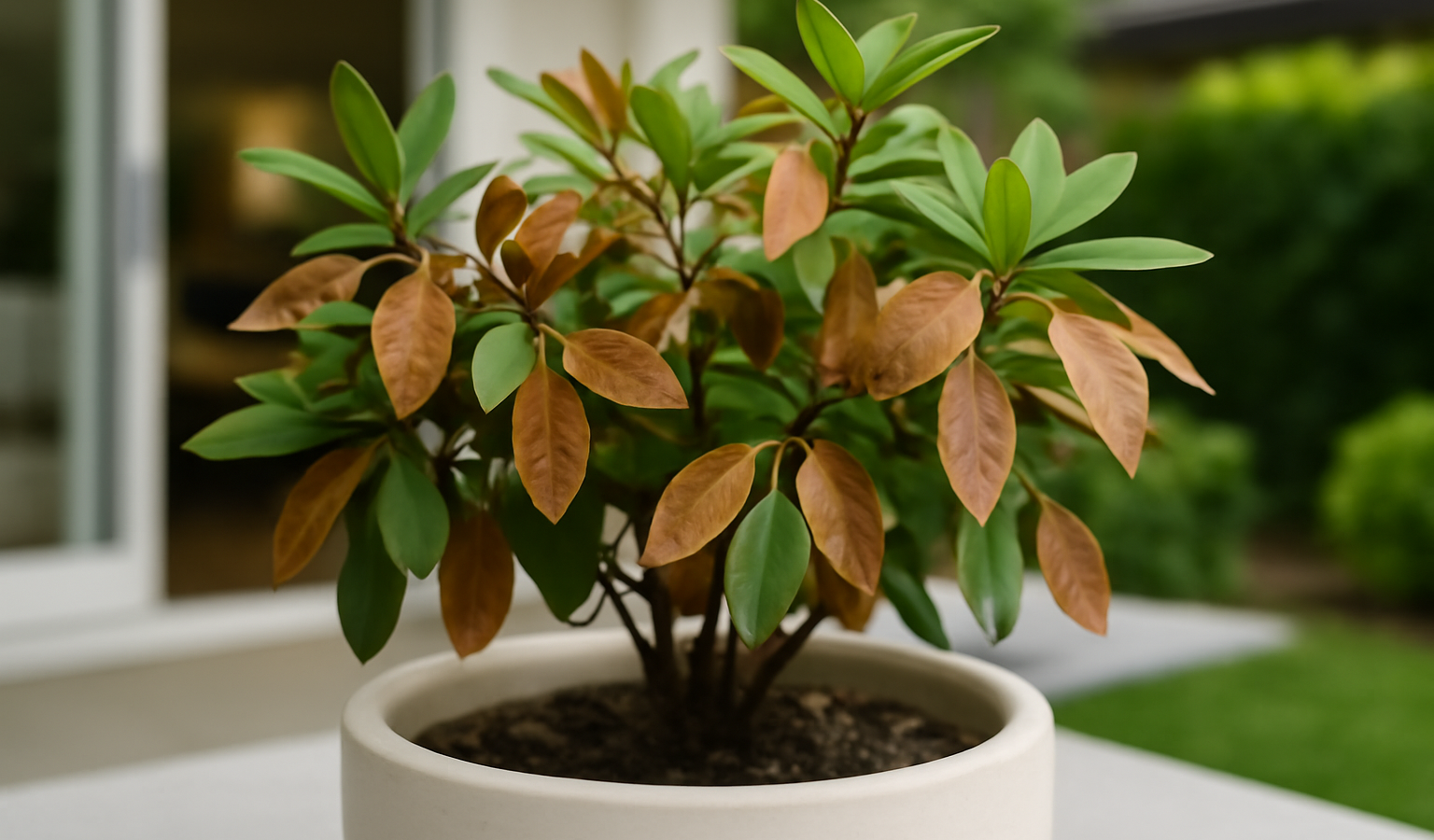
Azaleas earn their place in the spring garden with a few weeks of breathtaking color, but for the rest of the year they are evergreen or semi-evergreen shrubs whose foliage you actually have to look at. So when those leaves start turning brown, stippling, scorching at the edges, or browning wholesale, it stands out, and it usually means something is wrong at the roots, in the canopy, or among the pests. Brown leaves are a symptom with many possible causes, and the trick is to read the pattern of the browning, because where and how the leaves brown tells you which problem you are dealing with.
Azaleas are shallow-rooted, acid-loving plants with specific needs, and brown foliage is most often the result of those needs going unmet: too little water, too much sun, suffocated roots, or sap-sucking insects. This guide breaks down the five most common reasons azalea leaves turn brown, how to diagnose each by its distinctive signature, and the corrective steps for each. Work through them in order and you will usually find the answer, then be able to stop the damage and keep new growth healthy.
Key Takeaways
- Fine pale or silvery stippling on upper leaves with black specks underneath means azalea lace bugs.
- Brown, crispy leaf edges and tips usually signal drought stress in these shallow-rooted shrubs.
- Bleached, brown patches on the sun-facing side point to sunscald from too much hot afternoon light.
- Overall wilting, browning, and dieback despite moist soil suggests root rot from poor drainage.
- Brown, dry foliage appearing in late winter on exposed plants is winter burn from cold wind and frozen soil.
Cause 1: Azalea Lace Bugs
Lace bugs are the single most common pest of azaleas and a leading cause of unhealthy-looking foliage. These small insects feed on the undersides of the leaves, piercing the cells and draining their contents, which destroys the green pigment and leaves a characteristic pale, mottled, or silvery stippling on the upper surface. Left unchecked through a season, the damage spreads until leaves look bleached, gray-brown, and unsightly, and heavily infested plants weaken noticeably. Lace bugs are worst on azaleas growing in too much sun, which is part of why a sun-stressed plant often suffers multiple problems at once.
How to diagnose it
Turn a damaged leaf over. The unmistakable sign of lace bugs is the underside: it will be peppered with tiny shiny black or brown specks of excrement, and you may see the small lacy-winged adults or their darker, spiny nymphs. The upper surface shows the fine pale stippling, almost like the green has been sandblasted away in tiny dots, rather than solid brown patches. This stippling-plus-black-specks combination is diagnostic and separates lace bug damage from drought, sun, or disease.
How to fix it
Catch lace bugs early, when nymphs first appear in spring, for the easiest control. Spray insecticidal soap or horticultural oil thoroughly on the leaf undersides where the insects live, repeating per the label since several generations hatch through the season. Strong populations may warrant a systemic insecticide applied per directions. Just as importantly, address the conditions: moving or shading a sun-baked azalea reduces lace bug pressure dramatically, and keeping the plant well watered and vigorous helps it shrug off feeding. Damaged leaves will not turn green again, but new growth will be clean once the pests are controlled.
Cause 2: Drought Stress and Underwatering
Azaleas have shallow, fibrous root systems that sit in the top few inches of soil and dry out quickly. When they do not get enough water, the leaves respond by browning and crisping at the tips and margins first, then more extensively as the stress deepens. Because the roots are so shallow, azaleas suffer drought faster than deeper-rooted shrubs, and a plant near a foundation, under an overhang, or competing with tree roots can go critically dry even when the rest of the garden seems fine.
How to diagnose it
The pattern is brown, dry, papery edges and tips on the leaves, often with the whole leaf curling or the plant looking limp and dull in the heat of the day. Push a finger or trowel into the root zone: if the top few inches are dry and crumbly, drought is your answer. Recent hot, dry, windy weather without supplemental watering, or a plant in a notoriously dry spot, reinforces the diagnosis. Unlike lace bug stippling or solid sunscald patches, drought browning concentrates at the leaf margins and works inward.
How to fix it
Water deeply and regularly. During dry spells, give the plant a slow, thorough soaking once or twice a week so moisture penetrates the whole shallow root zone rather than a daily splash that only wets the surface. A two to three inch layer of organic mulch over the roots, kept off the stems, is the single most effective thing you can do for an azalea: it conserves moisture, moderates soil temperature, and protects the shallow roots. For plants under eaves or fighting tree roots, assume they get little natural water and irrigate on a schedule.
Cause 3: Sunscald and Too Much Sun
Most azaleas are woodland understory plants that prefer dappled or morning sun with protection from harsh afternoon rays. Planted in full, hot sun, especially in warmer regions, the foliage scorches. Sunscald shows up as bleached, tan, or brown patches on the most exposed leaves and the sun-facing side of the plant, where intense light and heat literally burn the leaf tissue. Sun stress also makes azaleas far more attractive to lace bugs, so a sunburned azalea is frequently a buggy one too.
How to diagnose it
Look at where the browning is. Sunscald concentrates on the side and top of the plant that takes the most direct afternoon sun, while shaded interior and lower leaves stay green. The damaged areas are irregular bleached-to-brown patches in the middle of the leaf or across the exposed surface, not confined to the margins like drought and not stippled like lace bugs. If your azalea sits in full afternoon sun in a hot climate, sunscald is a strong candidate.
How to fix it
The real fix is light. If feasible, transplant the azalea, in fall or early spring while it is not stressed by heat, to a spot with morning sun and afternoon shade or dappled light all day. Where moving is not practical, create shade with a taller companion shrub, a small tree, or temporary shade cloth during the hottest months. Mulching and consistent watering help the plant tolerate more sun than it otherwise could, but the long-term answer for a chronically scorched azalea is reducing the afternoon sun it receives.
Cause 4: Root Rot and Poor Drainage
Azaleas need moist but well-drained, acidic soil. When they sit in soggy ground, whether from heavy clay, a low spot, or overwatering, the roots cannot get oxygen and begin to die, often aided by water-mold pathogens like Phytophthora that thrive in saturated soil. As the roots fail, they can no longer supply the leaves, which wilt, brown, and die back even though the soil is wet, a confusing symptom that fools many growers into watering more and making it worse. Root rot can kill an azalea, so it is the most serious cause on this list.
How to diagnose it
The tell is browning and dieback combined with consistently wet soil. The plant wilts and the leaves brown, often dulling to a grayish-green first, yet the ground is damp or soggy rather than dry. Branches may die back progressively. Check the site: heavy clay, a low spot that collects runoff, or a habit of frequent watering all point to drainage problems. If you dig near the roots and find dark, mushy, foul-smelling roots instead of firm pale ones, root rot is confirmed.
How to fix it
Improve drainage immediately and stop overwatering. Let the soil dry appropriately between waterings rather than keeping it constantly wet. For a plant in chronically soggy ground, the durable fix is to replant it higher, on a mound or raised bed amended with coarse organic matter and pine bark fines so excess water drains away from the crown. Azaleas should always be planted high, with the top of the root ball slightly above grade. A badly rotted plant may not recover, but catching it early and drying out the root zone gives it a fighting chance. Choosing the right bed and soil from the start prevents recurrence; our comparison of a raised bed vs in-ground garden covers drainage trade-offs.
Cause 5: Winter Burn and Cold Damage
Evergreen azaleas hold their leaves through winter, and in cold, windy climates those leaves can desiccate and brown over the winter and early spring. The mechanism is winter desiccation: cold, dry winter wind pulls moisture from the leaves while the soil is frozen and the roots cannot replace it, so the foliage dries out and turns brown. Exposed plants and those that went into winter dry are most affected. Severe cold can also outright injure tissue. This damage typically becomes obvious in late winter or as spring arrives.
How to diagnose it
Timing and exposure are the clues. Browning that appears over winter or shows up clearly in early spring, concentrated on the windward and most exposed side of the plant, signals winter burn. The leaves are dry, brown, and often curled, and the damage is worst where the plant faces open sky and prevailing winter wind, while sheltered portions stay greener. It is easy to confuse with drought, but the season, late winter rather than summer, distinguishes it.
How to fix it
For damage that has already occurred, wait until spring growth resumes before judging the extent; many burned plants push new leaves and recover, and you can then prune out any branches that stay dead. To prevent it, water azaleas well in fall right up until the ground freezes so they enter winter fully hydrated, and mulch deeply to insulate the roots. Site evergreen azaleas out of the harshest winter wind, and in exposed spots erect a burlap windbreak or screen for the coldest months. An anti-desiccant spray applied in late fall can reduce moisture loss on particularly exposed plants.
Preventing Brown Azalea Leaves
Almost every cause of azalea browning traces back to siting and soil. Plant azaleas in dappled or morning sun with afternoon shade, in acidic, organic-rich, well-drained soil, set high so the crown never sits wet, and out of the worst winter wind. Mulch every year with two to three inches of pine bark or pine straw to protect the shallow roots, conserve moisture, and moderate temperature. Water deeply during dry spells and again in fall before the ground freezes. Get those fundamentals right and the plant resists the whole spectrum of browning problems.
When browning does appear, read the pattern before reaching for a cure: stippling with black specks underneath means lace bugs, crispy margins mean drought, bleached patches on the sunny side mean sunscald, wilt-and-dieback in wet soil means root rot, and late-winter browning on exposed foliage means winter burn. Match the fix to the cause and avoid the common mistake of watering a root-rotted plant even more. For broader guidance on growing healthy flowering shrubs, browse the Plants & Flowers hub, and if your azalea also struggles to flower, the same light and stress issues often apply, as covered in our piece on why a rose is not blooming.
Frequently Asked Questions
How can I tell lace bug damage from sunscald on my azalea?
Lace bug damage is a fine pale or silvery stippling on the upper leaf surface with tiny black excrement specks on the underside. Sunscald is irregular bleached-to-brown patches concentrated on the sun-facing, most exposed side of the plant, with no insect specks underneath.
Will brown azalea leaves turn green again?
No, damaged leaves do not recover their color. Once you fix the underlying cause, the new growth will come in healthy and green. You can prune out badly browned branches after new growth confirms what is truly dead versus what will recover.
My azalea leaves are browning but the soil is wet. What is wrong?
Browning and dieback with consistently soggy soil points to root rot from poor drainage. The roots are suffocating and dying, so they cannot supply the leaves. Stop overwatering, improve drainage, and replant high on a mound if the site stays wet.
Why do my azalea leaves brown over the winter?
That is winter burn, or winter desiccation. Cold, dry wind pulls moisture from the evergreen leaves while frozen soil keeps the roots from replacing it. Water well in fall, mulch deeply, and shelter exposed plants with burlap to prevent it.
How much sun do azaleas need to avoid scorching?
Most azaleas prefer morning sun with afternoon shade, or dappled light all day. Full hot afternoon sun, especially in warm climates, scorches the foliage and invites lace bugs. If yours bakes in afternoon sun, move it or shade it during the hottest hours.