

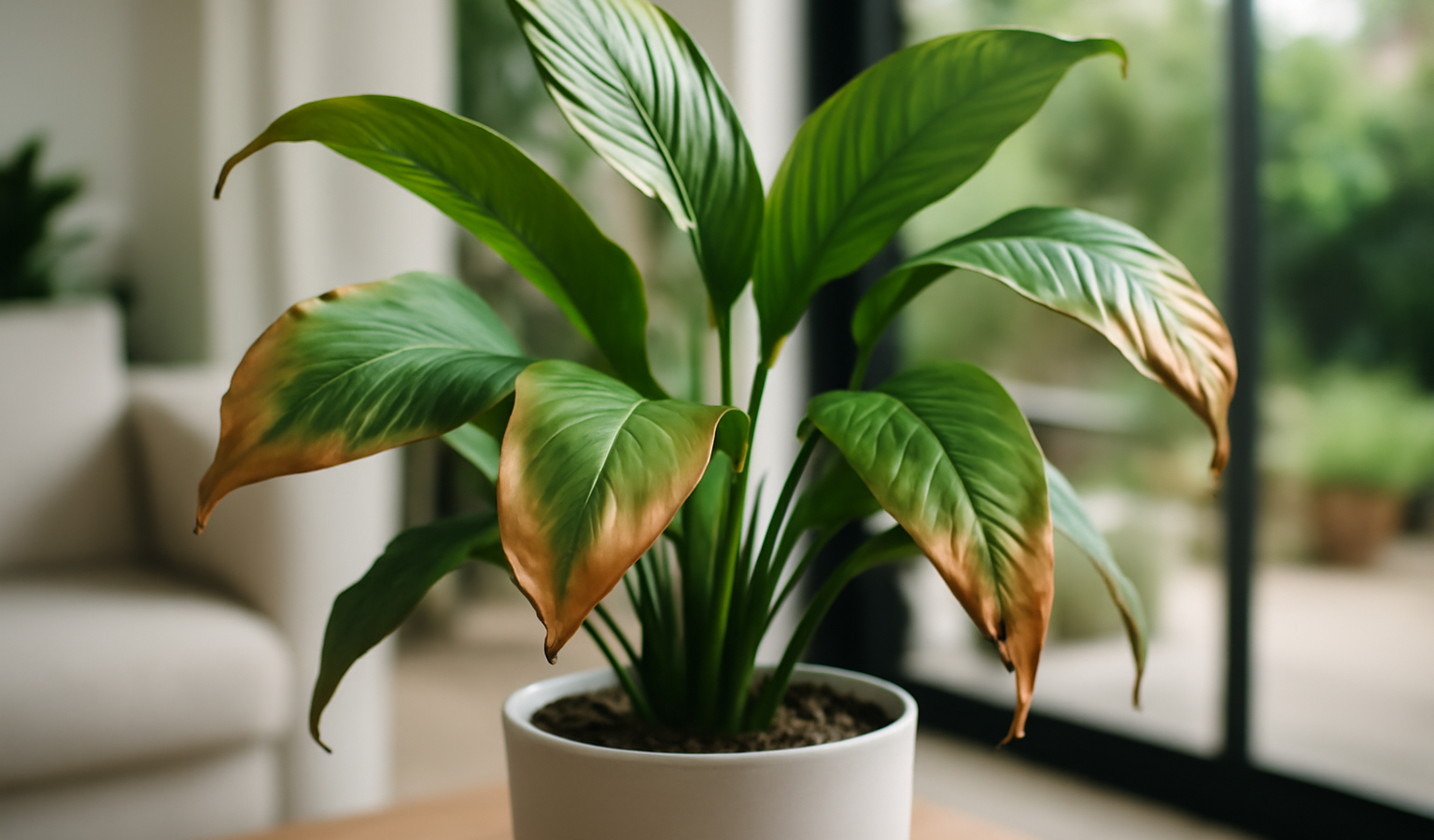
Peace lilies (Spathiphyllum) are among the most forgiving houseplants, but they are also among the most expressive — when something is off, the leaves tell you, usually by turning brown. Where the browning appears is the key to the diagnosis. Crispy brown tips and edges almost always mean a water or humidity problem, often made worse by minerals and fluoride in tap water. Large brown blotches in the middle of a leaf point to sunburn or cold. Widespread browning with yellowing and limpness usually means the roots are in trouble from over- or underwatering. Browning that creeps up from the soil with mushy, smelly roots is rot. This guide walks through every likely cause, shows you how to read the pattern of the browning to tell them apart, and gives you a specific fix for each — plus how to keep the leaves green for good.
Key Takeaways
- The location of the browning is the clue: crispy tips and edges mean water, humidity, or tap-water minerals; central blotches mean sun or cold; overall yellow-brown limpness means a root problem.
- Peace lilies are sensitive to chlorine, fluoride, and salts in tap water — switch to filtered, distilled, or left-out water if tips keep browning.
- They like to dry slightly between waterings but droop dramatically when too dry; water when the top inch is dry and the leaves just begin to flag.
- They are low-light plants — direct sun scorches them. Bright, indirect light is ideal.
- Browning leaf parts will not turn green again; trim them and focus on healthy new growth.
Underwatering and Inconsistent Watering
Peace lilies are thirsty plants relative to many houseplants, and the most common single cause of brown, crispy leaf tips and edges is letting the soil get too dry, too often. Each time the plant dries out hard enough to wilt, a little leaf tissue dies back at the extremities. Repeated cycles of bone-dry and then soaked leave a fringe of brown around otherwise healthy leaves.
How to diagnose it
The tips and outer edges go brown and crispy while the center of the leaf stays green. The plant may droop dramatically between waterings — peace lilies are famous for collapsing flat when thirsty and then springing back within hours of a drink. The soil is dry well below the surface and the pot feels light. If you have been watering only when you remember rather than when the plant needs it, this is almost certainly the culprit.
How to fix it
Water when the top inch of soil is dry — for most peace lilies in a typical pot that lands around once a week, more in summer and less in winter. Water thoroughly until it drains from the bottom, then empty the saucer. Do not wait for the dramatic droop as your watering cue; chronic wilting damages the plant even though it recovers. If the soil has gone so dry it repels water, bottom-water by standing the pot in a basin for 20 to 30 minutes. Trim the crispy edges off with clean scissors, following the natural leaf shape, and new leaves will come in clean.
Overwatering and Root Rot
The flip side is just as damaging. Peace lilies droop when too dry, but people often read that droop as thirst and respond by watering more — even when the soil is already wet. Constantly soggy soil suffocates the roots, which rot, and the plant browns and yellows because the damaged roots can no longer feed the leaves.
How to diagnose it
The browning here is different: leaves yellow first, then turn soft brown, often starting with lower or older leaves, and the plant looks limp and droopy even though the soil is wet. The soil stays damp for many days and may smell sour. The decisive check is to slide the plant out and look: healthy roots are white and firm, while rotted roots are brown or black, mushy, and foul-smelling. A plant that droops with wet soil is overwatered, not thirsty.
How to fix it
- Stop watering and let the soil dry out. If only mild, this may be enough.
- If roots are rotting, unpot, rinse the roots, and cut away every brown, mushy root with clean scissors, keeping only firm white tissue.
- Repot into fresh, well-draining mix (a quality peat- or coir-based houseplant mix with extra perlite) in a pot with drainage holes, sized to the remaining roots.
- Water lightly and resume normal watering only when the top inch dries.
Going forward, always check the soil before watering rather than reacting to a droop. Our guide to reviving a dying houseplant covers root-rot rescue step by step if the plant is badly affected.
Tap Water: Chlorine, Fluoride, and Salt Buildup
Peace lilies are unusually sensitive to chemicals in tap water. Chlorine, fluoride, and dissolved mineral salts accumulate in the soil and in the leaf tissue over time, and the plant pushes them out to the leaf margins where they burn the tissue. This is a leading and frequently overlooked cause of stubborn brown tips that keep coming back no matter how carefully you water.
How to diagnose it
Suspect water quality when the tips and edges brown despite correct, consistent watering and decent humidity. You may also see a white, crusty mineral residue on the soil surface or around the pot rim from accumulated salts, including from fertilizer. Homes on fluoridated municipal water or with water softeners (which add sodium) are especially prone to this.
How to fix it
Switch to filtered water, distilled water, or rainwater. If you must use tap water, leave it out in an open container overnight so some chlorine dissipates — though this does nothing for fluoride or salts, so filtered or distilled is better for sensitive plants. Once or twice a year, flush the pot: run water slowly through the soil for several minutes to leach out accumulated salts, letting it drain fully. Avoid softened water entirely. Trim damaged tips and watch the new growth for improvement.
Low Humidity
Peace lilies are tropical rainforest plants that enjoy humidity well above what most heated or air-conditioned homes provide. In dry indoor air — especially in winter with the heat running — the leaf tips lose moisture faster than the plant can replace it, and they turn brown and crispy.
How to diagnose it
Look for browning that is worst at the very tips, appears or worsens in winter, and affects a plant kept near a heating vent, radiator, or in an otherwise dry room. Watering and water quality check out fine. Other humidity-loving houseplants in the same room showing crispy tips is a confirming clue.
How to fix it
Raise the humidity around the plant. The most reliable method is a small room humidifier. You can also set the pot on a tray of pebbles topped with water (keeping the pot above the waterline, not in it) or group it with other plants so they share transpired moisture. Move it away from heating and cooling vents and out of dry rooms. A steamy bathroom with bright, indirect light is an ideal home for a peace lily.
Too Much Light or Sunburn
Peace lilies thrive in low to medium light and are one of the best plants for a dim room. Put one in direct sun and the leaves scorch. Sunburn shows up differently from the water-related browning above — as large, dry, bleached or brown patches in the middle of the leaf blades, on the side facing the window.
How to diagnose it
Look for broad brown or yellow-brown blotches across the leaf surface rather than a fringe at the edges, often with a faded or pale look, concentrated on the leaves that catch the most direct sun. If the plant sits in a south- or west-facing window getting hours of direct light, that is the cause.
How to fix it
Move the plant out of direct sun to a spot with bright, indirect light — a few feet back from a window, or near an east or north window. The scorched patches will not recover, so trim badly damaged leaves; new growth will come in undamaged. If the room is genuinely dark, the plant will still survive (it just blooms less), so err toward less light rather than more for this species.
Over-Fertilizing
Peace lilies are light feeders, and too much fertilizer burns the roots and leaf margins with excess salts — producing brown tips and edges that look much like the tap-water problem because the mechanism (salt buildup) is the same.
How to diagnose it
Suspect this if you fertilize often or at full strength, especially alongside a white salt crust on the soil. Browning tips that appeared after you started a feeding routine, or that worsen with each feeding, point here.
How to fix it
Cut back sharply. Feed only during spring and summer, with a balanced houseplant fertilizer diluted to half or quarter strength, roughly every six to eight weeks — not every watering. Flush the soil thoroughly with plain water to leach out the excess salts, and skip feeding entirely in fall and winter.
How to Prevent Brown Leaves
Keeping a peace lily green comes down to steady moisture, gentle water, the right light, and a light touch with fertilizer:
- Water consistently. Check the soil and water when the top inch is dry — usually about weekly. Do not let it dry out so hard it wilts, and do not leave it sitting in water.
- Use gentle water. Filtered, distilled, or rainwater avoids the chlorine, fluoride, and salt buildup that browns the tips. Leaving tap water out overnight helps a little.
- Raise the humidity. Aim for moist air with a humidifier or pebble tray, and keep the plant away from heating and cooling vents.
- Give bright, indirect light. Never direct sun. Low to medium light suits this plant; it will tolerate a dim room.
- Feed lightly. Half-strength balanced fertilizer every six to eight weeks in the growing season only.
- Flush the soil with plain water a couple of times a year to clear accumulated salts, and repot every year or two into fresh mix.
Remember that browned tissue never turns green again, so trim it off neatly and judge your fix by the new leaves. For a deeper rescue on a struggling plant, see how to revive a dying houseplant, and explore more easy-care greenery in the Plants & Flowers hub.
Frequently Asked Questions
Should I cut the brown tips off my peace lily?
Yes. Browned tissue is dead and will not turn green again, so trimming it improves the plant’s appearance and removes a site for further dieback. Use clean, sharp scissors and follow the natural pointed shape of the leaf rather than cutting straight across, which looks unnatural. If a whole leaf is mostly brown, remove it at the base. Then fix the underlying cause so new leaves come in clean.
Why are only the tips and edges of my peace lily brown?
Brown tips and edges with a green center almost always point to a water issue: inconsistent or insufficient watering, low humidity, or — very commonly — chlorine, fluoride, and salts in tap water that the plant pushes out to its leaf margins. Over-fertilizing causes the same salt-burn pattern. Water consistently, switch to filtered or distilled water, raise humidity, and feed sparingly.
Can tap water cause brown leaves on a peace lily?
Yes — peace lilies are notably sensitive to chlorine, fluoride, and mineral salts in tap water, which accumulate and burn the leaf tips. If your tips keep browning despite good watering and humidity, switch to filtered, distilled, or rainwater. Leaving tap water out overnight removes some chlorine but not fluoride or salts. Avoid softened water, which adds sodium, entirely.
My peace lily droops and the leaves brown — is it thirsty or overwatered?
Feel the soil. If it is dry and the plant perks up within hours of watering, it was simply thirsty, though chronic wilting still browns the tips. If the soil is wet and the plant still droops and browns, it is overwatered and the roots may be rotting — stop watering, check the roots, and repot if they are mushy. A droop with wet soil means too much water, not too little.
How much light does a peace lily need?
Bright, indirect light is ideal, but peace lilies tolerate low to medium light better than almost any houseplant — which is why they suit dim rooms. They cannot take direct sun, which scorches the leaves into bleached or brown patches. Place yours a few feet from a window or near an east or north window. In a darker spot it will survive and stay green but bloom less.