

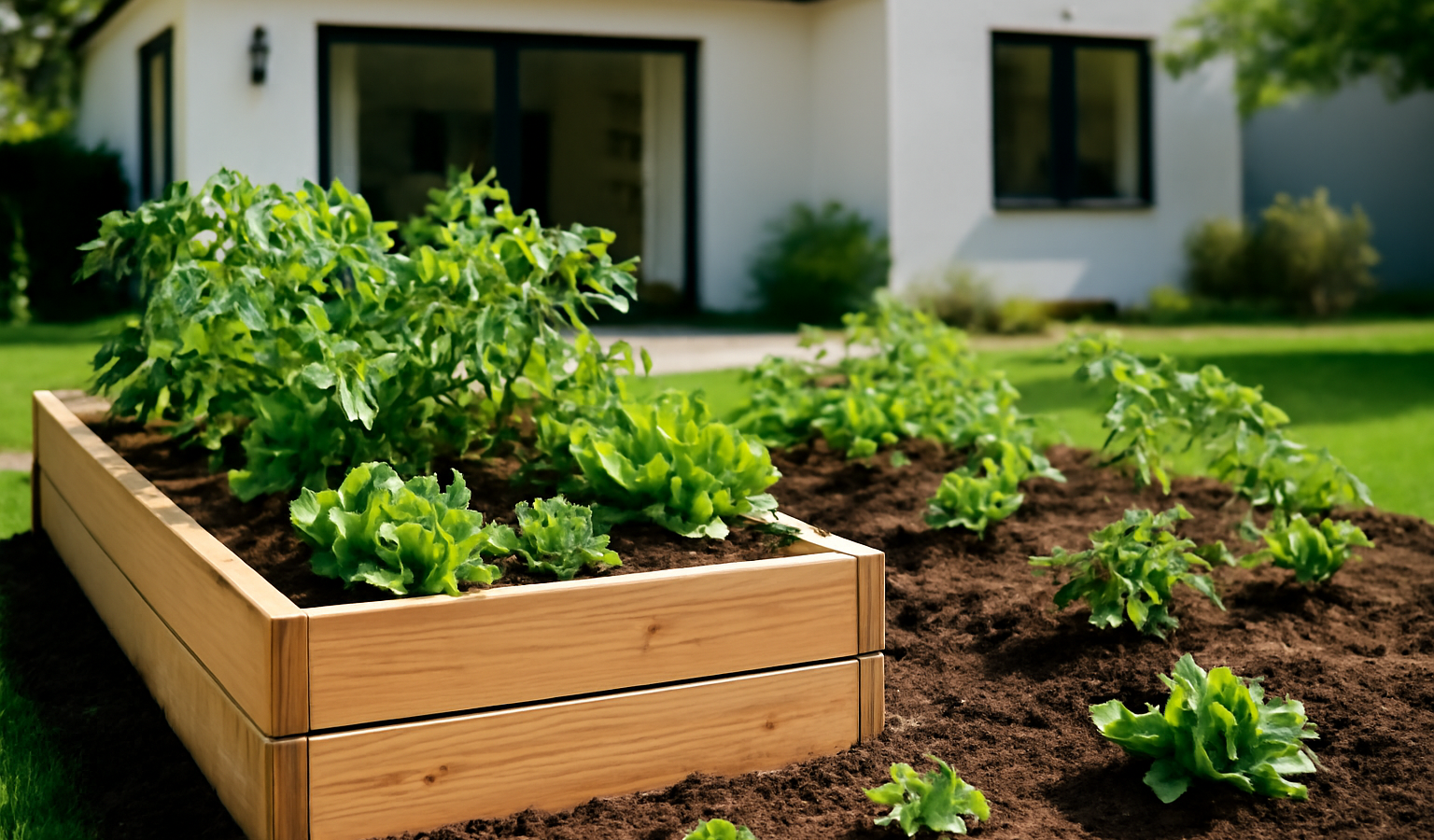
Raised beds and in-ground gardens both grow great vegetables — the right choice comes down to your soil, your budget, your back, and your space. Raised beds give you instant control over soil quality, warm up earlier in spring, drain well, and are easier on your knees and back, which makes them ideal when your native soil is poor, compacted, or contaminated, or when bending is hard. In-ground gardens cost almost nothing to start, hold moisture longer, and scale to any size, which makes them the practical choice for large plots and decent existing soil. If you have heavy clay, bad drainage, or limited mobility, lean raised. If you have good soil and want to garden big and cheap, go in-ground. Many gardeners run both.
Key Takeaways
- Raised beds give instant soil control, better drainage, earlier spring warmth, and easier access — best for poor soil and limited mobility.
- In-ground gardens are nearly free to start, hold moisture longer, and scale to large areas — best for good soil and bigger plots.
- Raised beds cost more upfront (lumber plus soil) but pay off in higher yields per square foot and fewer weeds.
- In-ground beds need less watering and no construction, but depend on your native soil and demand more bending and weeding.
- Choose based on your soil quality, drainage, budget, physical needs, and how much space you have.
Raised Bed vs In-Ground at a Glance
| Factor | Raised Bed | In-Ground Garden |
|---|---|---|
| Upfront cost | Higher (frame + imported soil) | Very low (just tools and seeds) |
| Soil control | Total — you fill it | Limited to native soil + amendments |
| Drainage | Excellent | Depends on soil; clay drains poorly |
| Spring warm-up | Earlier (soil warms faster) | Later |
| Watering frequency | More often (drains/dries faster) | Less often (holds moisture) |
| Weeding & maintenance | Less (fewer weeds, no tilling) | More (weeds, tilling) |
| Physical strain | Lower (less bending) | Higher (ground-level work) |
| Scalability | Limited by build cost | Easily scales to large plots |
| Best for | Poor soil, small space, accessibility | Good soil, large gardens, low budget |
Raised Beds: Control, Comfort, and Quick Wins
A raised bed is a contained frame — wood, metal, stone, or fabric — filled with soil you choose. That single fact, that you control the soil, is the biggest reason gardeners build them. If your yard is heavy clay, sandy and nutrient-poor, rocky, or possibly contaminated near an old house or driveway, a raised bed lets you skip the years of amending and simply fill it with a quality blend. You start with great soil on day one instead of fighting bad soil for a decade.
The benefits stack up from there. Raised beds drain well because excess water moves down and out, which protects roots from the waterlogging that plagues clay-soil gardens. They warm up earlier in spring — the elevated, exposed soil heats faster than cold ground — letting you plant sooner and extend the season. They are easier on your body; a 12 to 24 inch bed (or taller) means far less kneeling and bending, which is a genuine game-changer for older gardeners or anyone with back or knee problems. Because you are not walking on the soil, it never compacts, so roots grow freely and you rarely need to till. And the defined edges mean fewer weeds creeping in and easier intensive planting, which is why raised beds pair so well with high-yield methods. To get the most out of the space, read our guide on square foot vs row gardening.
The Costs and Catches
Raised beds are not free. You pay for the frame material and, more significantly, for enough soil to fill it — a few 4×8 beds can mean cubic yards of purchased soil and compost. They also dry out and need watering more often precisely because they drain so well, which makes drip irrigation almost essential in hot climates. The materials matter, too: untreated softwood rots in a few years, cedar and metal last far longer, and your choice affects both cost and longevity. Our comparisons of wood vs composite raised beds and galvanized vs cedar can help you build one that lasts.
In-Ground Gardens: Cheap, Big, and Low-Tech
An in-ground garden is the oldest method there is: clear a patch, work the soil, and plant. Its overwhelming advantage is cost. With no frame to build and no soil to import, you can start an in-ground bed for the price of seeds and a shovel. That makes it the obvious choice when you want to garden at scale — a 30 by 50 foot vegetable plot is trivial in-ground and prohibitively expensive to build as raised beds.
In-ground soil also holds moisture longer. Connected to the deep earth, it does not dry out as fast as an elevated bed, so you water less often — a real benefit in hot, dry regions or for gardeners who cannot water daily. Deep-rooted crops can stretch their roots far down into the subsoil for water and minerals. And if your native soil is already good loam, you are starting with a free, fertile, well-balanced growing medium that no bag of imported mix can beat. For many rural and suburban gardeners with decent ground, in-ground is simply the sensible, economical default.
Where In-Ground Struggles
The catch is that you are married to your existing soil. If it is heavy clay, the garden drains poorly and roots rot; if it is sandy, water and nutrients flush away; if it is compacted, roots cannot penetrate. Amending takes years and steady additions of organic matter. In-ground beds also warm slowly in spring, delaying planting; grow more weeds, since open ground invites them; and demand more bending, tilling, and ground-level labor, which is hard on aging knees and backs. The soil compacts wherever you walk, so you need defined paths and beds to protect root zones. None of these are dealbreakers with good soil and a willing body — but they are the price of the low entry cost.
How to Choose: Five Questions
Run your situation through these and the answer usually becomes obvious.
- How is your soil? Poor, compacted, clay, or possibly contaminated → raised beds. Good loam → in-ground works great.
- How is the drainage? Water pools after rain → raised beds solve it. Drains freely already → in-ground is fine.
- How big do you want to garden? Small to medium → raised beds shine. Large plot on a budget → in-ground scales cheaply.
- What is your budget? Willing to invest upfront for convenience → raised. Want to start nearly free → in-ground.
- How is your back and mobility? Bending is hard → raised (or tall) beds. No physical limits → either works.
Notice these often point the same direction. A new gardener with clay soil, a bad back, and a small suburban yard is squarely a raised-bed case. A homeowner with rich loam, a big rural lot, and a tight budget is squarely in-ground. And plenty of people do both: raised beds near the house for salad greens and herbs they tend daily, an in-ground plot out back for sprawling crops like corn, squash, and potatoes.
Setting Up for Success Either Way
- Raised bed soil: fill with a blend of quality topsoil, compost, and aeration (a common mix is roughly equal parts topsoil, compost, and coarse material). Top up yearly as it settles.
- In-ground prep: test your soil, then amend with several inches of compost worked in. Build permanent beds and paths so you never compact the growing soil.
- Sun: both need 6 to 8 hours of direct sun for most vegetables. Site them in the open, away from tree roots and shade.
- Water smart: raised beds usually want drip or soaker lines because they dry faster; in-ground beds need less frequent but deeper watering.
- Mulch both: a 2 to 3 inch mulch layer cuts watering, blocks weeds, and steadies soil temperature in either system.
The Verdict
Choose raised beds when your soil is the problem or your body needs the help: poor, compacted, clay, or contaminated ground, bad drainage, a small space you want to plant intensively, or knees and a back that protest at ground-level work. You will pay more upfront but get great soil instantly, earlier harvests, fewer weeds, and higher yields per square foot. Choose an in-ground garden when you have decent soil and want to grow big without spending big: it is nearly free to start, holds moisture, and scales to any size your space allows. There is no universal winner — only the method that fits your soil, budget, space, and physical needs. For many gardeners, the best answer is to use both, putting each where it does its best work.
Frequently Asked Questions
Are raised beds better than in-ground gardens?
Not universally. Raised beds are better when your native soil is poor, compacted, or poorly drained, when space is limited, or when bending is hard. In-ground gardens are better when you have good soil, want to garden at large scale, and prefer a near-zero startup cost.
Do raised beds need more watering?
Yes. Because raised beds drain and dry faster than connected ground soil, they typically need more frequent watering, especially in hot weather. Many gardeners add drip or soaker irrigation and a layer of mulch to reduce how often they have to water.
Are raised beds more productive than in-ground gardens?
Often, per square foot. Loose, fertile, well-drained soil and intensive planting let raised beds produce high yields in small areas. In-ground gardens can match or exceed total output simply by being larger and cheaper to expand.
How deep should a raised bed be?
For most vegetables, 10 to 12 inches of good soil is enough, and deeper is fine. Taller beds of 18 to 24 inches reduce bending and suit gardeners with limited mobility, but they require more soil to fill and cost more to build.
Can I put a raised bed over poor or contaminated soil?
Yes — that is a key advantage. A raised bed lets you grow in clean, imported soil regardless of what is underneath. For potentially contaminated ground, build a deeper bed and lay a barrier at the base so roots stay in the fresh soil you added.