

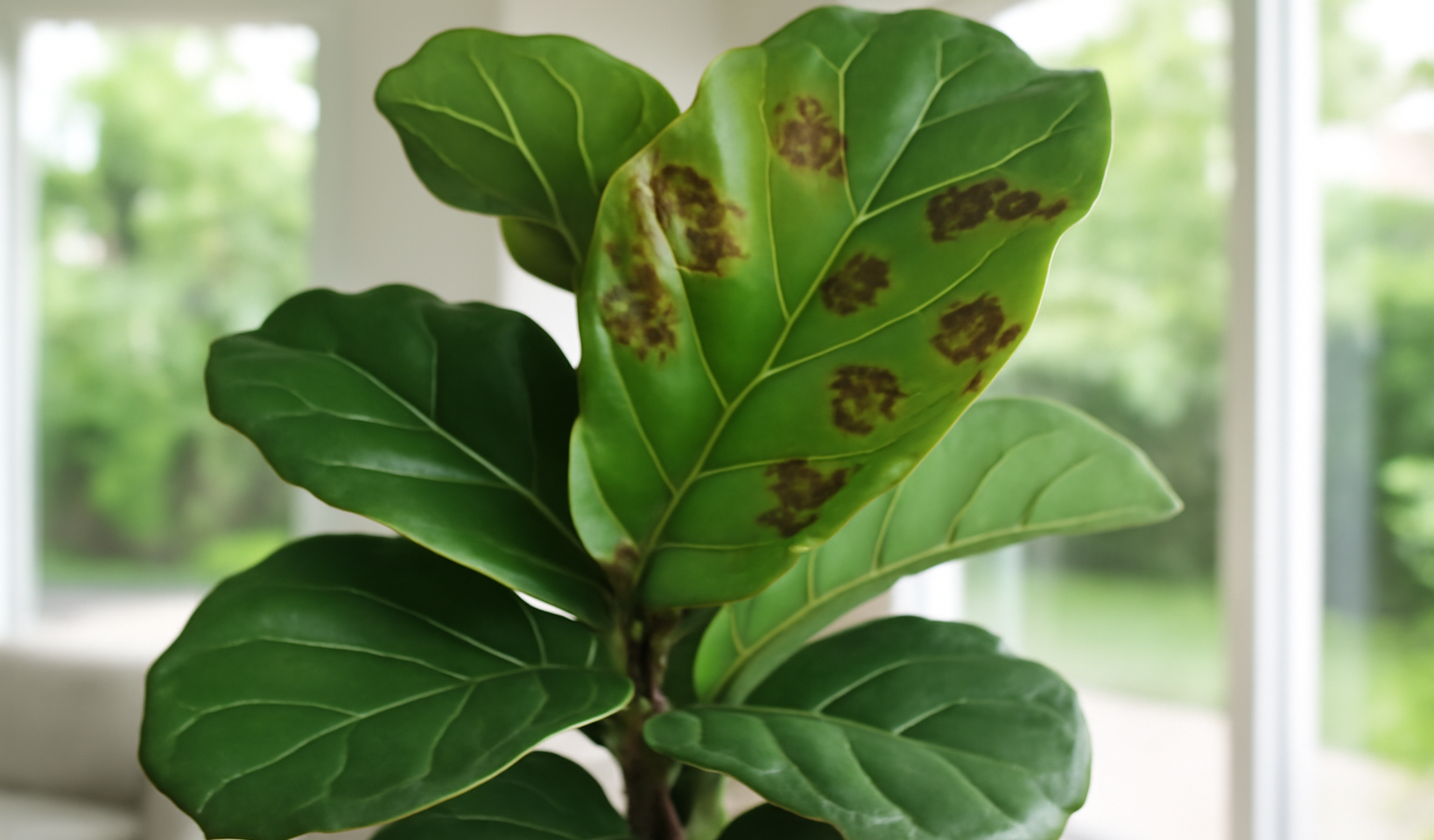
Brown spots on a fiddle leaf fig are almost always a watering or environment problem, and the single most useful skill you can develop is reading where the spots sit on the plant and what they look like up close. A dark, mushy spot near the base of a lower leaf tells a completely different story than a crispy tan patch on the leaf facing your window. Same symptom, opposite cures. Get the diagnosis wrong and you can easily make things worse, watering a plant that is already drowning or moving a plant that just needed to be left alone. So before you do anything, slow down and look. Pull the plant into good light, turn it, and inspect both the affected leaves and the soil. Once you can match the appearance and position of the spots to a cause, the fix is usually straightforward. This guide walks through the six causes that account for nearly every case, with a clear diagnose-then-fix breakdown for each, plus a quick reference so you can tell them apart at a glance.
Key Takeaways
- Dark brown or black mushy spots near the center or base of lower leaves, paired with soggy soil, mean root rot from overwatering. This is the most common cause by far.
- Brown spots ringed with yellow that start at leaf edges and hit new growth are likely bacterial leaf spot, which spreads fast and is the hardest to treat.
- Light tan, dry, crispy spots and curling leaves with bone-dry soil mean underwatering, not too much water.
- Bleached tan-brown patches only on leaves facing the window are sunburn; brown crispy edges and tips usually mean low humidity or cold drafts.
- Reading spot location, color, and texture is how you tell these apart. Consistent watering, bright indirect light, and a stable warm spot prevent most of them.
Root Rot From Overwatering
This is the cause to rule out first, because it is the most common and the most dangerous. Fiddle leaf figs hate sitting in wet soil, and chronically soggy roots suffocate, die back, and rot. The damage then shows up in the leaves as brown spots, but the real problem is happening underground.
Diagnose
Look for dark brown to nearly black spots that start near the center or base of the leaf and spread outward, or that creep inward from the edges. The spots are often mushy or soft rather than dry and brittle. They typically show up on multiple lower leaves first, the oldest growth nearest the soil. The two giveaways that confirm it: the soil feels wet or soggy days after you last watered, and leaves are dropping, sometimes still green, sometimes browning at the base before they fall. If you smell a sour or musty odor at the soil line, that is rot. To be certain, slide the plant out of its pot and look at the roots. Healthy roots are firm and pale or tan; rotted roots are brown to black, slimy, and pull apart easily.
Fix
Unpot the plant and inspect the root ball. With clean, sharp scissors or shears, cut away every black, mushy root back to firm, healthy tissue. Rinse the remaining roots gently to clear old soggy soil. Repot into a fresh, fast-draining mix: a quality indoor potting soil cut with a generous handful of perlite or orchid bark to keep it from compacting and holding water. The pot must have a working drainage hole. Going forward, water only when the top two inches of soil are dry to the touch, then water thoroughly until it runs out the bottom and empty the saucer. Never let the pot stand in water. A plant recovering from root rot will be slow for a while, so resist the urge to fertilize or fuss over it until you see new growth. If you want a deeper reference on getting watering right across your collection, our guide on why a houseplant stalls and stops growing covers the same soggy-soil dynamics from another angle.
Bacterial Leaf Spot
Bacterial leaf spot is the cause people most often confuse with root rot, and getting the two mixed up wastes precious time. Bacteria thrive in the same wet conditions that cause rot, so the plant can have both at once, but the leaf symptoms differ in ways you can learn to spot.
Diagnose
The clearest tell is yellowing around the brown spots. Bacterial spots are irregular in shape, often start at the leaf edges and tips, and spread inward, and the tissue around each spot turns yellow before the whole leaf yellows and drops. The second tell is that bacterial leaf spot attacks new growth. Root rot picks off old lower leaves; bacterial infection will brown and deform fresh young leaves at the top of the plant. Leaves often yellow and fall fast, within days. Contrast that with root rot, where the spots are darker, more centered or basal, mushy, and concentrated on older leaves with far less surrounding yellow. If you see lots of yellow halos and your newest leaves are going down, treat it as bacterial.
Fix
Bacterial leaf spot is harder to cure than the other causes, so act decisively. Isolate the plant away from your other houseplants immediately, since it can spread. Remove every affected leaf with sterilized scissors, wiping the blades with alcohol between cuts so you do not carry bacteria from leaf to leaf. Repot into fresh, sterile, well-draining soil and discard the old soil; do not reuse it. Cut watering back so leaves and soil dry out faster, because moisture fuels the infection, and avoid getting water on the foliage. Improve air circulation around the plant. If the infection is advanced and most leaves are involved, your best move is often to take a few cuttings from any clearly healthy growth and propagate them, treating the original plant as a loss rather than risking your whole collection. There is no reliable home chemical cure, so prevention and sanitation do the heavy lifting here.
Underwatering and Dry Roots
The mirror image of root rot, underwatering produces brown spots too, but they look and feel entirely different. A thirsty fiddle leaf fig cannot move water and nutrients to its leaf tissue, so cells at the extremities die and dry out.
Diagnose
Look for light tan to brown spots that are dry, crispy, and brittle, often along the edges and tips of leaves rather than the center. The leaves may curl or look limp and dull, and the whole plant can droop. The deciding factor is the soil: it will be bone dry, sometimes pulling away from the sides of the pot, and the pot will feel noticeably light when you lift it. If the spots crumble when you touch them and the soil is dust-dry, this is thirst, not rot. Remember the texture rule: mushy means too much water, crispy means too little.
Fix
Give the plant a deep, thorough watering. If the soil has dried out so completely that water runs straight through without soaking in, bottom-water by setting the pot in a basin of water for twenty to thirty minutes so the root ball rehydrates evenly, then let it drain fully. The real fix, though, is consistency. Set a routine of checking the top two inches of soil with your finger and watering when they are dry, rather than waiting until the plant wilts. Most fiddle leaf figs settle into roughly a once-a-week rhythm indoors, but that varies with pot size, light, and season, so always check the soil rather than the calendar. Existing crispy spots will not heal, but new growth should come in clean once the plant is reliably hydrated.
Sunburn From Too Much Direct Sun
Fiddle leaf figs want bright light, but harsh direct sun through glass will scorch their large leaves. This one is easy to identify because the damage follows the light.
Diagnose
Sunburn shows as bleached, faded tan-to-brown patches, often pale and washed-out looking rather than dark. The decisive clue is location: the damage appears only on the leaves and the leaf surfaces facing the window or the brightest light, usually the upper and outer leaves that catch the most sun. The backs of leaves and anything shaded stays clean. If you trace a line from your sunniest window to the damaged leaves and they line up, it is sunburn. The spots are dry to the touch, not mushy, and the soil moisture is usually fine.
Fix
Move the plant out of harsh direct rays into bright indirect light. A spot a few feet back from a sunny south or west window, or right beside an east-facing window, is ideal. If you cannot relocate it, a sheer curtain diffuses midday sun nicely. Avoid the opposite overcorrection of stuffing it into a dim corner, because a fiddle leaf fig in low light grows leggy and weak and becomes far more prone to the watering problems above. Rotate the plant a quarter turn every week or two so all sides get even light and it grows straight, but otherwise keep it in one stable location.
Dry Air, Low Humidity, and Cold Drafts
As tropical plants, fiddle leaf figs are sensitive to dry indoor air and sudden temperature swings. This cause is common in winter when heating systems run and the air gets parched, and near doors, vents, and AC units year-round.
Diagnose
Look for brown, crispy edges and tips on the leaves, often with the leaf interior staying green and healthy. The browning rims the leaf rather than forming distinct interior spots. Low humidity damage tends to be widespread but mild, showing up across many leaves at once. If the plant sits near a heat vent, a radiator, an air conditioner, an exterior door, or a drafty window, suspect this. Cold drafts can also cause sudden browning and leaf drop after a cold snap or a chilly night by an open window.
Fix
Raise the humidity around the plant to the 40 to 60 percent range it prefers. A small room humidifier is by far the most effective tool; grouping plants together and using a pebble tray help to a lesser degree. Just as important, move the plant away from heat vents, AC outlets, radiators, and drafty doors or windows, and keep it in a stable warm spot between roughly 65 and 75°F, avoiding cold below the mid-50s. For a full walkthrough of raising indoor moisture levels reliably, see our guide on how to increase humidity for houseplants. Trim the crispy edges with clean scissors if you want a tidier look, following the natural leaf shape.
Edema and Erratic Watering
This one is less common and milder, but worth knowing because it confuses people who swear they are watering carefully. Edema happens when a plant takes up water faster than it can use or release it, usually after the soil swings from too dry to suddenly saturated.
Diagnose and Fix
Look for small, scattered dark spots caused by leaf cells rupturing, sometimes with slightly raised or corky bumps on the underside of the leaf. It tends to follow a pattern of letting the plant go bone dry and then drenching it. The fix is simply consistent, moderate watering: water before the soil becomes fully desiccated and avoid the dry-then-flood cycle. Steady moisture in the top couple inches, checked by finger rather than guessed, resolves it. If you have been inconsistent, this and a touch of underwatering damage often appear together.
How to Tell the Causes Apart
When you find a brown spot, run through these three questions before you decide. Where is it, what color is it, and is it mushy or crispy? Here is the quick reference.
- Root rot: dark brown to black, mushy, near the center or base of lower leaves, soggy soil, leaves dropping. The most common cause.
- Bacterial leaf spot: brown with a yellow halo, irregular, starts at edges and tips, hits new growth, leaves yellow and drop fast.
- Underwatering: light tan, dry and crispy, at edges and tips, leaves curl, soil bone dry and pot feels light.
- Sunburn: bleached tan-brown patches, dry, only on upper and outer leaves facing the window.
- Low humidity or cold drafts: brown crispy edges and tips with green centers, widespread and mild, near vents or drafty spots.
- Edema: small scattered dark spots, sometimes corky underside bumps, follows erratic dry-then-soaked watering.
The two you most need to separate are root rot and bacterial leaf spot, since both involve dark spots and wet conditions. Remember: root rot is mushy, basal, on old leaves, with little yellow; bacterial is yellow-haloed, edge-starting, and attacks fresh new leaves quickly.
Preventing Brown Spots for Good
Nearly every cause above traces back to inconsistency, so a stable routine prevents most brown spots before they start.
- Water by checking the soil, not the calendar. Feel the top two inches; water thoroughly when dry, then let the pot drain completely and empty the saucer. This single habit prevents both rot and thirst.
- Use fast-draining soil and a pot with a drainage hole. Cut potting mix with perlite or orchid bark so roots get air and excess water escapes.
- Give it bright indirect light. Plenty of light without harsh midday direct sun keeps growth strong and reduces watering mistakes.
- Keep it in a stable, warm spot. Aim for 65 to 75°F and 40 to 60 percent humidity, away from vents, radiators, AC, and drafts.
- Wipe the leaves and stop moving the plant. Dust the big leaves with a damp cloth so they can photosynthesize, and resist relocating it constantly, since fiddle leaf figs hate change and sulk after every move.
Once the plant is settled and growing again, a light feeding during the growing season supports recovery and new leaves. Our guide on how to fertilize houseplants covers timing and dilution so you do not overdo it on a stressed plant. For more troubleshooting across your collection, browse the Plants & Flowers hub.
Frequently Asked Questions
Should I cut off leaves with brown spots?
Yes, if a leaf is more than about half browned or clearly diseased, remove it with sterilized scissors so the plant can redirect energy to healthy growth. For minor edge browning, you can trim just the dead margin following the leaf shape, or leave the leaf if it is still mostly green and functional.
Will the brown spots spread to other leaves?
It depends on the cause. Bacterial leaf spot spreads readily, so isolate the plant and sanitize your tools. Root rot will keep claiming leaves until you fix the soggy roots. Sunburn, underwatering, and humidity damage do not spread on their own once you correct the underlying condition.
Do brown spots heal or turn green again?
No. Damaged leaf tissue does not recover or turn green again. The goal is to stop new spots from forming. Once you have diagnosed and fixed the cause, watch the new leaves; if they emerge clean and unblemished, your fix is working, even though the old spotted leaves stay marked.
How often should I water my fiddle leaf fig?
There is no fixed schedule. Water when the top two inches of soil are dry, which often works out to roughly once a week indoors but varies with light, pot size, and season. Always check the soil with your finger rather than watering on a set day, since overwatering is the leading cause of brown spots.
How do I know if it is root rot or bacterial leaf spot?
Check three things. Root rot spots are dark, mushy, near the base or center of older lower leaves, with little surrounding yellow and soggy soil. Bacterial leaf spot has yellow halos around the spots, starts at leaf edges, and attacks new growth that yellows and drops fast. If unsure, slide the plant out and inspect the roots; black mushy roots confirm rot.