

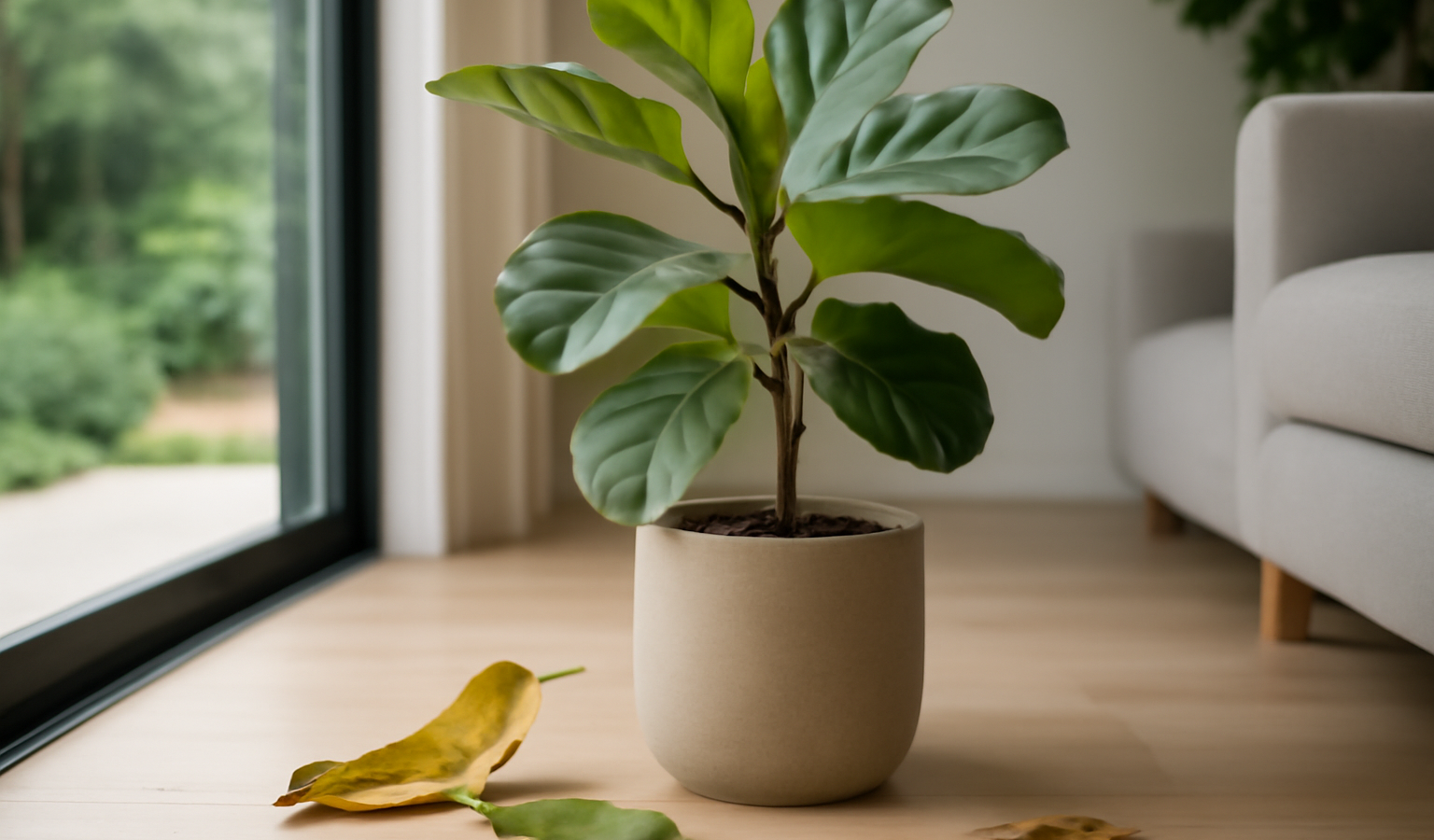
The fiddle leaf fig (Ficus lyrata) has a reputation for drama, and dropping leaves is its most theatrical complaint. One day the plant looks fine; the next, big violin-shaped leaves are landing on the floor. The underlying truth about fiddle leaf figs is that they hate change — they’re sensitive to anything that disrupts their routine, and dropping leaves is how they protest. Most leaf drop traces back to stress (often from a recent move), a watering mistake in one direction or the other, cold drafts, or a change in light. The plant can’t tell you which, so this guide walks through the four causes, how to diagnose each, and how to stop the drop and stabilize your tree.
Key Takeaways
- Fiddle leaf figs drop leaves in response to stress — a recent move or change in conditions is the usual trigger.
- Both overwatering and underwatering cause leaf drop; the spots and pattern tell you which.
- Cold drafts from windows, doors, and AC vents shock the plant into dropping leaves.
- A change in light — moving the plant, or seasonal shift — commonly sets off a round of drop.
- Consistency is the cure: stable spot, stable watering, stable light, and patience.
Cause 1: Stress and sudden change
Fiddle leaf figs are creatures of habit. They acclimate slowly to a set of conditions, and any abrupt change — bringing the plant home from the store, moving it to a new room, repotting, or even rotating it dramatically — can trigger a wave of leaf drop as the plant adjusts. This stress response is the most common reason a previously healthy fiddle leaf fig suddenly starts shedding, and it’s also the most misunderstood, because owners often react by changing more things, which makes it worse.
How to diagnose it
Think back over the last week or two. Did you buy the plant recently, move it, repot it, or change anything about its environment? Stress-related drop often follows within days of such a change and may not be tied to any obvious problem with the leaves themselves — they can drop while still green. If the timing lines up with a recent disruption, stress is almost certainly the cause.
How to fix it
Stop changing things and let the plant settle. Pick a good permanent spot — bright, indirect light, away from drafts — and leave it there. Resist the urge to repot, relocate, or fuss; fiddle leaf figs need weeks to acclimate, and constant adjustment prolongs the stress. Keep watering consistent and wait. A newly purchased or freshly moved plant may drop several leaves before it stabilizes, and that’s normal. Once it’s adjusted to a steady environment, the drop stops and new growth resumes. Patience genuinely is the treatment here.
Cause 2: Over- or underwatering
Watering mistakes are the second big cause, and fiddle leaf figs are touchy in both directions. Overwatering — soggy soil that never dries — rots the roots and is the more dangerous error. Underwatering — letting the soil go bone dry for too long — dehydrates the plant. Both end in dropped leaves, but the symptoms differ, so reading them correctly tells you which mistake you’re making.
How to diagnose it
Overwatering shows up as dark brown or black spots and blotches, often starting in the center or base of leaves, with the soil staying wet and the lower leaves dropping first. Underwatering shows up as dry, crispy brown edges, curling, and leaves that go limp before they fall, with light, bone-dry soil and a pot that feels suspiciously light. Push a finger 2 inches into the soil: wet means you’re overwatering, bone dry means you’re underwatering.
How to fix it
Dial in a consistent routine. Water only when the top 2 inches of soil are dry, then water thoroughly until it runs from the drainage holes and empty the saucer — never let the plant sit in water. For most homes that’s roughly once a week, but always check the soil rather than counting days. If you’ve been overwatering, let the soil dry out and inspect the roots for rot (brown, mushy roots mean you need to trim them and repot into fresh, well-draining soil). If you’ve been underwatering, rehydrate thoroughly — bottom-water if the soil has pulled away from the pot — and then keep it evenly moist. Consistency matters more to a fiddle leaf fig than perfection; erratic watering is itself a form of the stress that causes drop.
Cause 3: Cold drafts and temperature swings
As a tropical plant, the fiddle leaf fig dislikes cold air and sudden temperature changes. A spot near a drafty window, an exterior door that opens to winter air, a heating or AC vent, or a cold pane of glass the leaves touch can all shock the plant into dropping leaves. Drafts are easy to overlook because the rest of the room feels comfortable to you — but the plant feels the cold blast.
How to diagnose it
Note the plant’s location relative to drafts. Is it near a frequently opened door, a single-pane window, an AC unit, or a forced-air vent? Did leaf drop coincide with cold weather, running the AC, or a cold snap? Draft-related drop often hits the leaves closest to the cold source first. Stand by the plant and feel for moving air or a temperature difference.
How to fix it
Relocate the plant away from the draft source — but do it once and leave it (remember cause 1). Keep it in a stable spot where temperatures stay between about 60 and 75°F, away from doors, drafty windows, radiators, fireplaces, and vents. Make sure no leaves are pressing against cold winter glass. Avoid placing it where the temperature swings sharply between day and night. A steady, draft-free location lets the plant hold its leaves, and it pairs naturally with the bright-light requirement in the next section. The same draft sensitivity affects many tropicals, as covered in our indoor plant care guides.
Cause 4: A change in light
Fiddle leaf figs need a lot of bright, indirect light, and they’re sensitive to changes in it. Moving the plant from a bright spot to a dimmer one — even across the same room — can prompt leaf drop as the plant sheds foliage it can no longer support. The same happens seasonally: as days shorten and light weakens in fall and winter, a plant that was fine in summer may start dropping leaves. New growth in too little light also comes in small and sparse.
How to diagnose it
Did you move the plant somewhere darker, or did drop begin as the seasons changed and daylight faded? Is the plant more than a few feet from a bright window, or in a north-facing room? Light-related drop tends to affect lower and interior leaves first — the ones getting the least light — and is often paired with slow, small new growth and a plant that leans toward the window.
How to fix it
Give the plant the brightest indirect light you can. An east or west window, or a few feet back from a bright south window, suits it well; a little gentle direct morning sun is fine, but harsh midday sun can scorch the leaves. If you must move it to brighter light, do so gradually over a week or two to avoid adding shock. In the darker months, supplement with a grow light to maintain consistent light levels year-round. Rotate the plant a quarter turn every couple of weeks so it grows evenly. Once light is adequate and steady, the drop slows and new leaves return.
How to stop fiddle leaf fig leaf drop for good
If there’s one word that prevents fiddle leaf fig leaf drop, it’s consistency. These plants reward a stable routine and punish change, so the cure is to lock in good conditions and hold them steady. Choose a permanent home with bright, indirect light, away from drafts, doors, and vents, with temperatures between 60 and 75°F. Water only when the top 2 inches of soil are dry, thoroughly and on a consistent rhythm, in a pot with drainage. Don’t move, repot, or rearrange the plant unless you truly need to, and when you do make a change, make it gradual and singular. Give a newly bought or recently moved plant several weeks to acclimate before judging it. Do all that and the dramatic shedding settles into the steady, glossy, large-leaved growth fiddle leaf figs are prized for. For broader troubleshooting across your indoor jungle, browse our Plants & Flowers guides.
Frequently Asked Questions
Is it normal for a new fiddle leaf fig to drop leaves?
Yes. Fiddle leaf figs are sensitive to change, and being moved from the store to your home is a major disruption. A newly bought plant often drops several leaves while it acclimates over a few weeks. Give it a stable spot, consistent care, and time, and the drop should stop on its own.
How do I know if leaf drop is from over- or underwatering?
Check the spots and the soil. Dark brown or black blotches on leaves plus wet soil point to overwatering and possible root rot. Crispy brown edges, curling, and bone-dry light soil point to underwatering. Feel the soil 2 inches down to confirm which direction you’ve gone.
Can a cold draft really make my fiddle leaf fig drop leaves?
Absolutely. As a tropical plant it’s shocked by cold air from drafty windows, exterior doors, and AC vents, and responds by dropping leaves. Keep it in a stable spot between 60 and 75°F, away from drafts and cold glass, and away from heat sources too.
Will my fiddle leaf fig grow its dropped leaves back?
Not on the same spot — fiddle leaf figs don’t regrow leaves where old ones fell, so a bare lower trunk stays bare. But once you stabilize conditions, the plant resumes growing new leaves at the top. You can encourage branching and fullness by pinching or notching the growing tip.
Should I move my fiddle leaf fig if it’s dropping leaves?
Only if the current spot has a clear problem like a draft or poor light — and then move it just once to a good permanent location. Repeatedly relocating the plant adds the very stress that causes leaf drop. After one good move, leave it put and let it acclimate.