

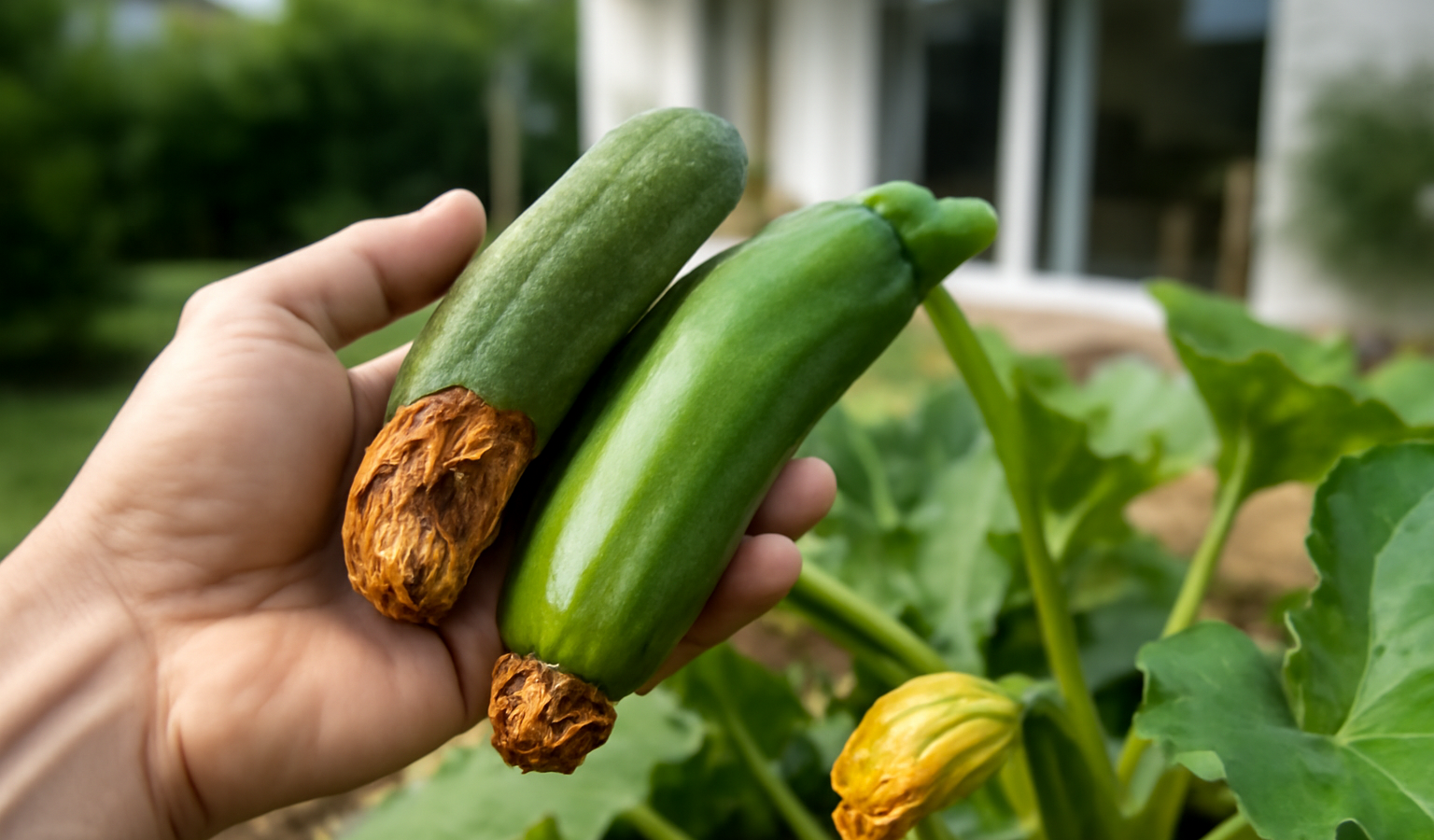
You watch a perfect little zucchini set on the vine, and then instead of swelling into a glossy fruit it turns yellow, shrivels at the tip, or goes soft and brown and mushy. It is one of the most frustrating things a vegetable gardener can see, especially on a plant that looks otherwise healthy and vigorous. The most common reason a zucchini rots on the vine — particularly when the rot starts at the blossom end (the flower end, opposite the stem) and turns dark and sunken — is blossom end rot, a calcium and watering problem rather than a disease. But poor pollination, fungal infections, and simple overripeness can all rot your fruit too, and each needs a different fix. This guide explains every common cause, how to tell them apart, and how to get firm, healthy zucchini for the rest of the season.
Key Takeaways
- Rot starting at the blossom end (tip), turning brown, sunken, and leathery = blossom end rot, caused by a calcium delivery problem driven by inconsistent watering.
- Blossom end rot is rarely a true soil-calcium shortage — it is usually irregular moisture preventing the plant from moving calcium to the fruit. Water consistently and mulch.
- Tiny fruit that yellows, shrivels, and falls off shortly after flowering = poor pollination, not rot. Hand-pollinate to fix it.
- Soft, fuzzy, gray or white mold on fruit and flowers = fungal rot, worsened by wet, crowded, humid conditions.
- Consistent deep watering, mulch, good spacing for airflow, and timely harvest prevent most rotting.
Blossom End Rot (the Most Common Cause)
If your zucchini rots from the flower end — the tip starts to look water-soaked, then turns brown or black, sunken, and leathery, while the stem end may still look fine — you almost certainly have blossom end rot. Despite how it looks, this is not a disease and you cannot spray it away. It is a physiological disorder caused by a calcium deficiency in the developing fruit. The crucial part most gardeners miss is that there is usually plenty of calcium in the soil; the problem is that the plant cannot move calcium to the fast-growing fruit, and the reason for that is almost always inconsistent watering. Calcium travels through the plant dissolved in water, so when the soil swings between bone dry and soaked, the fruit gets starved of calcium right when it needs it most.
How to diagnose it
Look at where the rot starts and how it feels. Blossom end rot always begins at the blossom end (opposite the stem), starting as a pale, water-soaked spot that enlarges into a dark, sunken, dry, leathery patch. It typically hits the earliest fruits of the season and shows up after a stretch of irregular watering — a dry spell followed by heavy rain or a deep soak. The leaves and overall plant usually look healthy. If the rot started at the stem end or the fruit is covered in fuzzy mold, look to the other causes below instead.
How to fix it
Focus on watering consistency, not on dumping calcium. Water deeply and regularly so the soil stays evenly moist — aim for about an inch to an inch and a half per week, more in heat, applied in deep soakings rather than frequent light sprinkles. Mulch heavily around the plants with straw or shredded leaves to buffer soil moisture and prevent the wet-dry swings that trigger the disorder. Remove affected fruit so the plant redirects energy to new ones. If a soil test confirms an actual calcium shortage or a pH problem locking it up, you can amend with lime in fall, but for the vast majority of gardeners the cure is simply steadier watering. The same underlying issue causes blossom end rot in tomatoes and peppers, so if you are battling it on multiple crops, our guide on why tomatoes won’t turn red covers related fruiting and watering stress.
Poor Pollination
Sometimes what looks like rot is really a fruit that was never properly pollinated. Zucchini produce separate male and female flowers, and a female flower has a tiny immature fruit behind it. If that flower is not adequately pollinated — not enough pollen moved from a male flower to the female — the little fruit starts to grow, then stalls, yellows, shrivels from the blossom end, turns soft, and drops off. It can look very much like rot, but the cause is a pollination shortfall, not calcium or disease.
How to diagnose it
The telltale sign is timing and size: the fruit is small, only an inch or two long, and it yellows and rots shortly after the flower opens rather than after the fruit has grown for a while. You may also notice few bees in the garden, lots of male flowers but few being visited, or cool, wet, or very hot weather that suppresses pollinator activity. Early in the season plants often produce mostly male flowers first, which can leave early female flowers unpollinated.
How to fix it
Hand-pollinate. In the morning when flowers are open, pick a male flower (it has a thin straight stem and a pollen-covered stamen, with no fruit behind it), peel back the petals, and gently rub the pollen onto the center of a female flower (the one with a baby zucchini behind it). One male can pollinate several females. To attract more natural pollinators, plant bee-friendly flowers nearby and avoid spraying insecticides when flowers are open. As the season warms and more flowers of both sexes open together, pollination usually improves on its own.
Fungal Rot and Disease
Fungi and bacteria can rot zucchini directly, especially in warm, wet, humid, crowded conditions. Choanephora and other blossom-end molds often start in the dying flower still attached to the fruit tip, then spread back into the fruit as a fuzzy gray or black growth. Botrytis (gray mold) coats fruit and stems with fuzzy gray spores. These rots are wet and fuzzy or slimy, unlike the dry, leathery patch of blossom end rot.
How to diagnose it
Look for fuzz and moisture. Fungal rot produces soft, mushy, often slimy tissue topped with visible mold — gray, white, or black fuzzy growth — frequently centered on the spent flower clinging to the fruit’s tip. It spreads in humid weather and dense plantings with poor airflow, and you may see it on several fruits and on the old flowers at once. A dry, sunken, mold-free patch points to blossom end rot instead.
How to fix it
Remove and discard all rotting fruit and decaying flowers promptly — do not leave them on the plant or compost diseased material, as the spores spread. Pinch off spent flowers that cling to developing fruit, since they are the entry point for blossom rot fungi. Improve airflow by spacing plants properly and thinning crowded leaves, and water at the base in the morning rather than wetting the foliage and fruit late in the day. In persistent wet weather, a preventive fungicide can help, but cultural fixes — sanitation, spacing, and dry foliage — do most of the work.
Overripe or Damaged Fruit
Zucchini left on the vine too long, or damaged by pests or contact with wet soil, will start to rot in place. Overripe fruit becomes oversized, the skin dulls and hardens, and the flesh can begin to break down and soften, especially in heat. Fruit resting directly on damp ground or nibbled by pests develops soft spots that quickly turn to rot.
How to diagnose it
Consider the size and position. A huge, dull-skinned zucchini that has been on the vine for weeks and is going soft is simply overripe. A fruit with rot on the underside where it touches the soil, or with chew marks and entry holes, has been damaged. These rots are tied to neglect, contact, or pests rather than to the blossom end specifically.
How to fix it
Harvest zucchini young and often — at six to eight inches they are tender and at their best, and frequent picking encourages the plant to keep setting new fruit. Check plants every day or two during peak season because zucchini grow astonishingly fast. Lift developing fruit off wet soil with mulch, a board, or a tile underneath, and deal with pests like squash bugs and vine borers promptly. Remove any rotting or damaged fruit so it does not invite further problems.
How to Prevent Zucchini From Rotting
Prevention pulls all of these fixes together into a simple routine. First and most important, water consistently: give a deep soaking that keeps soil evenly moist and avoid the dry-then-flooded swings that cause blossom end rot. Mulch around the base with straw or shredded leaves to hold that moisture steady and keep fruit off bare wet soil. Second, support pollination by planting flowers to draw bees, avoiding sprays during bloom, and hand-pollinating early in the season if fruit is aborting. Third, manage airflow and sanitation: space plants generously, thin dense foliage, water at the base in the morning so leaves dry quickly, and remove spent flowers and any rotting fruit before disease spreads. Fourth, harvest young and often to keep fruit from overripening on the vine. Finally, if blossom end rot recurs year after year, run a soil test to check pH and calcium and amend in fall rather than chasing quick fixes mid-season. Do those things and most of your zucchini will size up firm and glossy. For more vegetable troubleshooting, browse the Plants & Flowers hub.
Frequently Asked Questions
Is blossom end rot in zucchini caused by a calcium deficiency in the soil?
Usually not. While blossom end rot is a calcium problem in the fruit, the soil almost always contains enough calcium. The real issue is that inconsistent watering prevents the plant from moving calcium to the developing fruit. Steady, deep watering and mulch fix it far more reliably than adding calcium.
Can I still eat a zucchini with blossom end rot?
If only the blossom-end tip is affected and the rest of the fruit is firm and healthy, you can cut away the damaged end generously and eat the good portion. Discard any fruit that is widely soft, moldy, or slimy. When in doubt, throw it out.
Why do my baby zucchini turn yellow and fall off?
That is the classic sign of poor pollination, not rot. The female flower’s fruit starts to grow, then stalls and aborts because it was not adequately pollinated. Hand-pollinate in the morning by transferring pollen from a male flower, and encourage bees by planting flowers nearby.
How do I tell blossom end rot from fungal rot?
Blossom end rot is dry, sunken, leathery, and brown or black, starting at the flower end with no mold. Fungal rot is soft, mushy, or slimy and topped with fuzzy gray, white, or black mold, often centered on a spent flower stuck to the fruit. Fuzz means fungus.
How often should I water zucchini to prevent rot?
Aim for about one to one and a half inches of water per week, more during hot, dry spells, delivered in deep soakings rather than frequent light watering. The goal is evenly moist soil at all times. Mulching helps lock in that consistency, which is the key to preventing blossom end rot.