

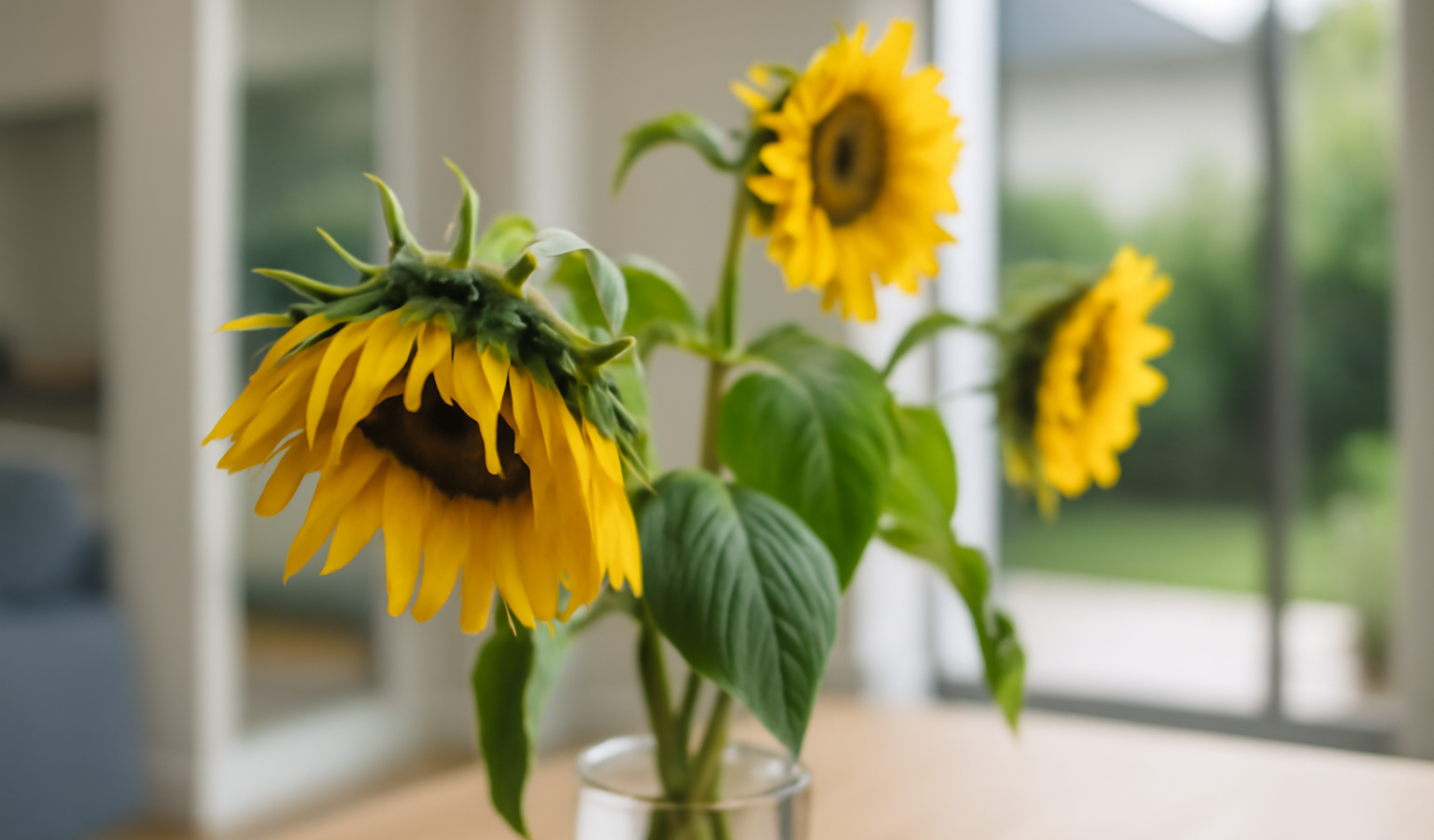
Few things in the garden command attention like a row of sunflowers, so it is unsettling when those tall, cheerful stems start sagging and the flower heads tip toward the ground. The good news is that a drooping sunflower is rarely a death sentence, and in many cases it is not a problem at all. After growing these plants for years, I have learned that “drooping” covers everything from a perfectly healthy mature head bowing under its own weight to a genuine emergency caused by root rot or a fungal infection chewing through the stem. The trick is reading the plant correctly so you treat the actual cause instead of guessing. Below I walk through the most common reasons your sunflowers are drooping, how to diagnose each one, and the specific steps that fix it. Work through them in order, because the fastest checks rule out the most common culprits first.
Key Takeaways
- A mature sunflower head naturally droops as the seeds fill in and gain weight. This is normal and even desirable, not a sign of illness.
- Sudden wilting of leaves and the whole top of the plant most often points to water stress, either too little water or, just as commonly, soggy roots from overwatering.
- Sunflowers want a deep soaking of about one to two inches of water per week rather than frequent light sprinklings.
- If a stem goes soft, slimy, or develops white fuzzy growth or dark cankers, suspect a fungal disease such as Sclerotinia stem rot, verticillium wilt, or downy mildew.
- Tall and large-headed varieties almost always need staking. A loose tie to a sturdy stake prevents the stem from snapping in wind or under a heavy head.
- Prevention comes down to the basics: full sun, well-draining soil, correct spacing, deep watering, and crop rotation to keep soilborne disease at bay.
Water Stress: Underwatering and Overwatering
Water stress is by far the most common reason a previously upright sunflower suddenly looks defeated. Sunflowers grow fast and build a lot of leaf surface, so they move an enormous amount of water on a hot day. When the supply does not keep up, the cells lose turgor pressure and the whole plant goes limp, leaves first, then the stem and head. The confusing part for many gardeners is that overwatering produces almost identical symptoms, because waterlogged soil suffocates the roots and they can no longer pull moisture up to the foliage. In both cases the plant wilts, so you have to look at the soil rather than the leaves to tell the two apart.
Diagnose: Push a finger two to three inches down into the soil near the base of the plant. If it is bone dry and dusty, and the leaves are limp but still firm and green, you are underwatering. If the soil is wet, heavy, and stays muddy long after watering, and the lower leaves are yellowing along with the wilt, you are dealing with overwatering or poor drainage. A classic tell for underwatering is a plant that perks up dramatically within a few hours of a deep soak. A plant that stays floppy even after watering, or droops worse after rain, is almost certainly suffering from soggy roots. Check whether your sunflowers sit in a low spot where runoff collects, or in heavy clay that holds water like a bathtub.
Fix: For underwatered plants, water deeply and slowly so the moisture penetrates down to the root zone rather than running off the surface. Aim for roughly one to two inches of water per week, delivered in one or two thorough soakings rather than a daily light sprinkle. Light, frequent watering trains roots to stay shallow, which makes the plant far more vulnerable to drying out the next hot afternoon. During a heat wave, established sunflowers in sandy soil may need water every two to three days. A two to three inch layer of organic mulch, such as shredded bark or straw, spread around the base will hold moisture in the soil and even out the swings that cause drooping. Keep the mulch a couple of inches away from the stem itself to discourage rot.
For overwatered plants, the cure is to back off and let the soil dry out before watering again. Stop watering entirely until the top two inches feel dry, and check that the plant is not sitting in standing water. If your bed drains poorly, the long-term fix is to amend the soil with compost and coarse organic matter to open up the structure, or to grow in raised beds or large containers with generous drainage holes next season. Sunflowers genuinely hate wet feet, and chronically soggy roots invite the very stem rots discussed further down. If the wilting comes from overwatering, do not be tempted to add more water when you see the droop, because that is precisely the wrong move and the mistake I see most often.
Normal Head Weight on Mature Plants
Before you reach for fungicide or start fretting over your watering schedule, consider the simplest explanation of all: your sunflower is supposed to droop. As the flower matures and the seeds in the central disc swell and fill, the head becomes genuinely heavy, often weighing a pound or more on the big mammoth-type varieties. The stem, even a thick and healthy one, naturally bends so the face of the flower points downward and toward the ground. This is not a flaw. It is the plant protecting the developing seeds from rain and from birds, and it is a normal stage in the life cycle of almost every sunflower you will grow. Many people panic at this point when nothing is actually wrong.
Diagnose: Look at the timing and at the rest of the plant. If your sunflower has finished flowering, the bright petals are fading or dropping, and only the head is bowing while the leaves and stem remain firm, green, and otherwise healthy, this is normal maturation. The droop will be a gentle downward curve of the neck just behind the head, not a collapse of the entire plant. By contrast, if a young plant that is still in bud or just opening flops over, or if the leaves are wilting along with the head, the cause is something else on this list. Healthy seed-fill drooping happens late in the season and only involves the flower head.
Fix: Honestly, the best fix is to do nothing and let nature take its course. If you are growing sunflowers for the seeds, this drooping stage is exactly what you want, and you simply wait until the back of the head turns yellow then brown and the seeds plump up before harvesting. If the bent neck bothers you aesthetically, or you are worried a top-heavy head might snap the stem in a storm, you can support the head with a stake and a soft tie, or you can cut the flower for display once it is fully open. Choosing shorter, branching, multi-headed varieties in future plantings will also give you smaller heads that hold themselves more upright, if a face-down giant is not the look you are after.
Fungal Disease: Stem Rot, Wilt, and Downy Mildew
When the soil moisture is right and the plant is not simply at the seed-filling stage, persistent or worsening droop points toward disease. Sunflowers are tough, but they are susceptible to a handful of fungal problems that attack the stem, the roots, or the vascular system that carries water up the plant. These are more serious than a watering hiccup because they often cannot be cured once established, so early recognition and good sanitation matter enormously. The three you are most likely to encounter are Sclerotinia stem rot, verticillium wilt, and downy mildew, and each has a distinctive signature once you know what to look for.
Diagnose: Sclerotinia stem rot, also called white mold, typically shows up as a tan or bleached soft lesion on the stem, often near the base or at a leaf junction, frequently accompanied by white cottony fungal growth. If you split the stem open, you may find hard black resting bodies called sclerotia inside, which look like rodent droppings. The plant above the lesion wilts suddenly and the whole top can flop because the stem can no longer hold itself up or move water. Verticillium wilt is a soilborne fungus that clogs the water-conducting tissue, so you see yellowing and browning between the leaf veins, often on one side of the plant first, with progressive wilting from the bottom up; a cut stem may show brown streaking in the inner tissue. Downy mildew tends to cause stunted, pale plants with angular yellow patches on the upper leaf surface and a grayish or purplish fuzzy growth on the undersides, especially in cool, wet, humid weather.
Fix: Fungal diseases of the stem and vascular system are difficult to reverse once symptoms appear, so the priority is containment. Remove and destroy badly affected plants rather than composting them, because the spores and sclerotia survive in plant debris and in the soil for years. Do not plant sunflowers, or related susceptible crops, in the same spot for several seasons, since rotation is one of the few genuinely effective tools against soilborne fungi like Sclerotinia and verticillium. Improve airflow by thinning crowded plantings and avoid overhead watering late in the day, because wet foliage overnight is what most of these fungi need to take hold. Water at the base in the morning so leaves dry quickly. Protective fungicides can help suppress downy mildew if applied early and preventively, but they will not rescue a plant whose stem has already rotted through, and they do little against established verticillium. The most reliable defense is healthy soil, good spacing, and prompt removal of any infected material. If you have battled fungal foliage problems before, the same hygiene principles I cover for zinnias developing powdery mildew apply directly to keeping sunflowers clean.
How to Keep Sunflowers Upright and Healthy
Once you have ruled out and addressed the immediate cause, the goal shifts to prevention, because a strong, well-grown sunflower rarely droops in a way that worries you. Everything that keeps a sunflower upright traces back to a few fundamentals: sturdy support for tall varieties, correct spacing for airflow and root room, healthy free-draining soil, and consistent deep watering. Get these right at planting time and you head off most of the problems above before they start.
Staking and support: Any variety that grows above about three feet, and certainly the giant types that reach six to twelve feet with dinner-plate heads, benefits from staking. Drive a stout wooden stake or bamboo cane into the ground a few inches from the stem, ideally early so you do not damage the roots later, and secure the stem to it with soft material such as garden twine, strips of cloth, or commercial plant tie tape. The key is to tie loosely in a figure-eight so the stem has room to thicken and sway a little; a tight tie cuts into the stem and snaps it in wind. Add a second tie higher up as the plant grows, and a final tie just below the head once the flower forms, so the heaviest part is supported. For a whole row, you can run twine between posts on either side to corral the plants.
Spacing: Crowded sunflowers compete for water and light, grow spindly weak stems, and trap humid air that fuels disease. Follow the spacing for your variety: small and dwarf types are happy at around six inches apart, mid-sized cutting varieties want about twelve inches, and the big single-stem giants need eighteen inches or more so each plant develops a thick, self-supporting stem and a strong root system. Thin seedlings ruthlessly to these distances rather than letting a clump fight it out, because a thick stalk with room to breathe is your single best insurance against drooping and against the fungal problems above.
Soil and siting: Sunflowers want full sun, at least six to eight hours a day, and soil that drains freely while still holding some moisture. Work a few inches of compost into the bed before planting to feed the plant and improve structure, and avoid heavy, waterlogged ground that promotes root rot and the soft, weak growth that flops over. If your native soil is dense clay, grow in raised beds or amend generously with organic matter. Pair that with the deep, even watering described earlier, and a layer of mulch to buffer moisture swings, and you give the plant everything it needs to stand tall on its own. The same approach to sun, drainage, and watering rhythm that keeps a fussy bedding plant from collapsing, which I outline for impatiens that keep wilting, is exactly what keeps sunflowers robust. For more troubleshooting guides across the garden, browse our full plants and flowers resource hub.
Frequently Asked Questions
Is it normal for sunflowers to droop after flowering?
Yes. Once the petals fade and the seeds in the central disc start to fill and gain weight, the head naturally bows downward on its neck. As long as the stem and leaves stay firm and green, this is a normal, healthy part of the plant maturing and protecting its seeds, and it requires no action on your part.
How much should I water my sunflowers to stop them drooping?
Aim for about one to two inches of water per week, delivered in one or two deep soakings rather than daily light sprinkles. Deep watering encourages a strong, far-reaching root system that resists wilting. During hot, dry spells, especially in sandy soil, you may need to water every two to three days to keep the soil from drying out completely.
My sunflower wilted overnight and watering did not help. What is wrong?
If a deep soak does not perk the plant up within a few hours, suspect overwatering or root rot rather than thirst. Check whether the soil is soggy and the lower leaves are yellowing. Persistent wilting that worsens, along with a soft or discolored stem base, can also signal a fungal stem rot, in which case the affected plant should be removed.
Do all sunflowers need staking?
Not all, but most tall varieties do. Dwarf and shorter types under about three feet usually stand on their own, while anything taller, and especially the giant heavy-headed varieties, benefits from a sturdy stake and a loose figure-eight tie. Staking prevents the stem from snapping in wind or buckling under the weight of a large, mature flower head.
Can a drooping sunflower recover?
It depends on the cause. A plant drooping from underwatering will usually bounce back within hours of a good soak. Normal seed-fill droop needs no fixing at all. However, sunflowers collapsing from advanced fungal stem rot or verticillium wilt generally cannot be saved, so focus on removing infected plants and protecting the healthy ones through spacing, airflow, and rotation.