

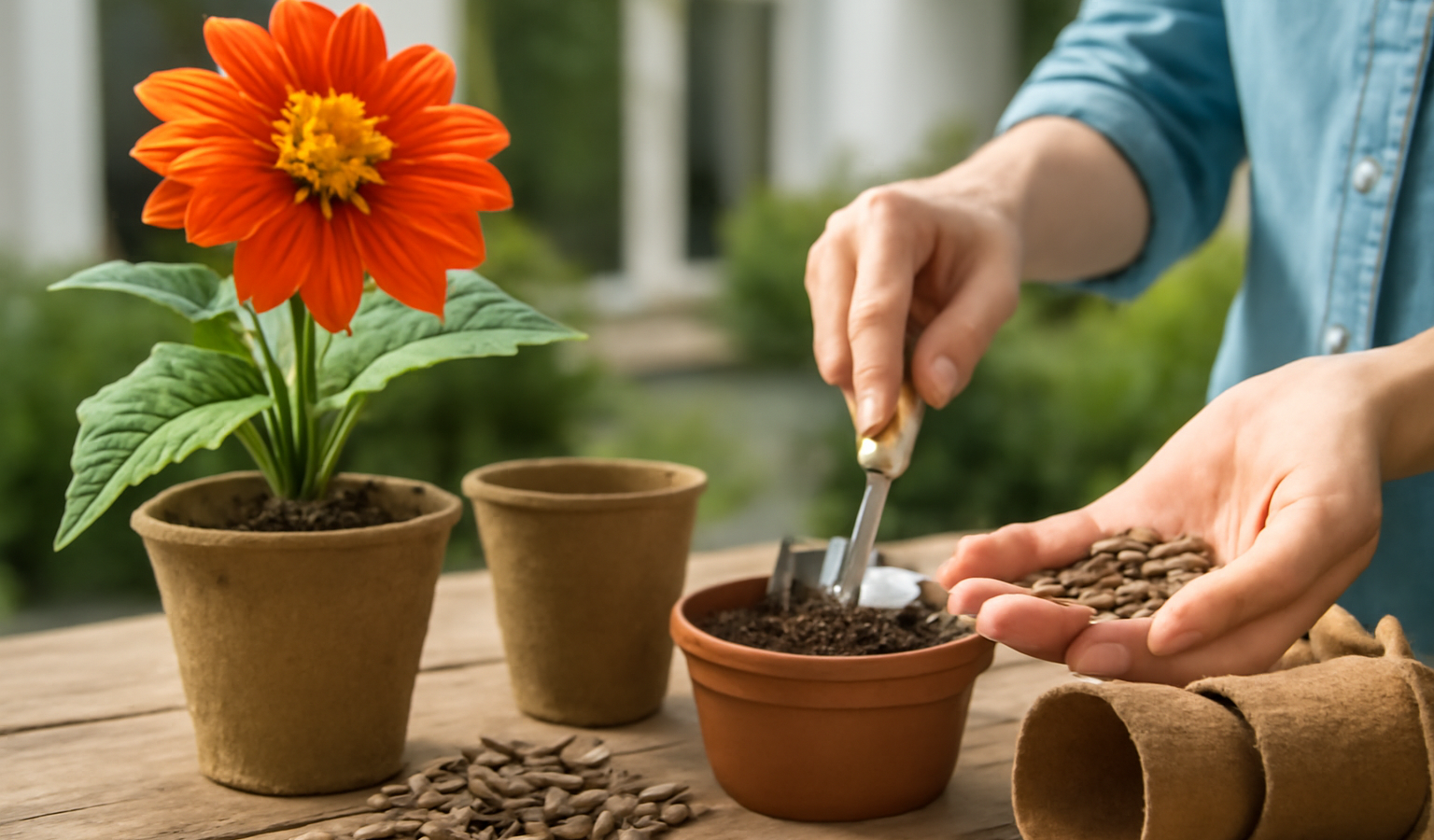
Mexican sunflower (Tithonia rotundifolia) is the big, bold, heat-proof annual that turns the back of a border into a 4- to 6-foot wall of fiery orange daisies humming with butterflies and bees. It is one of the easiest annuals to grow from seed, asks for almost nothing — full sun, lean soil, and a bit of room — and blooms its head off from midsummer until frost. If you want a low-effort, high-impact pollinator magnet, this is the plant. This guide covers seed starting, spacing for these tall plants, sun and soil needs, watering, staking, deadheading, and how to make the most of its remarkable draw for monarchs and other pollinators.
Key Takeaways
- Mexican sunflower is a fast, easy annual grown from seed, reaching 4 to 6 feet (some types taller).
- Sow seeds after the last frost in full sun; it thrives in heat, drought, and poor soil.
- Space plants 18 to 36 inches apart to give the large, branching plants room.
- Avoid rich soil and heavy feeding — lean conditions produce more flowers and sturdier stems.
- Tall plants in windy or fertile sites may need staking to stay upright.
- It is a premier pollinator magnet, especially for monarch butterflies, bees, and skippers.
- Deadhead to prolong bloom; it self-seeds modestly but is easy to manage.
About Mexican Sunflower
Despite the name, Mexican sunflower is not a true sunflower (Helianthus) but a related member of the aster family from Mexico and Central America. The plants are large, bushy, and fast-growing, with coarse, slightly fuzzy leaves and branching stems topped by 2- to 3-inch daisy-like flowers in brilliant orange or red-orange, each with a golden center. The most popular variety, ‘Torch’, reaches 4 to 6 feet, while ‘Fiesta del Sol’ is a compact 2- to 3-foot selection better suited to small gardens and containers, and ‘Goldfinger’ sits in between.
Because it loves heat and poor soil and shrugs off drought, it is ideal for tough spots where pampered annuals struggle. It makes a superb back-of-border plant, temporary summer screen, or cut flower, and it pairs beautifully with other hot-color, sun-loving bloomers. Gardeners who enjoy easy, generous annuals will find it as forgiving as marigolds but far taller and more dramatic.
When and Where to Plant
Mexican sunflower is a warm-season annual that grows fast, so direct sowing usually works perfectly. Sow seeds outdoors after the last frost, once the soil has warmed to around 60°F. In long-season climates (zones 7 and warmer) direct sowing gives plenty of time for the plants to reach blooming size by midsummer. In cooler, shorter-season regions (zones 3 to 6), start seeds indoors four to six weeks before the last frost to get a head start, then transplant after frost danger passes — but handle the seedlings gently, as they grow quickly and dislike root disturbance.
Give it full sun — at least six to eight hours, and the more the better. This plant genuinely thrives in heat and is happiest in lean, well-drained soil. Rich, fertile, or heavily fertilized ground produces tall, floppy, leafy plants with fewer flowers and weak stems prone to toppling. Choose an open, sunny, somewhat sheltered spot, ideally at the back of a bed where the height works in your favor.
Starting From Seed
Mexican sunflower seeds are large and easy to handle, and unlike the hard-coated morning glory family seeds, they do not require scarifying or soaking. Sow them about ¼ to ½ inch deep. Germination is quick and reliable in warm soil, usually within 5 to 10 days. Keep the seedbed evenly moist until sprouts emerge, then let the seedlings establish with less frequent watering.
Spacing the Plants
These are big, branching plants, so give them room. Thin or space seedlings 18 to 36 inches apart depending on the variety — the full-size ‘Torch’ wants the wider end of that range, while compact types can go closer. Crowding leads to leggy plants, poor air circulation, and more disease. Proper spacing produces sturdy, well-branched plants covered in flowers. If starting indoors, harden seedlings off before transplanting at the same spacing.
Watering and Feeding
Once established, Mexican sunflower is notably drought-tolerant — one of its best traits. Water young plants regularly until they are well rooted, then water only during extended dry spells, providing a deep soak rather than frequent shallow watering. Established plants often get by on rainfall alone in many climates. Overwatering produces soft, disease-prone growth and weak stems.
Feeding is rarely needed and usually counterproductive. In lean to average soil, skip fertilizer entirely; the plant flowers more freely and stands up better without it. Excess nitrogen creates tall, leafy, flop-prone plants with sparse bloom — the same problem that plagues over-fed annual vines. If your soil is genuinely poor, a single light feeding early in the season is more than enough.
Staking Tall Plants
The full-size varieties can reach 5 or 6 feet and, especially in rich soil, windy sites, or after heavy summer storms, may lean or topple. To keep them upright, stake taller plants early, before they get top-heavy, using a stout stake or a grow-through grid, and tie the main stems loosely as they grow. Planting them in a sheltered spot, in lean soil, and at proper spacing reduces the need for support, since lean conditions naturally produce sturdier, more self-supporting stems.
Pinching the growing tips of young plants when they are about a foot tall encourages branching, resulting in a bushier, somewhat shorter, and more flower-laden plant that is less likely to flop. For more on supporting tall annuals and planning a productive border, see our plants and flowers guides.
A Pollinator Powerhouse
If there is one reason to grow Mexican sunflower, it is the wildlife. The flowers are an absolute magnet for pollinators — monarch butterflies in particular adore them, and the blooms are often covered with swallowtails, skippers, bees, and even hummingbirds throughout the season. For gardeners fueling fall monarch migration, a patch of Tithonia is one of the most reliable late-season nectar sources you can plant.
To maximize the pollinator draw, plant several together in a sunny drift rather than a single specimen, and avoid spraying insecticides near them. The long bloom season — from midsummer right through to frost — means the plants provide nectar exactly when many pollinators need it most. Leaving a few late flowers to set seed also feeds finches and other seed-eating birds in fall.
Deadheading and Reseeding
Deadheading — removing spent flowers before they set seed — keeps Mexican sunflower blooming heavily and looking tidy. The stems are slightly hollow and brittle, so snip just below the faded bloom with clean shears. Regular deadheading through the season noticeably extends and increases flowering. Cutting flowers for arrangements has the same effect, so harvest freely.
The plant self-seeds modestly where the season is long enough for seed to ripen, but it is easy to manage — volunteers are simple to spot and pull or transplant in spring. If you want it to return, simply leave some late flowers to mature and drop seed, or collect the ripe seed heads and store the seed for deliberate sowing next year. It is far less aggressive than the self-seeding annual vines and rarely becomes a nuisance.
Common Problems
Mexican sunflower is remarkably trouble-free. Flopping or leaning is the most common issue, caused by rich soil, too much water or nitrogen, crowding, or wind — grow lean, space well, pinch young plants, and stake if needed. Few flowers point to too little sun or excess nitrogen. Slugs and snails may chew young seedlings; protect them until established. Powdery mildew or leaf spot can appear in crowded, damp, poorly ventilated plantings — improve spacing and air circulation. Aphids occasionally cluster on tender tips but are easily rinsed off and are often handled by the beneficial insects the flowers attract.
Is It Safe?
Mexican sunflower is not listed among the common toxic plants and is generally considered safe to grow around children and pets. It is an ornamental rather than an edible, so it should not be eaten, and the coarse, slightly bristly foliage can occasionally irritate sensitive skin — wearing gloves when handling or pruning is a reasonable precaution for anyone prone to skin sensitivity. As with any plant, discourage pets from eating large quantities of foliage and consult a veterinarian if they do. For routine growing and enjoyment, no special precautions are needed, making it a worry-free choice for family and wildlife gardens alike.
Frequently Asked Questions
How tall does Mexican sunflower get?
The popular ‘Torch’ variety reaches 4 to 6 feet, while compact selections like ‘Fiesta del Sol’ stay around 2 to 3 feet. Choose the variety to match your space, and pinch young plants or stake tall ones to keep them sturdy and upright.
Do Mexican sunflower seeds need soaking?
No. Unlike morning glory family seeds, Tithonia seeds are large and germinate quickly without scarifying or soaking. Just sow them ¼ to ½ inch deep in warm soil after the last frost and keep the bed moist until they sprout, usually within 5 to 10 days.
Why is my Mexican sunflower falling over?
Flopping is usually caused by rich soil, too much nitrogen or water, crowding, or wind. Grow it in lean soil, space plants properly, pinch young plants to encourage branching, and stake the tall varieties early before they become top-heavy.
Are Mexican sunflowers good for pollinators?
Exceptionally so. They are one of the best annuals for attracting monarch butterflies, bees, swallowtails, skippers, and even hummingbirds, and they bloom from midsummer to frost — providing crucial late-season nectar. Plant several together and avoid insecticides for the best results.
Will Mexican sunflower come back next year?
It is an annual killed by frost, but it self-seeds modestly where the season is long enough for seed to ripen, so volunteers may appear next spring. To ensure its return, leave a few late flowers to set seed or collect and store the seed to sow deliberately.