

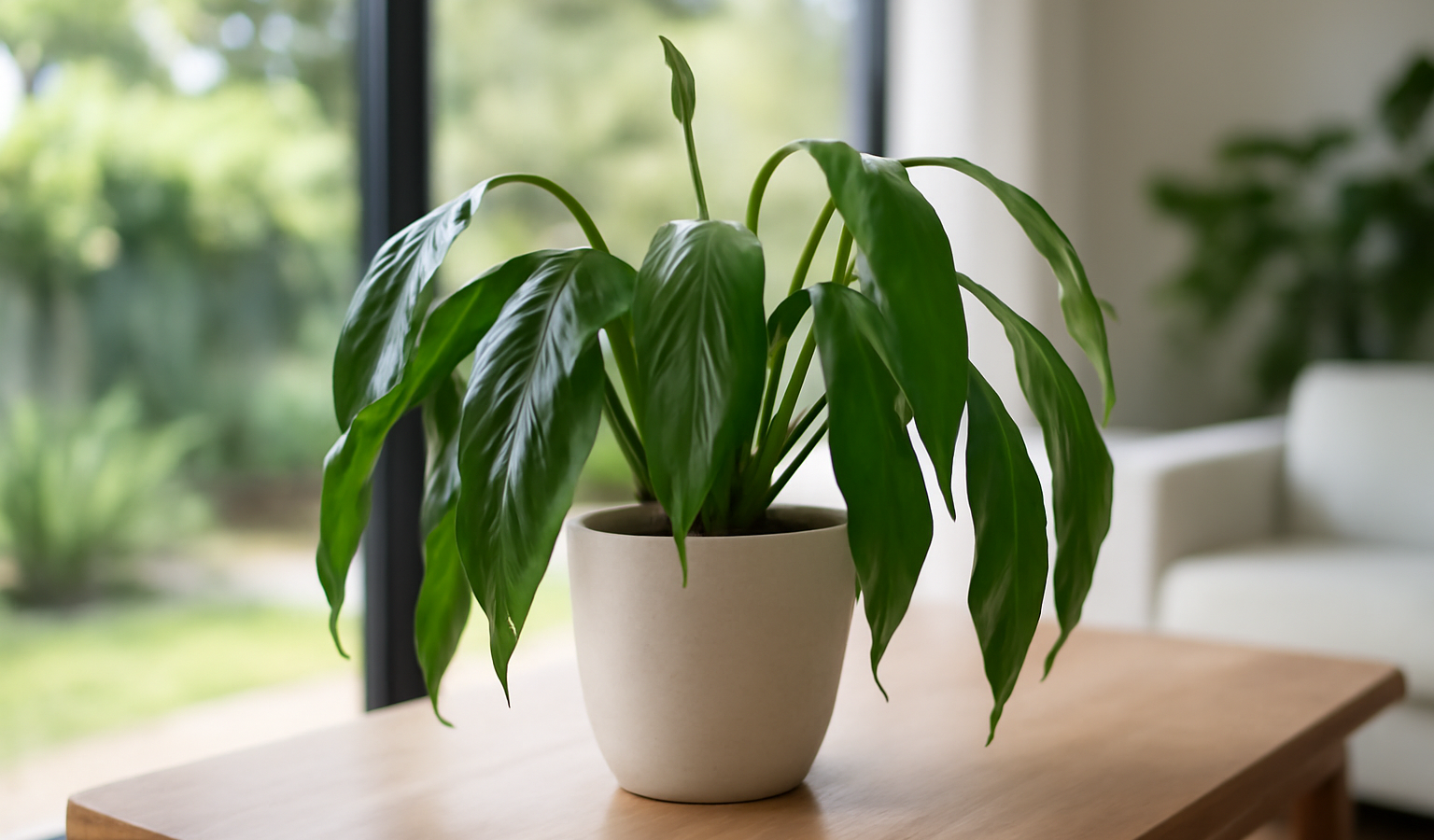
A drooping peace lily is almost always thirsty. The peace lily (Spathiphyllum) is a tropical drama queen that collapses its leaves dramatically the moment its soil dries out, then perks back up within a few hours of a thorough watering. So before you panic, push a finger into the soil: if the top inch is bone dry, you have your answer. But drooping can also signal the opposite problem, overwatering and root rot, plus dry air, harsh light, or roots that have outgrown the pot. The key is reading the clues, the soil moisture, the recovery speed, and the leaf color, so you fix the real cause instead of guessing. Here are the five most common reasons and exactly how to diagnose and fix each one.
Key Takeaways
- Thirst is the number one cause: a peace lily that wilts when the top inch of soil is dry will bounce back within 2 to 24 hours of a deep watering.
- Droop that does not recover after watering, paired with yellow leaves and soggy soil, points to overwatering and root rot.
- Use the recovery test plus the finger test to tell underwatering from overwatering before you act.
- Peace lilies want bright indirect light, temperatures of 65 to 80°F (never below 60°F), and humidity around 50% or higher.
- Repot every 1 to 2 years when rootbound, water with filtered or sat-out tap water, and flush salts every couple of months.
Cause 1: Underwatering & thirst (the most common reason)
This is the classic peace lily collapse. The plant uses water pressure inside its cells to hold its leaves upright, and when the soil runs dry that pressure vanishes, so the whole plant flops over almost theatrically in a single day. It looks alarming, but it is the easiest problem to solve and the plant rarely suffers lasting harm if you catch it promptly. Peace lilies are sensitive to drying out partly because they are native to humid tropical forest floors, where the soil rarely bakes. In a heated or air-conditioned home, especially in a small or terracotta pot, the soil can dry faster than you expect, sometimes in under a week.
How to diagnose it
Stick your finger into the soil up to the first knuckle, about an inch deep. If it feels dry and crumbly, and the pot feels surprisingly light when you lift it, thirst is your culprit. The leaves themselves are the giveaway: with underwatering they droop limply but stay a healthy green, often with crisp brown edges or tips if it has gone dry repeatedly. There is no sour smell and the soil may have pulled away from the sides of the pot, leaving a small gap. The single most reliable confirmation is the recovery test described in the fix below: a thirsty plant rebounds fast, while a rotting one does not.
How to fix it
Water deeply and immediately. Take the plant to a sink and pour water through the soil slowly until it runs freely out the drainage holes for several seconds, then let it drain completely so the roots are never left sitting in a saucer of water. If the soil has dried so hard that water runs straight through without soaking in, set the whole pot in a basin of water for 15 to 20 minutes to rehydrate from the bottom. Within 2 to 24 hours you should see the leaves lift back up, often dramatically. Going forward, water when the top inch is dry rather than on a fixed calendar, which usually works out to roughly once a week but varies with your home. Trim off any leaves that stay brown and crispy.
Cause 2: Overwatering & root rot
Ironically, the second most common cause of a drooping peace lily is too much water, not too little. When soil stays soggy for days, the roots cannot get oxygen, they begin to suffocate and rot, and rotted roots can no longer pull up water, so the plant wilts even though it is sitting in moisture. This is the dangerous one. Underwatering is forgiving, but root rot kills plants and is far harder to reverse. People often make it worse by seeing the droop, assuming the plant is thirsty, and adding more water, which accelerates the decline. That is exactly why diagnosis matters.
How to diagnose it
Check the soil first: if it feels wet or soggy several days after you last watered, and the pot feels heavy, overwatering is likely. The leaves often turn yellow rather than staying green, starting with the lower or older leaves, and they may feel soft or limp rather than crisp. The decisive sign is the recovery test in reverse: a drooping plant in wet soil that does not perk up after a day or two is almost certainly rotting at the roots. Slide the plant out of its pot and look at the roots. Healthy roots are firm and white or pale tan; rotting roots are brown or black, mushy, and give off a foul, sour, swampy smell.
How to fix it
Stop watering and act on the roots. Remove the plant from its pot, gently shake or rinse away the soggy soil, and use clean scissors to snip off every brown, black, or mushy root until only firm, healthy tissue remains. Sterilize the scissors between cuts with rubbing alcohol so you do not spread the rot. Repot into fresh, well-draining potting mix in a clean pot that has drainage holes and is no more than an inch or two larger than the root ball, since an oversized pot holds excess water. Water lightly, then let the top inch dry out before watering again. Recovery takes weeks, and you may lose some leaves, but a plant with healthy remaining roots can come back.
Cause 3: Low humidity, dry air & cold drafts
Peace lilies evolved in steamy rainforest understories where humidity rarely drops below 50%. Indoor air, especially in winter with the heat running or in summer with air conditioning blasting, is far drier than that, often dipping to 20 or 30%. Chronically dry air stresses the plant, causing soft drooping along with brown, crispy leaf tips and edges. Cold drafts compound the problem: a peace lily parked beside a frequently opened door, a leaky window, or directly under an air-conditioning vent gets hit with sudden temperature swings and dry moving air that it hates, and it responds by wilting.
How to diagnose it
Look at the leaf tips and edges. Browning that starts at the very tip and spreads inward, while the soil moisture is correct and the plant otherwise looks reasonable, points to dry air rather than a watering fault. A cheap hygrometer will confirm low humidity; if it reads below 40%, that is a problem for this plant. Also note the location. If the droop is worst on the side facing a vent or door, or if it worsens when the heating or cooling kicks on, drafts and dry air are the likely cause. Rule out thirst first by checking that the soil moisture is correct, because dry-air symptoms only show clearly once watering is right.
How to fix it
Raise the humidity around the plant. The most effective method is a small room humidifier running nearby, which can lift levels into the comfortable 50 to 60% range. Grouping houseplants together creates a shared pocket of moister air, and setting the pot on a pebble tray, a shallow dish of pebbles and water with the pot sitting on the stones above the waterline, helps too. Misting gives only brief relief and can encourage leaf spotting, so do not rely on it. Just as important, move the plant away from heating and cooling vents, drafty doors, and cold windows. A stable, draft-free spot does as much good as any humidity gadget.
Cause 4: Too much direct sun, light or heat
Peace lilies are low-to-medium light plants that thrive in bright indirect light and tolerate quite shady corners. What they cannot handle is harsh direct sun. A few hours of unfiltered afternoon sunlight through a south- or west-facing window can scorch the leaves and overheat the plant, causing it to wilt as it loses water through its foliage faster than the roots can replace it. The droop from heat and sun stress often comes with pale, washed-out patches, yellowing, or scorched brown blotches in the middle of leaves rather than just at the tips. Sitting near a hot radiator or in a stuffy, overheated room can produce the same wilting.
How to diagnose it
Watch the plant through the day. If it looks fine in the morning but wilts every afternoon when the sun hits it, then recovers in the evening, light and heat are the cause even though the soil moisture is fine. Look for bleached, faded, or scorched patches on the upper surfaces of leaves that catch the most light, and feel the leaves and surrounding air, which will be noticeably warm. If the plant sits within a couple of feet of a bright unobstructed window or near a heat source, that location is the prime suspect. Confirm by ruling out dryness with the finger test first.
How to fix it
Move the plant out of direct sun into a spot with bright but indirect light, a few feet back from the window or beside an east-facing window that gets gentle morning light. A sheer curtain over a bright window softens the rays nicely. Keep room temperatures in the peace lily’s happy range of 65 to 80°F and away from radiators, stoves, and other heat sources. Scorched leaves will not turn green again, so trim badly damaged foliage once the plant has stabilized in its new spot. Within a week or two in better light, new growth should emerge healthy and the daily afternoon wilting should stop.
Cause 5: Rootbound, repotting needs & temperature or salt stress
If your peace lily has been in the same pot for two or more years and droops constantly no matter how carefully you water, it may be rootbound. The roots fill the pot completely, leaving little soil to hold moisture, so the plant dries out within a day or two of watering and wilts repeatedly. Two related stressors often travel with this. Cold is one: peace lilies are tropical and suffer below about 55 to 60°F, drooping and even blackening if chilled. The other is mineral buildup, from fertilizer salts accumulating in the soil and from chlorine and fluoride in tap water, which damages the fine root tips and causes browning and wilting over time.
How to diagnose it
Lift the plant out of its pot and inspect the roots. If they circle the inside of the pot in a dense, tangled mass, or poke out of the drainage holes, with little soil left to see, it is rootbound. A plant that needs water every couple of days is another telltale sign. For temperature stress, check whether the plant sits near a cold window, an exterior door, or an air-conditioning vent, and whether the droop appeared after a cold snap. For salt buildup, look for a white crust on the soil surface or pot rim, and for persistent brown leaf tips despite correct watering and humidity, which often points to chlorine or fluoride in your tap water.
How to fix it
Repot a rootbound plant into a container one to two inches wider, using fresh well-draining mix, ideally in spring; aim to do this every 1 to 2 years. Keep the plant in a warm spot consistently above 60°F and move it away from cold glass and chilly drafts. To deal with minerals, water with filtered or distilled water, or fill a container from the tap and let it sit out uncovered for 24 hours so chlorine can dissipate before you use it. Every couple of months, flush the soil by running plain water through the pot for a minute or two to wash out accumulated fertilizer salts, and feed only lightly during the growing season.
Prevention: keeping your peace lily upright for good
The single best habit is to water by feel, not by the calendar. Check the top inch of soil every few days and water deeply only when it is dry, letting the pot drain fully each time so the roots never sit in water. Give your peace lily a stable home with bright indirect light, steady temperatures between 65 and 80°F, and humidity around 50% or higher, away from heating and cooling vents, drafty doors, and cold windows. Use filtered or sat-out tap water, feed lightly during spring and summer, and flush the soil every couple of months to keep salts in check. These small routines prevent nearly every drooping episode before it starts.
Pay attention to the rhythm of your particular plant, since every home is different, and learn its early warning signs, a slight softening of the leaves usually comes before a full collapse. Repot every one to two years before it becomes badly rootbound, and wipe the leaves occasionally so they can breathe and photosynthesize efficiently. For more on diagnosing common houseplant problems, browse our Plants & Flowers guides, and if brown foliage is troubling another of your plants, see our walkthrough on why your fern is turning brown. A peace lily that is read correctly and cared for consistently will reward you with glossy upright leaves and elegant white blooms for years.
Frequently Asked Questions
How long does it take a peace lily to recover after watering?
If the cause was simple thirst, a peace lily usually perks up within 2 to 24 hours of a deep watering, often dramatically. If it does not recover within a day or two despite moist soil, suspect root rot rather than dryness and inspect the roots.
How do I tell underwatering from overwatering when both cause drooping?
Do the finger test and the recovery test. Dry, light soil with green leaves that bounce back fast after watering means underwatering. Wet, heavy soil with yellowing leaves that stay limp after watering means overwatering. Rotting roots also smell sour and feel mushy.
Should I mist my peace lily to raise humidity?
Misting only helps briefly and can encourage leaf spotting, so it is not a reliable fix. A small room humidifier, grouping plants together, or a pebble tray under the pot all raise humidity far more effectively and keep levels in the 50 to 60% range the plant prefers.
Why does my peace lily droop even though the soil is moist?
Moist soil with persistent drooping usually means root rot from overwatering, where damaged roots cannot take up water. It can also signal cold stress, a recently rootbound plant, or roots damaged by salt buildup. Check the roots and the plant’s location to pin down which.
Will tap water harm my peace lily?
Chlorine and fluoride in tap water can damage the fine root tips over time and cause brown leaf tips. Use filtered or distilled water, or leave tap water out uncovered for 24 hours so chlorine dissipates, and flush the soil every couple of months to clear mineral buildup.