

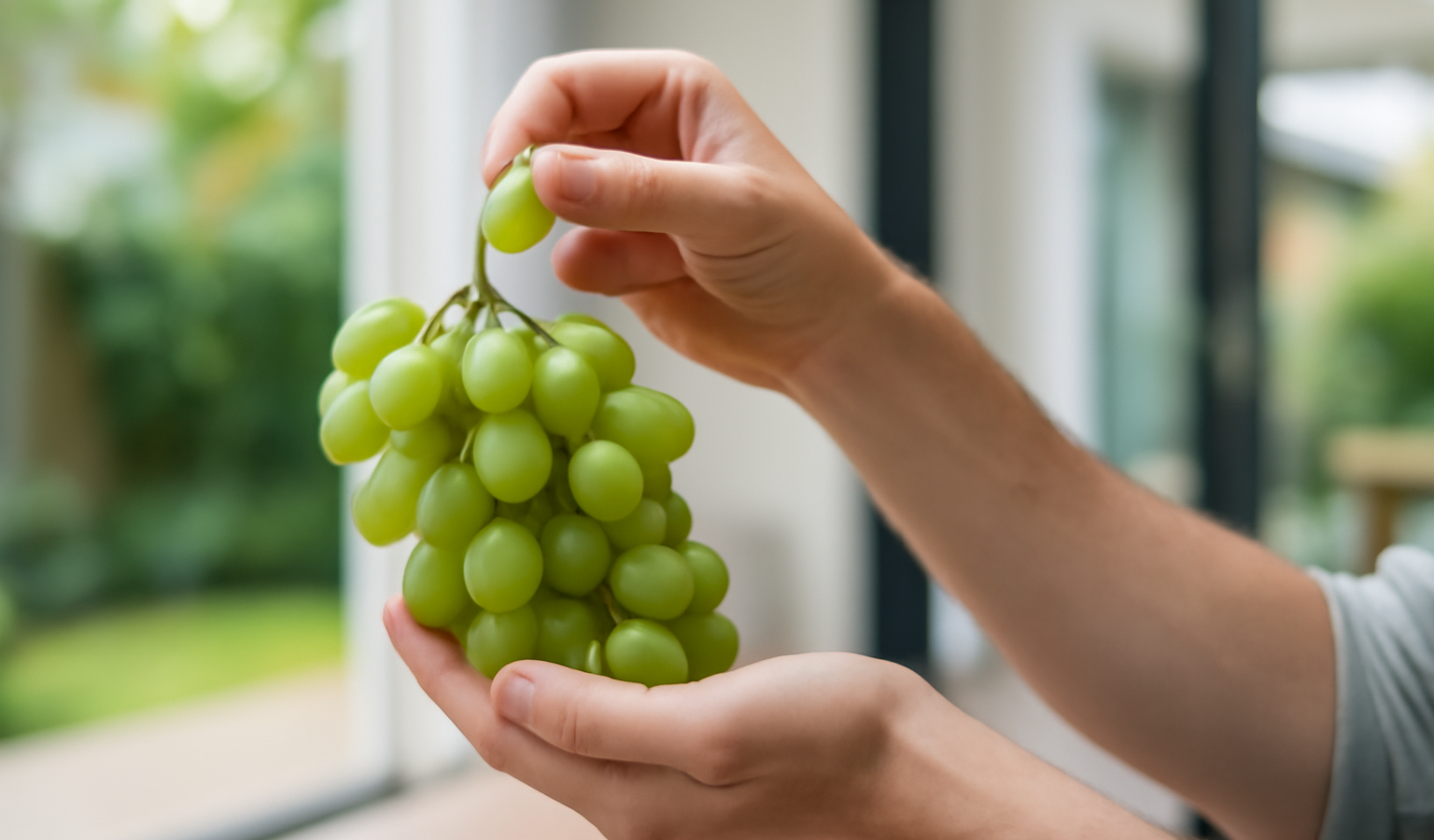
You waited all season, watched the clusters swell, and finally picked a handful of grapes off your own vine, only to recoil at that puckering, mouth-shrinking tartness. It is one of the more disappointing moments in the home orchard, especially when the fruit looks perfectly ripe. The good news is that sour grapes are almost never a disease problem or a sign that your vine is doomed. In nearly every case, the sourness comes down to sugar that never had the chance to accumulate, and once you understand why that happens, the fix is usually within your control.
In this guide
Grape flavor is a balancing act between sugar and acid. A ripe table grape typically lands somewhere around 16 to 24 degrees Brix, which is a measure of dissolved sugar content, while acidity falls as the season progresses. When sugar stays low and acid stays high, you get sour fruit. Three culprits cause this far more often than anything else: not enough sun and heat to finish ripening, harvesting before the fruit is actually ready, and leaving too many clusters on the vine so the sugar gets spread thin. Let’s walk through each one, how to recognize it, and exactly what to do about it.
Key Takeaways
- Grapes are non-climacteric, meaning they do not sweeten after picking, so harvesting too early permanently locks in sour fruit.
- Insufficient sun and heat are the most common cause of sour grapes; vines need 7 to 8 hours of direct sun and adequate warmth to drive sugar accumulation.
- Overcropping, leaving too many clusters per vine, dilutes the available sugar so no single bunch fully ripens.
- A refractometer that reads Brix takes the guesswork out of harvest timing; aim for roughly 18 to 22 Brix on most table grapes before picking.
- Thinning clusters to one or two per shoot, opening the canopy, and matching your variety to your climate are the most reliable ways to grow sweeter grapes.
Cause 1: Too Little Sun and Heat
Grapes are sun-worshippers, and sunlight is the engine that converts the vine’s stored energy into the sugars that make fruit sweet. Without enough light hitting the leaves and the developing clusters, photosynthesis slows, sugar production stalls, and the fruit simply cannot reach a respectable Brix level. Heat matters just as much. Grapes accumulate sugar in response to warmth, and many varieties need a long, hot run of summer days to finish properly. A cool, cloudy season, a shady garden corner, or a vine planted on the north side of a fence can all leave you with tart, underwhelming fruit no matter how patient you are.
How to diagnose it
Start by being honest about your site. Stand by the vine at several points through the day and count the hours of unobstructed, direct sun the leaves actually receive. Anything under six hours is a red flag, and grapes truly want seven to eight hours or more. Look at the position of the clusters too. Bunches buried deep inside a dense, leafy canopy are effectively growing in shade even if the vine as a whole sits in full sun, and those interior clusters will almost always be more sour than the ones hanging in the light. If your fruit also colors up late, ripens unevenly, or never develops the deep, even tone typical of the variety, weak light and heat are very likely the problem.
Climate is the other half of this equation. If you live in a region with short, cool summers and you are growing a variety bred for hot Mediterranean conditions, the vine may never see the accumulated warmth it needs. Cool nights late in the season can also stall ripening even when the days are pleasant. Compare your local growing season against the requirements of the grape you planted; a mismatch here is one of the most common reasons home growers end up with chronically sour fruit.
How to fix it
You cannot move the sun, but you can do a lot to maximize what reaches the fruit. The single most effective step is canopy management: selectively remove leaves around the fruit zone, particularly on the morning-sun side of the row, so light and warm air reach the clusters directly. This practice, sometimes called leaf pulling, is standard in vineyards for a reason. Be careful not to strip every leaf in very hot, sunny climates, where some shade prevents sunburn, but in cool or shaded gardens, opening up the canopy can make a dramatic difference to sugar levels.
Train the vine to a sturdy support that holds the foliage up and spread out, rather than letting it collapse into a tangled mound that shades itself. Growing against a south-facing wall or fence captures reflected heat and can add the extra warmth a borderline variety needs. And if your existing vine is hopelessly shaded, the honest long-term answer may be to relocate it during dormancy to the sunniest spot you have, or to accept that your conditions suit a different, more cool-tolerant grape. For more fruiting plants suited to warm, sunny spots, our guide on how to grow passion fruit covers another heat-loving climber worth considering.
Cause 2: Harvested Too Early (And They Will Not Ripen Off the Vine)
This is the cause that catches the most people out, and it is the one with the cruelest twist. Grapes are non-climacteric fruit, which means they do not continue to ripen or sweeten after they are cut from the vine. Unlike bananas, peaches, or tomatoes, which keep softening and developing sugar on the counter, a grape is locked in at the moment of harvest. Whatever sugar and flavor it has when you pick it is exactly what you get. If you harvested early because the fruit looked the right color, you may have committed yourself to sourness with no way back.
The trap is that color and ripeness are not the same thing in grapes. A red or black grape can turn its full color weeks before the sugar finishes accumulating, and a green grape may look ready long before it tastes ready. Color change, known as veraison, marks the start of the ripening period, not the end of it. Plenty of impatient gardeners see that color shift, assume the job is done, and pick a fruit that still has several more weeks of sugar-building ahead of it.
How to diagnose it
The most reliable diagnostic is simply tasting before you commit. Pick a single grape from the most exposed, sun-bathed part of a cluster, since those ripen first, and taste it. If it is tart and the skin is still tightly attached to the flesh, the vine is not ready. Ripe grapes taste sweet, the seeds inside turn from green to brown, the skin develops a slight give, and the berries detach from the stem more easily. If you harvested and the whole crop was uniformly sour rather than just a few shaded bunches, an early pick is the prime suspect.
For a number instead of a guess, use a refractometer. This inexpensive handheld tool reads the Brix, or sugar concentration, from a single drop of juice squeezed from a crushed berry. Most table grapes are at their best between roughly 18 and 22 Brix, with some varieties pushing into the mid-twenties. Testing a few berries from different parts of the vine every few days as harvest approaches will show you the sugar climbing, and you can pick at the peak rather than guessing from appearance. Once you have done this for a season, you will be amazed how early you were tempted to harvest in the past.
How to fix it
The fix here is patience and information, because there is no rescuing an already-picked sour grape. Leave the fruit on the vine longer than feels comfortable. Grapes hang well and will keep sweetening for weeks after they first color up, so resist the urge to harvest at the first blush. Track Brix with a refractometer if you can, and taste-test from the sunniest clusters as your benchmark. Watch for the birds and wasps, too, as they have an uncanny sense for true ripeness; a sudden surge of pest interest is often nature’s signal that the sugar has finally arrived.
If you have already picked a sour batch, do not throw it out. Underripe grapes are tart but useful: they make a passable verjuice, the acidic culinary juice used in dressings and sauces, and they can be cooked down with sugar into jellies where the natural tartness is an asset. It is not the fresh dessert grape you hoped for, but it saves the harvest. The lesson sticks for next year: with non-climacteric fruit, the vine is the only place ripening happens.
Cause 3: Overcropping (Too Many Clusters Diluting the Sugar)
A young, vigorous grapevine will happily set far more fruit than it can actually ripen, and many gardeners, thrilled to see a heavy crop, leave every last bunch in place. This is a mistake. A vine has a finite capacity to produce sugar through its leaves, and that sugar has to be shared among all the clusters it is carrying. Pile on too many bunches and you simply spread the same amount of sugar across more fruit, so every cluster ends up underwhelming and sour. This is overcropping, and it is a remarkably common reason for disappointing flavor even on healthy, well-sited vines.
Think of it as a budget problem. The vine has only so much energy to spend, set by its leaf area, root system, and the sun and water it receives. A modest crop concentrates that energy into rich, sweet fruit. An excessive crop divides it thinly, and the result is a large quantity of mediocre, tart grapes plus a stressed vine that may struggle to ripen wood and overwinter properly. Quantity and quality pull against each other, and overcropping always wins on quantity at the expense of the sweetness you actually want.
How to diagnose it
Look at how heavily the vine is loaded relative to its size. If a relatively small vine is groaning under dozens of clusters, with multiple bunches on every shoot, it is almost certainly carrying more than it can sweeten. Sourness from overcropping tends to be uniform across the whole vine rather than confined to shaded interior bunches, and it often comes alongside late, sluggish ripening because the vine cannot finish such a large crop before the season ends. Weak, thin shoot growth and a vine that looks exhausted by late summer are further clues that it is overcommitted.
How to fix it
The remedy is cluster thinning, and it is one of the most satisfying acts of restraint in the garden. Shortly after fruit set, go through the vine and remove excess clusters so that each fruiting shoot carries only one or two bunches. Yes, you are throwing developing fruit on the ground, and yes, it feels wasteful, but the clusters that remain will receive a far larger share of the vine’s sugar and ripen sweeter and more evenly as a result. You will trade a big crop of sour grapes for a smaller crop of genuinely good ones, which is a trade worth making every time.
Pair cluster thinning with sound winter pruning. Grapes fruit on the current season’s growth arising from last year’s wood, and a hard dormant pruning that limits the number of buds keeps the following year’s crop in proportion to the vine’s capacity. A vine pruned correctly each winter is far less likely to overcrop itself in the first place. If you tend toward leniency, remember that grapevines are pruned harder than almost any other fruiting plant; removing the vast majority of the previous year’s growth is normal and necessary for sweet fruit.
How to Grow Sweeter Grapes
Once you have identified what went wrong, growing consistently sweet grapes becomes a matter of stacking the right practices together season after season. None of them is complicated, but they reinforce each other, and a vine that gets all of them tends to produce fruit that genuinely earns its place on the table. Here is the full prevention checklist that ties together everything above.
Give them full sun. Plant grapes where they receive a minimum of seven to eight hours of direct sunlight per day, ideally on a south- or west-facing aspect that captures afternoon warmth. This is the foundation of sweet fruit, and no amount of later management compensates for a vine planted in shade. If you are establishing a new vine, choose the sunniest, warmest microclimate your garden offers before you do anything else.
Thin the clusters. After fruit set each year, reduce the crop to one or two clusters per shoot. This concentrates the vine’s sugar into fewer bunches and is the most direct lever you have on sweetness once the vine is in the ground. Combined with disciplined winter pruning, it prevents the overcropping that quietly ruins so many home harvests.
Manage the canopy and pull leaves. Keep the foliage trained up and spread out on a trellis or wires so light penetrates to the fruit, and selectively remove leaves around the clusters to expose them to sun and air. This raises sugar, improves color, and dramatically reduces disease by keeping the bunches dry. In very hot regions, leave a little leaf cover on the afternoon side to guard against sunburn.
Match the variety to your region. Choose grape varieties bred for your climate and length of growing season. A short-season, cool-climate gardener will get far sweeter fruit from an early-ripening variety than from a late, heat-demanding one that never finishes. Your local nursery or extension service can point you to grapes proven to ripen reliably where you live, and this single decision often makes the difference between perennial sourness and dependable sweetness.
Test the Brix and harvest at the peak. Invest in a refractometer and start testing sugar a couple of weeks before you expect to pick. Watch the Brix climb, taste alongside it, and harvest only when the numbers and your palate agree that the fruit has reached its best, typically in that 18 to 22 Brix window for table grapes. Because grapes never sweeten after picking, getting this timing right is the last and most decisive step. If you enjoy diagnosing fruit flavor problems like this, our companion article on why your blueberries taste sour walks through a similar ripeness puzzle, and you can browse our full plants and flowers growing guides for more on getting the best from everything in your garden.
Frequently Asked Questions
Will sour grapes get sweeter if I leave them on the counter?
No. Grapes are non-climacteric, which means they stop ripening the moment they are picked. Whatever sugar level they have at harvest is permanent. Bananas and peaches keep ripening off the plant, but grapes do not, so you must let them sweeten fully on the vine before you cut them.
What Brix level should table grapes reach before I harvest?
Most table grapes taste their best between roughly 18 and 22 degrees Brix, with some sweeter varieties climbing into the mid-twenties. A handheld refractometer reads this from a single drop of juice. Testing every few days as harvest nears lets you pick at the sugar peak rather than guessing from color.
How many clusters should I leave on each grape shoot?
Aim for one or two clusters per fruiting shoot. Removing the excess shortly after fruit set concentrates the vine’s limited sugar into fewer bunches, so the remaining grapes ripen sweeter and more evenly. Leaving every cluster causes overcropping, which dilutes the sugar and produces a large but sour harvest.
Can grapes ripen properly in a partly shaded spot?
Rarely. Grapes need a minimum of seven to eight hours of direct sun to drive the photosynthesis that builds sugar. In shade, the fruit colors up but stays tart because it never accumulates enough sugar. If your vine is shaded, opening the canopy helps, but relocating it to full sun is the real solution.
My grapes turned dark but still taste sour. Why?
Color change, called veraison, marks the beginning of ripening, not the end. A grape can reach full color weeks before its sugar finishes building. Dark, sour grapes simply need more time on the vine, more sun exposure, or a lighter crop load. Taste-test or check Brix rather than relying on color alone.
Sour grapes are frustrating, but they are a solvable problem and almost always a fixable one. In the overwhelming majority of cases the answer is one of three things: the vine did not get enough sun and heat, the fruit was picked before it finished sweetening, or the vine was carrying more clusters than it could ripen. Address the light, respect the fact that grapes never sweeten after harvest, thin your crop, and test your sugar, and next season’s bunches should reward you with exactly the sweetness you have been waiting for.