

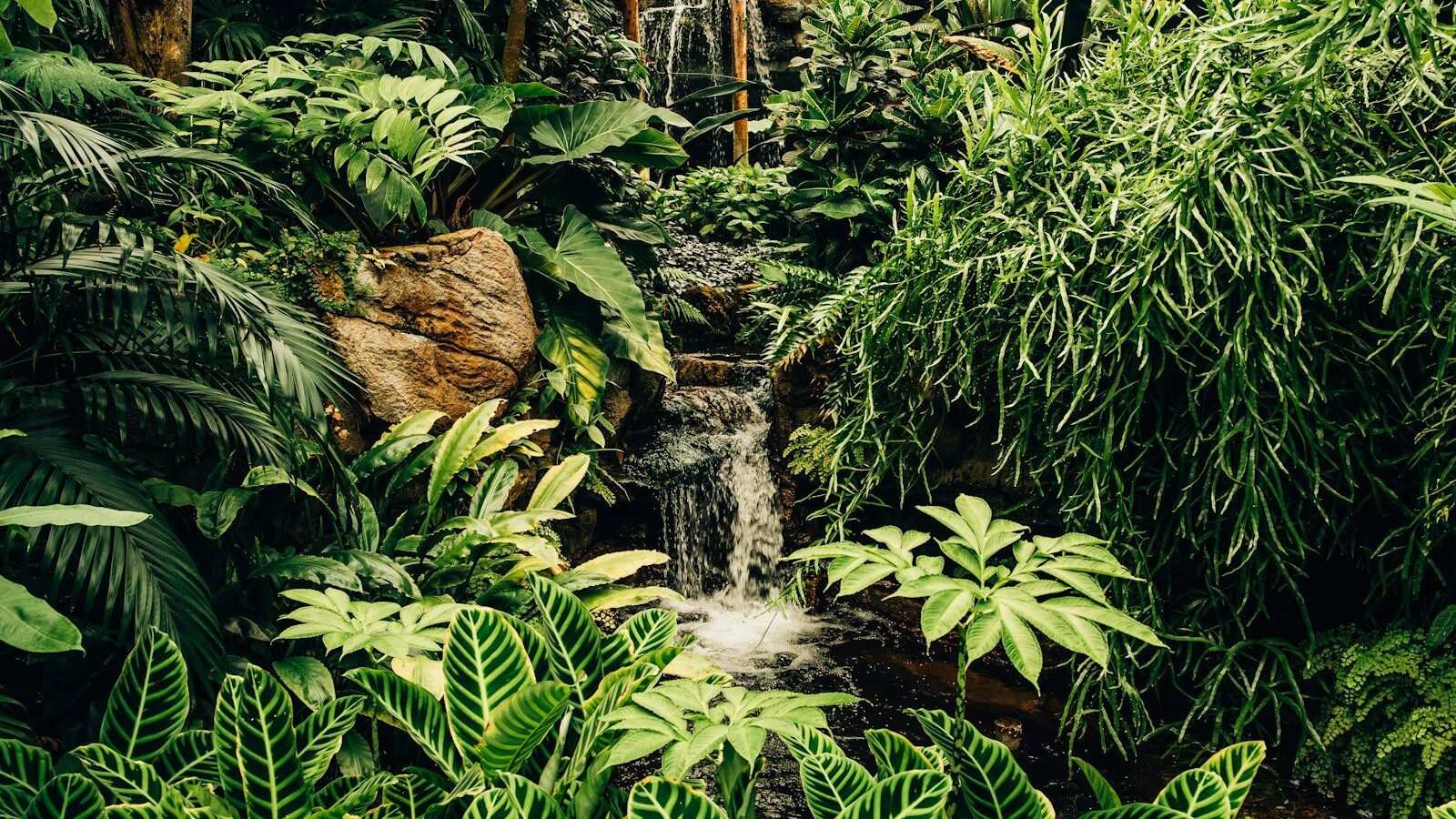
Tropical landscaping is all about lushness — oversized leaves, layered greenery, hot color, and the feeling of a jungle that has been gently tamed. It is the opposite of the spare, gravel-and-line styles: here, more is more, foliage piles on foliage, and the goal is a dense, immersive, resort-like canopy. The good news is you do not need to live in Florida or Hawaii to pull it off. With the right cold-hardy “tropical look-alikes” and a few plants you lift or pot for winter, gardeners well into zone 6 and 7 can build a convincing tropical paradise that explodes every summer. This guide covers the design principles, the genuine tropical palette by zone, cold-climate substitutes, and the hardscape that completes the look.
Key Takeaways
- Tropical style relies on layering — tall canopy, mid-height big-leaf plants, and a lush groundcover floor — for jungle density.
- Bold foliage (banana, canna, elephant ear, palms) carries the look more than flowers; texture and leaf size are everything.
- True tropicals suit zones 9–11, but cold-climate gardeners (zones 6–8) can fake it convincingly with hardy substitutes and lifted tubers.
- Most tropical plants want rich, moisture-retentive soil, regular water, and protection from harsh midday sun and wind.
- Add bold color in big drifts — hibiscus, bougainvillea, canna — and warm hardscape (wood, water, dark mulch) to complete the feel.
Design Principles
The defining principle is layering. A real tropical planting has at least three tiers: a tall overstory of palms, bananas, or tree ferns; a middle layer of big-leaf shrubs and perennials like elephant ears, gingers, and cannas; and a dense floor of groundcovers, ferns, and bromeliads. Stacking those layers is what creates the immersive, enclosed jungle feel — you are walking through the planting, not just past it. Sparse, single-layer beds never read as tropical no matter how exotic the individual plants.
The second principle is bold foliage over flowers. Leaf size, shape, and contrast do the heavy lifting: pair the giant paddle leaves of a banana against the fine, feathery fronds of a palm, then add the glossy heart-shaped leaves of an elephant ear and the strappy fans of a canna. Variegation and dark, near-black foliage punch up the contrast. Flowers are the exclamation points — vivid hibiscus, bird of paradise, bougainvillea — but they sit within a foliage-driven composition.
Third, embrace density and abundance. Plant closer than you would in other styles so the bed fills in and overlaps. Curving, informal bed lines and a winding path that disappears into the greenery heighten the sense of lush mystery. Add the sound and humidity cue of water — a small pond, a fountain, or a misting feature — and warm materials underfoot, and the illusion is complete even in a temperate backyard.
Tropical Plants (by Zone)
True tropicals thrive in zones 9–11. In colder zones you grow them as summer “annuals,” lift their tubers, or pot and overwinter them indoors — covered in the next section. Here is the genuine tropical palette with zones:
- Banana (Musa, Ensete) — zones 9–11 (Musa basjoo hardy to zone 5): the ultimate big-leaf statement. Hardy Japanese banana (Musa basjoo) survives surprisingly cold winters with a heavy mulch over the crown.
- Elephant ear (Colocasia, Alocasia) — zones 8–11: giant glossy heart-shaped leaves; ‘Black Magic’ adds near-black drama. Lift tubers in colder zones.
- Canna lily — zones 7–10: bold strappy foliage and hot flowers; rhizomes lift and store easily, so even zone 5 gardeners grow them as summer stars.
- Palms — zones vary: windmill palm (Trachycarpus, zones 7–10) and needle palm (Rhapidophyllum, zones 6–10) are the cold-hardiest; queen and royal palms need zones 9–11.
- Hibiscus — zones 9–11 (hardy Hibiscus moscheutos zones 4–9): dinner-plate blooms; the hardy perennial type delivers tropical-scale flowers in cold zones.
- Bird of paradise (Strelitzia) — zones 9–11: the iconic crane-like orange flower; a superb container specimen elsewhere.
- Ginger (Hedychium, Zingiber) — zones 7–10: fragrant blooms and lush upright foliage; hardy ginger lilies return in zone 7 with mulch.
- Bromeliads & ferns — zones 9–11 (many ferns to zone 4): the floor and epiphyte layer; hardy ferns fill the same role in cold gardens.
- Bougainvillea & mandevilla — zones 9–11: explosive vine color for warm climates or as potted summer accents.
If you want fragrant ginger as a kitchen crop too, our guide to growing ginger at home covers the rhizome basics that apply to ornamental gingers as well.
Faking the Tropics in a Cold Climate
This is where the style gets fun for zone 6–8 gardeners. The trick is “tropicalismo” — combining a few genuinely hardy big-leaf plants with tender stars you treat as summer guests. Hardy backbone plants that overwinter in the ground (zones 6–7) include Musa basjoo banana, hardy hibiscus, hardy ginger lily, Japanese fiber banana, windmill palm, and bold-leaved perennials like ligularia, rodgersia, and giant-leaved hosta. Around that frame, you plug in tender showstoppers each spring.
- Lift and store: dig canna rhizomes, dahlia tubers, and elephant ear corms after the first frost, dry them, and store in peat in a cool, dark, frost-free spot until spring.
- Pot and overwinter: keep bird of paradise, mandevilla, and tender palms in containers that move into a bright indoor space or a frost-free garage for winter.
- Grow as annuals: treat cheap, fast-growing tropicals (coleus, sweet potato vine, castor bean) as one-season fillers for instant lush volume.
- Hardy look-alikes: use bigleaf perennials — Darmera, gunnera (in mild spots), petasites, and large hostas — to read as “jungle” while surviving cold winters.
The payoff is a bed that looks like Bali from June to October, then gets cut back and mulched for winter. Plant the tender pieces out only after your last frost date and the soil has warmed — tropicals sulk in cold ground.
Soil, Water, and Siting
Most tropicals are heavy feeders and drinkers that evolved in rich, humus-laden forest soil. Work in generous compost, keep the soil consistently moist (but not waterlogged for most species), and feed through the growing season — the giant leaves are expensive for the plant to produce. A thick layer of dark organic mulch retains moisture, feeds the soil, and visually warms the bed. Site big-leaf plants out of strong wind, which shreds those dramatic leaves into tatters, and give many of them dappled or afternoon shade so the foliage does not scorch.
Water is both a practical need and a design element. A small pond or recirculating stream raises local humidity, supports moisture-loving marginals, and adds the sound cue that sells the tropical feel. If you want to build one, our wildlife pond guide covers excavation and liners; edge it with cannas, elephant ears, and ferns for an instant jungle waterline.
Hardscape and Finishing Touches
Tropical hardscape is warm and natural rather than sleek. Favor timber decking, bamboo screens, natural flagstone or pebble paths, and dark mulch over pale gravel and concrete. A bamboo or reed privacy screen encloses the space and blocks views, intensifying the secret-garden feel — and our DIY fence guide covers the posts you can clad in bamboo. Add resort touches: a hammock between two palms, string or torch lighting, oversized glazed pots planted with single specimen tropicals, and a shaded seating nook tucked into the canopy. Keep the color palette hot and saturated — reds, oranges, magentas, and acid greens — for that unmistakable tropical energy. For more style directions, see the Outdoor Living hub.
Frequently Asked Questions
Can I have a tropical garden in a cold climate?
Yes. Combine hardy big-leaf plants that overwinter in the ground (Musa basjoo banana, hardy hibiscus, windmill palm, hardy ginger, bold perennials) with tender stars you lift, pot, or grow as annuals each summer. The bed looks lush from June to October, then gets cut back and mulched for winter.
What plants give the most tropical look?
Big bold foliage carries the style: bananas, elephant ears, cannas, palms, and ferns. Leaf size, shape, and contrast matter more than flowers. Layer tall canopy, mid-height big-leaf plants, and a dense groundcover floor to create the immersive jungle feel.
Do tropical plants need full sun or shade?
It varies. Many big-leaf plants prefer dappled or afternoon shade so their dramatic leaves do not scorch, and most want shelter from strong wind that shreds the foliage. Flowering tropicals like hibiscus and bougainvillea want more sun. Group plants by their light needs.
How do I overwinter tropical plants?
Three methods: lift and store tubers and rhizomes (canna, dahlia, elephant ear) in peat in a cool, frost-free spot; pot tender specimens (bird of paradise, mandevilla, palms) and move them to a bright indoor space; or grow cheap fast-growers as one-season annuals.
What soil do tropical plants need?
Rich, moisture-retentive, humus-heavy soil. Work in generous compost, mulch thickly with dark organic matter to hold moisture, keep the soil consistently moist, and feed through the growing season — those giant leaves are energy-expensive, so most tropicals are heavy feeders and drinkers.