

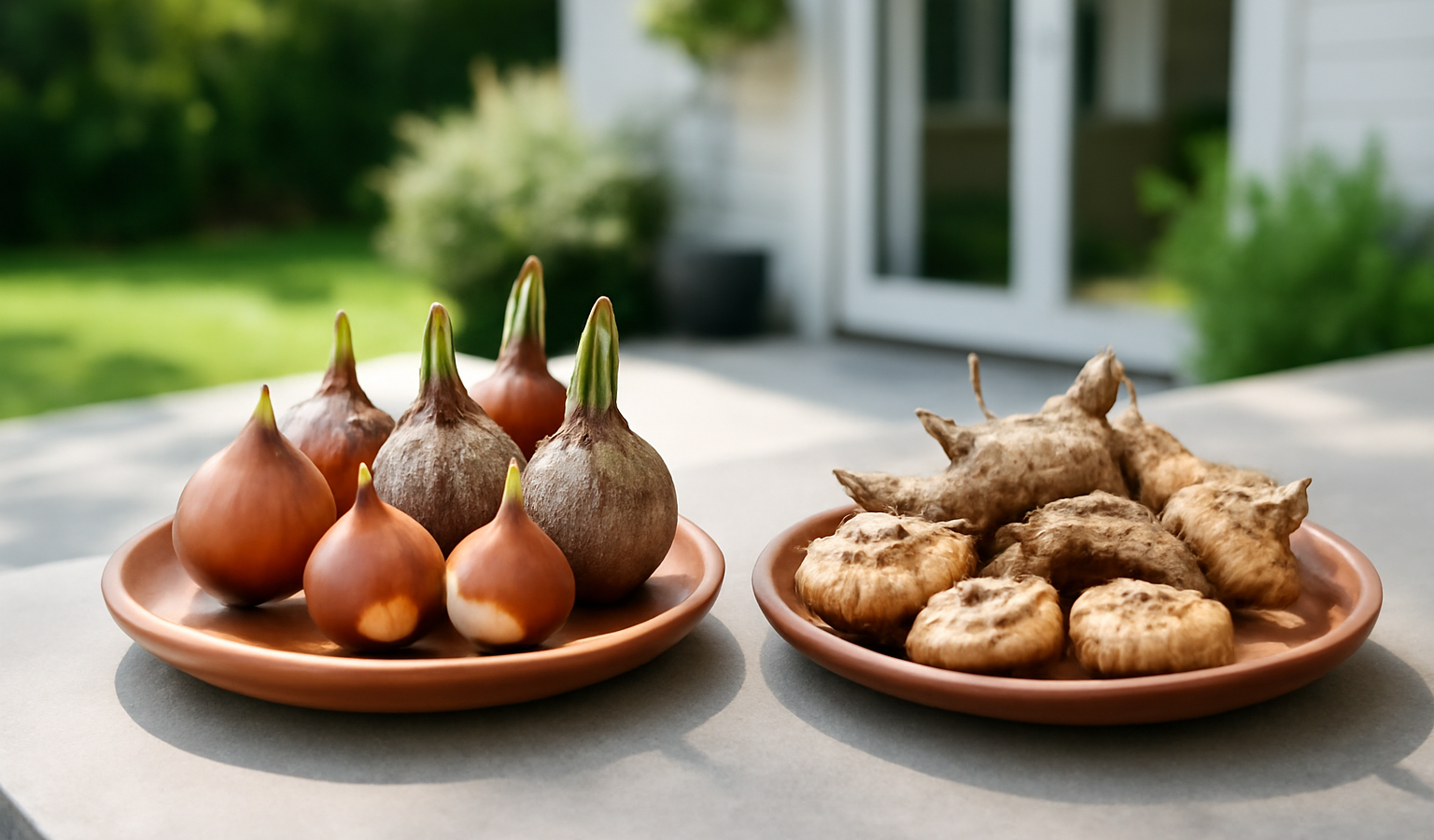
The simplest way to keep your garden in flower from March to October is to grow both kinds of bulbs. Spring-flowering bulbs — tulips, daffodils, crocus, hyacinth, fritillaria — are planted the previous fall and bloom March through May, carrying the garden out of winter. Summer-flowering bulbs — lilies, dahlias, gladiolus, cannas, begonias, caladiums — are mostly planted in spring and bloom June through the first fall frost. Plant them in succession and you never have a bare patch. Here’s how the two groups differ in timing, hardiness, and care, plus how to layer and stagger plantings for color that never quits.
Key Takeaways
- Spring bloomers are planted in fall (Sept–Nov) and flower March–May; summer bloomers are mostly planted in spring and flower June–September.
- Most spring bulbs are hardy and need 12–16 weeks of winter cold; most summer bulbs are tender and need warm soil above 60°F.
- Within spring, bloom runs in waves: crocus and snowdrops first, then daffodils and hyacinth, then mid- and late-season tulips and alliums.
- Stagger gladiolus corm plantings every 10–14 days from spring through midsummer for continuous spikes into fall.
- Lilies are the bridge: planted in fall or spring, fully hardy, and they bloom early-to-late summer to link the two seasons.
- "Lasagna" layering of bulbs at different depths in one pot gives weeks of succession from a single container.
| Feature | Spring-Flowering | Summer-Flowering |
|---|---|---|
| Examples | Tulip, daffodil, crocus, hyacinth, fritillaria | Lily, dahlia, gladiolus, canna, begonia, caladium |
| When planted | Previous fall (Sept–Nov) | Spring, after last frost (lilies also fall) |
| Bloom time | March–May | June–September/first frost |
| Hardiness | Mostly hardy; need winter chill | Mostly tender; lilies are hardy |
| Cold requirement | 12–16 weeks below 45°F | None — want warm soil 60°F+ |
| Winter handling | Leave in ground; many naturalize | Lift and store tender types in cold zones |
| Best role | Early-season color out of winter | Bold mid-to-late-season display |
Spring-Flowering Bulbs: Color Out of Winter
Spring-flowering bulbs are the ones that make winter feel survivable. You plant them in fall, they root and chill through the cold months, and they erupt before almost anything else in the garden is awake. Nearly all of them are hardy bulbs that need a sustained cold period — 12 to 16 weeks below 45°F — to trigger blooming. That’s why the planting window is September through November, once soil cools below 60°F. Plant pointed end up, 2 to 3 times the bulb’s height deep: tulips and daffodils 6 to 8 inches, crocus and muscari 3 to 4 inches, hyacinth around 6 inches.
The Spring Bloom Sequence
Spring isn’t one event — it’s a relay, and you can plant for every leg of it. The earliest wave (late February into March in milder zones) brings snowdrops, winter aconite, and the first crocus, often pushing up through snow. Next come the early daffodils, grape hyacinth (muscari), and hyacinths in late March and April. Then mid-season tulips, fritillaria, and more daffodils fill out April. The grand finale in late April and May belongs to late-season tulips and the towering ornamental alliums. Choose a few varieties from each wave and you’ll have spring color for ten to twelve weeks instead of two.
Hardiness and longevity vary a lot inside this group. Daffodils are nearly indestructible — fully hardy through zone 3, deer- and rodent-proof, and they naturalize into bigger clumps every year. Crocus, muscari, and snowdrops also come back reliably and spread. Most hybrid tulips, on the other hand, are short-lived and fade after a season or two, so many gardeners plant them as annuals or choose perennial-leaning Darwin hybrids and species tulips. In warm zones 8 to 10, tulips, hyacinths, and crocus need pre-chilling in the refrigerator for 12 to 14 weeks because winters there don’t deliver enough cold.
Where Spring Bulbs Shine
Beyond raw bloom, spring bulbs earn their keep in ways summer bulbs can’t match. They flower when pollinators are desperate for early forage — crocus and snowdrops are often the first nectar of the year for emerging bees. They thrive under deciduous trees because they complete their whole cycle before the canopy leafs out and shades the ground, which makes them ideal for woodland edges and beneath shrubs where little else will bloom. And because they go dormant by early summer, you can interplant them with later perennials and annuals that fill the space as the bulb foliage dies back. Plant them in generous drifts of a dozen or more rather than stingy single rows — bulbs always read better in groups, and the small early types especially need numbers to register from a distance.
Summer-Flowering Bulbs: The Mid-Season Powerhouses
Summer-flowering bulbs pick up exactly where spring leaves off and carry the garden through to frost. This group is mostly tender — dahlias, gladiolus, cannas, caladiums, and tuberous begonias all come from warm climates and have no frost tolerance, so they’re planted in spring after the last frost once soil reaches 60°F or warmer. Lilies are the important exception: true lilies (Asiatic, Oriental, trumpet) are fully hardy bulbs that can be planted in fall or spring and overwinter in the ground through zone 4. Because lilies bloom from early summer (Asiatics in June) through late summer (Orientals in August), they bridge the gap between the spring and summer bulb seasons beautifully.
The tender summer bulbs are where you get drama. Dahlias produce blooms from the size of a golf ball to a dinner plate, flowering from midsummer until frost and getting better as the season cools. Gladiolus throw vertical spikes 3 to 4 feet tall in every color. Cannas bring tropical foliage and bold flowers on plants that can top 6 feet. Caladiums and tuberous begonias light up shade with foliage and flowers where most summer bulbs won’t grow. Plant dahlias 4 to 6 inches deep and stake them; gladiolus 4 to 6 inches deep and 4 to 6 inches apart; cannas 4 inches deep with 18 to 24 inches of spacing.
Stagger Gladiolus for Nonstop Spikes
Gladiolus bloom roughly 70 to 90 days after planting and each corm flowers only once, so a single planting gives you one short burst. The fix is succession planting: drop a new batch of corms into the ground every 10 to 14 days from your last frost through about midsummer. Stop new plantings about 90 days before your first expected fall frost. Done right, you’ll have fresh glad spikes opening continuously from July through September instead of one two-week show. The same staggering trick works for dahlias started at intervals, though dahlias rebloom on their own all season once they get going.
Lifting and Storing Tender Summer Bulbs
In zones 7 and colder, tender summer bulbs won’t survive freezing soil, so dig them after the first hard frost blackens the tops. Cure them dry for a week or two, then store dahlias, cannas, and caladiums in slightly damp peat or vermiculite and gladiolus corms dry in mesh bags, all held at 40 to 50°F somewhere frost-free. Lilies stay in the ground — they’re hardy and resent being disturbed. In zones 8 to 10, most tender summer bulbs can overwinter outdoors under mulch. If you’d rather skip storage, treat them as annuals and buy fresh in spring. For more on which bulbs come back on their own, see our guide to hardy vs tender perennials.
How to Choose: Plan for Continuous Color
This isn’t an either/or decision — the best gardens grow both groups in deliberate succession. Map your year in seasons: fall planting buys you spring bloom (crocus, daffodil, tulip, allium), spring planting buys you summer-into-fall bloom (lily, dahlia, gladiolus, canna), and lilies tie the two together in early-to-mid summer. Start a planting plan in fall, fill the summer gaps in spring, and you can realistically have flowers from late February through October from bulbs alone. Pair the planting jobs with our seasonal lists of spring garden tasks so the timing doesn’t slip past you.
If you garden in containers or a small space, the layering trick called "lasagna" planting compresses a whole season into one pot. In a deep container, place the largest, latest-blooming bulbs (tulips, daffodils) at the bottom around 8 inches deep, a middle layer of hyacinth or mid-size bulbs at 5 inches, and small early bulbs (crocus, muscari) near the top at 3 inches. Each layer emerges through the one above it in turn, giving weeks of staggered bloom from a single planting. You can do the same conceptually in a border by mixing early, mid, and late varieties. For more on bulb structure and which types layer well, our explainer on bulbs vs corms vs tubers is a useful companion, and you’ll find more growing guides on the plants and flowers hub.
Frequently Asked Questions
What is the difference between spring and summer-flowering bulbs?
Spring-flowering bulbs (tulips, daffodils, crocus) are planted the previous fall, need winter cold to bloom, and flower March through May. Summer-flowering bulbs (dahlias, gladiolus, lilies, cannas) are mostly planted in spring, need warm soil, and flower June through frost. Most spring types are hardy; most summer types are tender.
Can I plant spring and summer bulbs at the same time?
Generally no. Spring bulbs must go in during fall to get their cold period, while tender summer bulbs would be killed by winter if planted then. The exception is lilies, which are hardy and can go in either fall or spring. Plan two separate planting sessions for full-season color.
Which summer bulbs come back every year?
Lilies are the standout — they’re fully hardy through zone 4 and return for years. Most other summer bulbs (dahlias, gladiolus, cannas, caladiums, begonias) are tender and only return on their own in zones 8 to 10, or if you lift and store them over winter in colder regions.
How do I get continuous bloom all season from bulbs?
Combine fall-planted spring bulbs with spring-planted summer bulbs, choose early, mid, and late varieties within each group, and stagger gladiolus plantings every 10 to 14 days. Lilies bridge the early-summer gap. In pots, use lasagna layering to get weeks of succession from one container.
What is lasagna bulb planting?
It’s layering bulbs at different depths in one container so they bloom in succession. Put large late bulbs like tulips deepest (about 8 inches), mid-size bulbs in the middle (around 5 inches), and small early bulbs like crocus near the top (3 inches). Each layer pushes up through the others in turn for weeks of color.