

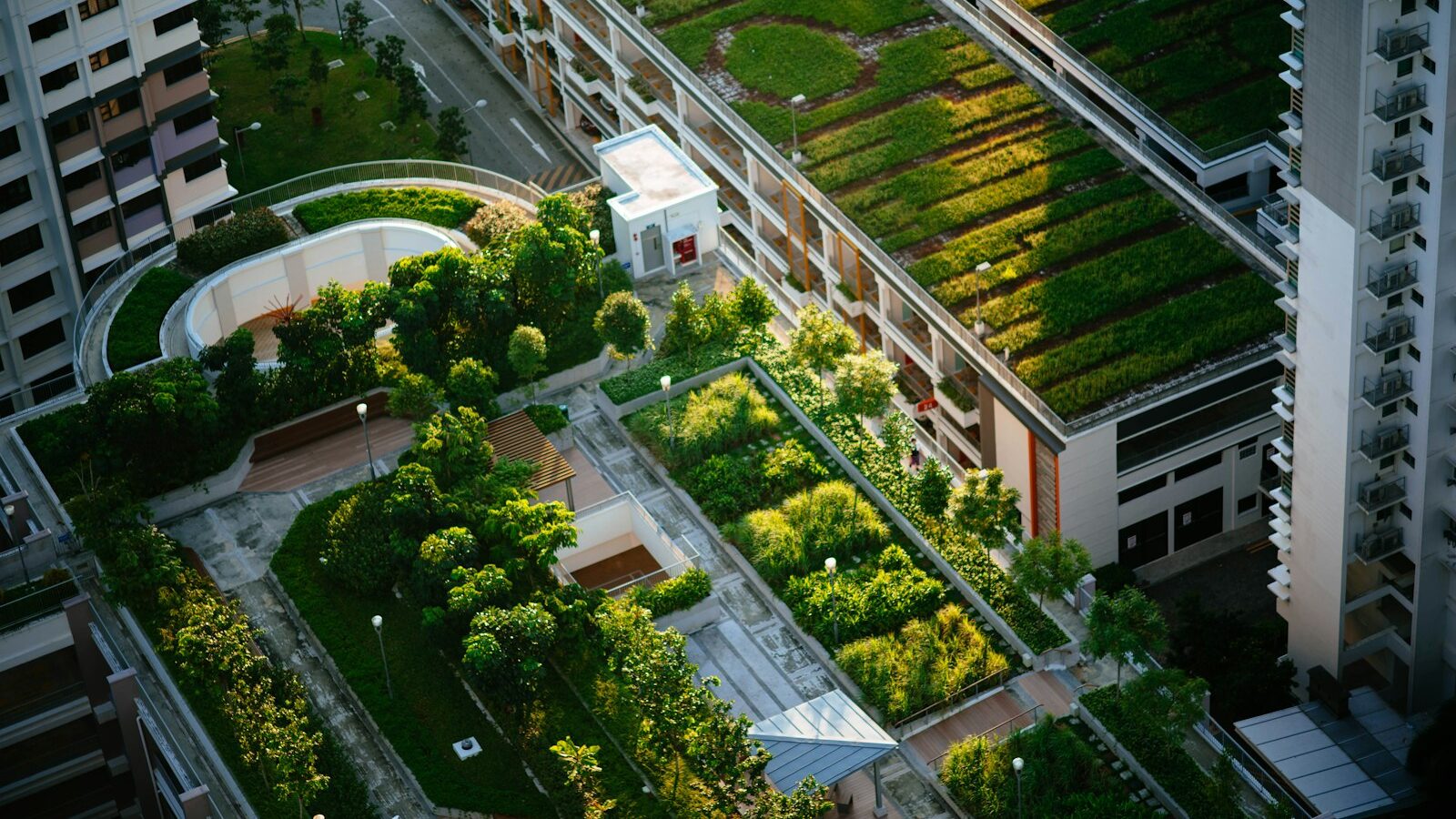
A rooftop or sky garden can turn dead concrete into Singapore’s most coveted outdoor room — a breezy retreat with skyline views, cooler interiors below, and real value for your condo, penthouse or commercial building. But a rooftop is not a balcony with more space: it sits in the full force of tropical sun, monsoon downpours and high-altitude wind, directly above habitable rooms. Get the waterproofing, structural loading or drainage wrong and you are not looking at a few dead plants — you are looking at leaks, ceiling damage and five-figure repair bills.
Key takeaways
- Waterproofing and structural load checks come first — never an afterthought. A planted rooftop adds significant dead and live load, so a Professional Engineer (PE) endorsement is essential before you build.
- Use lightweight engineered growing media, not garden soil, to keep loads down and drainage fast.
- Choose wind- and sun-tolerant species; rooftops are far harsher than ground-level gardens in Singapore.
- NParks Skyrise Greenery (and the LUSH programme) plus BCA Green Mark can offset a meaningful share of your costs — worth checking before you commit.
- Budget realistically: simple rooftop greening starts around S$150–S$300 per m², while full intensive sky gardens with structures run far higher.
Waterproofing and structural load: the two things you cannot get wrong
Everything else on this page is secondary to these two checks. A rooftop garden places water, soil and people directly above an occupied space, so the build-up that protects the slab is the single most important investment you will make.
Waterproofing done properly
- A dedicated waterproofing membrane — typically a torch-on bituminous or liquid-applied system, not the basic screed left by the developer.
- A root barrier above the membrane, so roots cannot penetrate and compromise it over time.
- A protection and drainage layer that moves water to outlets while shielding the membrane from damage.
- Flood testing and proper upstands at every parapet, door threshold and penetration before any soil goes down.
Structural loading and the PE endorsement
Saturated growing media is heavy — often 1,000–1,500 kg per cubic metre when wet — and that is before planters, water features, paving and people. In Singapore you will almost always need a Professional Engineer to assess whether the existing slab can carry the proposed load, and for many additions you will need submissions to BCA for approval. Never assume an existing flat roof is rated for a garden; confirm it in writing. This is precisely why rooftop work belongs with a professional landscaping & design service rather than a DIY weekend project.
Drainage that survives a Singapore downpour
A tropical thunderstorm can dump intense rain in minutes. Your rooftop must shed that volume quickly while still holding enough moisture for plants between showers — a balance that only works with a proper layered system.
- Drainage and reservoir boards that hold a thin layer of water for plant roots while channelling the excess away.
- A filter fabric between media and drainage layer to stop fine particles clogging outlets.
- Falls and outlets sized for peak storm flow, with overflow scuppers as a backup.
- Accessible inspection points so silt and debris can be cleared during maintenance — blocked outlets are the most common cause of ponding and leaks.
Plants that thrive in sun, wind and salt-laden air
Rooftops in Singapore are brutal microclimates: relentless sun, drying wind, reflected heat off parapets, and in coastal or high-rise locations, salt and gusts that shred soft foliage. Choose tough, established species and your garden looks good with minimal fuss.
Reliable choices for exposed rooftops
- Hardy groundcovers and succulents such as Sedum, Portulaca and Zoysia turf for thin, dry build-ups.
- Wind-tolerant shrubs and grasses like Spider Lily (Crinum), Mexican Heather, Fountain Grass and Lemongrass.
- Sun-loving flowering plants — Bougainvillea, Frangipani (Plumeria) and Ixora bring colour and cope with heat.
- Structural palms or small trees for intensive gardens only, where loading and root space allow — always wind-rated and properly anchored.
Tall, top-heavy specimens need staking or guying until established. If you also want greenery on parapets or service cores, pair the rooftop with green walls for a fuller, more sheltered planting scheme.
Lightweight growing media and irrigation
Two systems quietly decide whether your rooftop garden survives: what the plants grow in, and how they get water in our hot, fast-draining conditions.
Engineered media, not garden soil
- Use lightweight blends based on materials like expanded clay, perlite, coco coir and composted organics — far lighter than topsoil and free-draining.
- Keep media depth to the minimum each plant needs: extensive (shallow, low-maintenance) build-ups can be 100–150 mm; intensive gardens with shrubs and trees need much deeper, heavier profiles.
- Heavier intensive profiles must be reconciled with your structural assessment before specifying.
Automated irrigation is almost non-negotiable
Exposed rooftops dry out fast, and hand-watering a sky garden in the midday sun is impractical. A well-designed automated irrigation system — typically drip lines for beds and planters, with a timer and rain or moisture sensor — keeps plants healthy, saves water and protects your investment while you are away. Pair it with a convenient water point and, where possible, rainwater harvesting.
Shade, pergolas and safe maintenance access
A rooftop you cannot comfortably use — or safely maintain — is wasted space. Designing for shade and access from the start turns it into a genuine extra room.
- Shade structures: pergolas, louvred roofs, shade sails or trellises with climbers cut glare and heat, and create usable space at midday. All must be wind-rated and properly fixed — not weighed down with loose blocks.
- Wind comfort: planters, screens and glass balustrades can buffer gusts on exposed penthouses and commercial rooftops.
- Maintenance access: ensure safe routes to outlets, irrigation valves and tall planting, plus parapet heights and fall-protection that meet safety requirements — especially on commercial buildings.
- Surfaces: use slip-resistant, heat-tolerant decking or pavers laid on pedestals so the drainage layer below stays accessible.
Get free rooftop garden quotes in Singapore
Tell us about your rooftop and we’ll match you with vetted local landscaping pros island-wide. Free, no obligation.
Skyrise greenery incentives and BCA Green Mark
Singapore actively encourages rooftop and sky gardens, and the right scheme can offset a useful slice of your costs — so check eligibility before you build, not after.
- NParks Skyrise Greenery Incentive Scheme (SGIS): co-funds a portion of installation costs for qualifying rooftop greenery and green walls on existing buildings — particularly relevant for commercial and strata developments.
- LUSH (Landscaping for Urban Spaces and High-Rises): the URA programme that promotes and, for many new developments, requires replacement greenery including sky terraces and rooftop gardens.
- BCA Green Mark: greenery, reduced heat gain and rainwater management can contribute towards Green Mark certification for commercial and larger residential buildings.
Schemes, funding caps and criteria change over time, so confirm current details with NParks, URA and BCA, or ask your contractor to advise on what your project qualifies for.
Typical costs in Singapore
Costs vary widely with access, structure, planting depth and the extent of waterproofing works. Use these as planning ranges only — always get a site-specific quote.
- Extensive (lightweight) rooftop greening: roughly S$150–S$300 per m² for shallow, low-maintenance planting over a basic build-up.
- Intensive sky gardens: commonly S$350–S$700+ per m² once you add deeper media, shrubs, paving, lighting and irrigation.
- Waterproofing and root barrier: a significant separate line item — often tens of thousands of dollars for a full re-waterproof on an existing roof.
- Structures: pergolas, louvred roofs, decking and water features can each add several thousand to tens of thousands of dollars.
- Professional fees: design, PE endorsement and any BCA submissions are additional but essential.
For a full picture of options across planting, structures and systems, browse all Singapore services.
Why this needs a professional
A rooftop garden combines waterproofing, structural engineering, drainage and horticulture — over an occupied space, in one of the world’s harshest planting climates. A botched membrane or an overloaded slab does not just kill plants; it damages the building and the rooms below, and the repair cost dwarfs any DIY saving. A qualified designer coordinates the PE, specifies the right build-up, selects species that survive the wind and sun, and sorts out incentive applications. It is the difference between a sky garden that lasts decades and one that leaks within a year.
Frequently asked questions
Do I need approval to build a rooftop garden in Singapore?
Often, yes. Adding load to a roof typically requires a Professional Engineer’s assessment, and many additions or alterations need BCA approval. New developments may also fall under URA’s LUSH requirements. Always confirm with a qualified professional before starting.
Will a rooftop garden cause leaks?
Not if it is built correctly. Leaks happen when waterproofing, root barriers or drainage are skimped on. A dedicated membrane, root protection, proper falls and flood testing — installed by professionals — are what prevent water ever reaching the rooms below.
Can my existing condo or penthouse roof take the weight?
You cannot assume so. Saturated growing media, planters and people add substantial load. A Professional Engineer must check the slab’s capacity and may require strengthening or limit you to a lightweight, shallow build-up.
What are the best low-maintenance rooftop plants for Singapore?
Hardy, sun- and wind-tolerant species such as Sedum, Portulaca, Zoysia turf, Mexican Heather, Fountain Grass, Bougainvillea and Frangipani perform well. Pair them with automated drip irrigation to keep maintenance low.
Are there grants for rooftop greenery?
Yes — NParks runs the Skyrise Greenery Incentive Scheme that co-funds qualifying rooftop greenery and green walls on existing buildings, and rooftop greenery can support BCA Green Mark certification. Criteria and funding change, so verify current terms with the relevant agencies.