

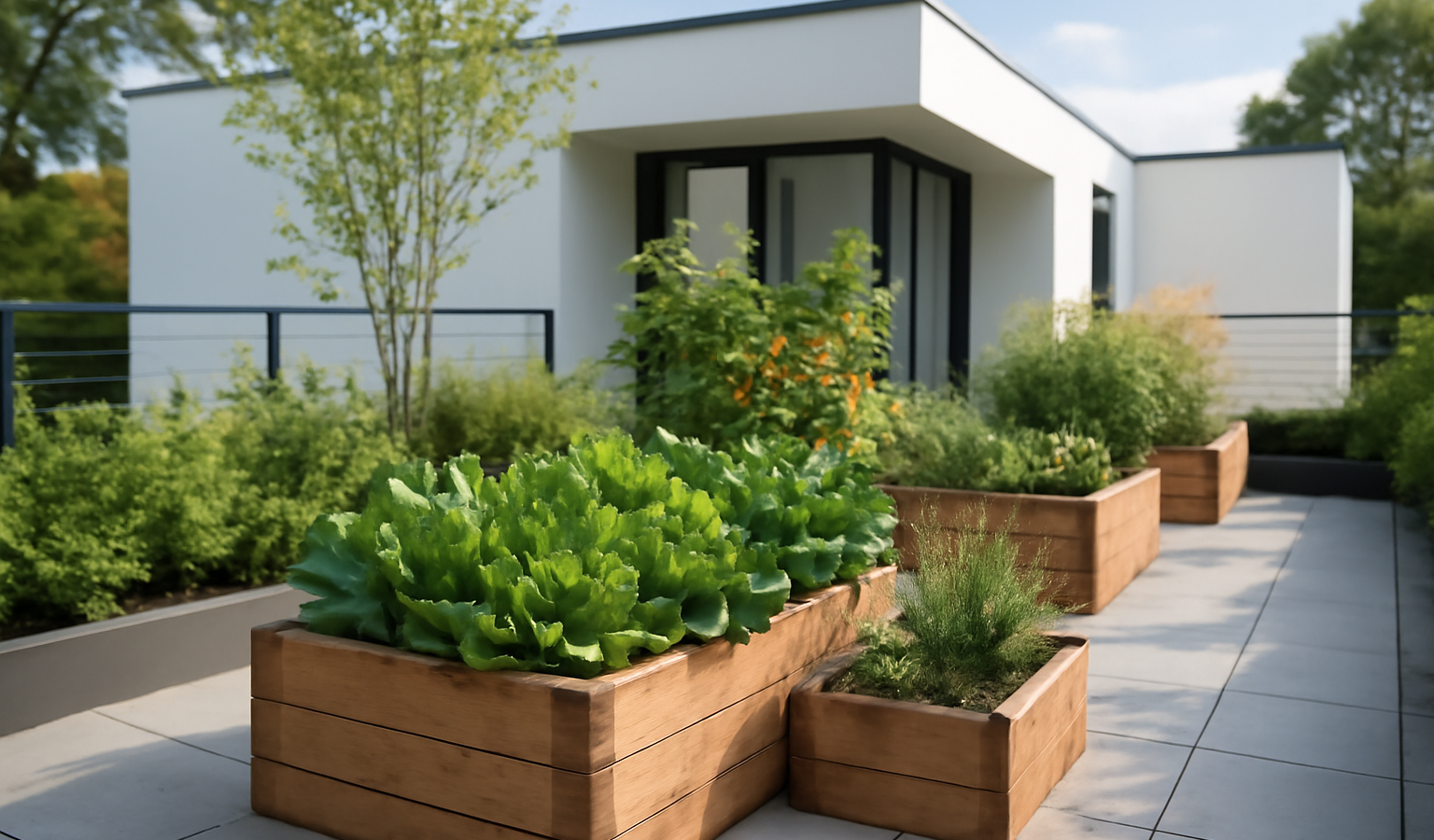
A rooftop garden turns dead space into a living retreat — fresh herbs steps from the kitchen, a green view above the city, and a cooler building below. But a roof is not a backyard. Before you haul up a single planter, you have to reckon with weight, waterproofing, wind, and access, because a garden’s load can be the difference between a beautiful terrace and a structural emergency. This guide covers the safety fundamentals first — load limits, structure, and drainage — then moves into design ideas, the best wind-tough plants, container and growing-medium choices, and the practical care a sky garden needs. Get the engineering right and the rest is a pleasure.
Key Takeaways
- Weight comes first: never add a rooftop garden without confirming the load capacity with a structural engineer — saturated soil and pots are heavy.
- Place heavy loads over supports: position the biggest planters over load-bearing walls, columns, and roof edges, not the unsupported center.
- Use lightweight everything: fiberglass or plastic pots and soilless mixes with perlite and coir cut weight dramatically versus terracotta and garden soil.
- Plan for wind and sun: rooftops are hotter, windier, and drier than ground level — choose tough plants and add windbreaks.
- Protect the roof: proper waterproofing, root barriers, and drainage prevent leaks and ponding that damage the structure.
Step One: Know Your Weight Limit
This is the part you cannot skip or guess. Roofs are engineered to carry a specific load, and a garden adds substantial, permanent weight — especially once soil and containers are saturated with water, which can double their dry weight. A few large planters of wet soil can run into hundreds of pounds, concentrated on a structure that may not have been designed for it.
Before committing to anything beyond a couple of small pots, consult a structural engineer or your building management. They can tell you the roof’s load capacity, expressed in pounds per square foot (psf), and how much “dead load” (permanent weight like soil and planters) and “live load” (people, furniture, snow) it can safely carry. For renters and condo owners, get written permission and confirm the lease or bylaws allow a rooftop garden at all. Skipping this step risks structural damage, water intrusion, and serious liability. No design idea in this guide matters until your weight budget is established.
Distributing the Load Correctly
Once you know your limit, how you arrange weight matters as much as how much you add. Roofs are strongest over their supports and weakest in the middle of an unsupported span. Apply these rules:
- Position heavy planters over load-bearing elements — perimeter walls, columns, and beams. The roof edge above an exterior wall is typically the strongest zone.
- Keep the center light. Reserve the middle of the span for lightweight items: small pots, seating, or open paving.
- Spread the load with wide bases, pavers, or platforms under containers rather than concentrating weight on small points. Pedestal pavers distribute weight and protect the membrane.
- Group, don’t pile. Avoid stacking soil-heavy features in one corner; distribute the garden evenly within the structurally sound zones.
When in doubt, your engineer can map the safe zones for heavier features. Treat that map as the skeleton your design hangs on.
Waterproofing, Root Barriers, and Drainage
Water is a roof’s enemy, and a garden adds a lot of it. Before planting, make sure the roof has a sound waterproof membrane in good condition; repair or upgrade it first, because fixing a leak under an established garden means tearing the garden out. Over the membrane, a root barrier prevents aggressive roots from probing seams and causing leaks — essential for anything beyond shallow-rooted annuals.
Drainage protects both your plants and the structure. Standing water adds weight, rots roots, and stresses the membrane. Raise containers slightly on feet or pavers so water flows beneath them to the roof drains, and never block existing roof drains or scuppers. For built-up planting beds, include a drainage layer and a filter fabric so water exits freely while soil stays put. Good drainage and waterproofing aren’t glamorous, but they’re what keep the building dry and the garden alive.
Managing Wind, Sun, and Exposure
Rooftops are extreme environments. With no surrounding buildings or trees to buffer them, plants face stronger wind, more intense and reflected sun, faster-drying soil, and bigger temperature swings than at ground level. Wind is the biggest challenge — it desiccates leaves, topples tall plants, and can launch lightweight pots.
Tame it with windbreaks: slatted screens, trellis panels with climbers, or sturdy railing planters that filter rather than fully block wind (a solid barrier creates damaging turbulence on the leeward side). Anchor or weight tall containers, and secure trellises firmly. For sun and heat, choose drought-tolerant, sun-loving plants, use light-colored containers that don’t bake roots, and plan for more frequent watering — rooftop soil dries out fast. A bit of afternoon shade from a pergola or umbrella protects both plants and people.
Lightweight Containers and Growing Medium
Since weight is your master constraint, every material choice should favor the lightweight option. For containers, choose fiberglass, plastic, resin, or fabric grow bags over heavy terracotta, concrete, or glazed ceramic. These look good, insulate roots, and weigh a fraction as much.
For growing medium, never use ordinary garden soil — it’s heavy, especially wet, and compacts. Use a lightweight soilless potting mix based on coir or peat, blended with perlite, vermiculite, or pumice for aeration and reduced weight. Many rooftop gardeners use commercial “green roof” media engineered to drain fast and weigh little when saturated. Fill only as deep as each plant needs; herbs and shallow-rooted edibles thrive in 6 to 8 inches, while small shrubs need more. Less depth means less weight and less water to carry up.
Best Plants for a Rooftop Garden
Choose plants that shrug off sun, heat, wind, and lean conditions. The toughest performers include:
- Sedums and sempervivums: the classic green-roof plants — succulent, drought-proof, shallow-rooted, and nearly indestructible.
- Ornamental grasses: little bluestem, fountain grass, and feather reed grass sway gracefully and handle wind well.
- Mediterranean herbs: rosemary, thyme, sage, oregano, and lavender love heat, sun, and dry soil — and earn their space in the kitchen.
- Sun-loving perennials: coneflower, black-eyed Susan, yarrow, and salvia bring color and pollinators with little fuss.
- Compact edibles: cherry tomatoes, peppers, lettuce, kale, strawberries, and dwarf beans do well in containers with frequent watering.
- Hardy small shrubs: dwarf junipers, potentilla, and compact spireas add structure where the load budget allows.
Favor compact and dwarf cultivars to keep both weight and wind exposure down. Group plants with similar water and sun needs so a single watering routine suits the whole bed.
Design Ideas to Bring It Together
With the engineering handled, the fun begins. A few approaches that work beautifully on roofs:
- Container clusters: the simplest, most flexible scheme — group pots of varying heights over the strong zones and rearrange as you like.
- Vertical gardens: living walls, trellises, and wall-mounted planters add greenery without floor-level weight, and double as windbreaks.
- Raised beds for edibles: lightweight raised planters over load-bearing edges create a productive kitchen garden in the sky.
- An outdoor room: define a seating area with weatherproof furniture, a pergola for shade, outdoor rugs, and lighting for evening use.
- A green-roof carpet: a shallow sedum mat covers large areas with minimal weight and maintenance while cooling the building.
For more layout inspiration and outdoor-living projects, see our Outdoor Living hub, and if you’re working with limited square footage, our Urban Gardening hub is full of small-space and container ideas that translate perfectly to a rooftop.
Ongoing Care
Rooftop gardens dry out faster than ground gardens, so watering is the main ongoing task. A drip irrigation system on a timer is a worthwhile investment — it keeps containers evenly moist without hauling cans up stairs and is far more efficient than hand watering in wind and heat. Feed container plants regularly through the season, since frequent watering flushes nutrients from the limited soil volume. The same fundamentals of feeding and watering that keep any planting lush apply here; our guide to feeding and watering for greener growth explains the principles. Check anchoring and ties after storms, refresh growing medium each spring, and keep roof drains clear of leaves and debris year-round.
Frequently Asked Questions
How do I know if my roof can support a garden?
Consult a structural engineer or your building management before adding any significant weight. They’ll tell you the roof’s load capacity in pounds per square foot and how much permanent (dead) and temporary (live) load it can carry. Saturated soil and containers are very heavy, so this assessment is essential — never guess.
Where should I place the heaviest planters?
Over load-bearing structure — perimeter walls, columns, and beams — never the unsupported center of the roof. The edge above an exterior wall is usually the strongest zone. Keep the middle of the span light, and spread weight with pavers or wide bases rather than concentrating it on small points.
What soil should I use on a rooftop?
Never ordinary garden soil — it’s heavy and compacts. Use a lightweight soilless potting mix based on coir or peat with perlite, vermiculite, or pumice, or a commercial green-roof medium engineered to drain fast and stay light when wet. Fill containers only as deep as each plant needs to minimize weight.
How do I deal with wind on a rooftop garden?
Add filtering windbreaks like slatted screens or trellis with climbers rather than solid walls, which create damaging turbulence. Anchor or weight tall containers, choose sturdy wind-tolerant plants and compact cultivars, and secure trellises firmly. Wind also dries soil quickly, so plan for more frequent watering.
Do I need to waterproof my roof before planting?
Yes. Ensure a sound waterproof membrane is in place and in good condition first, since repairing it later means removing the whole garden. Add a root barrier over the membrane, keep containers raised for drainage, and never block roof drains. Proper waterproofing and drainage protect both the building and your plants.