

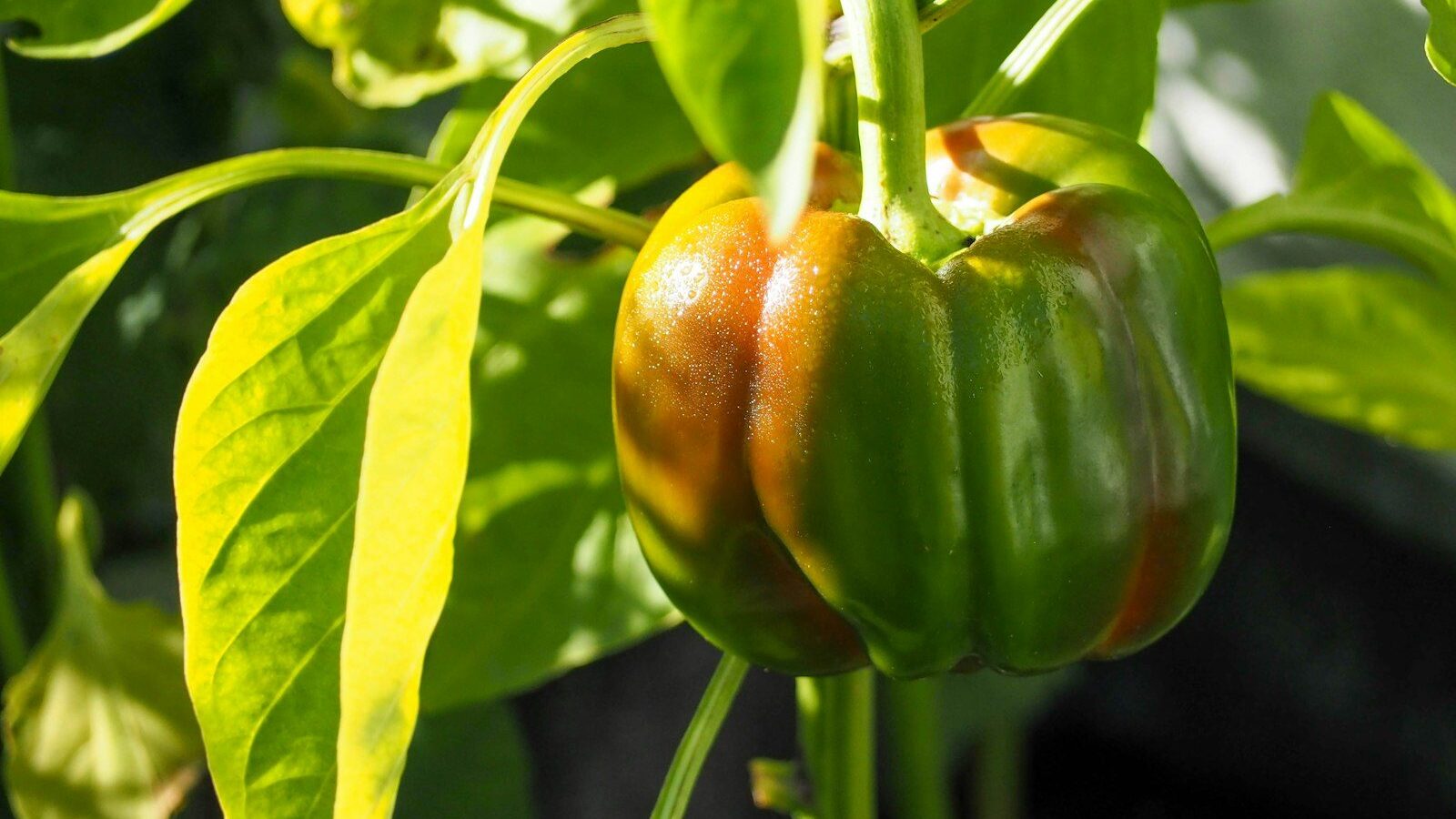
Yes, red and green bell peppers usually come from the same plant. A green bell pepper is simply a full-sized fruit picked before it ripens; leave it on the plant another few weeks and most varieties turn red, sweeter and higher in vitamins. The trade-off for the gardener is yield: picking peppers green keeps the plant setting new fruit, while letting every pepper ripen to red slows production. For the best of both, pick the first flush green to keep the plant productive, then let later peppers ripen to red as the season winds down. Here is how ripening works, what changes along the way, and how to decide when to pick.
Part of our Vegetable Gardening & Raised Beds guide →
In this guide
- Red vs Green Bell Peppers at a Glance
- Why Green Peppers Turn Red
- How Long Does It Take a Green Pepper to Turn Red?
- Flavor and Kitchen Use
- Nutrition Differences
- The Yield Trade-Off in the Garden
- Risks of Leaving Peppers to Ripen
- How to Get More Red Peppers
- Can Picked Green Peppers Turn Red?
- How to Tell When to Pick
- Which Should You Choose?
- Frequently Asked Questions
Key Takeaways
- Green bells are immature fruit. Red, yellow and orange bells are the same fruit fully ripe, depending on variety.
- Ripening from green to red typically adds 2 to 4 weeks on the plant, longer in cool weather.
- Red peppers are sweeter and milder, with more vitamin C and carotenoids; green peppers are crisper and slightly bitter.
- Picking green encourages more fruit set, so total pounds per plant are usually higher.
- Ripening needs warm, steady temperatures. Cool nights and very hot days both slow color change.
Red vs Green Bell Peppers at a Glance
| Factor | Green bell pepper | Red bell pepper |
|---|---|---|
| Ripeness | Mature size, unripe | Fully ripe |
| Typical days from transplant | About 60–75 | About 80–100 |
| Flavor | Grassy, crisp, slightly bitter | Sweet, fruity, mild |
| Texture | Firm, thick crunch | Slightly softer, juicy |
| Vitamins | Good source of vitamin C | Higher vitamin C and much more beta-carotene |
| Yield per plant | Higher (frequent picking) | Lower (plant slows new fruit) |
| Shelf life | Longer | Shorter; softens sooner |
| Risk on the plant | Low | More exposure to sunscald, rot and pests |
Why Green Peppers Turn Red
A pepper fruit grows to full size first, then ripens. During ripening, the green chlorophyll in the skin breaks down while the fruit builds carotenoid pigments. In red varieties, the main pigments are capsanthin and capsorubin, which are found almost only in peppers. In yellow and orange varieties, different carotenoids dominate. Sugars rise at the same time, and the grassy compounds responsible for green pepper flavor fade.
Because the color comes from ripeness, the color of a “green bell pepper” in the store is not a variety. Most supermarket green bells are varieties that would turn red if left on the plant. Varieties that ripen yellow, orange, purple, white or chocolate brown also start green, with a few exceptions such as purple types that turn purple before ripening fully to red. Seed packets list the mature color, for example “green to red” or “green to yellow.”
How Long Does It Take a Green Pepper to Turn Red?
Once a pepper reaches full green size, expect roughly 2 to 4 more weeks for it to turn completely red in warm summer weather. Seed catalogs often list two numbers for days to maturity: one for green and a later one for red. The gap is usually around 15 to 25 days, but cool weather can stretch it to five or six weeks.
Ripening is fastest when daytime temperatures run in the 70s to mid-80s Fahrenheit and nights stay above about 60°F. Below that, color change crawls. Above about 90°F, plants stress, and ripening and fruit set both stall. In short northern seasons, that is why many gardeners see full-size green peppers in September that never color before frost. Our guide on why peppers are not turning red covers the full list of causes and fixes.
Flavor and Kitchen Use
Green bell peppers have a sharp, vegetal, slightly bitter flavor and a firm crunch. They hold up in long-cooked dishes such as gumbo, jambalaya, chili and stuffed peppers, and they are part of the Cajun and Creole “holy trinity” with onion and celery. Many cooks prefer them for fajitas and stir-fries where a little bitterness balances rich food.
Red bell peppers are noticeably sweeter, with fruity notes and less bite. They shine raw in salads and crudités, roasted and peeled, in romesco and red pepper soups, and anywhere you want color. Partly colored peppers, picked when they are breaking from green to red, land in between and are excellent for grilling.
Nutrition Differences
All bell peppers are low in calories and high in vitamin C. As the fruit ripens to red, vitamin C rises further and carotenoids, including beta-carotene that the body converts to vitamin A, increase dramatically. Green peppers contain more chlorophyll and some different plant compounds, but if you are eating peppers for vitamins, red has the edge. Yellow and orange peppers sit in between, with their own carotenoid mix.
The Yield Trade-Off in the Garden
A pepper plant has a limited budget of energy. While mature fruits are ripening, they draw sugar from the plant and send hormonal signals that slow the formation of new flowers and fruit. Picking peppers as soon as they reach full green size relieves that load, and the plant responds by setting more. This is why commercial growers who sell green peppers often get several harvests from a field, while red pepper crops are typically fewer, slower and more expensive to produce.
In a home garden, the difference shows up as total pounds per plant. You will usually harvest more peppers by picking green and fewer, sweeter peppers by waiting for red. Neither is wrong; it depends whether you want quantity or flavor.
Risks of Leaving Peppers to Ripen
- Sunscald: Ripening fruit exposed to hot afternoon sun can develop pale, papery patches. Keep foliage healthy and use 30 to 40 percent shade cloth during heat waves in hot climates.
- Blossom-end rot: Dark, sunken spots at the bottom of the fruit come from calcium not reaching the fruit, usually because of uneven watering. Keep soil evenly moist.
- Pests: Stink bugs, pepper maggots and birds target ripening fruit. The longer a pepper hangs, the more chances they have.
- Rot after rain: Heavy, ripe fruit is more likely to split or rot during wet weather.
- Broken branches: Pepper stems are brittle. Stake or cage plants that carry several large ripening fruits.
How to Get More Red Peppers
- Choose faster varieties. Look for bell varieties with shorter days-to-red ratings, and consider smaller “lunchbox” or mini bell types, which ripen faster than big blocky bells.
- Start early and transplant on time. Start seeds indoors 8 to 10 weeks before your last frost and transplant once nights stay above 55°F.
- Use heat. Black plastic mulch, a south-facing wall or large dark containers warm the root zone and speed growth in cool climates. See our guide to growing peppers in containers.
- Pick the first few green. Removing early fruit while the plant is still small lets it build a bigger frame before you let fruit ripen.
- Feed for fruit. Too much nitrogen gives lush leaves and slow fruit. Switch to a balanced or lower-nitrogen fertilizer once flowering starts.
- Water evenly. About 1 to 2 inches a week, more in heat, with mulch to hold moisture.
Can Picked Green Peppers Turn Red?
Partly. A pepper that has started to blush, showing streaks or patches of red, will usually continue coloring on the counter at room temperature over several days, especially in a paper bag with a ripe banana or apple. A pepper picked fully green may change color a little, but it will not develop the same sweetness as one ripened on the plant, because the sugars come from the plant, not the fruit. At the end of the season, pick all peppers before frost; frost-damaged fruit turns soft and spoils.
Another option before a hard frost is to pull the whole plant and hang it upside down in a garage or shed. Some fruit will continue to color slowly, though results vary. In mild climates, peppers can also be overwintered indoors and will start fruiting earlier the next year.
How to Tell When to Pick
For green peppers, pick when the fruit reaches the size listed for the variety, the walls feel thick and firm, and the skin is glossy. Soft or thin walls mean it needs more time. For red, wait until the fruit is fully colored with no green patches; it will still feel firm. Always cut peppers with pruners or scissors, leaving a short stem, rather than pulling, which can snap branches. Our full guide on how to grow bell peppers covers planting, feeding and support from start to finish.
Which Should You Choose?
- If you want the most peppers per plant, pick green and pick often.
- If you want sweetness and vitamins, let them ripen fully to red, and accept a smaller harvest.
- If you have a short or cool season, pick most green, and choose an early variety for a few red.
- If you grow in a hot climate, ripen in spring and fall, when temperatures are steadier, and pick green in midsummer heat.
- If you want both, pick the first flush green, then let late-summer fruit ripen as the plant slows down anyway.
For more crops that suit beds and containers alike, browse our vegetable gardening guide.
Frequently Asked Questions
Are red and green bell peppers the same plant?
In most cases, yes. A green bell pepper is the unripe fruit of a variety that turns red, yellow or orange when fully ripe.
Why are red peppers more expensive?
They take weeks longer on the plant, reduce how many peppers each plant produces, and are more prone to damage and spoilage, so they cost more to grow and ship.
Do all green peppers turn red?
No. Depending on variety, they may ripen to yellow, orange, purple, chocolate or red. A few varieties are bred to stay green longer, but they will eventually change color.
Is it better to pick peppers green or red?
It depends on your goal. Green gives more fruit and a crisp, savory flavor. Red gives sweeter, more nutritious peppers but fewer of them.
Why are my green peppers not turning red?
Usually cool nights, very hot days, too little time left in the season, or a plant carrying too much fruit. Warm, steady temperatures and patience solve most cases.