

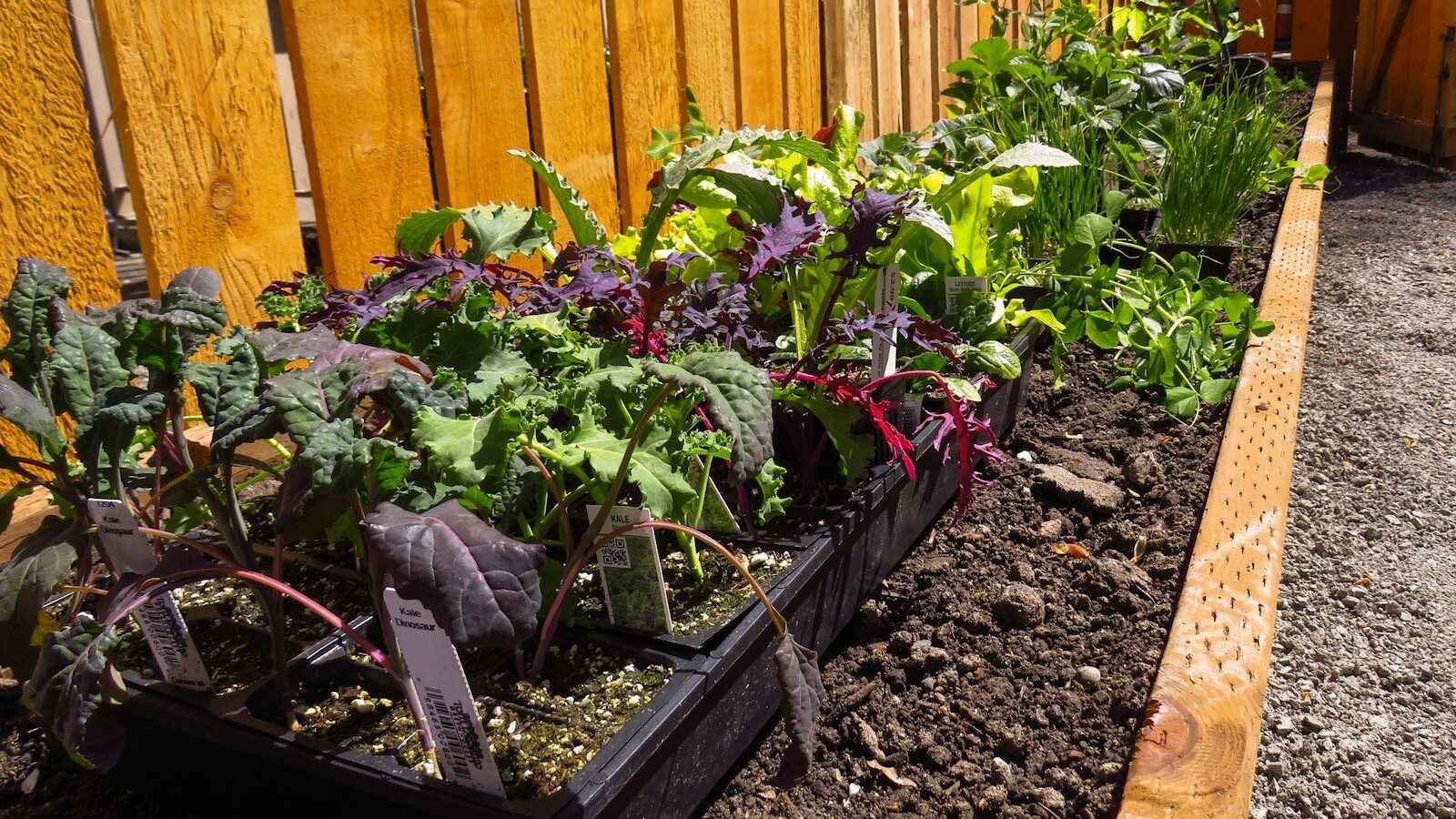
The best raised garden bed is the one you can reach across without stepping in it, fill without going broke on soil, and water without dragging a hose across the yard. In practice that means beds no wider than 4 feet (3 feet if you can only reach from one side), 10 to 18 inches deep for most vegetables, and laid out with paths at least 18 to 24 inches wide. Within those rules there’s plenty of room to play: classic rectangles, U and L shapes that wrap around you, keyhole beds with a compost basket in the middle, tall waist-high boxes, and long galvanized troughs. Below are the most useful raised garden bed ideas for US backyards, with dimensions, materials and simple plans you can build in a weekend.
Part of our Vegetable Gardening & Raised Beds guide →
In this guide
Key Takeaways
- Keep beds 3–4 ft wide so you can reach the center; length is limited only by space and lumber (8 ft is the easiest).
- 12 in of soil depth grows nearly all vegetables; 18–24 in helps carrots, parsnips and potatoes and saves your back.
- U, L and keyhole shapes give more growing area per square foot of yard and keep everything within reach.
- Untreated cedar, galvanized steel and modern ACQ-treated lumber are the common materials; skip old railroad ties.
- A 4×8 bed 12 in deep needs about 32 cubic feet (1.2 cubic yards) of soil mix.
Start With the Rules That Don’t Change
Every good raised garden box idea follows the same ergonomics, so settle these first.
- Width: 4 ft if you can walk around the bed; 2.5–3 ft against a fence or wall.
- Height: 6–8 in over good soil; 10–12 in for most gardens; 18–30 in for poor soil, bad backs or wheelchair access.
- Paths: 18 in minimum, 24–36 in if you use a wheelbarrow or garden cart.
- Sun: 6–8 hours for tomatoes, peppers, squash and beans; 4–6 hours works for greens and herbs.
- Orientation: run long beds north to south so plants on both sides get even sun, and put tall crops on the north end.
- Water: site beds within reach of a spigot or plan for drip irrigation from day one.
If you’re still deciding whether beds are worth it, our vegetable gardening hub and the comparison of raised beds vs in-ground gardens lay out the trade-offs.
Raised Bed Ideas by Shape
1. The classic 4×8 rectangle
The 4×8 is the default for good reason: standard 8-ft boards mean almost no cutting, it gives 32 sq ft of growing space, and you can reach the middle from either side. Two or three 4×8 beds feed a household with fresh salad, tomatoes, peppers, beans and herbs through summer. Plan them in a grid with 2- to 3-ft paths.
Simple plan: six 2×6 or 2×8 boards cut as two 8-ft sides and two 4-ft ends per layer (one 8-ft board cut in half gives both ends), stacked two high for 11–15 in of depth; four 4×4 or 2×4 corner posts cut to the bed height; 3-in exterior screws. Line the bottom with hardware cloth if gophers or voles are a problem.
2. U-shaped bed
A U-shaped bed wraps around a central standing area, so you get a lot of planting length in a compact footprint. A common size is 8 ft by 8 ft overall with 2-ft-wide arms and a 4-ft-wide entry gap. Because each arm is only 2 ft deep, you can reach everything from the center without kneeling on soil. It works especially well as a kitchen garden near the back door: herbs on the arms closest to you, tomatoes and trellised cucumbers along the back.
3. L-shaped corner bed
An L-shape tucks into the corner of a fence or patio and uses space that’s otherwise wasted. Make each leg 2.5–3 ft wide if it backs onto a fence, since you’ll only reach from one side. The fence becomes free trellis space for pole beans, peas, cucumbers or espaliered fruit.
4. Keyhole bed
A keyhole bed is a circle, typically 6 ft across, with a wedge-shaped notch cut in so you can walk to the center. Many designs put a wire compost basket at the hub: you add kitchen scraps and water through it, and nutrients leach into the surrounding soil. It’s an efficient design for hot, dry climates because water goes where roots are. Build the walls from stone, block or bent metal edging rather than lumber.
5. Long, narrow beds along a fence or driveway
A 2-ft by 10- or 12-ft bed along a sunny fence, garage wall or driveway is perfect for tomatoes, peppers, herbs or cut flowers. It also works for side yards where a wider bed would block the walkway.
6. Tiered or stepped beds on a slope
On sloping ground, build beds as level terraces, each one a few inches lower than the last. The uphill side of each box sits nearly at grade and the downhill side is taller. This avoids soil and water running off and turns a hard-to-use slope into productive space.
7. Elevated or waist-high planters
A raised bed on legs (often 30 in tall with 8–10 in of soil) keeps rabbits out and lets you garden standing or seated. They suit patios, decks, renters and anyone with knee or back trouble. Keep the soil depth modest so the weight stays manageable on a deck; see our plan for building a raised bed with legs.
Raised Bed Ideas by Material
| Material | Typical life | Best for | Watch out for |
|---|---|---|---|
| Untreated cedar or redwood | 10–15+ yrs | Classic look, easy DIY | Higher material cost than pine |
| Untreated pine or fir | 3–7 yrs | Budget, temporary beds | Rots fast in wet soil |
| Modern treated lumber (ACQ/CA) | 15+ yrs | Long life on a budget | Some gardeners line it; avoid old CCA wood |
| Galvanized / coated steel | 15–20+ yrs | Tall, modern beds; kits | Heats faster in sun; sharp edges |
| Concrete block / cinder block | Decades | Permanent beds, curves | Raises soil pH slightly; heavy |
| Stone or brick | Decades | Keyhole and curved beds | Labor-intensive |
| Composite boards | 20+ yrs | Low maintenance | Can bow on long spans without bracing |
| Fabric grow beds | 2–5 yrs | Renters, quick start | Dries out quickly |
Galvanized metal has become the most popular kit choice because the panels go together with bolts and stand up to rot. Our roundup of the best metal raised garden beds compares current kits, and the head-to-head on galvanized vs cedar raised beds covers durability and soil temperature.
Avoid railroad ties (creosote) and lumber of unknown age that might be CCA-treated; CCA was phased out of residential lumber in the US in 2003. Current treated lumber uses copper-based preservatives that are widely used for garden beds.
Layout Ideas for a Whole Raised Bed Garden
- Grid of four: four 4×8 beds around a central path cross. Easy crop rotation: tomato family, legumes, brassicas and roots each move one bed a year.
- Potager: beds arranged symmetrically around a focal point such as a birdbath, obelisk or small fruit tree, mixing vegetables with flowers.
- Perimeter + center: narrow beds along fences with one or two freestanding beds in the middle.
- Arched trellis between beds: place two beds 4–5 ft apart and span a cattle-panel arch between them for squash, cucumbers or pole beans to climb over the path.
- Enclosed garden: a low fence or hardware-cloth wall around the bed area keeps out rabbits and dogs.
For crop-by-crop spacing inside the beds, see our raised bed vegetable garden layout guide.
How Much Soil Do You Need?
Multiply length × width × depth in feet to get cubic feet. Divide by 27 for cubic yards. Bagged soil is usually sold in 1, 1.5 or 2 cubic-foot bags.
| Bed size | Depth | Cubic feet | Cubic yards |
|---|---|---|---|
| 4 x 4 ft | 12 in | 16 | 0.6 |
| 4 x 8 ft | 12 in | 32 | 1.2 |
| 4 x 8 ft | 18 in | 48 | 1.8 |
| 3 x 6 ft | 12 in | 18 | 0.7 |
| 2 x 8 ft | 24 in | 32 | 1.2 |
For multiple beds, bulk soil delivered by the yard is usually more practical than bags. A good starting mix is roughly 60% screened topsoil, 30% compost and 10% aeration material such as perlite or pine bark fines. For tall beds, fill the bottom third with logs, branches or leaves (a hugelkultur-style base) to save soil, accepting that it will settle over a few years. Our picks for the best raised bed soil help if you’d rather buy a ready mix.
Build Steps for a Basic Wood Raised Bed
- Choose a level, sunny spot and mark the footprint with string.
- Kill or remove the grass, or lay overlapping cardboard on top (remove tape and labels).
- Cut boards and corner posts; pre-drill to avoid splitting cedar.
- Assemble the long sides to the posts first, then attach the ends.
- Set the frame in place and check level, digging out high corners rather than shimming.
- Add hardware cloth for burrowing pests, then fill with soil mix, watering every few inches to settle it.
- Top with 2 inches of compost, plant, and mulch with straw or shredded leaves.
For long beds over 8 ft, add a cross brace at the midpoint so the soil pressure doesn’t bow the sides outward. Our full step-by-step raised bed build covers cut lists and hardware in more detail.
Extras That Make Raised Beds Work Better
- Drip irrigation or soaker hose: raised beds drain and dry faster than in-ground beds. A timer-run drip line saves a lot of hand watering in July.
- Hoop covers: PVC or metal hoops with row cover extend the season by a few weeks in spring and fall and keep out cabbage moths.
- Trellises: mount cattle panel or a wooden trellis on the north side to grow vertically.
- Bed caps: a 2×6 cap along the top edge gives you a seat and a place to set tools.
- Mulched paths: wood chips over landscape fabric or cardboard keep paths clean and weed-free.
Common Raised Bed Mistakes
- Making beds wider than 4 ft and ending up stepping on the soil.
- Filling with pure topsoil (compacts) or pure compost (too rich, sinks fast).
- Paths too narrow for a wheelbarrow.
- Building in shade because it looks nicer there.
- Forgetting to top up soil each spring; beds settle 1–2 inches a year.
Frequently Asked Questions
What is the best size for a raised garden bed?
4 ft wide by 8 ft long is the most practical size. It fits standard lumber, gives 32 sq ft of growing space and lets you reach the center from both sides. Use 3 ft wide or less if the bed backs onto a wall.
How deep should a raised garden bed be?
12 inches suits most vegetables. Go 18–24 inches for deep-rooted crops like carrots and potatoes, or if the native soil underneath is very poor or compacted.
Should I put anything in the bottom of a raised bed?
Cardboard over grass smothers it and breaks down within a season. Add hardware cloth if gophers or voles are present. Avoid plastic or landscape fabric under vegetable beds because it blocks drainage and earthworms.
Is treated lumber safe for raised garden beds?
Modern residential treated lumber uses copper-based preservatives and is widely used for garden beds. Avoid old CCA-treated wood and railroad ties. If you prefer, line the inside of treated boards with plastic sheeting on the walls only.
What shape of raised bed gives the most growing space?
U-shaped and keyhole beds give the most planting area per square foot of yard while keeping everything within arm’s reach, because the access path is built into the bed itself.
Pick one shape, build one or two beds this season, and see how you use them before filling the whole yard. Raised beds are easy to add to, but much harder to move once they’re full of soil.