

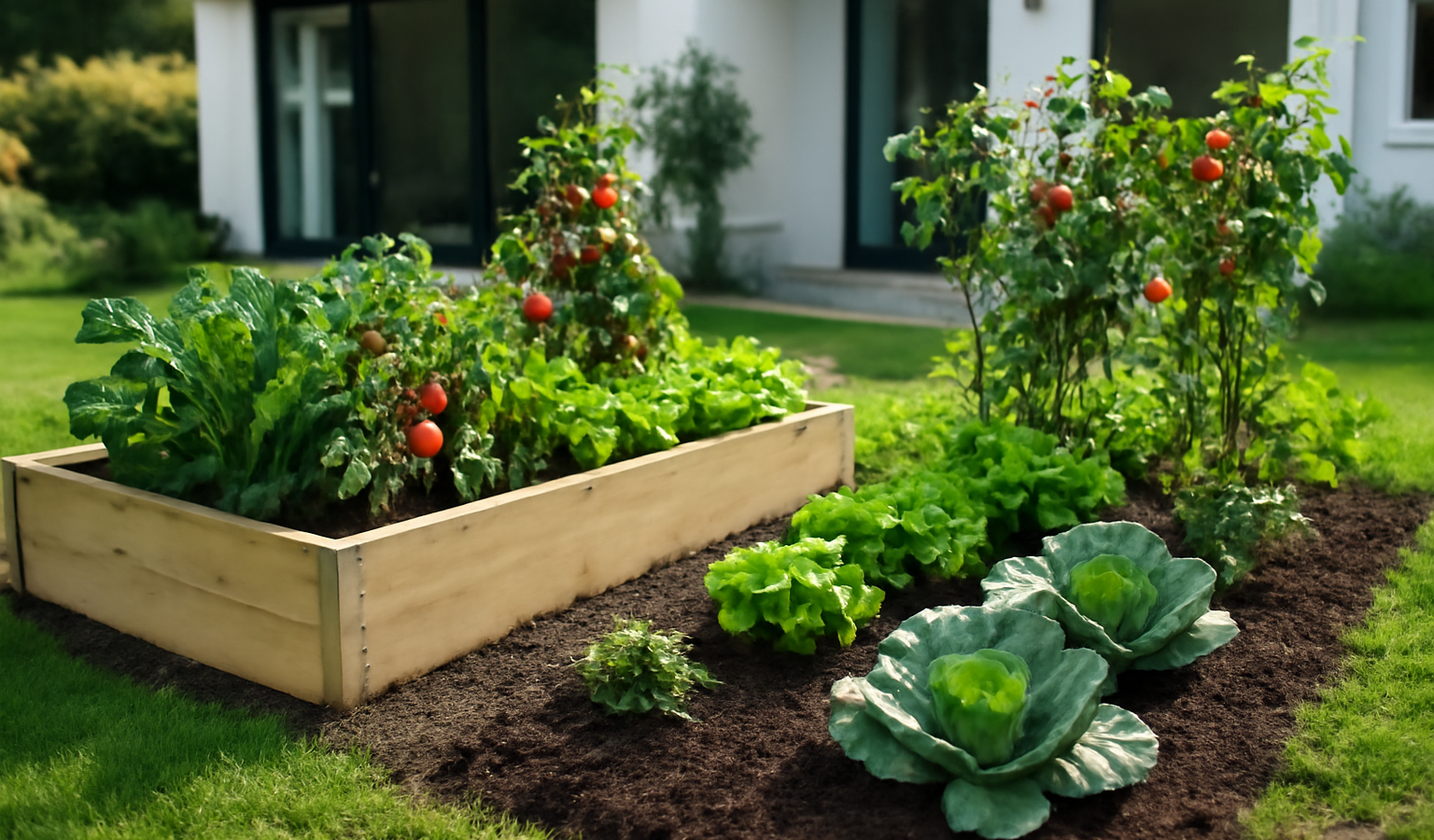
Every new vegetable gardener eventually hits the same fork in the road: build raised beds or plant straight into the ground. Both grow great food, and both have been feeding families for generations. The difference is in the trade-offs. Raised beds give you instant control over soil and drainage at a higher cost and a thirstier watering schedule. In-ground gardening is cheap and water-wise but leaves you at the mercy of whatever dirt you already have. This guide compares the two across the factors that actually decide your harvest — soil quality, drainage, cost, water use, back strain, and pest pressure — so you can pick the approach that fits your yard, your body, and your budget instead of copying whatever you saw on the internet.
Key Takeaways
- Raised beds win on control: you fill them with ideal soil, they drain and warm up earlier in spring, and they are far easier on your back and knees.
- In-ground wins on cost and water: no materials to buy, deeper roots reach groundwater, and beds dry out more slowly in heat.
- Soil is the deciding factor: if your native soil is heavy clay, rocky, or contaminated, raised beds solve the problem instantly.
- Budget reality: a single 4×8 raised bed with soil often runs $100–$300; an in-ground plot of the same size can cost almost nothing.
- Both can match yields when soil is good — the choice is about your site, climate, and physical comfort, not productivity alone.
Raised Bed vs In-Ground at a Glance
| Factor | Raised Beds | In-Ground |
|---|---|---|
| Upfront cost | High: ~$100–$300+ per 4×8 bed with soil | Low: little more than seeds and amendments |
| Soil control | Total — you fill it with the mix you want | Limited — you improve what you have |
| Drainage | Excellent; rarely waterlogged | Depends on native soil |
| Water use | Higher; dries out faster | Lower; roots tap deeper moisture |
| Spring warm-up | Earlier; plant 1–2 weeks sooner | Slower to warm |
| Back/knee strain | Low; less bending | Higher; ground-level work |
| Weed pressure | Lower; defined, filled space | Higher; open ground |
| Root depth | Limited to bed depth + soil below | Unlimited downward |
| Best for | Bad soil, small space, accessibility, tidy plots | Large plots, good soil, low budget, dry climates |
Raised Bed Gardening: Control From Day One
A raised bed is a contained frame — typically 6 to 18 inches tall — that you fill with imported soil. Its biggest advantage is that you skip your native soil entirely and start with a perfect blend: roughly equal parts quality topsoil, compost, and an aerating material. That means even a yard built on construction-fill clay or rocky subsoil can grow lush tomatoes the very first season. You sidestep compaction too, because you never walk on the growing area, so the soil stays loose and roots breathe.
Drainage is another standout. Because the soil sits above grade, excess water runs out the bottom rather than pooling, which protects roots from rot in wet springs and heavy clay sites. The contained soil also warms faster in spring — often letting you sow and transplant one to two weeks earlier than your in-ground neighbors — and stays warmer into fall, extending the season on both ends. For anyone with back pain, bad knees, or limited mobility, a tall bed turns kneeling-and-bending work into comfortable standing-height gardening.
Where raised beds fall short
The headline drawback is cost. Lumber or steel, hardware, and especially the cubic yards of soil to fill the bed add up quickly — a single 4x8x12-inch bed can swallow well over a cubic yard of mix. Multiply that across a real garden and the bill climbs into the hundreds or thousands before you plant a seed. Raised beds also dry out faster: more surface area and free-draining soil mean you water more often, sometimes daily in summer heat, so a drip system is close to mandatory. Finally, the contained soil limits how deep roots can go before hitting the bed floor and the compacted ground below, which matters for deep-rooted crops unless your beds are tall and the soil beneath is loosened. If your space is the limiting factor, raised beds pair perfectly with other urban gardening techniques for tight lots and balconies.
In-Ground Gardening: Working With the Earth
In-ground gardening means planting directly into the native soil after loosening and amending it. The obvious win is cost — there are no frames to build and no soil to buy by the truckload. You spend on seeds, transplants, and amendments like compost, and that is largely it. For a big plot, in-ground can be ten times cheaper than the equivalent area of raised beds, which is why most large home gardens and nearly all farms are in-ground.
The second advantage is water. Roots in open ground grow downward without obstruction, reaching deeper moisture reserves that buffer them through dry spells. The surrounding soil mass also holds water far better than an exposed bed, so in-ground plots need less frequent irrigation — a real benefit in hot, arid climates or anywhere water is expensive. Deep, unrestricted rooting also tends to produce sturdier, more drought-resilient plants over a long season.
Where in-ground struggles
You are stuck with your soil. If the native ground is heavy clay, sandy and lean, rocky, compacted, or contaminated with old lead paint or chemicals, in-ground gardening means years of patient amending — or simply poor results. Drainage problems are common: clay holds water and drowns roots, while a low spot can stay swampy after rain. In-ground plots also warm slowly in spring, delaying planting, and they invite more weeds because the open, undefined ground has no walls to stop seeds from blowing in and germinating. Add the bending, kneeling, and tilling that ground-level work demands, and in-ground asks more of your body. Improving native soil is a multi-season project — understanding the difference between feeding the soil and feeding the plant, as covered in our compost vs fertilizer guide, makes a big difference here.
Cost, Water, and Yield: The Honest Numbers
On cost, in-ground wins clearly. A 4×8 raised bed built from cedar or composite with quality soil commonly lands between $100 and $300, and steel or stone beds cost more. The same footprint in the ground costs little beyond a bag or two of compost. If money is the constraint and your soil is workable, in-ground gets you growing for almost nothing.
On water, in-ground also wins. Raised beds drain freely and expose more surface to sun and wind, so they dry faster and demand more frequent watering — often daily in peak summer versus every few days in-ground. In a hot, dry climate, that difference shows up on your water bill. On yield, though, it is closer to a tie: when both have good soil, full sun, and adequate water, they produce comparable harvests. The real difference is how reliably you reach “good soil.” Raised beds get there instantly with purchased mix; in-ground gets there eventually through years of composting and amending. So the productivity question is really a soil-quality and patience question in disguise.
Which Should You Choose?
Let your site, body, and budget decide. These scenarios cover most gardeners.
Choose raised beds if…
- Your native soil is heavy clay, rocky, sandy, compacted, or contaminated.
- You have back, knee, or mobility issues and want comfortable standing-height gardening.
- You garden in a small or urban space and want a tidy, defined, productive plot.
- You live somewhere wet or with a short season and need better drainage and earlier warm-up.
- You can invest more upfront and do not mind watering more often.
Choose in-ground if…
- You already have decent loamy soil or are willing to amend it over time.
- You want to garden a large area without a large materials bill.
- You live in a hot, dry climate where deeper roots and slower drying save water.
- Your budget is tight and you want to start growing for almost nothing.
- You are growing deep-rooted or sprawling crops that want unrestricted room.
Plenty of gardeners run both: raised beds near the house for salad greens, herbs, and accessibility, and a larger in-ground plot for space-hungry crops like corn, squash, and potatoes. Start with whichever solves your single biggest constraint — bad soil and bad backs point to raised beds; tight budgets and good dirt point to in-ground. For more small-space strategy, explore our urban gardening hub.
Frequently Asked Questions
Do raised beds really produce more than in-ground gardens?
Not inherently. When both have rich soil, full sun, and proper watering, yields are comparable. Raised beds often appear more productive simply because gardeners fill them with excellent soil from the start, whereas in-ground beds may sit in mediocre native dirt. Match the soil quality and the harvests match too — the bed style itself is not the deciding factor.
How deep should a raised bed be for vegetables?
Aim for at least 10–12 inches for most vegetables, which suits lettuce, beans, peppers, and herbs. For deep-rooted crops like tomatoes, carrots, and potatoes, 18 inches is better, or loosen the native soil beneath the bed so roots can extend down. Shallow beds under 6 inches dry out quickly and limit what you can grow well.
Are raised beds worth the extra cost?
They are if they solve a real problem — bad soil, poor drainage, back strain, or a cramped urban lot. In those cases the convenience and reliable results justify the price. But if you already have good, workable soil and plenty of room, in-ground gardening delivers similar harvests for a fraction of the cost, making raised beds an optional upgrade rather than a necessity.
Do raised beds need more water than in-ground gardens?
Yes. Raised beds drain freely and expose more soil surface to sun and wind, so they dry out faster and often need watering daily in summer heat. In-ground beds hold moisture longer because roots reach deeper reserves and the surrounding soil mass buffers them. A drip irrigation system makes raised beds far more manageable and water-efficient.
Can I convert an in-ground garden into raised beds later?
Absolutely, and it is a common upgrade. Build your frames right over the existing garden, loosen the soil beneath so roots can travel down, then fill with a topsoil-and-compost blend. Keeping the loosened native soil below the bed gives you extra rooting depth and improves drainage, blending the cost benefits of in-ground with the control of a raised bed.