

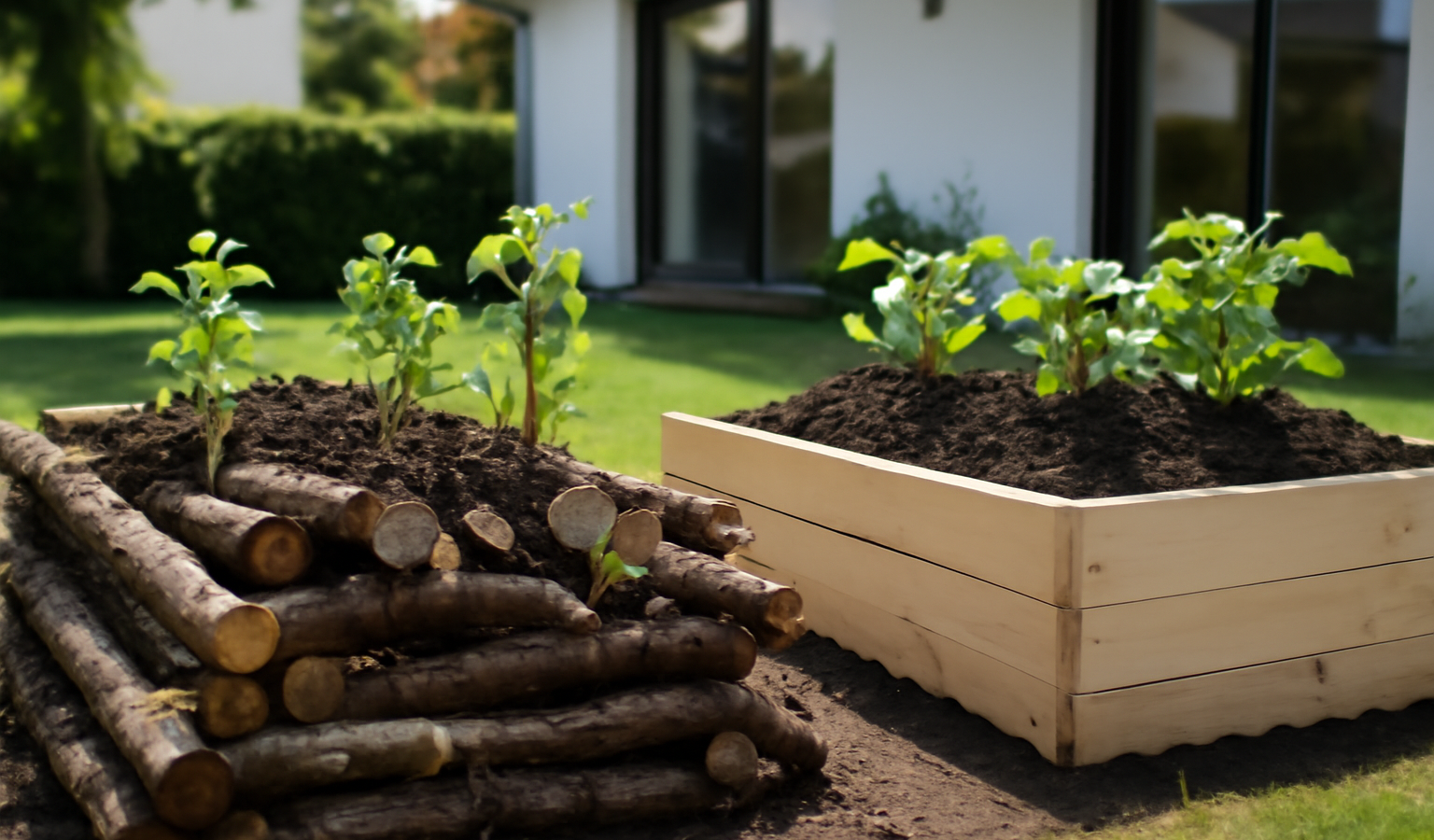
Both hugelkultur mounds and conventional raised beds solve the same core problems — poor native soil, bad drainage, and the back strain of bending to ground level — but they go about it in completely different ways. A raised bed is a contained box of imported soil: tidy, predictable, and ready to plant the day you fill it. A hugelkultur (“hill culture”) bed is a mound built over a buried core of logs and woody debris that slowly decomposes, feeding the soil and holding water for years. Raised beds win on neatness, instant readiness, and small-space tidiness. Hugelkultur wins on long-term water retention, low cost, and self-fertilizing soil — at the price of a big upfront build and a less manicured look. This guide compares them honestly so you can decide which belongs in your yard, or whether to combine the two.
Key Takeaways
- Hugelkultur buries logs and woody debris under a soil mound; as the wood rots it stores water and slowly fertilizes the bed for years — even decades.
- Raised beds are contained boxes of imported soil — neat, predictable, and plantable immediately, but they dry out faster and need ongoing amendment.
- Hugelkultur is nearly free if you have wood and soil on hand; raised beds cost money for lumber and bagged or delivered soil.
- Raised beds suit small, tidy urban spaces and accessibility; hugelkultur suits larger rural plots, slopes, and dry climates.
- Fresh hugelkultur mounds can tie up nitrogen in the first season — plant nitrogen-fixers or heavy feeders accordingly, or top with compost.
Hugelkultur vs Raised Bed at a Glance
| Factor | Hugelkultur | Raised Bed |
|---|---|---|
| Core structure | Buried logs/wood under a soil mound | Box of imported soil |
| Upfront cost | Very low if wood/soil on hand | Moderate to high (lumber + soil) |
| Build effort | High — heavy digging and stacking | Moderate — assemble and fill |
| Ready to plant | Best after settling; usable right away | Immediately |
| Water retention | Excellent — wood acts as a sponge | Lower — drains and dries faster |
| Soil fertility over time | Self-feeding for years as wood rots | Needs regular compost/fertilizer |
| Appearance | Rustic mound, irregular | Neat, geometric, contained |
| Best setting | Larger plots, slopes, dry climates | Small urban spaces, tidy gardens |
Hugelkultur: The Self-Watering, Self-Feeding Mound
Hugelkultur is a permaculture technique with German roots: you build a raised mound over a buried core of logs, branches, and woody debris, then cover it with smaller organic matter, compost, and soil. As the wood decomposes over the following years, it does three valuable things. First, it acts like a giant sponge, absorbing rain and irrigation and releasing moisture slowly back to plant roots — established hugelkultur beds can go remarkably long between waterings, sometimes through an entire dry spell. Second, the rotting wood continuously releases nutrients, effectively fertilizing the bed from within for years or even decades. Third, the decomposition generates a little warmth, which can slightly extend the growing season at the shoulders.
The economics are compelling: if you have downed trees, prunings, or storm debris and access to soil and compost, a hugelkultur bed can cost almost nothing but labor. That makes it a favorite on larger rural and homestead plots where wood is plentiful and budgets are tight. It is also excellent on slopes — built along the contour, a hugel mound slows runoff and catches water — and in dry climates where its water-storing core is a genuine advantage. The catches are real, though. Building one is hard physical work: you are digging, hauling logs, and stacking a substantial mound. Fresh mounds also settle significantly as the wood compacts, so they shrink over the first year or two. And in the first season, the decomposing wood can temporarily tie up nitrogen as microbes consume it, which can stunt heavy feeders. The fixes are to top the mound with compost-rich soil for the first year, plant nitrogen-fixing legumes or less demanding crops initially, and let the system mature.
How to Build a Basic Hugelkultur Bed
Lay the largest logs on the ground (or in a shallow trench), pack branches and smaller wood into the gaps, then add a layer of nitrogen-rich material like grass clippings or manure to kickstart decomposition. Top with leaves, compost, and finally several inches of good soil, building a mound a few feet high since it will settle. Use untreated, non-allelopathic wood — avoid black walnut, cedar, and anything chemically treated. Hardwoods like oak and maple rot slowly and last longest; softwoods break down faster for quicker fertility. Because the technique builds soil over time, it fits naturally into the broader strategy of no-dig and soil-building methods.
Raised Beds: Tidy, Instant, and Predictable
A raised bed is the conventional answer to bad soil: build a frame — cedar, composite, galvanized steel, brick, or stone — and fill it with a controlled blend of topsoil, compost, and amendments. The appeal is immediacy and control. You fill it and plant the same day, you know exactly what is in the soil, and you sidestep poor native ground, heavy clay, and drainage problems entirely. The geometric, contained shape keeps gardens tidy and pathways clean, which is why raised beds dominate small urban yards, suburban vegetable plots, and any space where looks and order matter. They also raise the planting surface, easing back and knee strain, and a taller bed can be genuinely accessible for gardeners with limited mobility.
The trade-offs are cost and maintenance. You pay for the frame material and for soil — and quality soil to fill a deep bed adds up fast, since you may need cubic yards of it. Raised beds also drain freely, which is great in wet climates but means they dry out faster than ground-level or hugelkultur beds, demanding more frequent watering in summer heat. And because there is no decomposing wood core feeding the system, you must replenish fertility yourself each season with compost, fertilizer, and amendments as plants draw the soil down. A raised bed is a container you maintain, not a self-sustaining ecosystem.
Where Raised Beds Excel
Raised beds are the obvious choice for small spaces, balconies, patios, and tidy suburban yards where a rustic mound would look out of place or simply not fit. They are ideal when you want full control over soil quality, when accessibility matters, and when you want to plant immediately without waiting for a system to mature. For renters and small-plot growers, they are also more portable in concept — you can reconfigure or rebuild them far more easily than you can move a hugel mound. They are a cornerstone of small-space and container gardening for exactly these reasons.
How to Choose Between Them
The right pick depends mostly on your space, climate, budget, and tolerance for upfront work.
- Space: Small urban or suburban yard? Raised beds. Larger rural plot, homestead, or slope? Hugelkultur has room to shine.
- Budget and materials: Have free wood, soil, and time? Hugelkultur is nearly free. Need a quick, clean solution and have a budget? Raised beds.
- Water and climate: Dry climate or want to water less? Hugelkultur’s moisture-storing core is a major advantage. Wet climate or you want fast drainage? Raised beds.
- Effort tolerance: Hugelkultur is a big one-time labor investment that pays off for years. Raised beds are easier to build but cost more in ongoing soil and water.
- Aesthetics: Want neat and geometric? Raised beds. Comfortable with a naturalistic mound? Hugelkultur.
- Timeline: Need to plant now with full fertility? Raised beds. Playing the long game and willing to manage first-season nitrogen? Hugelkultur.
You do not have to choose just one. Many gardeners build raised beds for tidy annual vegetables near the house and a hugelkultur mound at the back of the property for perennials, squash, and water-hungry crops — letting each method do what it does best.
The Verdict
Build a raised bed when you want tidy, instant, predictable growing in a small or suburban space, when you value control over soil quality and easy access, and when you would rather spend money than do heavy upfront labor. Build a hugelkultur mound when you have room, free woody material, and a long-term mindset — especially in a dry climate or on a slope where its remarkable water retention and self-feeding fertility pay dividends for years. Raised beds are the maintained container; hugelkultur is the self-sustaining ecosystem. For most urban gardeners with limited space, the raised bed is the practical default. But if you have the land and the logs, a hugelkultur bed rewards the effort with a garden that waters and feeds itself long after the work is done — and there is no rule against having both.
Frequently Asked Questions
Is hugelkultur better than a raised bed?
Neither is universally better. Hugelkultur excels at long-term water retention and self-fertilizing soil at very low cost, making it ideal for larger or dry-climate plots. Raised beds are tidier, plantable immediately, and better for small urban spaces, but they cost more and need ongoing watering and fertility management.
Do hugelkultur beds really need less watering?
Yes, once established. The buried wood core absorbs rain and irrigation like a sponge and slowly releases it to roots, so mature hugelkultur beds can go much longer between waterings than free-draining raised beds. The benefit increases over the first few years as the wood breaks down.
Why do my plants struggle in a new hugelkultur bed?
Fresh hugelkultur mounds can temporarily tie up nitrogen as microbes break down the wood, which stunts heavy-feeding crops in the first season. Top the mound with compost-rich soil, plant nitrogen-fixing legumes or less demanding crops at first, and fertility will improve as the bed matures.
What wood should I use for hugelkultur?
Use untreated hardwoods like oak and maple for slow, long-lasting decomposition, or softwoods for faster fertility. Avoid black walnut and cedar, which can inhibit plant growth, and never use chemically treated lumber. Partially rotted logs work especially well because they break down and hold water quickly.
Which is cheaper to build?
Hugelkultur is far cheaper if you have wood, soil, and compost on hand — often costing nothing but labor. Raised beds require buying lumber or a kit plus quality soil to fill them, which can add up quickly, especially for deep beds that need cubic yards of soil.