

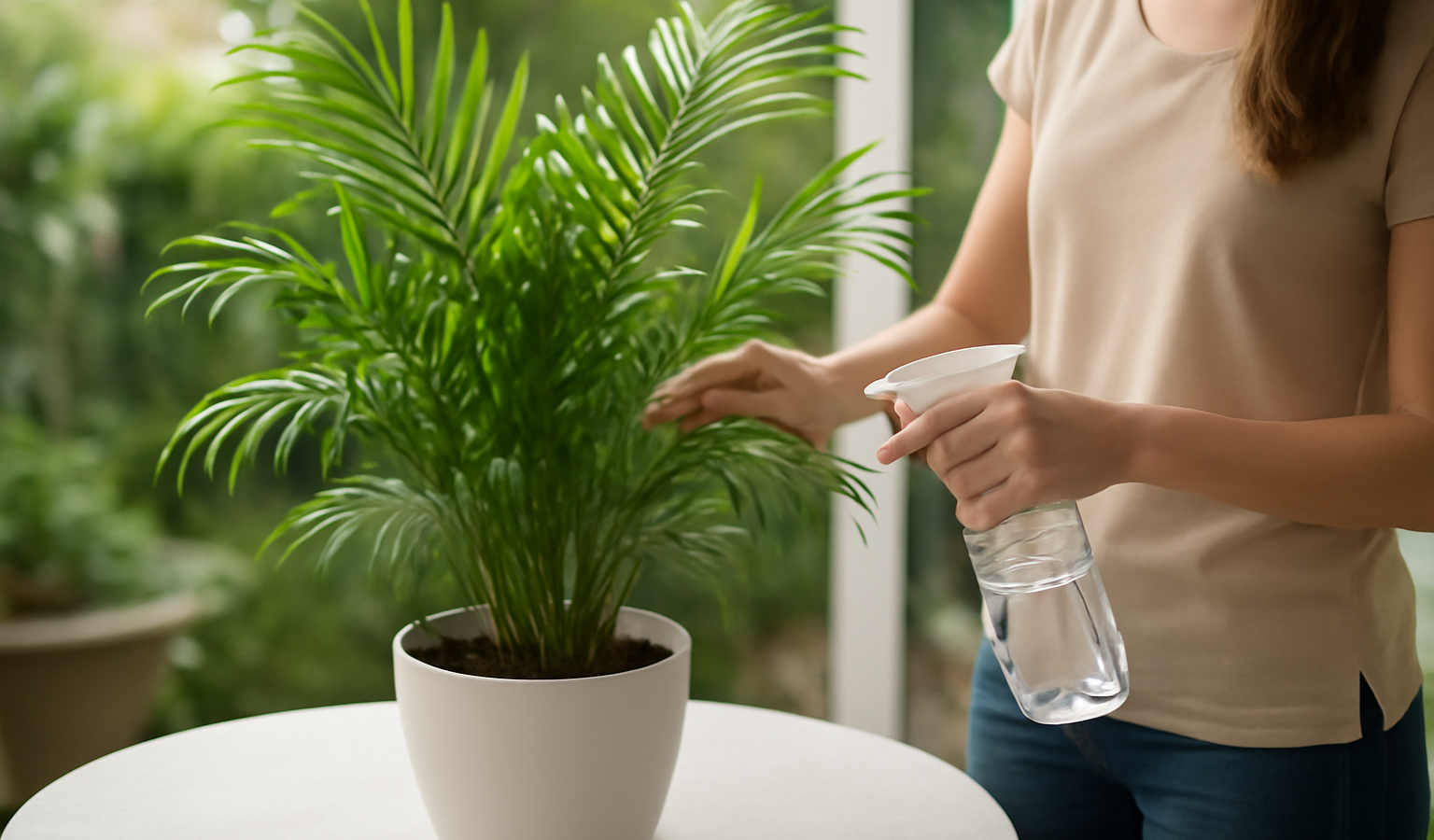
The cat palm (Chamaedorea cataractarum) is the lush, bushy palm people reach for when they want a full clump of feathery green rather than a single tall trunk. Native to the rocky stream banks and waterfalls of southern Mexico—its species name cataractarum literally means “of the waterfalls”—it grows naturally in humid, dappled shade with its roots near moving water. That heritage tells you almost everything about caring for it indoors: it wants steady moisture, decent humidity and bright, filtered light, and it will throw a few brown tips the moment any of those slip. It’s a touch fussier than a Kentia, but a happy cat palm is one of the fullest, most tropical-looking houseplants you can grow.
Key Takeaways
- Light: Bright, indirect light. Tolerates medium light; no harsh direct sun.
- Water: Keep soil consistently moist but never soggy—water when the top inch dries, usually 1–2 times a week.
- Humidity: Loves it high (50% or more). The most common reason for brown tips is dry air.
- Soil: Rich but fast-draining mix with peat and perlite; a pot with drainage holes is essential.
- Propagation: By division of the clump—the only reliable home method.
- Pet-safe: Non-toxic to cats and dogs (ASPCA).
Light
Cat palms want bright, indirect light—the conditions they’d get under a forest canopy. An east-facing window is close to perfect, as is a few feet back from a brighter south or west window where the light is filtered by a sheer curtain. They’ll tolerate medium light, growing a little slower and sparser, but they sulk in deep shade and lose their lush fullness.
Keep them out of direct sun. Hot, unfiltered rays—especially summer afternoon sun—bleach and scorch the delicate fronds, leaving yellow or brown burn marks. Rotate the pot a quarter turn every week or two so all sides get light and the clump grows symmetrically rather than leaning. If you notice the plant straining toward the window, that’s a cue it wants a bit more light.
Watering: the trickiest part
The cat palm walks a fine line. Coming from stream banks, it likes its soil consistently moist—but its roots still rot if they sit in waterlogged mud. The rule of thumb: water when the top inch of soil feels dry, soaking thoroughly until water drains from the bottom, then empty the saucer so the pot never stands in water. In a warm, bright room that often works out to watering once or twice a week in the growing season, easing off in winter.
Both extremes show up fast. Underwatering causes crispy, browning fronds and a wilted, droopy look; overwatering yellows the leaves and, left unchecked, rots the roots. Because cat palms are sensitive to the fluoride, chlorine and salts in tap water—a frequent cause of brown tips—use filtered water, rainwater, or tap water left to sit out overnight whenever you can.
Humidity: non-negotiable
If there’s one thing that separates a thriving cat palm from a constantly browning one, it’s humidity. These palms want 50% or higher, well above the 30–40% typical of heated or air-conditioned homes. Dry air is the number-one cause of those frustrating brown frond tips.
To keep humidity up, run a humidifier nearby (the most reliable fix), group it with other plants to create a moist microclimate, or set the pot on a pebble tray filled with water—just keep the pot base above the waterline. Bright bathrooms and kitchens, with their natural moisture, are great spots. Misting offers only a brief boost and won’t substitute for any of these. Naturally humidity-loving plants like ferns make good companions; see our Plants & Flowers guides for more.
Soil and potting
Cat palms want a mix that holds moisture yet drains freely. A good blend is standard potting soil with added peat and perlite—the peat retains moisture, the perlite keeps the roots aerated. A little coarse sand or orchid bark improves drainage further. The pot must have drainage holes; without them, the constant moisture this palm enjoys quickly turns to rot.
These palms like to be slightly snug in their container and don’t need frequent repotting—every 2–3 years, or when roots crowd the surface or grow out the drainage holes, is plenty. Repot in spring, moving up just one pot size. Cat palms have dense, somewhat brittle root systems, so handle them gently and avoid breaking the clump unless you’re deliberately dividing it.
Temperature and feeding
Keep cat palms in the comfortable 70–80°F (21–27°C) range during the day, and never let them drop below about 55°F (13°C). They’re sensitive to cold and to sudden temperature swings, so keep them away from drafty doors, single-pane windows in winter, and the dry blast of heating and AC vents.
Feed during the growing season—spring through early fall—with a balanced liquid houseplant fertilizer diluted to half strength, about once a month, or a slow-release palm fertilizer in spring. Stop feeding in winter. Cat palms are prone to salt buildup that burns the leaf tips, so err on the side of under-feeding and flush the soil with plain water every couple of months to leach out excess.
Propagation by division
The cat palm is a clumping palm, which makes it one of the few that you actually can propagate at home—by division. Unlike single-stem palms, a mature cat palm is really a cluster of stems sharing a root mass, and you can separate that mass into smaller plants. The best time is spring, ideally when you’re repotting anyway.
- Water the plant a day ahead so the root ball is hydrated, then slide it out of its pot.
- Gently tease the soil away from the roots so you can see where natural clusters of stems separate.
- Using a clean, sharp knife, divide the clump into sections—each needs several healthy stems and a generous portion of roots.
- Pot each division into fresh, fast-draining mix at the same depth it grew before.
- Water well, set the divisions in bright indirect light with high humidity, and keep the soil evenly moist while they re-establish.
Expect divisions to look a little stressed for a few weeks—keep humidity high and avoid fertilizing until you see new growth. Cat palms can’t be grown from leaf or stem cuttings, so division (or seed, which is impractical at home) is the route.
Common problems
Brown leaf tips
The classic cat palm gripe. Almost always low humidity, sometimes compounded by fluoride/salt in tap water or letting the soil dry too far. Raise humidity, switch to filtered or rainwater, and keep moisture steady. Snip the brown tips off following the leaf’s natural shape, leaving a sliver of brown so you don’t wound the green tissue.
Yellowing fronds
Often overwatering or poor drainage—check that the soil isn’t staying soggy. It can also signal a nutrient deficiency (commonly magnesium or iron) during active growth. Correct watering first; feed lightly only if the plant is otherwise healthy and growing.
Spider mites
Dry air invites spider mites, which leave fine webbing and yellow speckling. Because this plant already needs high humidity, keeping the air moist is your best prevention. Treat infestations by rinsing the foliage and applying insecticidal soap or neem oil every 7–10 days until clear. Watch also for mealybugs (white cottony tufts) and scale (brown bumps), treated the same way.
Drooping, wilted look
If the whole clump droops, check the soil. Bone dry means it’s thirsty—water thoroughly. Soggy and sour-smelling means root rot from overwatering, which calls for trimming the rotted roots and repotting in fresh mix.
Is the cat palm pet-safe?
Good news for pet owners: the cat palm is non-toxic to cats and dogs according to the ASPCA. Its very name makes it a popular pick for households with curious felines. As always, it’s not meant to be eaten—nibbling the fronds may cause mild stomach upset and ragged leaves—so position it where it won’t tempt a determined chewer. It pairs well with other non-toxic greenery; for small-space pet-friendly setups, see our urban gardening ideas.
The cat palm rewards attention. Stay on top of moisture and humidity, keep it out of direct sun and cold drafts, and it will fill your room with a dense fountain of feathery green that feels genuinely tropical. Browse more indoor palm and foliage guides in our Plants & Flowers collection.
Frequently Asked Questions
How often should I water a cat palm?
Keep the soil consistently moist but not soggy. Water when the top inch dries out—often once or twice a week in spring and summer, less in winter. Always use a pot with drainage holes and empty the saucer so the roots never sit in water.
Why does my cat palm keep getting brown tips?
Brown tips are nearly always caused by low humidity, made worse by fluoride and salts in tap water or by letting the soil dry too much. Raise humidity to 50%+ with a humidifier or pebble tray, water with filtered or rainwater, and keep moisture steady.
How much light does a cat palm need?
Bright, indirect light is ideal—an east window or a filtered spot near a brighter window. It tolerates medium light but grows sparser, and harsh direct sun scorches the fronds. Rotate the pot regularly for even, symmetrical growth.
Can you propagate a cat palm?
Yes, by division. Because it’s a clumping palm, you can separate a mature root mass into smaller plants in spring—each section needs several stems and plenty of roots. It can’t be grown from leaf or stem cuttings.
Is a cat palm toxic to cats or dogs?
No. The ASPCA lists the cat palm as non-toxic to both cats and dogs, making it a safe choice for pet homes. Still discourage pets from chewing the fronds, which can cause mild stomach upset.