

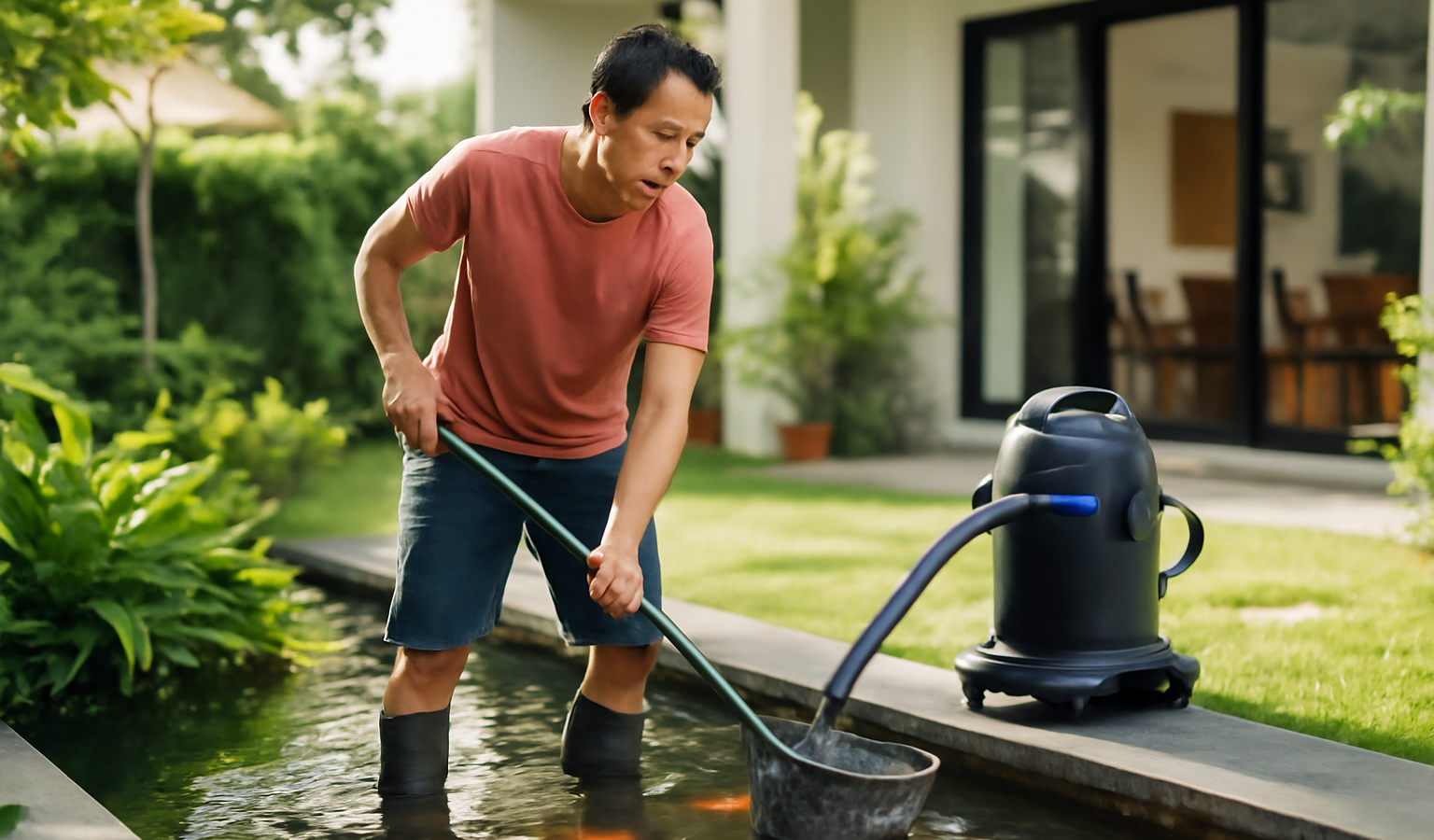
A fish pond looks effortless when it is healthy, but in Singapore’s heat that calm surface hides a fair bit of weekly work. Warm water, intense sun and sudden monsoon downpours all push a pond harder than the temperate setups most guides are written for. Whether you keep koi in a Sembawang landed garden or guppies in a condo courtyard, this guide covers the real maintenance routine, the monthly cost in SGD, and when it makes sense to hand the job to a servicing plan.
Key takeaways
- In the tropics, do a 10 to 20 percent water change weekly and rinse the mechanical filter regularly to keep ammonia in check.
- Heat and strong sun mean algae and low oxygen are your two biggest year-round battles, so aeration and shade matter.
- Test water for ammonia, nitrite, nitrate and pH at least monthly, more often after heavy rain or when adding fish.
- DIY upkeep costs roughly S$40 to S$120 a month; a professional servicing plan typically runs S$100 to S$300 a visit.
- Never overfeed in our warm water, as uneaten food is the fastest route to green water and sick fish.
Why pond maintenance is harder in the tropics
Singapore’s climate works against a pond in ways owners often underestimate. Water that sits at 28 to 32 degrees Celsius holds far less dissolved oxygen than the cooler water most pond equipment is designed around, and at the same time it speeds up fish metabolism, bacterial activity and algae growth. The result is a pond that produces and processes waste quickly, then runs short of the oxygen needed to keep that process healthy.
Our rainfall adds a second layer of work. A heavy monsoon downpour can dilute your water chemistry in minutes, wash debris and roof runoff into the pond, and overflow a poorly planned edge. After a big storm it is worth checking water clarity, skimming floating leaves, and making sure the overflow or drainage point is clear so the pond is not topping up with dirty surface water. Building cost and effort are higher here precisely because the environment never slows down the way a temperate winter would.
Your weekly pond maintenance routine
Consistency beats occasional deep cleans. A short weekly routine keeps water parameters stable and prevents the sudden green-water crashes that warm climates encourage. The core weekly jobs are simple and take most owners 20 to 40 minutes depending on pond size.
- Partial water change: replace 10 to 20 percent of the volume with dechlorinated water to dilute nitrates and refresh the pond.
- Skim and net: remove fallen leaves, petals and floating debris before they sink and rot, which happens fast in the heat.
- Rinse the mechanical filter: clear the sponge or brush that traps solids, ideally in old pond water so you do not kill the beneficial bacteria.
- Check equipment: confirm the pump flow is strong, the aerator is bubbling and the UV clarifier is running, since a stalled pump in our heat can crash a pond within a day.
- Observe the fish: a few minutes watching for clamped fins, gasping at the surface or loss of appetite catches most problems early.
If you are constantly fighting cloudy or green water during these checks, the root cause is usually nutrients plus sun rather than a one-off problem. Our guide on how to get rid of pond algae walks through fixes that work in Singapore conditions without harsh chemicals.
Monthly and seasonal tasks
Some jobs do not need weekly attention but should not be skipped. At least once a month, run a full water test for ammonia, nitrite, nitrate and pH. Ammonia and nitrite should read zero in an established pond; any reading above zero signals an overloaded filter, overfeeding or a recent fish addition that the biology has not caught up with. Because warm water accelerates everything, a problem that might take weeks to show in a temperate pond can turn serious here in days.
Monthly, also give the biological filter media a gentle check, top up beneficial bacteria if you have recently cleaned heavily, and inspect the UV clarifier sleeve for algae film that reduces its effectiveness. UV bulbs lose output over time and generally need replacing around once a year even if they still glow. Every few months, clear out accumulated sludge from the pond bottom with a pond vacuum or by stirring and netting, as decomposing muck is a major source of ammonia and a breeding concern in a country that watches mosquitoes closely.
On the dengue point, a well-run pond with moving water and fish is generally not an Aedes mosquito risk, because the fish eat larvae and the surface is never still. The risk lies in neglected ponds, stagnant overflow trays and water-filled saucers nearby, so keep circulation running and clear standing water around the feature.
Feeding, algae and heat management
Feeding is where most well-meaning owners go wrong. In warm water fish are active and seem perpetually hungry, but overfeeding is the single biggest driver of poor water quality and algae. Feed only what the fish finish in a couple of minutes, once or twice a day, and skip a feed entirely after a heavy storm or if the water looks stressed. Uneaten pellets break down into the exact nutrients algae feast on.
Algae control in Singapore is a constant balancing act rather than a one-time fix. Limiting direct sun with partial shade from planting, a pergola or floating plants reduces the energy algae need, while a correctly sized UV clarifier handles the green-water type that turns a pond pea-soup within days. Healthy aquatic plants also compete with algae for nutrients, which is why a planted pond often stays clearer than a bare one.
Heat management ties it all together. Because warm water holds less oxygen, strong aeration is non-negotiable, and adequate depth helps the lower layer stay cooler and more stable through the day. If you are still planning your build, designing in depth, shade and proper aeration from the start is far cheaper than retrofitting. Our overview of professional pond and water feature installation covers how these are sized for local conditions.
How much does pond maintenance cost per month?
Running a pond in Singapore carries both consumable and electricity costs. The pump and UV clarifier run around the clock, so they are the steady line item on your utility bill, alongside fish food, water conditioner, test kits and replacement filter media. The table below gives realistic SGD ranges for typical home ponds.
| Maintenance item | Typical SGD range |
|---|---|
| Electricity for pump, aerator and UV (small to medium pond) | S$20 – S$70 / month |
| Fish food, conditioner and treatments | S$15 – S$50 / month |
| Replacement filter media and test kits (averaged) | S$10 – S$30 / month |
| Total DIY upkeep | S$40 – S$120 / month |
| Professional servicing visit (per visit) | S$100 – S$300 |
| Annual UV bulb replacement | S$30 – S$120 / year |
Larger koi ponds with multiple pumps and automation sit at the upper end of every band, while a small planted condo pond may cost just S$40 a month to keep healthy. If you are still weighing the upfront build against these running costs, our breakdown of koi pond cost in Singapore sets out the full picture from installation to ongoing care.
DIY upkeep vs a servicing plan
Whether to maintain the pond yourself or pay for a plan comes down to time, confidence and the value of your fish. DIY upkeep is genuinely manageable for a small to medium pond if you enjoy the routine and stay disciplined about water changes and feeding. The risk is the busy week that becomes a busy month, because in our heat a neglected pond declines quickly and an expensive koi loss can wipe out years of supposed savings.
A professional servicing plan, typically a monthly or fortnightly visit at S$100 to S$300 each depending on pond size, suits owners with valuable fish, large ponds, or simply no time. A good servicer tests water, cleans filters, checks equipment and flags problems before they become emergencies. Many owners run a hybrid: handle the simple weekly skim and feed themselves, and bring in a professional monthly for the deeper checks and water testing.
Whichever route you choose, the goal is the same: stable water, strong oxygen and no nasty surprises after the next downpour. Get the routine right and a tropical pond is no harder to live with than any other part of the garden.
Frequently asked questions
How often should I change pond water in Singapore?
A 10 to 20 percent partial water change once a week works well for most ponds in our climate, using dechlorinated water to protect fish and beneficial bacteria. Increase the frequency after heavy rain or if a water test shows rising nitrates.
Why does my pond water keep turning green?
Green water is algae thriving on strong tropical sun plus excess nutrients, usually from overfeeding or built-up sludge. A correctly sized UV clarifier, some shade, balanced feeding and healthy plants bring it under control. See our pond algae guide for natural methods.
Will my fish pond breed mosquitoes?
A pond with moving water and fish is generally not a mosquito risk because fish eat larvae and the surface stays disturbed. The danger is stagnant overflow trays and saucers nearby, so keep the pump running and clear any standing water around the feature.
How much does professional pond maintenance cost?
A servicing visit typically costs S$100 to S$300 depending on pond size and what is included, while DIY upkeep runs roughly S$40 to S$120 a month in electricity, food, treatments and media. Many owners combine simple weekly tasks themselves with a monthly professional check.
How much should I feed my pond fish in the heat?
Feed only what the fish finish in a couple of minutes, once or twice a day, and skip a feed after a heavy storm or if the water looks stressed. Overfeeding in warm water is the fastest route to poor water quality and algae.
Featured project by Gensou Aquascaping
Get free pond servicing quotes in Singapore
Tell us about your pond and we’ll match you with vetted local pond maintenance specialists island-wide. Free, no obligation.