

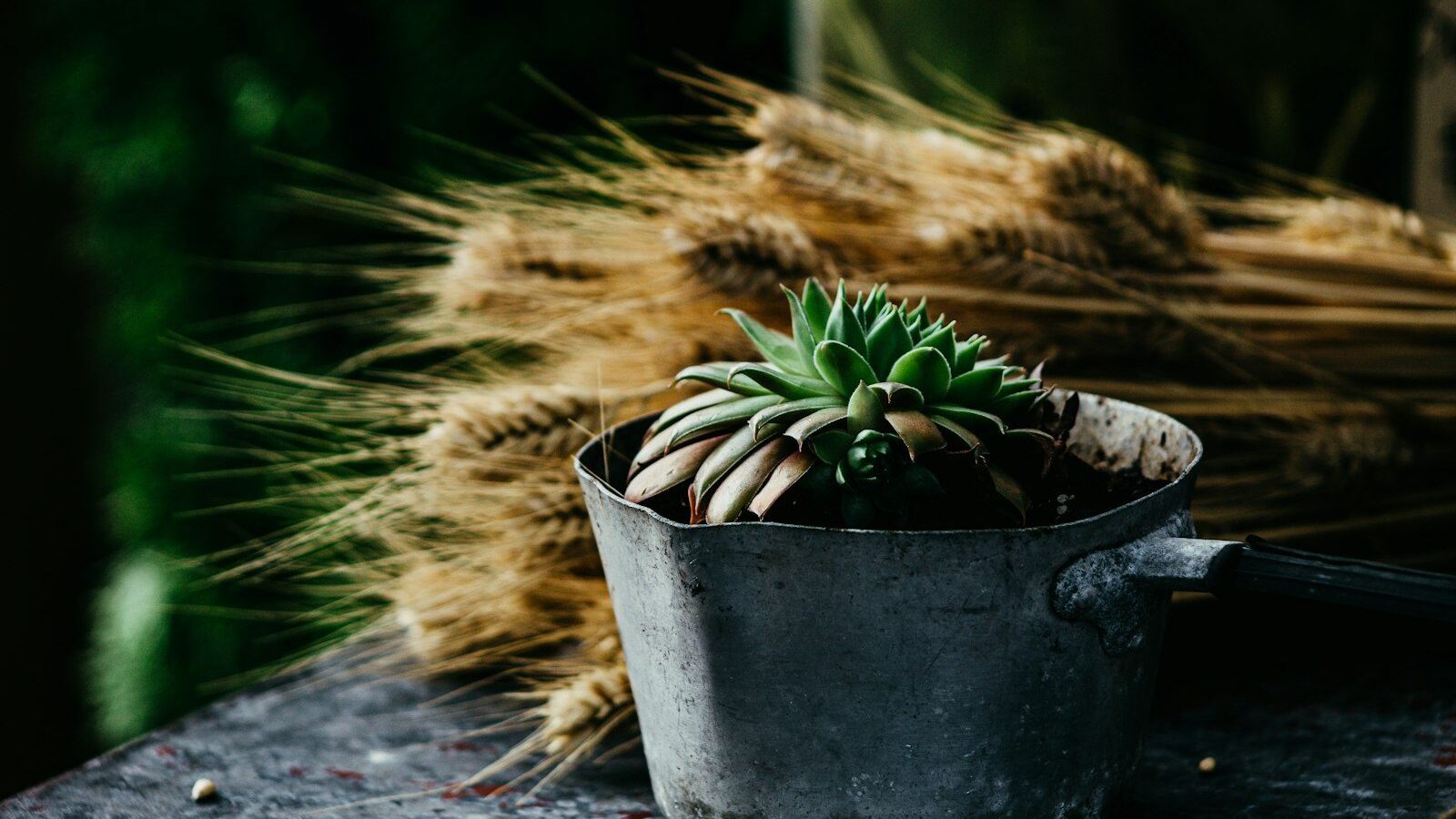
A succulent arrangement is a small living sculpture — a cluster of rosettes, trailing strands, and spiky uprights packed into a single dish that can sit happily on a sunny sill for months. The plants are forgiving, slow-growing, and endlessly combinable, which makes them ideal for beginners and a satisfying afternoon project. The secret to an arrangement that lasts rather than rots is mostly about getting three things right: a container that drains, a gritty soil that dries fast, and a planting layout that balances tall, medium, and trailing shapes. This guide walks through choosing your plants and pot, mixing the right soil, arranging by the classic “thriller, filler, spiller” principle, and caring for the finished piece so it stays compact and colorful.
Key Takeaways
- Group succulents with similar light and water needs so the whole arrangement can be cared for the same way.
- Use a container with a drainage hole and a fast-draining gritty mix — regular potting soil holds too much water and causes rot.
- Design with the “thriller, filler, spiller” rule: a tall focal plant, mounding mid-height rosettes, and trailing edges.
- Let cuttings callus for a few days and wait about a week after planting before the first watering.
- Bright light keeps succulents compact and colorful; too little light causes pale, stretched growth.
Choosing Your Succulents
Pick three to five varieties for a small dish or five to nine for a larger bowl, and choose plants with similar needs so one watering schedule suits them all. The vast majority of common rosette and trailing succulents want bright light and infrequent water, so they mix freely. Aim for contrast in shape, color, and texture rather than uniformity.
- Rosette types (mid-height fillers): Echeveria, Graptopetalum, and Aeonium form tidy rose-like rosettes in greens, blues, pinks, and purples.
- Upright types (the thriller): A taller crassula like jade, a small Haworthia, or a slim aloe gives vertical height at the center or back.
- Trailing types (the spiller): String of pearls, burro’s tail (Sedum morganianum), and string of bananas drape over the rim and soften the edges.
- Texture and fillers: Small sedums, hens and chicks (Sempervivum), and ghost plant fill gaps and offsets quickly.
For deeper care notes on individual species, see our guides to caring for echeveria and string of pearls, two of the most useful plants in any arrangement.
Selecting the Right Container
The single most important feature is a drainage hole. Succulents store water in their leaves and rot quickly if their roots sit in soggy soil, so a sealed decorative bowl is a slow death sentence unless you’re very disciplined. Terracotta is ideal because the porous clay wicks moisture away and helps the soil dry between waterings. Shallow, wide dishes suit succulents better than deep narrow pots — their roots are shallow, and a wide profile gives more surface to arrange across.
If you’ve fallen for a closed glass terrarium or hole-less bowl, you can still use it, but plant lightly, water in tiny measured amounts, and add a drainage layer of gravel and a thin layer of horticultural charcoal at the bottom to give excess water somewhere to go. Even then, expect to monitor moisture closely. A drilled container is always safer.
The Right Soil Mix
Standard potting soil holds far too much water for succulents. You want a gritty, fast-draining medium that wets through then dries within a few days. Buy a bagged cactus and succulent mix, or make your own by combining roughly:
- Two parts standard potting mix
- One part coarse sand (horticultural or builder’s sand, not fine play sand)
- One part perlite or pumice for aeration
This blend mimics the rocky, sharp-draining ground succulents evolve in. You can buy a ready-made cactus and succulent soil mix if you’d rather skip the mixing. A topping of decorative gravel or fine grit after planting looks finished and keeps the leaves’ undersides off wet soil.
Step-by-Step: Building the Arrangement
- Prep your plants. Slide each succulent from its nursery pot and gently tease away loose soil from the roots. If you’re using cuttings, let the cut ends callus over for two to four days first so they don’t rot when planted.
- Add a base layer. If your container has no drainage, lay an inch of gravel and a sprinkle of charcoal. In a drilled pot, you can skip straight to soil.
- Fill with mix. Add gritty mix until the pot is about two-thirds to three-quarters full, leaving room for root balls.
- Place the thriller. Set your tallest, most striking plant first — center it in a viewed-from-above dish, or toward the back of one meant to be seen from the front.
- Add the fillers. Arrange rosette succulents around the focal plant, nestling them close together. Tight spacing looks lush and is fine — succulents grow slowly and won’t crowd each other quickly.
- Add the spillers. Tuck trailing types near the rim so they cascade over the edge.
- Fill gaps. Press small sedums, offsets, or cuttings into any bare spots. Use a chopstick or pencil to nudge roots into tight gaps and firm soil around each plant.
- Top-dress. Spoon a thin layer of decorative grit or pebbles over the soil for a clean finish and to anchor small cuttings.
The “Thriller, Filler, Spiller” Principle
Borrowed from container design, this simple formula reliably produces a balanced, professional-looking arrangement. The thriller is your vertical focal point — the tall aloe, jade, or upright sedum that draws the eye. The fillers are the mounding mid-height rosettes that build body and color around it. The spillers are the trailing plants that break the hard line of the rim and add movement. Repeat colors or leaf shapes across the dish to tie it together, and contrast a fine texture (string of pearls) against a bold one (a chunky echeveria) for visual interest. Odd numbers of plants almost always look more natural than even ones.
Caring for Your Finished Arrangement
Wait about a week after planting before the first watering. This pause lets disturbed and freshly cut roots heal so they don’t rot when they meet moisture. After that, water only when the soil is completely dry — typically every one to three weeks depending on warmth, light, and pot size. When you do water, soak the mix thoroughly until it runs from the drainage hole, then let it dry out completely before the next drink. The “soak and dry” cycle is exactly how succulents prefer to be treated.
If your container has no drainage, water sparingly with a measured amount — a few tablespoons for a small dish — aimed at the soil, not the leaves. The most common mistake by far is overwatering; when in doubt, wait another few days.
Light and feeding
Give the arrangement the brightest spot you can — a south- or east-facing window indoors, or bright shade outdoors. Strong light keeps succulents compact and brings out reds, pinks, and purples; insufficient light causes etiolation, where plants stretch tall and pale reaching for the sun. Rotate the dish every few days so all sides get even light. Feed lightly with a diluted, balanced or low-nitrogen fertilizer just once or twice during the spring and summer growing season; succulents need very little.
Keeping It Looking Good
Over time, faster growers may outgrow their neighbors. Pinch or snip back trailing stems to keep proportions, and replant the cuttings to fill gaps or start a new dish. Pluck off any shriveled lower leaves and remove anything that softens or yellows, which signals rot — catch it early and the rest of the arrangement stays healthy. Every year or two, refresh the soil and replant if roots fill the dish.
Succulent arrangements make excellent gifts and centerpieces, and once you’ve mastered the basics you’ll find yourself propagating cuttings into new dishes constantly. For more small-space projects, browse the urban gardening hub for container and balcony ideas. With the right pot, gritty soil, and a light hand on the watering can, your arrangement will stay handsome for years.
Frequently Asked Questions
What soil should I use for a succulent arrangement?
Use a fast-draining gritty mix — either a bagged cactus and succulent soil or a homemade blend of two parts potting mix, one part coarse sand, and one part perlite or pumice. Regular potting soil holds too much water and causes the roots to rot.
How soon should I water a newly planted arrangement?
Wait about a week after planting. The pause lets disturbed roots and any fresh cuttings callus and heal so they don’t rot when they meet moisture. After that, water only when the soil has dried out completely.
Can I make an arrangement in a container without drainage?
Yes, but carefully. Add a base layer of gravel and a little charcoal, plant sparingly, and water in small measured amounts. A drilled pot with a drainage hole is always safer because excess water can escape instead of pooling at the roots.
How do I keep my succulents from stretching and turning pale?
Stretched, pale growth (etiolation) means too little light. Move the arrangement to the brightest window or bright outdoor shade and rotate it regularly. Strong light keeps the plants compact and brings out their reds, pinks, and purples.
How many plants should I use in one dish?
Three to five varieties suit a small dish and five to nine work in a larger bowl. Odd numbers tend to look more natural, and grouping plants with similar light and water needs lets you care for the whole arrangement on one schedule.