

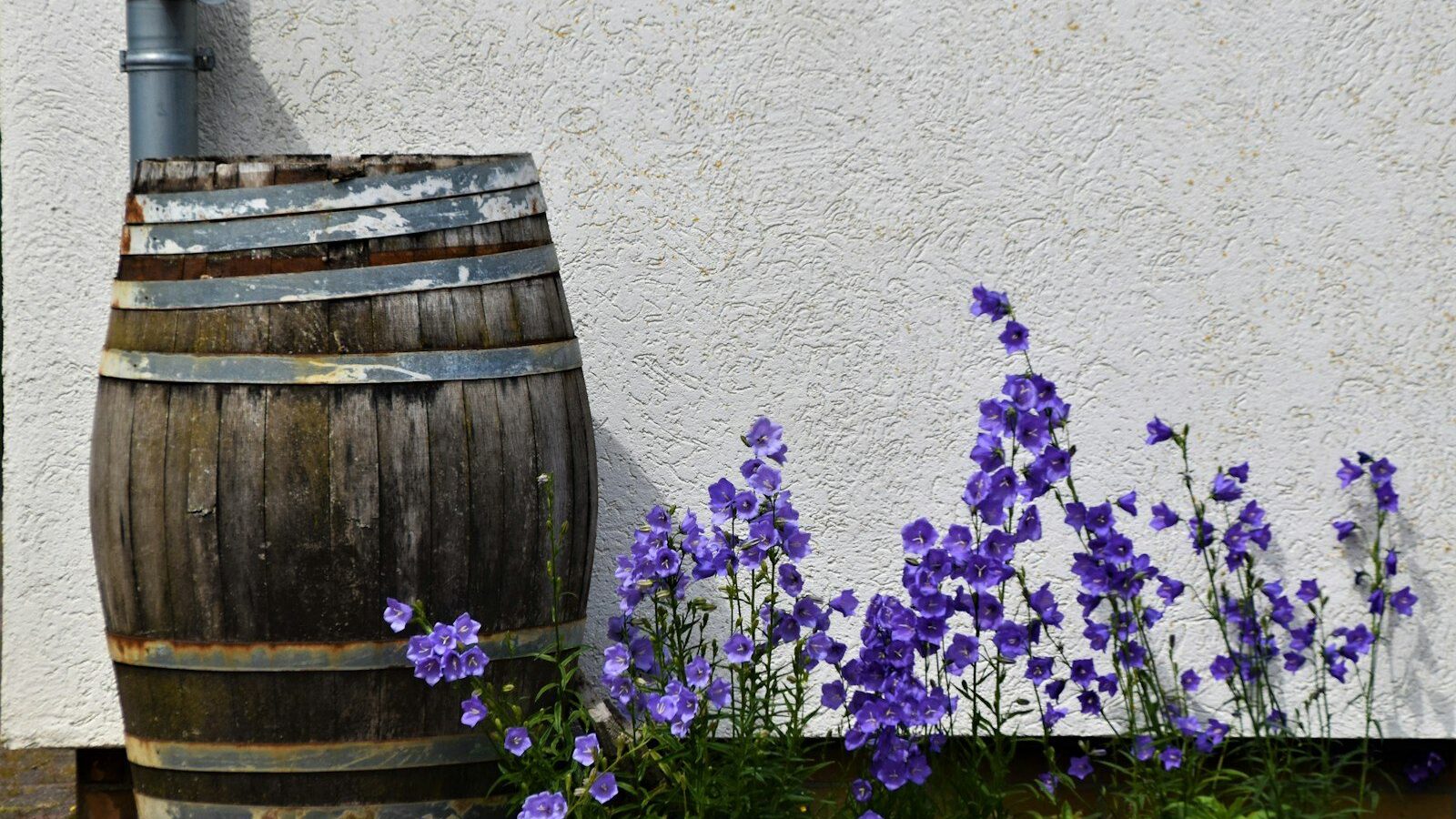
A barrel fountain is one of the easiest water features you can build in a weekend: a half whiskey barrel, a liner or sealant, a small submersible pump, and something for the water to spill over or bubble through. It needs no digging, fits on a patio or deck, and sounds like a much bigger feature than it is. The two things that decide whether it works long term are keeping the barrel watertight and choosing a pump that matches the effect you want. This guide walks through both, plus the wiring, plants and seasonal care that keep a barrel fountain running for years.
Part of our Ponds & Water Gardens guide →
In this guide
- Barrel Fountain vs. Barrel Pond: What You Are Building
- Materials and Tools
- Choosing the Right Pump
- Step 1: Pick and Prepare the Spot
- Step 2: Make the Barrel Watertight
- Step 3: Route the Power Cord
- Step 4: Set the Pump and Fountain Head
- Step 5: Fill, Test and Tune
- Plants for a Barrel Fountain
- Keeping the Water Clean
- Fish in a Barrel Fountain?
- Winter Care by Climate
- Common Problems and Fixes
- Design Ideas
- Frequently Asked Questions
Key Takeaways
- A standard half whiskey barrel holds roughly 25–30 gallons; a pump rated around 100–300 GPH is enough for a bubbler or short spout.
- Line the barrel with a rigid plastic insert or flexible pond liner. Sealing bare oak alone works but needs more upkeep and can leach tannins.
- Plug the pump into a GFCI-protected outdoor outlet and run the cord over the rim or through a sealed hole near the top, never the bottom.
- Place the barrel on level pavers or a sturdy stand; full of water it can weigh well over 250 pounds.
- Top off weekly in summer, clean the pump intake monthly, and drain or bring the pump indoors where water freezes solid.
Barrel Fountain vs. Barrel Pond: What You Are Building
A barrel fountain puts moving water first. The barrel is a reservoir, the pump pushes water up through a spout, bubbler or spitter, and the sound and splash are the point. A barrel pond is a still or gently aerated mini water garden built around plants and sometimes a few small fish. The build steps overlap, but the priorities are different. If you mainly want water lilies, marginal plants and a tiny ecosystem, follow our guide on how to make a half barrel pond instead. If you want a feature that splashes and gurgles next to a seating area, keep reading.
You can combine the two: a bubbler in one corner of a planted barrel gives you both sound and plants. Just keep strong splash away from water lilies, which dislike moving water on their pads. For more small-scale ideas built around water, browse the wider ponds and water gardens guide.
Materials and Tools
- Half whiskey barrel: usually about 24–26 inches across and 16–18 inches deep. Real oak barrels are sold at garden centers and home stores; plastic look-alikes also work and never leak.
- Liner: a preformed plastic barrel insert sized for half barrels, or a piece of 45-mil EPDM or PVC pond liner roughly 5 by 5 feet.
- Submersible fountain pump: 100–400 GPH depending on the effect (sizing below), with an adjustable flow valve.
- Outlet fixture: a bubbler nozzle, fountain head, copper or bamboo spout, or a resin spitter figure.
- Tubing: flexible vinyl tubing matched to the pump outlet, usually 1/2 inch inside diameter for small pumps.
- Riser: a couple of bricks, an upturned plastic pot or a cinder block to lift the pump and fountain head to the right height.
- Stones and gravel: river rock to hide the pump and cord, and to weight down the liner.
- Sealant (optional): a non-toxic, water-based pond sealer if you skip the liner or want a second layer of protection.
- Tools: utility knife, drill with spade bit (only if routing the cord through the side), level, staple gun with stainless staples, and scissors.
Choosing the Right Pump
Pump size is where most barrel fountains go wrong. Too small and the spout dribbles; too large and water sprays out of the barrel, the level drops fast, and the pump runs dry. Fountain pumps are rated in gallons per hour (GPH) at a given head height, the vertical distance from the pump to the outlet. Always read the flow chart, not just the maximum number on the box, because a pump rated at 300 GPH at zero lift may move half that at 3 feet.
Rough sizing by effect
| Effect | Typical pump range | Notes |
|---|---|---|
| Gentle bubbler just above the surface | 80–150 GPH | Quietest option; least splash loss |
| Small spitter or bamboo spout | 100–250 GPH | Lift is usually 1–2 feet above the pump |
| Bell or tiered fountain head | 200–400 GPH | Needs a wind-sheltered spot to avoid spray loss |
| Water spilling over a rim or upper basin | 250–400 GPH | Flow needs to be wide enough to form a sheet |
Buy a pump with a flow-adjust dial so you can tune the effect after setup. Choose one with a foam pre-filter or intake cage, a cord at least 10 feet long, and a UL listing for submersible outdoor use. Our roundup of the best fountain pumps covers small models suited to barrels. Solar pumps are an option if you have no outlet nearby, but most only run in direct sun unless they include a battery, so expect the fountain to stop on cloudy days and in the evening.
Step 1: Pick and Prepare the Spot
Do this before anything else, because a filled barrel is very hard to move. Water weighs about 8.3 pounds per gallon, so 25–30 gallons plus the barrel, liner and stones easily lands in the 250–300 pound range. On a wood deck, set the barrel over a joist or near a beam rather than in the middle of a span, and check that your deck is in good condition.
- Level base: set the barrel on a pair of level patio pavers, a flagstone, or a sturdy wheeled plant caddy rated for the weight. A barrel that tilts will show a visible waterline gap on one side.
- Power: within reach of a GFCI outdoor outlet. Avoid extension cords left running across lawns or walkways.
- Light: a few hours of sun keeps plants happy, but full afternoon sun in hot climates heats a small volume of water quickly and encourages algae. Morning sun and afternoon shade is ideal.
- Trees: avoid placing it directly under messy trees. Leaves and seed pods clog the pump intake and foul the water.
Step 2: Make the Barrel Watertight
Real whiskey barrels are built to hold liquid, but garden-center half barrels have usually dried out, and the staves shrink and gap. You have three ways to deal with that.
Option A: Preformed insert (easiest)
Rigid plastic liners shaped for half barrels drop straight in. They hold water from day one, keep tannins out of the water, and make cleaning simple because you can lift the whole liner out. The trade-off is that the black plastic rim shows slightly below the barrel lip unless you trim it or hide it with stones and trailing plants. Measure the inside diameter and depth of your barrel before buying, because barrel sizes vary by an inch or two.
Option B: Flexible pond liner
Drape a sheet of EPDM or PVC liner into the barrel, fill it partway with water to let the weight pull it into place, and fold the excess into neat pleats around the sides. Once it is seated, trim the top so 2–3 inches lap over the rim, then fasten it just under the lip on the inside with stainless steel staples. Avoid regular steel staples, which rust and stain. A strip of wood trim or a rope wrapped around the inside top edge hides the liner cleanly.
Option C: Swell and seal the bare barrel
Fill the barrel with water and let it sit for several days; the oak swells and most leaks close up. Once it holds, you can drain it, let the inside dry briefly and coat it with a non-toxic, water-based pond sealer, following the label for dry time before refilling. This looks the most natural, but bare oak can release tannins that tint water tea-brown for a few weeks, and if the barrel ever dries out over winter the staves can shrink and leak again. Never use roofing tar, oil-based wood sealers or anything not labeled safe for ponds if you plan to keep plants or fish.
Whatever you choose, tighten or replace loose metal hoops first. A rusty hoop that slips will let staves spread, and no liner fixes a barrel that is falling apart.
Step 3: Route the Power Cord
The cleanest look comes from bringing the cord over the back rim and down behind the barrel, hidden by a plant or stone. If you want no visible cord at all, drill a hole through one stave about 2 inches below the rim, above the waterline, push the cord through, and seal around it with an outdoor-rated silicone or a rubber grommet. Do not drill through the bottom or below the waterline; every hole there is a future leak point. If the plug will not fit through the hole, drill the hole only as large as the cord and route it over the rim instead, because cutting and splicing a pump cord usually voids its warranty and creates a shock hazard.
Plug into a GFCI-protected receptacle with an in-use (bubble) cover so the connection stays dry in rain. Leave a drip loop: let the cord dip below the outlet before rising to it, so water running along the cord drips off instead of running into the plug.
Step 4: Set the Pump and Fountain Head
- Attach the tubing or fountain head to the pump outlet. Keep tubing as short and straight as possible; every bend and extra foot reduces flow.
- Place a riser in the center or to one side of the barrel. Lifting the pump a few inches off the bottom keeps it out of settled sludge and makes it easier to reach.
- Set the pump on the riser so the fountain head ends 1–3 inches above the planned waterline for a bubbler, or position the spout so water lands well inside the barrel.
- For a spitter or wall-style spout on the rim, run tubing from the pump up the inside wall, hide it behind stones, and connect it to the spout. Aim the stream toward the center so it does not hit the rim and splash out.
- Pack river rock around the pump to hide it, leaving the intake screen clear. Rocks directly over the intake starve the pump.
If you want a more sculptural look, a cast piece built separately can sit inside or beside the barrel. Our walkthrough on how to make a concrete fountain covers casting bowls and spill basins that pair well with a barrel reservoir.
Step 5: Fill, Test and Tune
Fill the barrel to about 2 inches below the rim with a hose. If your water is chlorinated and you plan to add plants or fish, use a dechlorinator or let the water sit a few days before stocking. Plug in the pump and watch for 15–20 minutes.
- Water landing outside the barrel: turn down the flow, lower the outlet, or shorten the spout so the stream drops closer to the center.
- Weak dribble: check for kinked tubing, a clogged intake, or a pump that is undersized for the lift.
- Loud gurgling or rattling: the pump may be pulling air because water is too low, or it is vibrating against the barrel wall. Add water or set it on a piece of foam.
- Waterline dropping overnight with no splash: you have a leak. With a liner, check the folds and staple line; with a bare barrel, look for wet spots on the outside.
Plants for a Barrel Fountain
Plants soften the look and shade the water, which cuts algae. Keep them away from the strongest splash and grow them in small aquatic baskets set on bricks so the crowns sit at the right depth.
- Dwarf papyrus or umbrella palm: upright accent that tolerates moving water; perennial in warm zones, treat as annual or overwinter indoors elsewhere.
- Dwarf cattail: narrow vertical foliage, set 2–4 inches below the surface.
- Creeping Jenny or water mint: trails over the rim and hides the liner edge.
- Water lettuce or water hyacinth: floating plants that shade the surface; check your state’s rules first, since both are restricted or banned in some southern states.
- Miniature water lily: only if you keep the fountain to a soft bubbler on the opposite side.
For more container-scale water feature layouts, see our container pond ideas.
Keeping the Water Clean
A barrel holds a small volume of water, so it warms quickly and swings fast. Green water and slime are the usual complaints. A few habits keep it in check:
- Top off weekly in summer. Evaporation and splash can take an inch or more in hot, windy weather, and a pump running dry burns out quickly.
- Rinse the pump intake every two to four weeks, more often in leaf season. Lift the pump, pull off the foam or cage, and rinse it in a bucket.
- Do a partial water change of about a quarter of the volume every few weeks if the water starts to smell or cloud.
- Add shade: plants covering roughly half to two-thirds of the surface noticeably reduce algae in a still or bubbler barrel.
- Control mosquitoes: moving water discourages them, but corners can still breed larvae. A mosquito dunk containing Bti is safe for plants, pets, birds and fish.
- Avoid harsh chemicals: bleach and household cleaners damage liners, plants and any wildlife that drinks from the fountain. A stiff brush and fresh water handle most cleaning.
Fish in a Barrel Fountain?
A couple of mosquitofish or small goldfish can live in a well-planted barrel, but a fountain is a tough home for them. The water temperature swings, the volume is small, and a strong pump can stress or trap small fish against the intake. If you want fish, keep the flow low, cover the intake with a fine mesh, keep the barrel in partial shade, and plan for winter, because a barrel will freeze solid in cold climates. Most people are happier with a plants-only fountain.
Winter Care by Climate
How you handle winter depends on your USDA zone.
- Zones 9–11: run the fountain year-round. Clean the pump and do a bigger water change in late fall after leaves drop.
- Zones 7–8: you can keep it running through occasional light frosts, since moving water resists freezing. Shut it down during hard freezes so ice does not form around the spout and redirect water out of the barrel.
- Zones 6 and colder: before the first hard freeze, unplug the pump, lift it out, clean it, and store it in a bucket of water in a frost-free garage or basement so the seals do not dry out. Drain the barrel or leave it partly full if lined; an empty, unlined oak barrel may shrink and need re-swelling in spring. Move tender plants indoors or treat them as annuals.
Common Problems and Fixes
| Problem | Likely cause | Fix |
|---|---|---|
| Brown, tea-colored water | Tannins from unlined oak | Partial water changes; add a liner or sealer |
| Green water | Sun, warmth, excess nutrients | More plant cover, partial shade, water changes |
| Pump stops intermittently | Clogged intake or thermal cutoff from low water | Clean intake, keep water topped up |
| Level drops fast | Splash, wind spray or leak | Lower flow, shelter from wind, inspect liner |
| Barrel staves gapping | Barrel dried out | Tighten hoops, re-swell, or add a liner |
Design Ideas
- Bamboo spout: a bamboo spout clamped to the rim with water trickling into the center is a classic, quiet look.
- Bubbler through a stone: drill or buy a pre-drilled basalt or river stone, set it on a riser so it barely breaks the surface, and let water well up over it.
- Two-barrel spill: set a smaller barrel or pot higher on blocks so it overflows into the main barrel; the pump in the lower barrel feeds the upper one.
- Lighting: a small submersible LED aimed up at the spout makes the fountain a nighttime focal point. Use low-voltage fixtures plugged into the same GFCI circuit.
- Planted surround: group potted grasses, ferns or herbs around the barrel to tie it into the patio and hide the cord.
Frequently Asked Questions
Do I need a liner for a whiskey barrel fountain?
Not strictly, since oak barrels swell and seal once soaked, but a liner or preformed insert is more reliable, keeps tannins out of the water, and prevents leaks if the barrel ever dries out. Most people find a liner worth the small extra effort.
What size pump do I need for a half barrel fountain?
For a 25–30 gallon half barrel, a pump in the 100–300 GPH range covers most bubblers and spouts. Check the pump’s flow at your actual lift height, and choose one with an adjustable flow so you can dial in the effect.
Can I run a barrel fountain without electricity?
Yes, with a solar fountain pump. Most run only in direct sunlight unless they include a battery, so the fountain will pause on cloudy days and at night. Place the panel in full sun and keep it clean.
How often should I clean a barrel fountain?
Rinse the pump intake every two to four weeks, top off weekly in warm weather, and change about a quarter of the water every few weeks if it looks cloudy. A full clean-out once or twice a year is usually enough.
Will a barrel fountain attract mosquitoes?
Moving water discourages mosquitoes from laying eggs, but still corners can breed them. Keep the pump running and add a Bti mosquito dunk during warm months for extra protection that is safe for plants, pets and birds.