

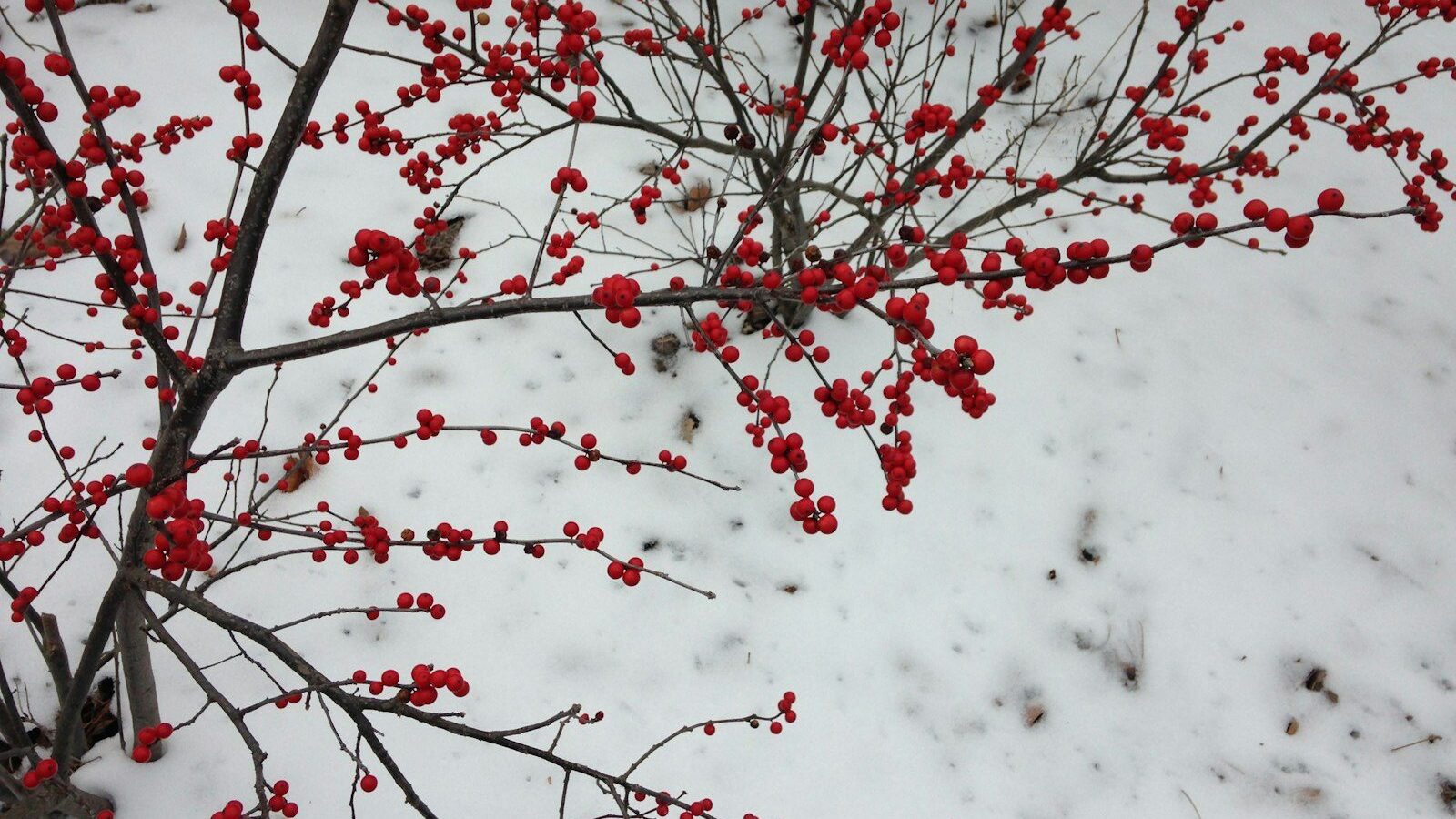
If you want a blaze of red berries lighting up the garden in the dead of winter, grow winterberry holly. To grow winterberry (Ilex verticillata) well, plant it in moist, acidic soil in full sun to part shade, and, crucially, plant at least one male shrub near your berry-producing females so the flowers get pollinated. Unlike evergreen hollies, winterberry is deciduous; it drops its leaves in fall, and that is exactly the point, because the bare branches then reveal masses of brilliant red, orange, or gold berries that persist for months and feed birds through the hardest part of the year. This native North American shrub thrives in the wet, acidic ground where many plants fail, asks little once established, and lights up the winter landscape like nothing else. This guide covers the male-female pollination requirement, planting, soil, pruning, and the wildlife value that makes winterberry a four-season favorite.
Key Takeaways
- Winterberry (Ilex verticillata) is hardy in USDA zones 3-9 and produces brilliant berries that persist from fall through winter.
- Plants are male or female; you need at least one male within about 50 feet to pollinate up to 6-10 female (berry-bearing) shrubs.
- It thrives in moist to wet, acidic soil and tolerates full sun to part shade, making it ideal for damp spots.
- Space plants 3-5 feet apart; most cultivars reach 3-8 feet tall and slowly form colonies by suckering.
- Prune in late winter to early spring; it flowers and fruits on new wood, and minimal pruning is needed.
- The berries are a critical late-winter food for birds; the small spring flowers feed bees and pollinators.
Why Grow Winterberry
Winterberry is grown for its spectacular winter display. Through spring and summer it is a quiet, leafy green shrub, easy to overlook. Then in autumn it drops its leaves entirely, and what is left is a dense thicket of upright stems studded from top to bottom with vivid red berries, often so heavy they bend the branches. Against snow, an evergreen backdrop, or a gray winter sky, the effect is electric, and the berries hold their color for months, frequently lasting until late winter when birds finally strip them.
Native to the wetlands and swamp edges of eastern North America, winterberry also solves a hard landscaping problem: what to plant in wet, acidic, poorly drained soil. It thrives in conditions that defeat most shrubs, tolerates clay and standing water, and is reliably deer-resistant. Cut branches are a staple of winter wreaths and holiday arrangements, prized by florists. Add its enormous value to wildlife, and winterberry becomes one of the most useful native shrubs you can plant. The one thing to understand before you buy is its pollination requirement.
The Male and Female Rule: You Need Both
This is the single most important thing about winterberry, and the reason many gardeners end up disappointed. Winterberry is dioecious, meaning individual plants are either male or female. Only female plants produce berries, and they will only do so if a compatible male plant grows nearby to pollinate their spring flowers. Plant a female alone and you will get healthy foliage but no berries, ever.
To get fruit, plant at least one male within roughly 50 feet of your females; bees carry the pollen between them. A single male can pollinate up to six to ten female shrubs, so you do not need them in equal numbers. Timing matters too: the male must bloom at the same time as the females. Nurseries sell matched pairs for exactly this reason. The classic combinations are the female ‘Winter Red’ with the male ‘Southern Gentleman’, and the compact female ‘Red Sprite’ with the male ‘Jim Dandy’. When you buy, confirm both the sex of each plant and that the bloom times overlap, and site the male centrally so it can reach all the females.
Hardiness, Size, and Cultivars
Winterberry is hardy across USDA zones 3 through 9, an exceptionally wide range. The species grows 6 to 10 feet tall, but compact cultivars suit smaller gardens. Note that early-blooming and late-blooming groups exist, so match your female and male within the same bloom window.
- ‘Winter Red’ is the benchmark female, a 6- to 8-foot shrub with heavy crops of long-lasting bright red berries; pair with ‘Southern Gentleman’.
- ‘Red Sprite’ (also sold as ‘Nana’) is a compact 3- to 5-foot female with unusually large red berries; pair with the dwarf male ‘Jim Dandy’.
- ‘Berry Heavy’ and ‘Berry Heavy Gold’ are prolific females in red and gold; pair with ‘Mr. Poppins’ or ‘Southern Gentleman’.
- ‘Winter Gold’ bears warm orange-gold berries for a softer look.
- Males like ‘Southern Gentleman’, ‘Jim Dandy’, and ‘Mr. Poppins’ bear no berries; they exist purely to pollinate and can be tucked at the back of a planting.
Where to Plant
Winterberry produces the heaviest berry crop in full sun, at least six hours a day, though it tolerates part shade with somewhat lighter fruiting. Site it where the winter berries will be visible from a window, walk, or street, against an evergreen hedge or a wall that shows off the red, since the berries are the entire reason to grow it. The male, which bears no berries, can be placed inconspicuously behind or among the females.
Like its cousins in the wetland flora, winterberry loves moisture. It is one of the best shrubs for low, wet, poorly drained sites, rain gardens, pond and stream edges, and damp corners where water collects. It also grows in average garden soil as long as it stays reasonably moist and acidic. Because it suckers, it slowly forms a colony; give it room to widen or remove outer suckers to contain it.
Soil and pH
Acidic soil is essential for winterberry. It performs best at pH 4.5 to 6.5 and develops chlorosis, with yellowing leaves and weak growth, in alkaline conditions. If you garden over limestone or have high-pH soil, this is a plant to grow only after acidifying the bed with elemental sulfur, peat, and acidic organic matter, or in a dedicated acidic, moisture-retentive area. A soil test before planting is well worth the trouble, because winterberry simply will not thrive in alkaline ground.
The plant also wants soil rich in organic matter and able to hold moisture. Work several inches of compost, composted leaves, or peat into the planting area, and mulch with an acidifying material such as pine needles or shredded bark. Heavy, wet clay is acceptable here, an unusual virtue, but truly compacted, anaerobic soil should still be loosened to give roots air.
When and How to Plant
Plant winterberry in spring after the soil warms, or in early fall at least six weeks before hard frost so roots establish before winter. Container-grown plants can be set out through the growing season with diligent watering. Plant the male and females at the same time so they establish together and the females can be pollinated from their first flowering.
- Dig a hole as deep as the root ball and two to three times as wide, loosening the sides.
- Tease apart any circling roots on a pot-bound plant so they grow outward into the surrounding soil.
- Set the shrub so the top of the root ball is level with or slightly above grade; do not plant deep.
- Backfill with the acidified, organic-rich amended soil, firming gently, and form a shallow watering basin.
- Space plants 3 to 5 feet apart, keeping at least one male within about 50 feet of the females.
- Water in well and apply a 2- to 3-inch acidic mulch, kept a couple of inches off the stems.
Watering and Feeding
Consistent moisture is key. Water new plants deeply once or twice a week through the first two seasons so the root zone never dries out, more in heat or sandy soil. Established winterberry in a naturally moist site may need no extra water, but those in average ground benefit from irrigation during droughts, especially while berries are sizing up in late summer. A drought-stressed plant may drop berries early or color poorly.
Feed lightly, if at all. In good soil winterberry needs no fertilizer; if growth is weak or leaves are pale, apply a fertilizer made for acid-loving plants such as one formulated for hollies or azaleas in early spring. Avoid overfeeding, which pushes leafy growth at the expense of berries and can raise soil pH with the wrong product. An annual mulch of pine needles and a topdressing of compost usually cover its needs.
Pruning Winterberry
Winterberry needs little pruning, which is part of its appeal. It flowers and fruits on new wood, so the best time to prune is late winter to early spring, before new growth begins. This also lets you enjoy the berries all winter first. Avoid heavy summer or fall pruning, which would remove developing fruit and reduce the winter show.
When you do prune, remove dead, damaged, or weak stems and thin crowded interior growth to keep the shrub open. To renew an old, congested plant, cut the oldest third of the stems to the ground over three years. Because winterberry suckers, you can control its spread by slicing off outer suckers with a spade in spring; rooted suckers transplant easily to start new plants. Cutting berried branches for winter arrangements is itself a form of light, harmless pruning, take what you like for wreaths and vases.
Wildlife and Pollinators
Winterberry is a wildlife powerhouse. The berries are a vital late-season food source for more than 45 species of birds, including robins, cedar waxwings, bluebirds, mockingbirds, and thrushes, and they are most valuable precisely because they persist into late winter when little other food remains. The fruit ripens to full sweetness and palatability after a few hard frosts, so birds often leave it alone in early winter and strip it in the lean weeks of late winter, which is also why the display lasts so long. Small mammals take the fallen berries as well.
The shrub supports pollinators too. The small, greenish-white flowers in late spring are an excellent nectar and pollen source for honeybees and native bees, the same bees that carry pollen from the male to the females and make the berry crop possible. Winterberry pairs beautifully with other moisture-loving natives such as summersweet for a wildlife-friendly wet border, and fits naturally into the kind of habitat plantings featured throughout our plants and flowers guides. As a bonus for gardeners in deer country, winterberry is reliably deer-resistant.
Common Problems and Pests
Winterberry is robust and rarely troubled, and most problems trace back to soil pH or moisture rather than pests.
Chlorosis from Alkaline Soil
The most common issue is leaf yellowing with green veins, a sign the soil is too alkaline and the plant cannot take up iron. Correct it by acidifying the soil with elemental sulfur or an acid-plant fertilizer and mulching with pine needles. Prevention starts with planting only in genuinely acidic ground.
No Berries
A healthy female with no berries almost always means there is no compatible male nearby, or the male blooms at a different time. Make sure a male of the matching bloom group grows within about 50 feet. Late frosts that kill the flowers, or excessive shade, can also reduce fruiting.
Leaf Spot and Powdery Mildew
Fungal leaf spots and powdery mildew may appear in wet, crowded, or shaded conditions but are usually cosmetic and do not affect berry production. Improve airflow by thinning, avoid overhead watering, and clean up fallen leaves. Serious insect pests are uncommon on winterberry.
A Note on Toxicity
Like other hollies, winterberry berries are mildly toxic to people, cats, and dogs if eaten in quantity, causing stomach upset, vomiting, and diarrhea. They are not generally dangerous in the small amounts a curious child or pet might sample, but it is wise to site the shrub away from areas where small children play unsupervised and to discourage pets from eating the fruit. The berries are perfectly safe and beneficial for the birds that have evolved to eat them.
Frequently Asked Questions
Why doesn’t my winterberry have berries?
Almost always because there is no compatible male plant nearby to pollinate the female. Winterberry plants are either male or female, and only females bear berries, and only when a male of the same bloom time grows within about 50 feet. Plant a matched male, such as ‘Jim Dandy’ for ‘Red Sprite’, and your female should fruit.
How many male winterberry plants do I need?
Just one male can pollinate up to six to ten female shrubs, as long as it is within about 50 feet and blooms at the same time. You do not need equal numbers. Place the single male centrally so bees can carry its pollen to all the surrounding females, and confirm the bloom times overlap when you buy.
Does winterberry lose its leaves?
Yes. Unlike evergreen hollies, winterberry is deciduous and drops all its leaves in fall. That is actually the point: once the leaves fall, the bare branches reveal masses of bright red berries that put on a spectacular winter show and feed birds through the coldest months. The leaves return green and healthy each spring.
When should I prune winterberry?
Prune in late winter to early spring, before new growth begins, after you have enjoyed the berries all winter. Winterberry flowers and fruits on new wood, so this timing preserves the next crop. It needs little pruning, just removal of dead or crowded stems, and renewal of the oldest third over a few years on old plants.
Is winterberry good for wildlife?
Exceptionally. The persistent berries feed more than 45 bird species, including robins, waxwings, and bluebirds, and are most valuable in late winter when other food is scarce. The spring flowers provide nectar and pollen for bees, and the shrub is deer-resistant. It is one of the best native shrubs for supporting wildlife.
Winterberry turns the bleakest weeks of the year into the garden’s brightest moment. Plant it in moist, acidic soil in full sun, remember to include at least one matching male so your females can fruit, and prune lightly in late winter, and you will be rewarded with months of brilliant berries, a steady stream of birds, and a deer-proof native shrub that thrives from zone 3 to zone 9. Pair ‘Winter Red’ with ‘Southern Gentleman’, or compact ‘Red Sprite’ with ‘Jim Dandy’, site them where you can see the color from indoors, and winterberry will light up your winters for decades.