

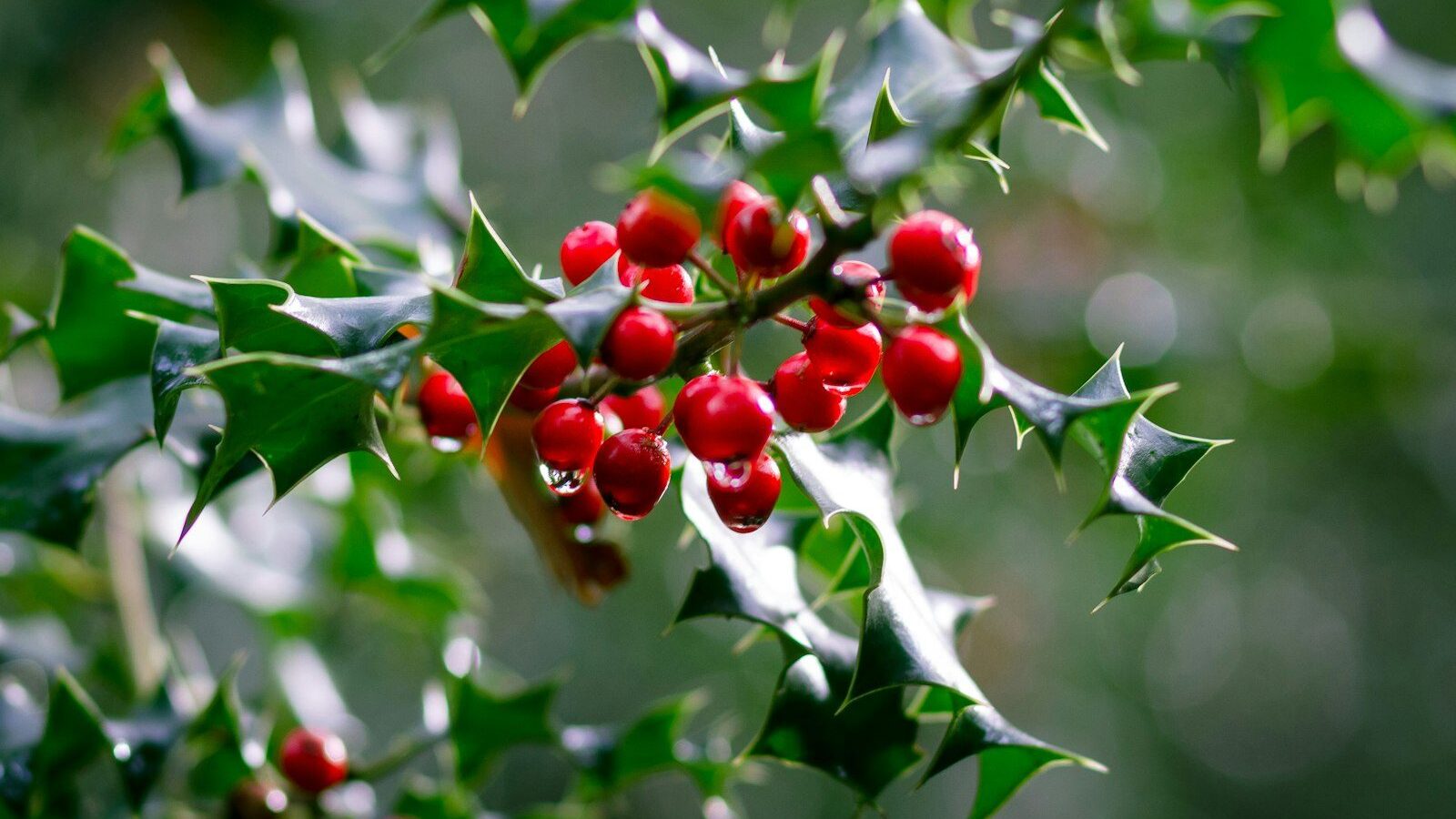
Few shrubs earn their keep in the winter garden the way holly does. When the perennials have collapsed and the deciduous trees stand bare, a well-grown holly is still glossy, dense, and studded with berries that glow against the frost. But holly has a reputation for being temperamental, and most of that reputation comes down to one misunderstood quirk: a lot of gardeners plant a single shrub, wait two seasons, and never see a berry. The good news is that holly is genuinely easy once you understand a couple of non-negotiable rules. If you learn how to grow holly with the right pairing, the right soil, and a sense of when to prune, you’ll have a plant that looks good for decades with very little fuss.
Key Takeaways
- Holly is dioecious: you need a male plant near your female plants to get berries. One male covers three to five females within about 50 feet.
- Most hollies thrive in USDA zones 5 to 9, but it ranges widely by species, from winterberry in zone 3 to yaupon in warm zone 9.
- Give holly slightly acidic, well-drained soil with a pH of 5.0 to 6.5, and full sun to part shade. More sun means denser growth and more berries.
- Plant in spring or early fall, water consistently for the first two years, and water evergreen types deeply in fall to prevent winter leaf browning.
- Prune for shape in late winter or early spring, fertilize lightly with an acid-loving formula, and watch for leafminer, scale, and spider mites.
Choosing the Right Holly for Your Zone
“Holly” covers a huge genus, Ilex, with hundreds of species and cultivars ranging from 40-foot trees to knee-high foundation shrubs. The first job is matching the type to your climate. Broadly, hollies are happy in USDA zones 5 through 9, but the spread within the genus is enormous, so don’t buy on looks alone.
- American holly (Ilex opaca): The classic broadleaf evergreen, hardy in zones 5 to 9. It can reach 15 to 30 feet and makes a beautiful specimen tree with dull-green spiny leaves.
- English holly (Ilex aquifolium): Zones 6 to 9. The glossy, sharply spined holiday holly. Lovely but fussy about heat and humidity, and invasive in parts of the Pacific Northwest.
- Meserve or “blue” hollies (Ilex x meserveae): Zones 5 to 7. These hybrids, including ‘Blue Princess’ and ‘Blue Prince’, are the cold-hardy workhorses with blue-green foliage and a compact habit.
- Inkberry (Ilex glabra): Zones 4 to 9. A native evergreen with smooth, spineless leaves and black berries, excellent as a low boxwood alternative.
- Winterberry (Ilex verticillata): Zones 3 to 9. A deciduous native that drops its leaves in fall, leaving bare branches loaded with brilliant red berries. The cold-climate champion.
- Yaupon holly (Ilex vomitoria): Zones 7 to 9. A tough, drought-tolerant Southern native that takes heat, salt, and heavy pruning in stride.
Pick the species that suits your hardiness zone first, then choose the cultivar for size and form. A blue holly will sulk in zone 9 heat, and English holly will die outright in a zone 4 winter. If you garden where rhododendrons and azaleas thrive, you’ll likely have good luck with holly too, since they share a love of acidic, well-drained soil. Our guide on how to grow rhododendrons covers many of the same site conditions.
The Pollination Rule You Cannot Skip
Here is the single most important thing about growing holly: it is dioecious, meaning individual plants are either male or female. Only female plants produce berries, and they only do so when a male holly is nearby to pollinate the flowers. Plant one holly by itself and you may get a healthy, handsome shrub that never sets a single berry. This trips up more new holly growers than any pest or disease ever will.
Bees carry the pollen from male flowers to female flowers in spring, so the two need to be within range of foraging insects. A practical guideline is to keep a male within about 50 feet of your females. One male plant can pollinate three to five females, so you don’t need a male for every shrub. If you’re planting a hedge or a group, tuck a single male somewhere in the middle and let it do the work for the whole planting.
The catch is that the male and female should be the same or closely related species, and they should bloom at the same time. Breeders make this easy by selling matched pairs with names that practically announce their job:
- ‘Blue Princess’ (female) pairs with ‘Blue Prince’ (male) among the Meserve blue hollies.
- ‘Winter Red’ (female winterberry) is pollinated by ‘Southern Gentleman’ (male), while early-blooming ‘Red Sprite’ uses ‘Jim Dandy’.
- ‘China Girl’ (female) matches with ‘China Boy’ (male).
Pay attention to bloom timing especially with winterberry. An early-flowering female won’t be pollinated by a late-flowering male even if they’re a foot apart, because their flowers never open at the same time. When in doubt, buy the male recommended on the female’s plant tag. If you’ve inherited a berryless female holly, a nearby neighbor’s male can sometimes save the day, but planting your own male is the surest fix.
Soil, Light, and Site Selection
Soil and pH
Holly wants slightly acidic soil, ideally a pH between 5.0 and 6.5. In that range, the plant can take up iron and other nutrients efficiently, which keeps the foliage a deep, healthy green. Push the pH much above 6.5 and you’ll often see chlorosis, where the leaves turn yellow between the veins because the plant can’t access iron in alkaline conditions. Before planting, it’s worth checking your dirt; our walkthrough on how to test soil pH takes about ten minutes and saves a lot of guesswork. If your soil runs alkaline, amend with elemental sulfur or peat well ahead of planting.
Just as important as pH is drainage. Most hollies hate wet feet and will develop root rot in soggy ground. The notable exception is winterberry, which tolerates and even enjoys the damp soil of its native wetlands. For evergreen hollies, choose a spot that drains freely, and improve heavy clay with compost before you plant.
Light
Holly grows in full sun to part shade. It will survive in fairly deep shade, but you pay for it: shaded plants grow leggy and open, and they flower and fruit far less. Since the whole point for most gardeners is those winter berries, aim for at least six hours of direct sun. More sun gives you denser, bushier growth and a heavier berry set. In hot southern zones, a little afternoon shade is welcome, but in cooler climates, plant holly in the brightest spot you’ve got.
How to Plant Holly
The best time to plant holly is in spring after the last hard frost, or in early fall while the soil is still warm enough for roots to establish before winter. Spring planting gives evergreen types a full season to settle in before facing their first cold; fall planting works well in milder zones where the ground doesn’t freeze early.
- Dig a hole two to three times as wide as the root ball but no deeper. Holly should sit with the top of the root ball level with or slightly above the surrounding soil.
- Loosen circling roots if the plant was pot-bound, then set it in and backfill with the native soil, mixing in compost only if your soil is poor or heavy.
- Water deeply to settle the soil and eliminate air pockets.
- Spread a two to three inch layer of mulch over the root zone, keeping it a few inches away from the trunk. Mulch conserves moisture, moderates soil temperature, and slowly acidifies as it breaks down.
Spacing depends entirely on how you’re using the plant. For a holly hedge or screen, set plants 3 to 5 feet apart so they knit together into a solid wall. For a specimen shrub or a large tree-form holly like American holly, give it considerably more room, often 6 to 10 feet from other plants and structures, so it can develop its natural pyramidal shape without crowding. Always check the mature width on the tag rather than the size of the pot in front of you.
Watering and Feeding
For the first two years after planting, water holly consistently. The roots are establishing, and a young holly that dries out badly may drop leaves or die back. Aim to keep the root zone evenly moist but never waterlogged, roughly an inch of water a week including rainfall, more during hot, dry spells.
There’s one watering rule that’s easy to forget and costly to ignore: water evergreen hollies deeply in fall, before the ground freezes. Evergreens keep their leaves through winter and continue to lose moisture through them even when the ground is frozen and the roots can’t draw any up. The result is winter desiccation, also called winter burn, where leaf edges turn brown and crispy. A thorough autumn soaking, sometimes paired with an anti-desiccant spray on exposed plants, goes a long way toward keeping foliage green until spring.
Holly is not a heavy feeder. A light application of an acid-loving, slow-release fertilizer such as a holly-tone or azalea-camellia formula in early spring is plenty. Over-fertilizing pushes soft, lush growth that’s prone to pests and can come at the expense of berries. If foliage is yellowing despite good feeding, suspect high soil pH locking out iron rather than a lack of nitrogen. Hollies share this acid-loving appetite with their cousins; the same feeding approach works for plants in our guide to growing camellias.
Pruning Holly
Holly takes pruning well, which is part of why it makes such a good hedge. For evergreen hollies, the main shaping prune happens in late winter or early spring, just before the new growth pushes out. Pruning then lets the plant heal and fill in quickly over the growing season, and any cuts disappear under fresh foliage.
There’s a bonus to growing holly: you can prune lightly around the holidays and use the trimmings for wreaths and decorations. Snipping berried branches in December is essentially a free decorative harvest that doesn’t hurt the plant, as long as you don’t take so much that you strip it bare. Just remember that on female plants, the branches you cut are the ones carrying berries, so prune males harder if you want to preserve the show.
Winterberry is the exception that needs a little thought. As a deciduous holly, it can flower on both old and new wood depending on the cultivar, so prune it in late winter while it’s dormant and you can clearly see the structure. Remove the oldest, thickest stems at the base every few years to keep the shrub vigorous and well-shaped, a technique called renewal pruning. Avoid heavy summer pruning on any holly, since it removes the developing berries and stresses the plant in heat.
Berries and Wildlife Value
The payoff for all this is the berry display. Most hollies produce bright red berries that ripen in fall and persist well into winter, sometimes lasting until spring. That persistence is exactly what makes holly so valuable in the cold months, both as ornament and as wildlife food. The berries are a critical food source for birds like robins, cedar waxwings, and bluebirds, especially in late winter when other food has run out. It’s worth noting that holly berries are toxic to humans and pets, so site the shrub thoughtfully if you have small children or curious dogs.
If your female holly is healthy but berryless, run through the checklist before assuming something is wrong: Is there a compatible male within 50 feet? Are they blooming at the same time? Did a late frost catch the flowers? Is the plant getting enough sun? Nine times out of ten, the answer is a pollination problem rather than a sick plant. For more berried and flowering shrubs that work alongside holly, browse our plants and flowers hub.
Common Pests and Problems
Holly is tough, but a handful of issues come up often enough to know by name.
- Holly leafminer: The classic holly pest. The larvae of a small fly tunnel inside the leaves, leaving winding tan or yellow trails and blotches. It’s mostly cosmetic and rarely kills a plant; remove and destroy badly mined leaves, and avoid spraying broadly, which kills beneficial insects.
- Scale insects: Small, immobile bumps on stems and leaf undersides that suck sap and excrete sticky honeydew, often followed by black sooty mold. Treat with horticultural oil in late winter.
- Spider mites: Tiny pests that thrive in hot, dry conditions and cause fine stippling and bronzing on leaves. A strong jet of water and good moisture help keep them down.
- Leaf spot: Fungal spotting that shows up in wet seasons. Improve air circulation, avoid overhead watering, and rake up fallen leaves.
- Chlorosis: Yellowing leaves with green veins, almost always a sign that the soil pH is too high and the plant can’t take up iron. Lower the pH rather than reaching for more fertilizer.
- Winter burn and desiccation: Browned, scorched evergreen leaves caused by winter moisture loss. Prevent it with deep fall watering and shelter from harsh winter wind.
One more thing worth knowing so you don’t panic: it’s perfectly normal for evergreen hollies to drop some of their oldest interior leaves in spring as new growth comes in. A holly shedding a layer of yellow leaves in April or May is usually just doing its annual housekeeping, not dying.
Frequently Asked Questions
Why doesn’t my holly have any berries?
The most common reason is pollination. Holly is dioecious, so only female plants produce berries and only when a compatible male is blooming nearby, ideally within about 50 feet. If you have a lone female, plant a matching male. Insufficient sun, a late frost on the flowers, or heavy summer pruning can also reduce or eliminate the berry set.
Do I need a male and female holly?
Yes, if you want berries. You need at least one male holly to pollinate your female plants, but a single male can service three to five females within range, so you don’t need them in equal numbers. Choose a male of the same or a closely related species that blooms at the same time, such as ‘Blue Prince’ for ‘Blue Princess’.
When is the best time to prune holly?
Prune evergreen hollies for shape in late winter or early spring, just before new growth begins. You can also take light trimmings around the holidays for decoration. Prune deciduous winterberry while it’s dormant in late winter, removing the oldest stems at the base to renew the shrub. Avoid heavy pruning in summer, which removes developing berries.
What soil pH does holly need?
Holly prefers slightly acidic soil with a pH between 5.0 and 6.5, along with good drainage. If the pH climbs above that range, the plant struggles to take up iron and the leaves yellow between the veins, a condition called chlorosis. Test your soil before planting and lower the pH with sulfur or peat if needed.
Why are my holly’s leaves turning brown in winter?
Brown, crispy leaves on an evergreen holly in winter are usually winter desiccation, or winter burn. The leaves keep losing moisture while the frozen ground prevents the roots from replacing it. Prevent this by watering deeply in fall before the ground freezes, mulching well, and sheltering exposed plants from harsh winter wind or using an anti-desiccant spray.
Grow holly with these basics in place and it becomes one of the most reliable, low-maintenance plants in the garden. Get the pairing right, give it acidic and well-drained soil and plenty of sun, water it through its first couple of winters, and prune it on schedule. Do that, and you’ll be rewarded every December with glossy foliage and bright berries while the rest of the garden sleeps.