

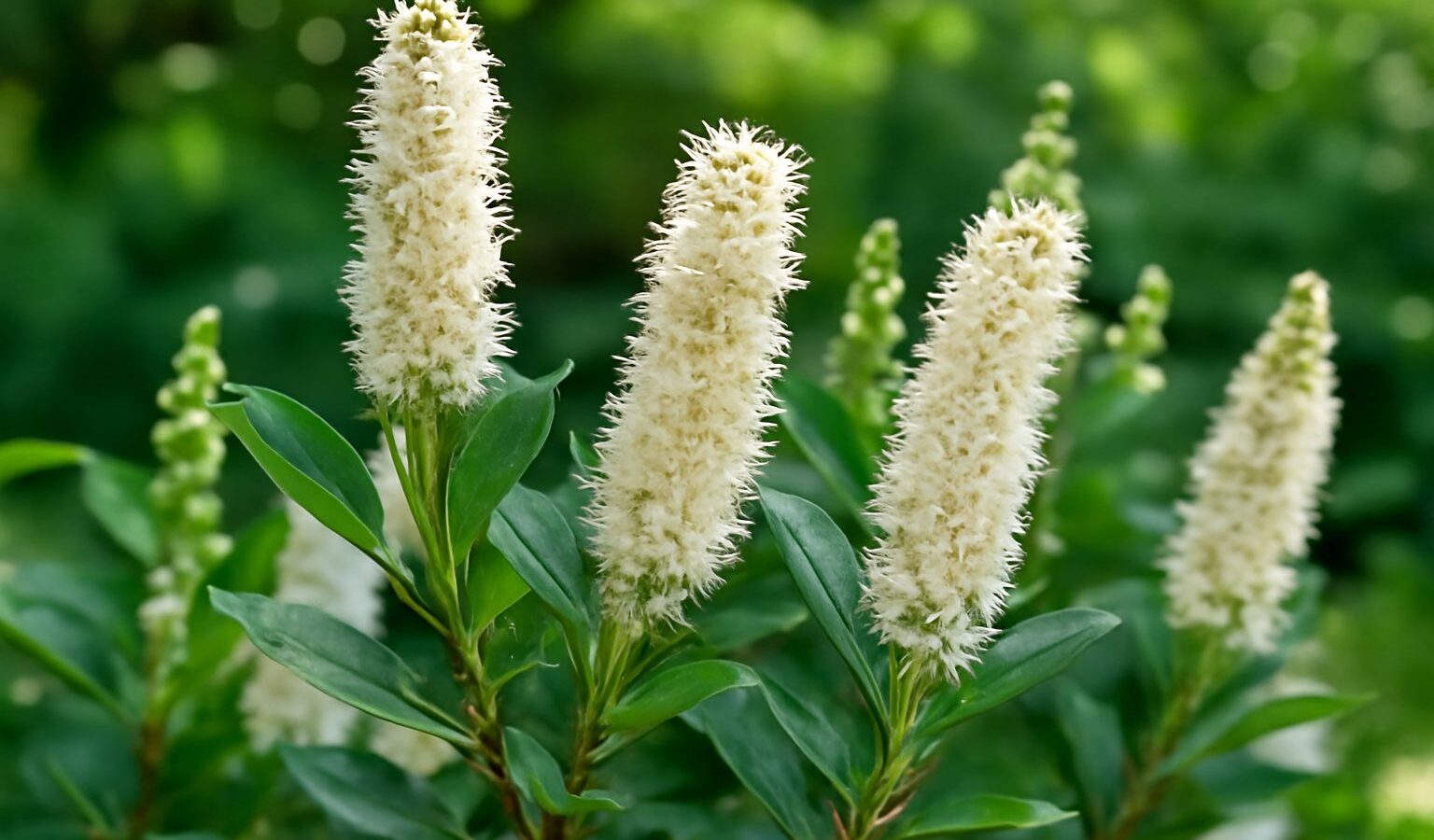
If you have a damp, shady corner that nothing seems to like and you want it to smell wonderful in August, grow summersweet. To grow summersweet (Clethra alnifolia) well, plant it in moist, acidic soil in part shade to full sun, give it room to spread by suckers, and prune in late winter before new growth begins. This North American native shrub is one of the few that bloom heavily in the dog days of summer, sending up upright spikes of intensely fragrant white or pink flowers just when most shrubs have finished. Bees and butterflies cover it from morning to dusk, which is why it also carries the names sweet pepperbush and honeycomb. Summersweet is hardy, deer-resistant, tolerant of wet ground and salt spray, and forgiving of the kind of conditions that defeat fussier plants. This guide covers choosing a cultivar, getting it established, pruning timing, and keeping it healthy for decades.
Key Takeaways
- Summersweet (Clethra alnifolia) is hardy in USDA zones 3-9 and blooms in mid- to late summer, July into August.
- It thrives in moist to wet, acidic soil and tolerates part shade, full shade, and full sun, making it ideal for damp problem spots.
- Space plants 4-6 feet apart; most varieties reach 3-8 feet tall and slowly form colonies by suckering.
- Prune in late winter or very early spring, since it flowers on new wood; this is the only pruning it needs.
- The fragrant flowers are a magnet for bees, butterflies, and other pollinators, and the shrub is deer-resistant.
- Few serious pests; mites and leaf spot may appear in dry, stressed plants, so keep it watered.
What Makes Summersweet Worth Growing
Summersweet is native to the eastern United States, from Maine down to Florida and across to Texas, where it grows wild along streambanks, in swampy woodlands, and in coastal thickets. That heritage tells you almost everything about how to use it: it shines in conditions other shrubs hate. Wet feet, heavy shade, sandy coastal soil, and salt spray are all within its comfort zone. For a gardener trying to fill a low spot that stays soggy after rain, or a shaded bed under tall trees, few flowering shrubs are as dependable.
Its signature feature is timing. The bottlebrush-shaped flower spikes open in July and August, a stretch when most shrubs have long since finished blooming and the garden can look tired. The fragrance is the other selling point, a sweet, spicy-honey scent that carries on warm, humid air and draws you across the yard. In fall the foliage turns a clear golden yellow, and the dried seed capsules persist into winter, giving the bare shrub a peppercorn-like texture that earns it the name sweet pepperbush.
Hardiness, Size, and Choosing a Variety
Summersweet is reliably hardy across USDA zones 3 through 9, one of the widest ranges of any native flowering shrub. The straight species grows 3 to 8 feet tall and 4 to 6 feet wide, slowly spreading into a loose colony by underground suckers. Plant breeders have selected several cultivars that control size and flower color, so you can match the plant to your space.
- ‘Hummingbird’ is the popular compact white form, staying around 2 to 4 feet tall with dense, heavy bloom, ideal for smaller gardens and the front of a border.
- ‘Ruby Spice’ carries the deepest pink flowers that hold their color without fading, reaching 4 to 6 feet.
- ‘Sixteen Candles’ produces upright, candle-like white spikes on a tidy 3- to 4-foot mound.
- ‘Pink Spires’ opens soft pink from rosy buds and grows to about 6 feet.
- ‘Vanilla Spice’ has notably large white flowers and a strong scent on a 3- to 6-foot plant.
For most home gardens, a compact cultivar like ‘Hummingbird’ or ‘Sixteen Candles’ is easier to place than the full-size species. If you want a colorful pollinator hedge along a wet edge, the larger ‘Ruby Spice’ or ‘Pink Spires’ makes a striking informal screen.
Where to Plant Summersweet
Light flexibility is part of summersweet’s appeal. It blooms well in full sun, part shade, and even fairly deep shade, though flowering and fall color are heaviest with at least a few hours of sun. In hot southern climates, afternoon shade keeps the foliage from scorching and the soil from drying out. In cooler northern gardens, more sun produces denser bloom. A spot with morning sun and afternoon shade suits it almost everywhere.
The real preference is moisture. Summersweet wants consistently moist soil and tolerates ground that is genuinely wet, including the edges of rain gardens, ponds, and downspout outflows where many shrubs would rot. It is one of the best choices for a low, poorly drained area. It will grow in average garden soil too, but in dry sites it suffers, dropping leaves and attracting mites, so reserve dry spots for tougher plants. Because it suckers, give it room to widen or be prepared to remove the outer shoots each spring.
Soil and pH
Summersweet prefers acidic soil, ideally in the pH 5.0 to 6.5 range, and rich in organic matter. In alkaline soils the leaves can yellow with chlorosis. If you garden over limestone or have a high soil pH, amend the planting area generously with peat, composted leaves, or pine bark, and mulch with an acidifying material like pine needles. A soil test before planting is worthwhile if you are unsure, since correcting pH is far easier before the shrub is in the ground.
Work two to three inches of compost or well-rotted leaf mold into the planting bed to boost both organic matter and moisture retention. Heavy clay that stays wet is acceptable here, an unusual virtue, but truly compacted, airless soil should still be loosened. The goal is a moisture-holding, slightly acidic, organically rich bed that mimics the woodland streambank where this plant evolved.
When and How to Plant
Plant summersweet in spring after the soil has warmed, or in early fall at least six weeks before the first hard frost so roots can establish before winter. Container-grown plants, the usual form sold at nurseries, can go in any time during the growing season as long as you water faithfully afterward. Spring planting is safest in the coldest zones.
- Dig a hole as deep as the root ball and two to three times as wide, loosening the sides so roots can spread.
- Tease apart any circling roots on a pot-bound plant so they grow outward rather than strangling the crown.
- Set the shrub so the top of the root ball sits level with or just slightly above the surrounding soil; do not plant deep.
- Backfill with the amended native soil, firming gently to remove air pockets, and build a shallow water-holding basin around the base.
- Space plants 4 to 6 feet apart for the full-size species, or 3 feet for compact cultivars used as a low massing.
- Water in thoroughly and apply a 2- to 3-inch layer of acidic mulch, kept a couple of inches off the stems.
Watering and Mulching
Because summersweet evolved in wet habitats, consistent moisture is the single most important part of its care. During the first two growing seasons, water deeply once or twice a week so the root zone never dries out, more often in heat or sandy soil. Established plants in a naturally moist site may need no extra water, but those in average ground will want supplemental irrigation during droughts. A summersweet that is allowed to dry out will scorch, drop leaves, and become vulnerable to spider mites, so when in doubt, water.
A 2- to 3-inch mulch of shredded bark, pine needles, or leaf mold conserves moisture, keeps the roots cool, suppresses weeds, and gently acidifies the soil as it breaks down. Refresh it each spring, and keep it pulled back slightly from the base to prevent stem rot.
Fertilizing
Summersweet is not a heavy feeder. In decent, organically amended soil it needs little or no fertilizer. If growth is weak or the leaves look pale, apply a fertilizer formulated for acid-loving plants, such as one made for azaleas and rhododendrons, in early spring as growth begins. Follow the label rate; overfeeding produces lush leaves at the expense of flowers. An annual topdressing of compost is usually all the nourishment an established shrub requires.
Pruning Summersweet
Pruning timing matters because summersweet blooms on new wood, the growth it produces in the current season. That means you should prune in late winter or very early spring, before the new shoots emerge. Pruning at this time encourages vigorous new growth that carries the summer flowers; pruning in summer or fall would remove the wood that is about to bloom.
For most plants, pruning is minimal. Remove any dead, damaged, or crossing stems, and shorten the shrub lightly to shape it if needed. Older shrubs that have grown leggy can be rejuvenated by cutting the oldest third of the stems to the ground each year over three years, which renews the plant without sacrificing all bloom at once. To control the spread of a suckering colony, slice off the outer suckers with a spade in spring, or dig and transplant them, since rooted suckers make easy free plants. Deadheading spent flower spikes is optional and purely cosmetic.
Pollinators and Wildlife Value
Few shrubs work harder for pollinators than summersweet. Blooming in mid- to late summer, it fills a nectar gap when many spring-flowering plants are long done, and the fragrant spikes draw an almost constant traffic of bees, including honeybees and native bumblebees, along with butterflies, moths, and hummingbirds. If you are building a pollinator garden, summersweet is a cornerstone for late-season forage; pair it with other nectar plants in our plants and flowers collection to extend the bloom season.
The shrub offers more than nectar. Songbirds feed on the small seeds held in the persistent fall capsules, and the dense, suckering form provides cover and nesting habitat. Just as valuable for many gardeners, summersweet is reliably deer-resistant, one of the few flowering shrubs deer tend to leave alone, which makes it useful in rural and suburban gardens under heavy browsing pressure.
Common Problems and Pests
Summersweet is remarkably trouble-free, and most problems trace back to the soil being too dry or too alkaline. Keep it moist and acidic and you will rarely see trouble.
Spider Mites
Spider mites are the most common pest, and they appear almost exclusively on plants stressed by drought and heat. They cause fine stippling and bronzing on the leaves, with faint webbing in heavy infestations. The best prevention is keeping the soil consistently moist; treat outbreaks with a strong water spray to the undersides of leaves or with insecticidal soap.
Leaf Spot and Chlorosis
Fungal leaf spots may show up in wet, crowded conditions but are usually cosmetic; improve airflow and clean up fallen leaves. Yellowing leaves with green veins indicate chlorosis from soil that is too alkaline; correct it by acidifying the soil with elemental sulfur or an acid-plant fertilizer and mulching with pine needles.
Excessive Suckering
The plant’s habit of spreading by suckers is a feature in naturalized settings but a nuisance in a tidy border. Manage it by removing outer suckers with a spade each spring, installing a root barrier, or simply choosing a more clumping compact cultivar.
Using Summersweet in the Landscape
Summersweet earns its place in a rain garden, along a pond or stream edge, in a shaded shrub border, or as an informal hedge in damp ground. Its tolerance of salt makes it a strong choice for coastal gardens. Plant it near a path, patio, or window where the August fragrance can be appreciated up close. It combines well with other moisture-loving natives such as winterberry holly and inkberry, and with shade companions like ferns and hostas. For a long season of interest, pair it with a spring-blooming shrub like mock orange so you get fragrance in both early summer and late summer from the same bed.
Frequently Asked Questions
Does summersweet grow in full shade?
Yes. Summersweet is one of the few flowering shrubs that tolerates fairly deep shade, which is why it is so useful under trees and in woodland gardens. Flowering and fall color are heavier with a few hours of sun, so part shade gives the best of both worlds, but it will bloom respectably even in mostly shaded spots.
When does summersweet bloom?
Summersweet blooms in mid- to late summer, typically July into August, depending on your climate. This late timing is its biggest asset, filling the garden with fragrant flowers when most other shrubs have already finished. The bloom lasts several weeks, and the dried seed capsules persist through winter.
When should I prune summersweet?
Prune in late winter or very early spring, before new growth starts. Summersweet flowers on new wood, so late-winter pruning encourages the fresh growth that carries the summer blooms. Remove dead or damaged stems, shape lightly, and renew old shrubs by cutting the oldest third of stems to the ground over a few years.
Is summersweet deer resistant?
Yes, summersweet is considered deer-resistant and is one of the better flowering shrubs for gardens with heavy deer pressure. No plant is completely deer-proof when food is scarce, but deer reliably leave summersweet alone in favor of tastier options, making it a dependable choice in rural and suburban landscapes.
Can summersweet grow in wet soil?
Absolutely. Summersweet is native to swamps, streambanks, and wet woodlands, so it thrives in moist to genuinely wet soil where many shrubs would rot. It is an excellent choice for rain gardens, pond edges, and low, poorly drained spots. It struggles most in dry soil, so wet conditions are an advantage, not a problem.
Summersweet is the answer to two of the hardest situations in a garden: damp shade and a late-summer lull. Give it moist, acidic soil and a spot in part shade, prune it in late winter, and keep it watered through dry spells, and it will reward you with weeks of fragrant, pollinator-covered bloom every August, golden fall color, and decades of low-maintenance service in zones 3 through 9. Tuck a compact cultivar like ‘Hummingbird’ near a path and you will look forward to the scent of summersweet every year.