

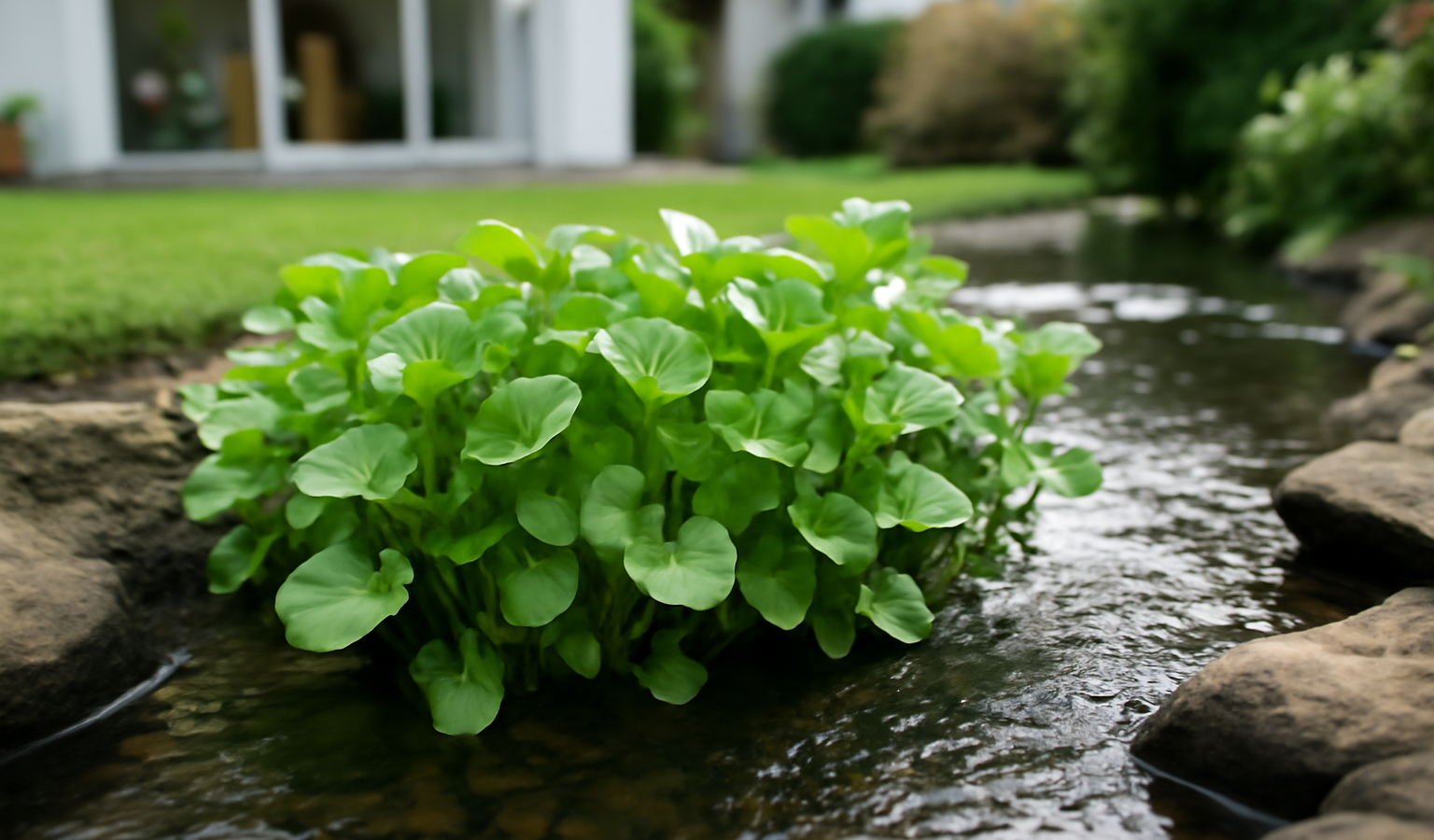
Watercress (Nasturtium officinale) is one of the few salad greens that actually wants to live with its feet in water. In the wild it grows in cool, clean, slow-moving streams and spring seeps, forming dense peppery mats you can cut again and again. That semi-aquatic habit is exactly what makes it intimidating to grow — and also why it is so rewarding once you understand the one thing it truly needs: a steady supply of cool, clean, oxygenated water. Get that right and watercress is nearly unkillable. Get it wrong and it sulks, yellows, or rots.
You do not need an actual stream. This guide covers both the classic approach — growing along the margin of a flowing stream or spring-fed pond — and a practical home version using a recirculating container with a small pump that mimics moving water on a patio. We will also cover the part too many articles skip: why you must be careful about eating watercress raw from natural water, because of a parasite called liver fluke.
Key Takeaways
- Watercress wants cool, clean, flowing water (ideally 50–65°F) over its roots — moving water keeps it oxygenated and stops rot.
- You can grow it along a real stream or spring-fed pond margin, or at home in a recirculating container with a small pump that keeps water gently moving.
- Start from seed, cuttings, or rooted supermarket sprigs — it roots from stem nodes within a week or two.
- Harvest by cutting the top few inches with scissors before it flowers; cut-and-come-again keeps plants tender and productive.
- Caution: watercress grown in natural or animal-grazed waterways can carry liver fluke. Eat it raw only from clean, controlled water; otherwise cook it.
Why Flowing Water Matters
Watercress is a true aquatic perennial, but the kind of water matters enormously. In its native habitat it grows in cool, clean, slow-flowing streams — not standing puddles. Moving water does three things the plant depends on. It keeps the root zone supplied with dissolved oxygen, which prevents the roots from suffocating and rotting. It carries away waste and keeps the water from stagnating and going foul. And it keeps the water cool, which is what watercress prefers: it does its best growing when water sits around 50–65°F, and it tends to bolt to flower and turn bitter in summer heat.
This is the single biggest difference between watercress and a crop like water chestnuts, which thrive in still, warm, shallow flooding. Water chestnuts want heat and stillness; watercress wants cool and movement. If you try to grow watercress in a warm, stagnant tub, it will likely yellow, go slimy at the base, and collapse. So whatever setup you choose, the design goal is the same: cool, clean water that keeps moving past the roots.
Growing Watercress in a Stream or Pond Margin
If you are lucky enough to have a clean, slow-flowing stream or a spring-fed pond, you can grow watercress the traditional way. Choose a spot at the water’s edge where the current is gentle and the water is only a few inches deep over a soft, gravelly or muddy bottom. Full sun to partial shade is fine; some afternoon shade actually helps in warmer regions by keeping the water cooler.
To establish plants, press rooted sprigs or seedlings into the streambed mud in the shallows, spacing them 4–6 inches apart, so the roots are submerged or in saturated soil but the growing tips stay above water. They will root quickly and begin to spread, knitting into a dense mat over a few weeks. Along a pond margin, the same principle applies — set plants in the saturated soil right at the waterline. Watercress can be vigorous to the point of invasive in suitable conditions, so if you are working in a managed pond, consider confining it to a planting basket or a defined margin so it does not take over. Our general water gardens and ponds guides cover building and managing those planting margins.
The important caveat with natural waterways is that you cannot control what is upstream. Runoff from pastures, livestock, or septic systems can contaminate the water — which matters both for plant health and, as we will cover below, for food safety.
The Home Recirculating-Container Method
Most home growers do not have a clean stream, and that is fine — you can build a small recirculating system that gives watercress the moving water it craves on a patio or balcony. The idea is to keep water gently circulating with a pump so it never goes stagnant.
A Simple Setup
Start with a watertight container or two — for example, a planting tray of soil sitting inside a larger reservoir tub. Plant watercress in a low, wide pot or tray filled with a heavy loam or a soil-and-gravel mix, set that pot in the reservoir, and keep an inch or two of water standing around the base of the plants. Add a small submersible fountain or aquarium pump (a modest 80–200 GPH pump is plenty for a tub) to lift water and let it trickle back over the planting, so the water is constantly turning over rather than sitting still. Even a small solar fountain pump can do the job and keep the surface moving.
Site the container in a bright spot but out of scorching afternoon sun, which overheats a small volume of water fast. Top up the reservoir as it evaporates, and refresh a portion of the water every week or two to keep it clean — small volumes foul more quickly than a stream. In hot weather, parking the reservoir in shade or even floating a frozen water bottle in it on the hottest days helps hold the cool temperatures watercress prefers. For a kitchen-window crop, you can even grow it more simply, much like other regrown greens such as lettuce regrown from scraps, by keeping cut sprigs in fresh water that you change often.
Starting Plants: Seed, Cuttings, or Supermarket Sprigs
Watercress is easy to start three different ways. From seed, sprinkle the tiny seeds on the surface of moist soil or a wet seed-starting mix and barely cover them; they germinate in roughly one to two weeks at 50–60°F. Keep the mix constantly wet — never let it dry out — and transplant the seedlings into your stream margin or container once they have a few true leaves.
The fastest route is cuttings or rooted sprigs. A bunch of fresh watercress from the grocery store or farmers market is essentially a bundle of live cuttings. Stand the stems in a glass of clean water on a windowsill and within about a week you will see white roots emerging from the nodes along the stems. Once rooted, plant them into your setup. This is the cheapest, quickest way to get a productive bed going, and a single store-bought bunch can seed an entire planting.
Ongoing Care
Once established, watercress is low-maintenance as long as the water stays cool, clean, and moving. Keep the roots permanently wet — this is a plant that genuinely cannot dry out. In a soil-based setup, a light feeding of a balanced fertilizer occasionally supports lush growth, but go easy: in a recirculating container, excess fertilizer just fouls the water and feeds algae. Watercress is naturally vigorous and rarely needs much pushing.
The main seasonal challenge is summer heat. As water warms past the mid-60s, watercress tends to bolt — sending up flower stalks, after which the leaves turn hot and bitter and growth gets stringy. You can delay this by keeping the water cool (shade, fresh cool water, larger water volumes) and by harvesting regularly, since cutting encourages tender new growth instead of flowering. In mild climates watercress is a perennial that slows in winter and rebounds in spring; in cold-winter areas it may die back or need protection, but it often reseeds or regrows from surviving roots.
Harvesting Watercress
You can begin cutting once plants are several inches tall and growing strongly, usually three to four weeks after establishing rooted sprigs. Harvest with scissors, snipping the top 2–4 inches of the tender stems and leaves. This cut-and-come-again approach is the key to good watercress: regular cutting keeps the plant in lush, leafy vegetative growth and delays bolting, so a healthy bed can be cropped repeatedly through the season.
Harvest in the cool of the morning when the leaves are crisp, and use it quickly — watercress wilts fast. To store it, treat it like a bouquet: stand the stems in a glass of water in the fridge, or wrap them in a damp paper towel in a bag, and use within a few days. Always cut before the plant flowers for the best flavor; once it bolts, the peppery bite turns harsh.
The Raw-Water Caution: Liver Fluke
This is the part that matters most for your health, and it is why you should think about where your watercress water comes from before you eat a leaf raw. Watercress growing in natural waterways — especially streams, ditches, or ponds where sheep, cattle, or other grazing animals have access — can become contaminated with the larvae of the liver fluke (Fasciola hepatica), a parasite that cycles through livestock and aquatic snails. The infective stage attaches to the leaves and stems of plants like watercress. Eating contaminated raw watercress can transmit the parasite to humans, causing an illness called fascioliasis.
The practical rules are straightforward. Eat watercress raw only when you know the water is clean and uncontaminated — for example, from your own recirculating container filled with clean tap water, or from a verified clean spring source with no upstream grazing animals. If you forage wild watercress, or grow it in any waterway that animals can reach or that drains farmland, do not eat it raw. Cooking thoroughly destroys the parasite, so contaminated watercress is safe once cooked — wilted into soup, sautéed, or simmered. When in doubt, cook it. A controlled home container is one of the safest ways to enjoy watercress raw, precisely because you control the water.
Frequently Asked Questions
Do I really need flowing water to grow watercress?
You need moving, not necessarily fast, water. Watercress thrives in cool, clean, slow-flowing water that stays oxygenated and never stagnates. At home you can mimic this with a small pump in a recirculating container; you do not need an actual stream. What it will not tolerate is warm, stagnant standing water.
Can I grow watercress in a pond?
Yes, along the shallow margin of a clean, preferably spring-fed pond, set plants in the saturated soil at the waterline. Because watercress spreads vigorously, confine it to a planting basket or defined margin. Make sure the water is clean and free of livestock contamination if you plan to eat it raw.
How do I start watercress quickly?
Buy a fresh bunch of watercress, stand the stems in a glass of clean water on a windowsill, and wait about a week for roots to form at the stem nodes. Plant the rooted sprigs into your stream margin or container. You can also grow it from seed or cuttings.
Is it safe to eat watercress raw?
Only from clean, controlled water. Watercress from natural streams or ponds accessible to grazing animals can carry liver fluke, a parasite that infects humans who eat it raw. Watercress from your own clean recirculating container is safe raw. If you are unsure of the water source, cook it — heat kills the parasite.
Why is my watercress bitter and flowering?
It has bolted, usually because the water got too warm in summer. Watercress turns bitter and stringy once it flowers. Keep the water cool (shade, fresh cool water, a larger reservoir), and harvest regularly by cutting the tips, which keeps the plant in tender leafy growth and delays bolting.