

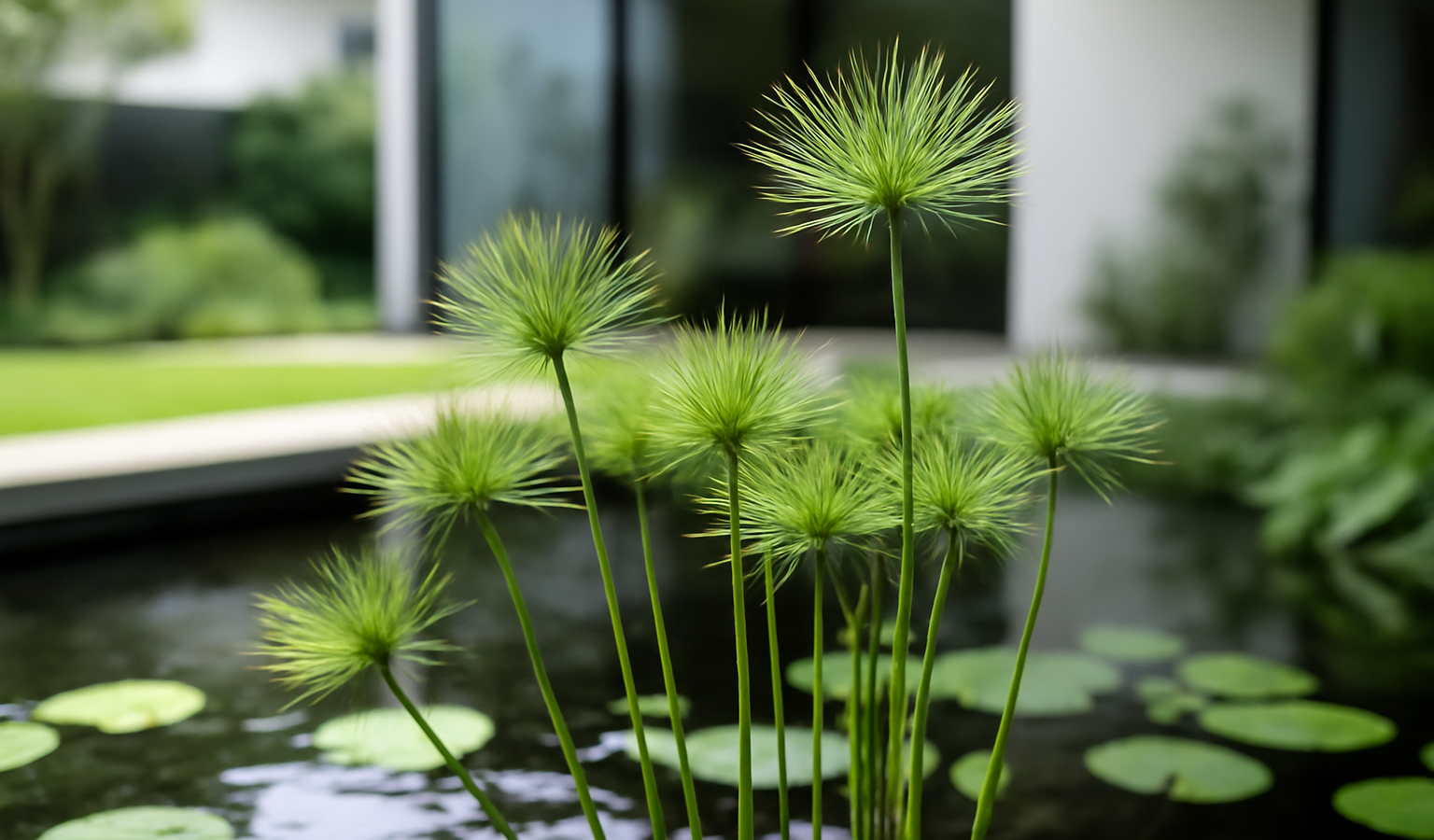
Few marginal plants deliver as much vertical drama for as little effort as dwarf papyrus. Those slender triangular stems shoot straight up and burst at the top into a green firework of thread-like bracts, giving you the airy, architectural silhouette of true Nile papyrus without the six-to-ten-foot scale that overwhelms a backyard pond. If you have ever wanted that wispy umbrella look at the water’s edge but worried it would swallow your whole feature, this is the plant for you. Below I will walk you through exactly how to grow dwarf papyrus, from the planting depth and hardiness zones that keep it happy to the one piece of advice most beginners ignore: containment. Get the pot, the depth, and the winter plan right, and this is one of the most rewarding, fuss-free verticals you can add to a water garden.
Key Takeaways
- Dwarf papyrus is a tender marginal plant; treat it as hardy in USDA zones 9-11, and overwinter indoors or grow as an annual in colder regions.
- It is a bog and shelf plant, not a deep-water plant: keep roughly 1-3 inches of water over the soil surface for dwarf types.
- Always grow it in a pot or mesh basket; Cyperus spreads aggressively by rhizome and seed and can become invasive if it escapes.
- Give it full sun for stocky, upright growth; shade makes the stems leggy and floppy.
- It must never dry out, but it almost never rots because it loves standing water.
- Propagate easily by dividing the rhizome or by floating an inverted umbrella head until plantlets sprout.
What Is Dwarf Papyrus?
Dwarf papyrus is a catch-all name for several compact members of the genus Cyperus, a group of grassy, sedge-family plants that thrive with their feet in water. The plant most often sold under the label is Cyperus haspan, commonly called dwarf papyrus or dwarf umbrella sedge, which tops out around 1.5 to 2 feet. You will also find dwarf cultivars of true papyrus, Cyperus papyrus, including the popular ‘Tut’ series: ‘Prince Tut’ is the dwarf form reaching roughly 2 to 3 feet, while ‘Baby Tut’ stays even shorter and tidier. A close relative, Cyperus alternifolius, goes by umbrella palm or umbrella sedge and offers a similar look at a slightly larger scale. Whatever the exact species, the defining feature is the same: a cluster of upright, three-sided stems, each crowned with a radiating starburst of fine green bracts. Compared with giant papyrus, which can hit 6 to 10 feet and dominate a pond, these dwarf forms keep all the texture at a manageable height.
Why Grow Dwarf Papyrus in a Pond?
The biggest reason is height and structure. Most pond plants are either low floaters like water lilies or sprawling marginals that hug the surface, so a planting can look flat. Dwarf papyrus breaks that horizontal monotony with strong vertical lines, drawing the eye upward and giving the whole feature a sense of scale. The fine, feathery umbrellas contrast beautifully against the broad, glossy pads of floating plants, and the thin stems sway and rustle in a breeze, adding gentle movement. It is also a fast grower, so a single small division fills out into a full clump within a season. Practically, it pulls excess nutrients out of the water through its roots, helping starve algae and keep the pond clearer. It looks especially at home tucked beside a waterfall or stream, where the splash keeps it moist and the upright stems frame the moving water.
Hardiness and USDA Zones
Dwarf papyrus is a tender, frost-sensitive plant with tropical and subtropical origins. As a rule of thumb, it is reliably hardy outdoors year-round only in USDA zones 9 through 11, where winters stay frost-free. Gardeners in zone 8 can sometimes overwinter it in the ground with heavy protection and a sheltered, deep spot, but that is a gamble rather than a guarantee. Everywhere colder, you have two sensible choices: grow it as an annual and replace it each spring, or lift it before the first frost and keep it alive indoors over winter. Frost is the hard limit here. The stems collapse quickly once temperatures dip into freezing, so the calendar matters more than the thermometer reading on any single night. If you are in a cool climate and want to keep your plant going for years, plan the rescue mission well before the first frost date for your area, not after the leaves have already browned.
One bonus of its tender nature: dwarf papyrus makes an excellent houseplant. Stand the pot in a saucer or bowl of water on a bright windowsill and it will sail through winter happily, ready to head back outside once nights stay reliably above the mid-50s in spring. For more on the seasonal cycle of tender water plants, see our guide on how to overwinter pond plants.
Planting Depth: The Most Important Detail
Get the depth right and dwarf papyrus practically grows itself; get it wrong and you will fight the plant all season. This is a marginal, or bog, plant. That means it wants its crown right at the waterline and its roots saturated, but it does not want to be submerged in deep open water. The target is shallow: set the pot so the soil surface sits roughly 1 to 6 inches below the water surface, with taller forms tolerating up to about a foot. For the true dwarf types most readers will be growing, aim for the shallow end of that range and keep about 1 to 3 inches of water standing over the soil. That is the sweet spot where the plant has the constant moisture it craves without drowning the crown.
In practice, this means the plant belongs on your pond’s marginal shelf, the built-in ledge around the edge that sits just below the surface. If your pond lacks a shelf, prop the pot up on bricks, an upturned crate, or a plant stand until the soil reaches the correct depth. Do not be tempted to drop it into the deep central zone of the pond; sunk too low, the crown rots and the stems yellow and fail. When in doubt, err shallow. Dwarf papyrus is just as content sitting in saturated soil with barely any standing water above it as it is under a few inches. Pair it with other shelf-dwellers, and if you want a low floating companion to contrast the height, the bright blooms of a water poppy make a lovely partner at the surface.
Step-by-Step Planting
- Choose a wide aquatic mesh basket or solid pot at least as wide as the clump’s current spread, giving the roots room.
- Fill with heavy clay or loam-based aquatic soil; avoid light, fluffy potting mixes that float away and foul the water.
- Set the rhizome so the crown sits at the soil surface, then firm the soil around the roots.
- Push one or two aquatic fertilizer tabs into the soil near the roots.
- Top-dress the surface with about an inch of gravel or pea shingle to hold the soil in place and stop fish from digging.
- Lower the planted pot gently onto the marginal shelf so the soil surface ends up 1 to 3 inches below the water.
Potting and Soil
A wide, relatively shallow container suits dwarf papyrus better than a tall narrow one, because the rhizome spreads sideways rather than diving deep. Mesh aquatic baskets are popular because they let water flow freely through the root zone, but a solid-sided pot works just as well and arguably contains roots a little better. Use a dense aquatic or topsoil-based loam; the heavier the soil, the better it anchors the plant and holds nutrients. The gravel top-dressing is not optional in a pond with fish, since koi and goldfish love to root around in soft soil and will quickly turn your water cloudy. A snug pot also keeps the clump tidy and upright, so the stems do not splay outward as the season goes on.
Containment: Keep It in a Pot
This is the rule I will not let you skip. Cyperus species are vigorous to a fault. They spread by creeping underground rhizomes and they self-seed prolifically from those pretty umbrella heads, so a plant set loose in pond-margin mud will colonize the entire edge in a season or two and then start hopping into ditches, wetlands, and waterways beyond your garden. In warm climates, several Cyperus species are listed as invasive or noxious weeds precisely because of this behavior. Growing dwarf papyrus inside a pot or basket is what keeps that energy in check. The container walls stop the rhizomes from running, and you stay in control of exactly where the plant lives.
Containment is also about being a responsible water gardener. Before you buy, check whether any Cyperus is restricted or banned in your region, since rules vary widely by state and country. During the season, deadhead the seed heads before they ripen and shatter, especially if you live somewhere warm and wet where stray seeds easily take hold. And never, ever dump excess plants, divisions, or trimmings into a natural waterway, storm drain, or wild pond. Bag spent material and compost or bin it. A pot, a pair of pruners, and a little discipline are all it takes to enjoy this plant without becoming part of an ecological problem. The broader hub on water gardens and ponds covers responsible plant choices in more depth.
Light Requirements
Dwarf papyrus grows in full sun to part shade, but sun is what gives you the best plant. With six or more hours of direct light, the stems come up thick, short, and ramrod straight, holding their umbrella heads proudly upright. In too much shade, the plant stretches toward the light, producing thin, elongated stems that flop over and lean on their neighbors. If your only available spot is partly shaded, the plant will still grow, but expect a looser, more relaxed habit and be ready to trim or stake the floppiest stems. For that crisp, fireworks-on-a-stick look, place it where it bakes in the sun for most of the day.
Water and Moisture
If there is one thing dwarf papyrus cannot tolerate, it is drying out. This is a plant adapted to permanently wet ground, and it wilts dramatically and fast the moment its roots lose moisture. In a pond, sitting on the marginal shelf, that need is met automatically and you will rarely think about it. The trouble comes with container or houseplant culture, where a pot can dry between waterings; there, keep the pot standing in a saucer or tray that always holds water. Because it loves saturated conditions, it is one of the few plants utterly unfazed by the constant splash and spray near a waterfall, fountain, or stream outlet. Site it confidently in those moving-water zones where many other plants would struggle.
Fertilizing
Dwarf papyrus is a hungry, fast grower, and it rewards feeding with lush, dense umbrellas. The cleanest way to fertilize a pond plant is with aquatic fertilizer tablets pushed down into the soil near the roots, where the nutrients stay locked in the pot rather than dissolving into the open water and feeding algae. Apply tabs in spring as growth resumes and again through the summer growing season, following the product’s spacing on the package. Stop feeding in fall as the plant slows down, and skip fertilizer entirely on plants you are overwintering dormant indoors. A well-fed plant in full sun is noticeably fuller and greener than a starved one.
Propagation
Multiplying dwarf papyrus is genuinely easy, and there are three reliable routes. The simplest is division: in spring, lift the pot, slide out the root ball, and slice the rhizome clump into sections with a clean knife, making sure each piece has both roots and a few stems. Pot the divisions up individually and they take off immediately. The second method is the classic papyrus party trick. Cut a healthy umbrella head with a few inches of stem attached, turn it upside down, and float or pin it onto wet soil or the surface of the water; within a couple of weeks, tiny plantlets sprout from the center of the inverted bracts and grow roots, ready to be potted on. The third route is from seed, collected from ripe heads, though division and the umbrella trick are faster and give you a fuller plant sooner.
Pruning and Maintenance
Routine care amounts to little more than tidying. Through the season, individual stems age, turn brown, and die back; just cut these out at the base to keep the clump looking fresh and to make room for new growth. Trim any stems that have flopped or stretched too tall and become unruly. In fall, especially on plants headed indoors for winter, cut the whole clump back hard to a few inches; this removes tired top growth, reduces the mess of dropping bracts, and lets the plant push fresh stems when conditions warm again. A pair of clean, sharp pruners is the only tool you need, and a quick once-over every couple of weeks keeps the plant looking its architectural best.
Overwintering in Cold Zones
If you garden anywhere colder than zone 9, you will need a plan for winter. The reliable approach is to lift the potted plant out of the pond before the first frost, cut it back, and move it indoors to a bright, sunny spot where temperatures stay above roughly 60 degrees Fahrenheit. Stand the pot in a tray, bowl, or bucket of water so the roots never dry out, and reduce watering somewhat but never let it go fully dry. Through winter, growth slows and the plant essentially idles until spring, when you can resume feeding, prune off any tired stems, and move it back outdoors once frosts have passed. If overwintering feels like too much fuss, simply treat dwarf papyrus as an inexpensive annual and start with a fresh plant or division each spring; many gardeners in cold climates do exactly that.
Pests and Common Problems
Outdoors in a pond, dwarf papyrus is remarkably trouble-free and rarely bothered by pests. The main issues crop up indoors over winter, where the dry warm air can invite aphids and spider mites; a rinse under the tap or an insecticidal soap usually handles them. Most worries are cosmetic and easily explained. Yellowing or browning stems are usually just normal aging or a sign the plant got too dry, so trim them and check moisture. Floppy, leaning stems mean too little light or stems that have simply grown too tall, both fixed by moving the plant to brighter conditions or trimming it back. Rot is rare with this plant precisely because it adores standing water, so the usual culprit behind a struggling specimen is the opposite problem: it dried out. Keep it wet, keep it sunny, and keep it potted, and dwarf papyrus will give you years of effortless vertical drama.
Frequently Asked Questions
How deep should I plant dwarf papyrus in a pond?
Treat it as a marginal plant and set the pot on the shallow shelf so the soil surface sits about 1 to 3 inches below the water for dwarf types, up to roughly 6 inches for larger forms. Never sink it into deep open water, which rots the crown.
Is dwarf papyrus winter hardy?
Only in USDA zones 9 to 11, where it survives outdoors year-round. In colder zones, lift the pot before frost and overwinter it indoors in a bright spot standing in water, or grow it as a replaceable annual.
Why must I keep dwarf papyrus in a pot?
Cyperus spreads aggressively by rhizome and self-seeds freely, and several species are invasive in warm climates. A pot or mesh basket contains the roots and prevents it from colonizing the pond margin or escaping into waterways.
How do I propagate dwarf papyrus?
Divide the rhizome clump in spring, sow seed from ripe heads, or use the classic trick of cutting an umbrella head, inverting it, and floating it on water until plantlets sprout from the bracts to be potted on.
Why is my dwarf papyrus flopping over?
Floppy, leggy stems almost always mean too little light or stems that have grown too tall. Move the plant into full sun for stockier growth and trim the longest stems back to encourage a tighter, more upright clump.