

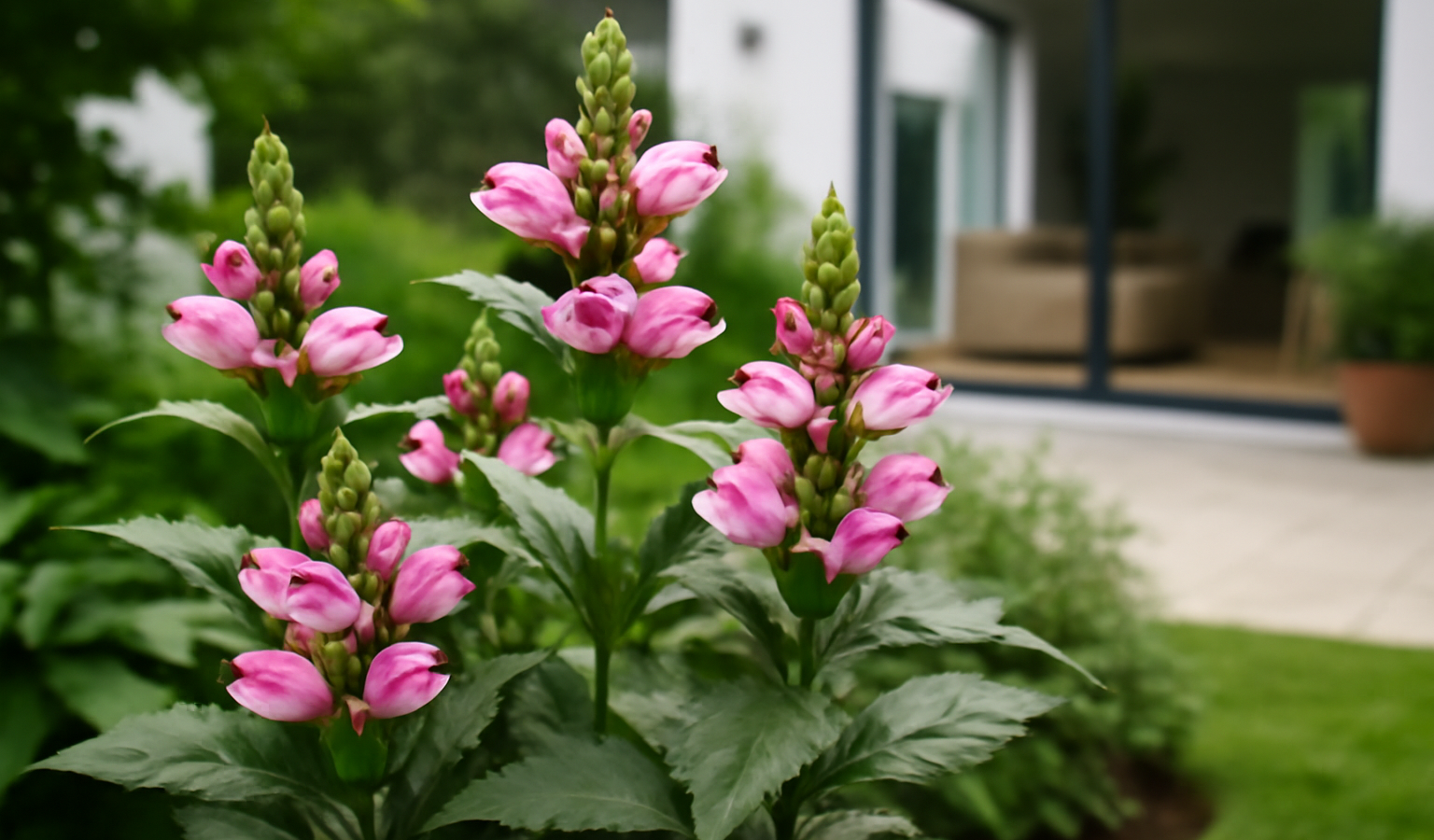
If you have a soggy corner where nothing else thrives, turtlehead (Chelone) is the perennial you have been looking for. This native North American wildflower is one of the few garden-worthy plants that genuinely prefers consistently moist to wet soil, blooms when the rest of the border is fading in late summer, and asks for almost nothing once established. Plant it in zones 3 through 8 in part shade with soil that never fully dries out, and it will reward you with hooded pink or white flowers that look exactly like a turtle opening its mouth. Below is everything you need to grow it well, from siting and spacing to pinching, division, and the pollinators that depend on it.
Key Takeaways
- Hardiness: Cold-tough across USDA zones 3-8, with some species reliable into zone 9.
- Light: Full sun to part shade; tolerates more shade than most perennials, but blooming thins in deep shade.
- Soil and moisture: Rich, humusy, consistently moist to wet soil at pH 5.5-7. This is its single most important requirement.
- Bloom: Late summer into fall, roughly August through October, on plants 2-4 feet tall.
- Wildlife: Critical late-season nectar for bumblebees and hummingbirds, host plant for the Baltimore checkerspot butterfly, and reliably deer-resistant.
- Care: Keep it watered in drought, pinch in early summer to curb flopping, and divide every three to four years.
What Is Turtlehead?
Turtlehead is a clump-forming herbaceous perennial in the genus Chelone, part of the plantain family (Plantaginaceae). The common name comes from the flowers, which are tubular and two-lipped, with the upper lip arching over the lower one to form a snug hood. Look at a single bloom from the side and you will see it instantly: a tortoise’s head with its mouth slightly open. The Greek root chelone literally means tortoise.
It is native to wetlands, stream banks, wet meadows, and shaded seeps across eastern and central North America, which tells you most of what you need to know about how to site it. In the garden it forms upright, leafy clumps 2 to 4 feet tall with dark green, lance-shaped, toothed leaves arranged in opposite pairs along sturdy stems. The flowers cluster in dense terminal spikes at the stem tips, opening from the bottom up over several weeks.
Common Species and Cultivars
Three species do most of the heavy lifting in cultivation. Chelone glabra, white turtlehead, is the widest-ranging native, with creamy white flowers sometimes flushed pink, and it is the species most often used in restoration and rain-garden plantings. Chelone lyonii, pink turtlehead, hails from the southern Appalachians and carries rosy-pink blooms on tidy, well-behaved clumps; its popular cultivar ‘Hot Lips’ offers bright pink flowers, bronze-tinged new growth, and reddish stems on a compact 2-3 foot frame. Chelone obliqua, rose turtlehead, blooms a deeper rose-pink and tends to be the most heat-tolerant of the three, performing well in the warmer end of the range. All three share the same cultural needs, so you can mix them freely.
USDA Hardiness Zones
Turtlehead is genuinely cold-hardy. The genus performs reliably across USDA zones 3 through 8, and C. obliqua in particular will hold up into zone 9 where soils stay cool and moist. In the coldest zones the plants die back completely to the ground each winter and re-emerge late in spring, so do not panic if your clump is slow to appear in April; turtlehead is one of the last perennials to break dormancy. There is no need for winter protection in any part of its range. The bigger limitation at the warm end of the scale is not cold but heat combined with dryness, which it cannot tolerate. If you garden in zone 8 or 9, lean on afternoon shade and dependable moisture and you will have no trouble.
Light and Shade
Turtlehead is unusually flexible about light, which is part of its appeal. It will grow in full sun provided the soil stays wet, and it also handles part shade better than nearly any other late-summer bloomer. That makes it a rare flowering choice for the dappled edge of a woodland or the north side of a structure where most perennials sulk.
The trade-offs are worth understanding. In hot southern climates, full midday sun stresses the plant and accelerates moisture loss, so site it where it gets morning sun and afternoon shade. In cool northern gardens it can take all the sun you can give it as long as its feet stay wet. The one situation to avoid is deep, dry shade. In heavy shade the stems stretch, lean, and flop, and flowering drops off sharply, since the plant simply does not have the energy to fund a big bloom display. Aim for at least four hours of direct or bright dappled light a day for a good show.
Moisture and Soil
This is the section that matters most. Turtlehead loves water. It evolved in places where the ground is reliably damp, and consistently moist to wet soil is the single biggest factor in whether your plant thrives or struggles. Give it a low spot, a pond margin, a stream bank, a drainage swale, or the basin of a rain garden, and it will be perfectly at home. It even tolerates standing water for short stretches and soils that stay saturated longer than most perennials would accept.
For soil texture, it wants rich, humusy ground with plenty of organic matter to hold moisture. Work in two to three inches of compost or well-rotted leaf mold at planting and it will repay you. The preferred pH runs slightly acidic to neutral, roughly 5.5 to 7.0, which suits most garden soils without amendment. After planting, apply a two- to three-inch layer of organic mulch such as shredded bark or leaf mold over the root zone to lock in moisture and keep the soil cool; just keep the mulch pulled back an inch from the stems.
The flip side is that turtlehead will not forgive drought. In dry soil the leaves scorch at the edges, the lower foliage yellows and drops, the plant wilts in afternoon heat, and growth stalls. If you only have a typical well-drained border, you can still grow it, but you will be committing to regular irrigation. Far better to match the plant to a naturally damp site. For more low-spot and moisture-loving choices, see our Plants & Flowers guides.
Planting Turtlehead
The best times to plant are spring, once the soil has warmed and the danger of hard frost has passed, and early fall, which gives roots six to eight weeks to establish before winter. Spring planting is the safer bet in the coldest zones so the crown is well anchored before its first freeze.
Space plants 18 to 24 inches apart. They fill in to form solid colonies over a few seasons, and that spacing also preserves the airflow that helps prevent powdery mildew. Dig the planting hole as deep as the root ball and about twice as wide, loosening the surrounding soil so roots can spread into the moisture they crave. Set the crown at the same depth it sat in the nursery pot, no deeper, then backfill and firm gently. Water in thoroughly and keep the soil evenly moist for the entire first growing season; a new transplant has no reserves to draw on if it dries out. Mulch immediately after planting to buffer that moisture.
Care and Maintenance
Watering
Watering is non-negotiable during dry spells. Even an established turtlehead resents drying out, so give it a deep soak whenever the top inch or two of soil starts to feel dry, aiming for roughly an inch of water a week from rain or irrigation, and more in heat. Plants in a naturally wet site or rain garden may never need supplemental water at all, which is the whole point of putting them there.
Feeding and Mulch
Turtlehead is not a heavy feeder. In rich, compost-amended soil it needs nothing. In leaner ground, a light topdressing of compost or a single application of balanced, slow-release fertilizer in early spring is plenty. Avoid heavy nitrogen, which produces lush, weak, flop-prone growth at the expense of flowers. Refresh the organic mulch each spring to keep the root zone cool and damp through summer.
Pinching and Staking
Turtlehead’s one cosmetic quirk is a tendency to flop, especially in too much shade or rich soil. The fix is simple: pinch back the growing tips by a few inches in early summer, around late May to June, before flower buds form. This is the same Chelsea-chop technique used on asters and other tall perennials. Pinching forces the plant to branch, producing a shorter, bushier, sturdier clump with more flowering stems. Plants in full sun rarely need it. If you skip pinching and a clump still leans, a few discreet grow-through stakes or twiggy pea-staking set early in the season will hold it upright.
Deadheading and Fall Cleanup
Deadheading spent spikes can tidy the plant but is not required, since turtlehead does not rebloom heavily. Many gardeners leave the seed heads standing through winter for structure and to feed birds, then cut the stems back to the ground in late winter or early spring before new growth emerges. If you prefer a clean fall garden, cut it back after a hard frost. Either approach is fine.
Dividing
Clumps spread by rhizomes and benefit from division every three to four years to keep them vigorous and to renew the center. Divide in early spring as new shoots appear, lifting the whole clump and splitting it into sections that each carry several shoots and a healthy chunk of root. Replant immediately at the same depth, water well, and keep the divisions damp while they re-root. Division is also the fastest way to make more plants for a larger drift.
Wildlife Value
Turtlehead earns its place in a wildlife garden several times over. Its late-summer-to-fall bloom timing fills a critical nectar gap when many earlier perennials have finished, making it a lifeline for pollinators heading into the lean season. Bumblebees are its star visitors; they are among the few insects strong enough to pry open the hooded flowers and force their way inside to reach the nectar, and you will often see a fat bumblebee disappear entirely into a bloom. Hummingbirds work the flowers too, drawn to the tubular shape.
Its most celebrated role is as a larval host plant for the Baltimore checkerspot butterfly. Females lay eggs on turtlehead foliage, and the caterpillars feed on the leaves; in much of its range the butterfly depends on Chelone glabra as a primary host, so planting it directly supports that species. On top of all this, turtlehead is reliably deer-resistant, since deer avoid its bitter foliage, which makes it a dependable choice in gardens under browsing pressure. For another deer-resistant, pollinator-magnet native that loves similar conditions, look at our guide to growing ironweed.
Propagation
You can propagate turtlehead three ways. Division, covered above, is the easiest and most reliable, and it produces flowering-size plants quickly. Stem cuttings work well too: take softwood cuttings in late spring or early summer from non-flowering shoots, strip the lower leaves, and root them in a moist, well-drained medium kept humid and shaded; they typically root within a few weeks.
Growing from seed is slower but rewarding for large plantings. The seed requires a period of cold, moist stratification to break dormancy, so either sow it outdoors in fall and let winter do the work, or refrigerate moist seed for six to eight weeks before sowing in spring. Surface-sow or barely cover the fine seed, as it needs light to germinate, and keep the medium consistently moist. Seedlings usually take two to three years to reach blooming size, so be patient.
Problems and Troubleshooting
Turtlehead is largely pest- and disease-free, but a few issues come up. Powdery mildew is the most common, showing as a white dusty coating on the leaves. Counterintuitively for a wetland plant, it appears most when the soil is too dry and air circulation is poor or plants are crowded. The prevention is twofold: keep the root zone consistently moist so the plant is not drought-stressed, and give plants enough space, the 18 to 24 inches recommended above, for good airflow. Avoid wetting the foliage late in the day. If mildew takes hold, thin crowded stems and remove badly affected leaves.
Occasional leaf spot may appear as dark blotches on foliage in wet, humid weather; it is usually cosmetic, and removing affected leaves and improving airflow keeps it in check. Flopping, the other frequent complaint, traces back to too much shade, overly rich soil, or skipped pinching, and is solved by addressing those causes. Aside from these, the plant shrugs off most trouble, and deer and rabbits leave it alone.
Companion Plants and Garden Uses
Turtlehead shines in any planting built around moisture. It is a backbone plant for rain gardens, bog gardens, pond and stream margins, low wet spots, and shaded woodland edges where the ground stays damp. Because it blooms so late, it pairs beautifully with other tall, moisture-loving natives that flower at the same time. Set it among ironweed and Joe Pye weed for a tapestry of purple, mauve, and pink at the back of a damp border, and weave in cardinal flower for a jolt of scarlet. In shadier, moist settings, combine it with ferns and astilbe, whose contrasting foliage textures set off turtlehead’s upright spikes. For another graceful shade companion that enjoys moist, humusy soil, see our guide to growing Jacob’s ladder.
However you use it, the recipe is the same: give turtlehead steady moisture, a few hours of light, and a little room to breathe, and it will anchor your late-season garden with quiet reliability for years.
Frequently Asked Questions
Can turtlehead grow in standing water?
Yes, for short periods. Turtlehead tolerates saturated soil and brief standing water far better than most perennials, which is why it excels in rain gardens and at pond margins. It does not, however, want to sit in deep permanent water; it prefers ground that is consistently moist to wet.
How much sun does turtlehead need?
It grows in full sun to part shade. In cool climates it takes full sun as long as the soil stays wet; in hot regions give it afternoon shade. Aim for at least four hours of direct or bright dappled light, because flowering thins out noticeably in deep shade.
Why is my turtlehead flopping over?
Flopping usually means too much shade, soil that is too rich in nitrogen, or a missed pinching. Pinch the stems back by a few inches in early summer to force bushier, sturdier growth, move plants into more light if you can, and ease off on fertilizer.
Is turtlehead deer-resistant?
Yes. Deer and rabbits avoid turtlehead’s bitter foliage, making it one of the more dependable choices for gardens with heavy browsing pressure. No plant is completely deer-proof in a tough year, but turtlehead is rarely touched.
When does turtlehead bloom?
It blooms from late summer into fall, roughly August through October depending on your climate and species. The flowers open from the bottom of the spike upward over several weeks, filling the late-season nectar gap for bumblebees and hummingbirds.