

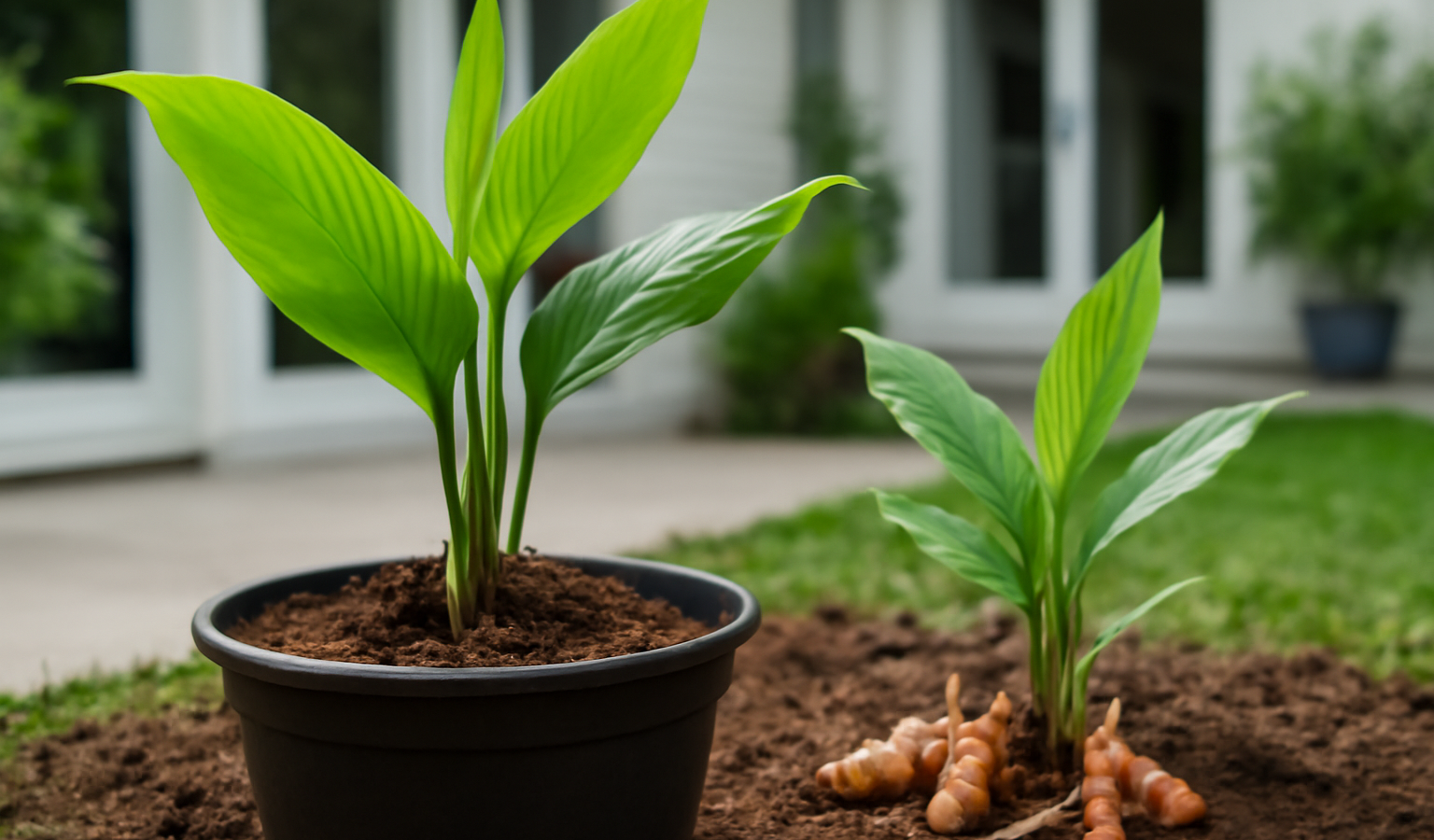
Turmeric is one of the most satisfying crops you can grow from a piece of the spice rack, and you do not need a tropical climate to do it. The plant grows from a knobby underground rhizome, the same golden-orange root you buy fresh or dried, and it produces a lush, leafy clump that doubles as a handsome ornamental. The one thing turmeric demands is time and warmth: it needs a long, warm growing season of 8 to 10 months to size up its rhizomes. That is why container growing is the key to success for most gardeners, letting you start the plant indoors early and keep it warm late into the season. This guide covers planting rhizomes, container culture, the long warm season turmeric needs, watering and feeding, and how to harvest and store your homegrown crop.
In this guide
Key Takeaways
- Turmeric grows from a rhizome; plant a piece with one or two buds (eyes), just like ginger.
- It needs a long warm season of 8 to 10 months, so start it indoors early in cooler climates.
- In-ground growing suits USDA zones 8 to 11; everywhere colder, grow it in a large container.
- Give it warmth (above 68°F), rich moist soil, partial shade in hot climates, and high humidity.
- Harvest 8 to 10 months after planting, once the leaves yellow and die back, then cure and store the rhizomes.
Understanding the Rhizome
Turmeric (Curcuma longa) is a tropical perennial in the ginger family, and like ginger it grows from a rhizome, a swollen underground stem rather than a true root. You start new plants by cutting a fresh, plump rhizome into pieces, each with at least one or two visible growth buds, the small bumps often called “eyes” or “fingers.” You can buy seed rhizomes from a garden supplier, or simply use fresh, firm turmeric from a grocery or farmers’ market, ideally organic, since some commercial roots are treated to inhibit sprouting. Let cut pieces dry and callus for a day before planting to reduce rotting. Each piece will sprout into a leafy shoot above ground and multiply into a cluster of new rhizomes below, which is your harvest.
The Long Warm Season Turmeric Needs
Here is the central challenge: turmeric needs roughly 8 to 10 months from planting to harvest, and it wants warmth the whole time, ideally daytime temperatures of 68 to 95°F. It grows in-ground year-round only in frost-free zones 8 to 11. In most of the country the frost-free window is far too short to fit a full turmeric season outdoors, which is why timing and containers are everything.
The strategy is to start your rhizomes indoors in late winter, around February or March, in warm conditions to get a head start of two or three months. Move the pots outside only after all danger of frost has passed and nights stay reliably above 55°F. Let the plants grow through the warm months, then either harvest in fall before frost or, in cold climates, bring the container back indoors to extend the season and finish sizing up the rhizomes. Bottom heat, like a seedling heat mat, dramatically speeds the initial sprouting, which can otherwise take 3 to 8 weeks in cool soil.
Growing Turmeric in Containers
For the majority of gardeners, a container is the best home for turmeric because it lets you control temperature and move the plant indoors at both ends of the season. Choose a wide pot at least 12 to 18 inches across and 12 inches deep, since the rhizomes spread sideways; a wide, shallow-ish container suits them better than a narrow deep one. Make sure it has drainage holes. Fill it with a rich, loose, well-draining mix, a quality potting soil enriched with plenty of compost, which gives the heavy feeders the nutrition they want while still draining freely.
Plant the rhizome pieces 2 to 4 inches deep with the buds facing up, spacing them several inches apart, or one or two pieces per medium pot. Water in and keep the soil warm and lightly moist while you wait for shoots. Once growing, turmeric produces broad, tropical-looking leaves on stems that can reach 2 to 3 feet tall. The container approach is the same flexible playbook used for other tender, long-season crops, and works well alongside the indoor-outdoor routines covered across the Plants & Flowers hub.
Light, Watering, and Feeding
Turmeric likes bright conditions but is not a full-sun-in-a-heatwave plant. In cooler climates give it full sun to part shade; in hot southern climates it actually prefers partial shade, especially from harsh afternoon sun, which can scorch the broad leaves. As a tropical understory plant it also appreciates humidity, so misting or grouping plants helps in dry indoor air.
Water is critical during active growth. Keep the soil consistently moist, never letting it dry out completely, because turmeric is a thirsty plant during its leafy growth phase. At the same time it must not sit in waterlogged soil, which rots the rhizomes, so good drainage paired with regular watering is the balance to strike. Reduce watering toward the end of the season as the leaves begin to yellow, signaling the rhizomes are maturing. Turmeric is a heavy feeder; work compost into the soil at planting and feed every few weeks during the growing season with a balanced organic fertilizer or one slightly higher in potassium to support rhizome development. A side-dressing of compost mid-season is excellent.
Harvesting Turmeric
Patience pays off at harvest. Turmeric is ready 8 to 10 months after planting, when the leaves and stems begin to yellow, brown, and die back, signaling the plant has finished bulking up its rhizomes underground. In cold climates this should happen before or just as you bring plants in for fall, or shortly after. Stop watering as the foliage dies down to let the rhizomes firm up.
To harvest, tip the whole pot out or dig carefully around in-ground plants and lift the entire clump. You will find the original “mother” rhizome surrounded by a generous cluster of new golden fingers, your crop. Shake off the soil, rinse, and snap or cut the rhizomes apart. Set aside a few healthy, firm pieces with good buds to replant next season; you can store these in a cool, dark place or pot them up again. The fresh rhizomes can be used immediately, grated into cooking, or stored in the refrigerator for several weeks. To make dried turmeric powder, boil the rhizomes briefly, dry them thoroughly (in the sun, a low oven, or a dehydrator) until brittle, then grind. Wear gloves throughout, because fresh turmeric stains skin, clothing, and countertops a vivid yellow-orange.
Overwintering and Storing for Next Year
Turmeric is a tender perennial, so in zones 8 and warmer you can leave it in the ground; the foliage dies back in winter and resprouts when warmth returns, though heavy mulch helps protect the rhizomes in zone 8. In colder climates you have two options: harvest everything in fall and replant fresh rhizomes next spring, or keep a potted plant alive indoors over winter. If overwintering a container, let it go dormant by reducing water after the leaves die back and keep the pot in a warm, frost-free spot until you resume watering in late winter to wake it up. Saved rhizomes for replanting store best somewhere cool, dark, dry, and frost-free, checked occasionally for rot. This grow-store-replant cycle lets one purchase of turmeric supply you year after year.
Common Problems
The most common failure is rhizomes that rot before sprouting, caused by cold, soggy soil; warm soil, good drainage, and letting cut pieces callus first all prevent it. Slow or no sprouting usually means the soil is simply too cold, fixed with a heat mat or a warmer spot. Yellowing leaves mid-season can signal overwatering or poor drainage, while crispy brown leaf edges suggest too much harsh sun or dry air. Pests are few, though spider mites can appear on indoor plants in dry winter air. The biggest “problem” is impatience, so resist the urge to dig early and give turmeric its full 8 to 10 months. If you enjoy slow-growing edible rhizomes and tender tropicals, our guides on growing a vanilla orchid vine and other warm-climate edibles pair naturally with turmeric. With warmth, rich moist soil, and a long season, you will dig up far more turmeric than you planted.
Frequently Asked Questions
How long does turmeric take to grow?
Turmeric needs a long warm season of about 8 to 10 months from planting to harvest. In cooler climates, start rhizomes indoors in late winter for a head start, move them outside after frost, and harvest in fall once the leaves yellow and die back.
Can I grow turmeric from grocery store roots?
Yes. Use fresh, firm, plump turmeric, ideally organic, since some commercial roots are treated to prevent sprouting. Cut it into pieces each with one or two buds, let the cuts callus for a day, then plant 2 to 4 inches deep with the buds facing up.
Can turmeric grow in containers?
Containers are ideal for most climates because they let you control temperature and move the plant indoors at the start and end of the season. Use a wide pot at least 12 to 18 inches across with drainage holes and a rich, well-draining, compost-amended mix.
What USDA zones can grow turmeric outdoors?
Turmeric grows in the ground year-round only in frost-free zones 8 to 11, dying back in winter and resprouting in warmth. In zone 8 use heavy mulch for protection. In colder zones, grow it in a container and overwinter the pot or replant fresh rhizomes each spring.
How do you know when turmeric is ready to harvest?
Turmeric is ready 8 to 10 months after planting, when the leaves and stems turn yellow and die back. Stop watering as the foliage declines, then lift the whole clump to find a cluster of golden rhizomes around the original piece. Wear gloves, as it stains.