

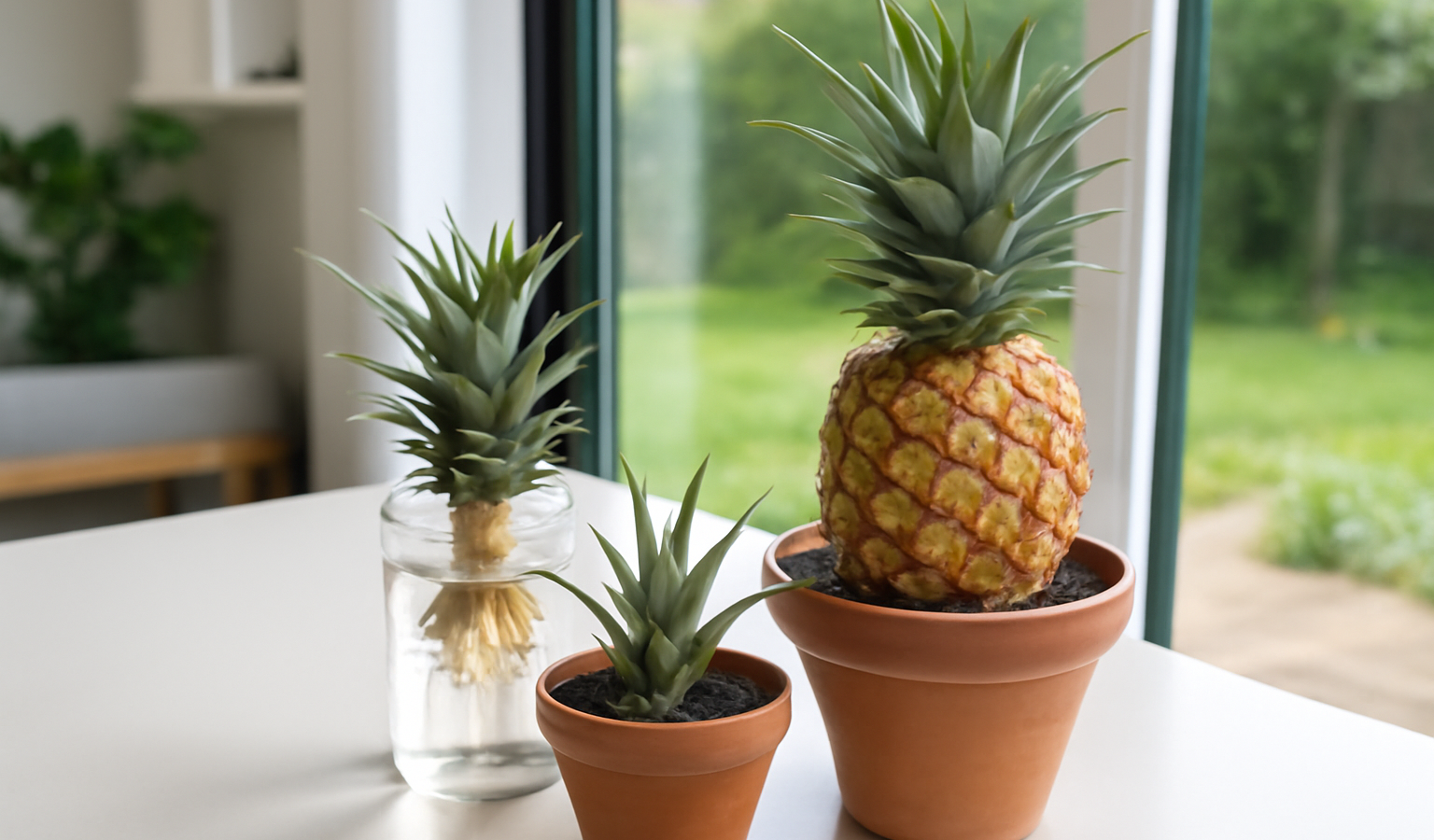
The pineapple you buy at the store carries its own free starter plant on top, and rooting that leafy crown is one of the most satisfying projects in container gardening. A pineapple is a bromeliad, a member of the same family as the spiky air plants and tank bromeliads sold as houseplants, and it grows as a low rosette of tough, sword-shaped leaves rather than on a tree or vine. That makes it well suited to a pot on a sunny patio or in a bright window almost anywhere, even though it only fruits outdoors year-round in USDA zones 11 and warmer. The catch is patience: a pineapple takes two to three years to produce a single fruit, and each plant fruits only once. Here is how to grow one from a grocery-store top, keep it thriving in a container, and coax it into flowering when the time comes.
Key Takeaways
- Root the leafy crown from any store-bought pineapple; it is a free, easy starter plant.
- Pineapples are bromeliads grown in pots; they fruit outdoors year-round only in USDA zones 11+.
- Give full sun (6-8 hours) or very bright indoor light, warmth above 60 degrees, and protection from frost.
- Use a light, well-drained, slightly acidic mix; water moderately and never let the plant sit wet.
- Expect two to three years from rooting to fruit, and each plant fruits only once.
- You can force flowering with ethylene gas (a ripe apple bagged with the plant) once it is mature.
Starting a Pineapple From a Grocery-Store Top
Choose a fresh, healthy pineapple with firm, green, undamaged leaves in the crown; avoid fruit with brown, mushy, or dried-out tops, because a damaged crown roots poorly. To remove the crown, grip the leafy top in one hand and the fruit in the other and twist firmly, like opening a jar. It should pull free with a short stub of inner core attached. If twisting fails, slice the top off about an inch below the leaves, then trim away all the fleshy fruit so you are left with just the firm central stalk; any leftover fruit will rot and invite mold.
Next, strip off the lowest ring of small leaves to expose roughly an inch of bare stalk. You will often see small brown bumps along this stalk, which are root primordia, the dormant beginnings of roots. Set the trimmed crown somewhere dry and out of direct sun for a couple of days so the cut base can callus over; planting a fresh, wet cut straight into damp medium is the fastest way to rot it. This drying step is the single most-skipped detail in pineapple propagation, and skipping it causes most failures.
Rooting in Water vs. Soil
You can root a callused crown two ways. For the water method, suspend the crown with toothpicks over a glass so the bare stalk sits in about an inch of water with the leaves above the rim. Keep it in bright, indirect light, change the water every few days to keep it fresh, and watch for white roots to emerge in two to four weeks. Once roots are an inch or two long, pot it up. The soil method skips the glass: plant the callused crown directly into a small pot of moist, well-drained mix, burying the bare stalk up to the base of the leaves, and keep the medium lightly moist but never soggy. Soil-rooted crowns are less prone to the transplant shock that water-grown roots sometimes suffer, while water rooting lets you see progress and reassure yourself it is working. Either way, keep the plant warm, around 70 to 80 degrees, since cold stalls rooting completely.
Growing Pineapple in a Container
Container culture is how nearly everyone outside the tropics grows pineapple, because the pot can summer outdoors and move inside before frost. Start a newly rooted crown in a 6- to 8-inch pot, then step it up as it grows; a mature, fruiting-size plant wants a container in the 3- to 5-gallon range, roughly 10 to 14 inches across. Pineapples have a shallow, modest root system, so width matters more than depth, and an overly large pot just holds excess wet soil. Always use a pot with generous drainage holes, because standing water at the roots is the quickest way to kill the plant.
The plant grows slowly into a rosette one to three feet across and a similar height. Set it in the sunniest, most sheltered outdoor spot once nights stay reliably above 60 degrees, and bring it back indoors well before the first frost. Because the same move-it-with-the-seasons approach applies to most tender fruit you grow in pots, the techniques in our urban gardening guides on small-space and container growing carry over directly to pineapples.
Light, Water, and Soil
Light is the biggest factor in whether a pineapple ever thrives, let alone fruits. Outdoors it wants full sun, six to eight hours a day; indoors, give it the brightest window you have, ideally south-facing, and supplement with a grow light to deliver 10 to 12 hours of strong light if your windows are dim. A pineapple starved of light grows pale, floppy leaves and will never flower. When moving a plant from indoors to full summer sun, acclimate it over a week or two to prevent the leaves from scorching.
As a bromeliad adapted to dry spells, the pineapple is far more tolerant of drought than of overwatering. Water thoroughly when the top inch or two of mix has dried, letting excess drain away completely, and then wait; in cool or low-light conditions it needs water only every week or two. The leaves themselves absorb moisture, so you can also pour a little water into the central cup formed by the rosette, though empty and refresh it occasionally outdoors so it does not become a mosquito nursery or stagnate. The fatal mistake is keeping the soil constantly wet, which rots the crown and roots.
For soil, use a light, fast-draining, slightly acidic medium with a pH around 4.5 to 6.5. A good blend is quality potting mix cut with extra perlite, coarse sand, or orchid bark to guarantee sharp drainage; a cactus-and-succulent mix amended with a little compost works well too. Heavy, water-holding garden soil is exactly wrong for a pineapple. Feed lightly through the warm growing season with a balanced liquid fertilizer diluted to half strength every few weeks, or apply a slow-release fertilizer in spring. Some growers also mist the leaves with dilute fertilizer, since bromeliads take up nutrients foliarly, but avoid getting strong fertilizer in the central cup, which can burn it.
How Long Until It Fruits
Patience is non-negotiable. A pineapple grown from a crown typically takes about two to three years to reach flowering size, sometimes longer in marginal light, and only flowers once it is mature enough, usually when the plant has 30 or more healthy leaves and a sturdy rosette a couple of feet wide. After the plant flowers, a single fruit develops over the following five to six months, ripening from green to golden and giving off that unmistakable sweet aroma at the base. So from rooting a top to slicing your own pineapple is realistically two and a half to three years, and a homegrown fruit is often smaller than the supermarket parent.
Crucially, each pineapple plant fruits only once and then slowly declines, just like many of its bromeliad relatives. But before it dies it produces offshoots, and that is how you keep the cycle going indefinitely without buying another fruit.
Suckers, Slips, and Ratoons
A mature pineapple sends out side shoots in several forms: suckers (sometimes called pups) that grow from between the leaves on the main stem, slips that emerge just below the fruit, and ratoons that come from the base near the soil. Any of these can be left in place or removed once they are six inches or so long and rooted on as new plants, exactly like the original crown. Suckers left attached to the parent will fruit faster than a crown, often within a year or so, because they start from a larger, established plant. Letting one strong sucker grow on as a replacement turns a single grocery-store top into a self-perpetuating pineapple patch.
Forcing a Pineapple to Flower
If a mature plant stubbornly refuses to flower, you can force it using ethylene, the same ripening gas that fruit naturally gives off. The classic home method: let the soil dry slightly, then enclose the entire plant in a clear plastic bag along with a ripe apple or two (some growers add a banana), and seal it for about a week. As the apple ripens it releases ethylene, which triggers the pineapple to initiate a flower. Keep the bagged plant out of direct sun so it does not cook, then remove the bag. If it works, a reddish flower spike pushes up from the center of the rosette within roughly four to eight weeks, eventually becoming the fruit.
Forcing only works on a plant that is already big and mature enough to support a fruit; doing it on a small, young plant produces a tiny, disappointing pineapple or simply fails. This ethylene trick is the same principle behind ripening other fruit faster in a paper bag, and it is the most reliable way to get a homegrown pineapple to fruit on your schedule rather than waiting for it to flower on its own.
Zones, Overwintering, and Indoor Growing
Pineapples are true tropicals and grow outdoors year-round only in USDA zones 11 and warmer, with parts of zone 10 working in frost-free pockets. They are damaged below about 60 degrees and killed by frost, so everywhere else they must be grown in containers and brought inside for winter. Before the first autumn frost, move the pot to a bright, warm indoor spot above 60 degrees, away from cold drafts and from hot, drying heating vents. Cut back on water through the low-light winter months, since the plant grows little and wet soil in cold conditions is doubly dangerous.
Indoors, a pineapple makes a striking, architectural houseplant even if it never fruits, and with enough light it certainly can. Give it the brightest position available plus a grow light, keep humidity up in dry winter homes, and watch for scale and mealybugs, which hide in the leaf crevices of stressed indoor bromeliads; wipe them off or treat with insecticidal soap. The leaf tips are sharply pointed and the leaf margins on some varieties carry small spines, so place the plant where people will not brush against it. If you enjoy growing unusual fruit in containers, the same care logic extends to many tropicals in our Plants and Flowers guides.
Common Problems
Most pineapple troubles come back to overwatering, cold, or too little light. A soft, browning, foul-smelling crown means crown or root rot from soggy soil; unpot it, cut away rotted tissue, and replant in drier, sharper-draining mix. Pale, limp, stretched leaves signal insufficient light. Brown, crispy leaf tips usually indicate dry air or underwatering, common indoors in winter. Reddish or purplish leaves can mean cold stress or a hungry plant. And the most common complaint of all, a healthy plant that simply will not fruit, is almost always a matter of the plant not yet being mature enough, not enough light, or both, which is exactly when the ethylene forcing trick earns its keep.
Frequently Asked Questions
Can you really grow a pineapple from the top of a store-bought one?
Yes. Twist or cut off the leafy crown, trim away all fruit flesh, strip the lowest leaves to expose an inch of stalk, let it dry for a day or two, then root it in water or directly in well-drained soil. Roots usually appear in two to four weeks.
How long does it take a pineapple to fruit?
About two to three years from rooting a crown. The plant must reach mature size, usually 30 or more leaves, before it flowers, and the fruit then takes another five to six months to ripen. Each plant fruits only once.
How do you force a pineapple to flower?
Seal a mature plant in a clear plastic bag with a ripe apple for about a week. The ethylene gas from the apple triggers flowering, and a red flower spike typically appears within four to eight weeks. It only works on a fully grown plant.
How often should I water a pineapple?
Water only when the top inch or two of mix has dried, then let it drain fully; that may be weekly in heat or every week or two indoors. Pineapples tolerate drought far better than soggy soil, which rots the crown and roots.
What growing zone do pineapples need?
Pineapples grow outdoors year-round only in USDA zones 11 and warmer, with frost-free parts of zone 10 sometimes working. In colder zones, grow them in containers and move them indoors above 60 degrees before frost.
Growing a pineapple is a long game, but it starts with something you would otherwise throw away. Root a healthy crown, give it sun, warmth, sharp drainage, and a couple of years of patience, then use the apple-in-a-bag trick to nudge it into flower. Manage its suckers and one grocery-store top becomes a renewing supply of homegrown pineapples. For more on growing unusual fruit at home, browse the Plants and Flowers collection.