

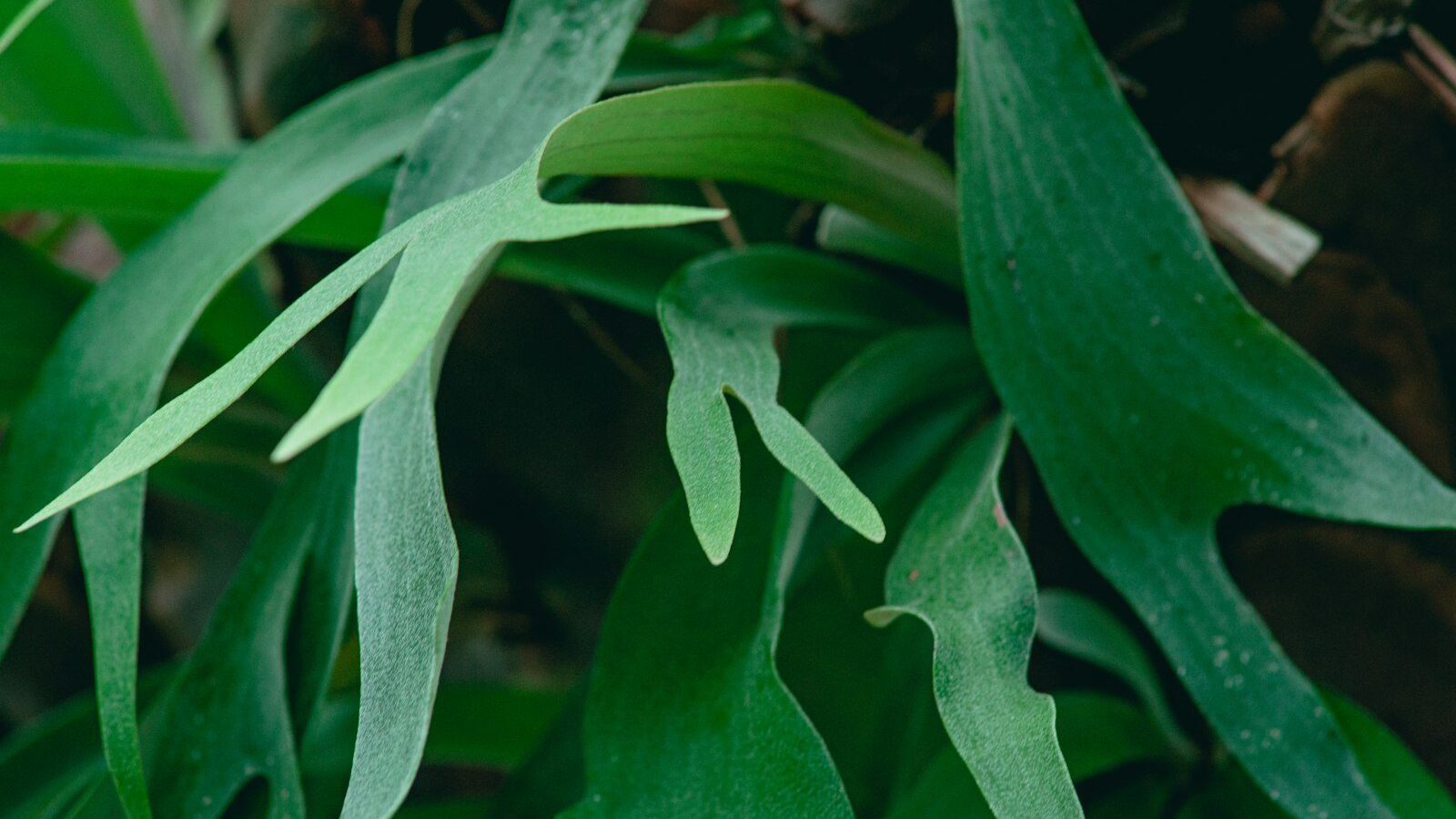
A staghorn fern (Platycerium) is an epiphyte, which means in the wild it grows clinging to tree trunks and branches rather than rooted in soil. That single fact explains almost everything about how to keep one alive indoors: it wants its roots wrapped in airy material that drains fast, bright but filtered light, humid air, and a watering rhythm that soaks it thoroughly then lets it dry. Get those four things right and a staghorn fern is genuinely low-maintenance, throwing out dramatic antler-shaped fronds that can span two to three feet on a mature plant. Get the watering wrong, and you will rot the crown within weeks. This guide walks through staghorn fern care from the ground up, including how to mount one yourself, how to read its two completely different frond types, and how to fix the most common problems before they kill the plant.
Key Takeaways
- Staghorn ferns have two frond types: flat brown shield fronds (never remove them) and antler-like foliar fronds.
- Give bright indirect light; harsh midday sun scorches the fronds and turns them pale or crispy.
- Water by the soak-and-dry method — dunk the mount in water for 10 to 20 minutes weekly, then let it dry before the next soak.
- They love humidity above 50%; bathrooms, humidifiers, and grouping plants all help.
- Mounting beats potting for mature plants — a wood board, sphagnum moss, and fishing line mimic how they grow in nature.
- Keep them between 60 and 80°F (16–27°C) and never below 50°F (10°C); they are frost-tender.
Understanding the Two Frond Types
Before you touch watering or light, you have to understand the plant’s anatomy, because new owners routinely kill or disfigure their fern by misreading it. A staghorn fern produces two completely different kinds of fronds, and they do completely different jobs.
Sterile shield fronds (the brown ones)
The flat, rounded, often heart-shaped fronds that press tightly against the mount or the back of the pot are called shield fronds (sometimes basal or sterile fronds). They start out soft and green, then gradually dry to a papery tan and finally to brown. This is completely normal and absolutely not a sign of disease. Their job is structural: they wrap around and protect the root ball, trap falling leaf litter and water, and anchor the plant to its surface. In nature they catch debris that decomposes into the plant’s own slow-release fertilizer.
The single most common mistake in staghorn fern care is cutting these brown shields off because they look dead. Do not remove them. Peeling away brown shield fronds exposes the roots, removes the plant’s natural water reservoir, and can stress or kill it. Leave them in place permanently, even when they look crispy. New green shields will grow over the old brown ones in overlapping layers, and that layered brown mass is exactly what a healthy mature staghorn should look like.
Fertile foliar fronds (the antlers)
The showy, branching, antler-shaped fronds that project outward and downward are the foliar or fertile fronds — the reason the plant is called a staghorn or elkhorn. These are the photosynthetic engines and, on mature plants, they carry the spore patches (a brown or rust-colored fuzzy area on the underside of the frond tips). That fuzz is reproductive spore, not pests or disease, so do not wipe it off. The fine silvery hairs covering young foliar fronds are also normal; they reduce water loss and should not be rubbed away, since doing so can damage the frond’s surface.
Light Requirements
Give a staghorn fern bright, indirect light. Picture the dappled light it would get high in a tree canopy: plenty of brightness, but the direct rays broken up by leaves above. An east-facing window is close to ideal. A north-facing window works if it is genuinely bright. A south or west window can be perfect too, as long as the plant sits a few feet back from the glass or behind a sheer curtain so it never takes harsh midday sun directly on the fronds.
Direct, unfiltered sun, especially through hot afternoon glass, will bleach the fronds to a washed-out pale green or yellow and eventually scorch them with dry brown patches. Too little light is the opposite problem: the plant slows down, foliar fronds grow long, floppy, and dark, and it produces few new shields. If you only have a dim corner, supplement with a grow light running 10 to 12 hours a day positioned 12 to 18 inches above the plant. For more on matching ferns to the right window, our plants and flowers hub has guides on several low-light-tolerant species.
Humidity
Staghorn ferns are tropical and want humidity of 50% or higher. Average heated or air-conditioned homes often sit around 30 to 40%, which is survivable but not ideal — you will see it in browning, crispy frond tips. The most reliable fix is a small room humidifier running near the plant. Other approaches that genuinely help:
- Bathrooms and kitchens naturally hold more moisture; a bright bathroom is a great home for a mounted staghorn.
- Grouping plants together raises the local humidity as they all transpire.
- Misting the foliar fronds a few times a week gives a short-term boost. It is not a substitute for soaking, and it should not be the plant’s only water source, but it helps in dry rooms.
- Pebble trays work for potted specimens but are awkward under mounts; a humidifier is simpler.
Good air circulation matters alongside humidity. Stagnant, damp, still air invites rot and fungal spotting, so aim for humid but moving air rather than a sealed, soggy microclimate.
Watering: The Soak-and-Dry Method
Watering is where most staghorn ferns are won or lost. Because the plant is an epiphyte with no soil to buffer it, you cannot water it on a fixed schedule from the top like a normal houseplant. Instead you use the soak-and-dry method, which mimics the heavy tropical downpour followed by a dry-out that the plant evolved for.
- Fill a sink, bucket, or basin with room-temperature water.
- Submerge the entire root ball and mount (the moss and shield-frond mass), keeping the foliar fronds out of the water as much as you can.
- Let it soak for 10 to 20 minutes, until the moss is fully saturated and stops releasing air bubbles.
- Lift it out, let it drain thoroughly, and hang or set it back only once excess water has stopped dripping.
How often? Roughly once a week in warm growing months and every 10 to 14 days in cooler, lower-light winter months — but read the plant, not the calendar. The reliable test is weight: lift the mount. A freshly soaked mount feels heavy; a dry one feels noticeably light. Soak again when it has gone light and the moss feels dry to the touch. A slightly wilted, taco-folded foliar frond also signals thirst and usually recovers within a day of a good soak. For potted staghorns, water when the top inch or two of the medium is dry, and never let the pot sit in standing water.
Reading over- and under-watering
Overwatering is the bigger killer. Its signs are foliar fronds turning black or brown at the base, a mushy or blackened crown, and a sour smell from the moss. This is rot, and it is usually fatal once it reaches the growing point, so always let the mount dry meaningfully between soaks. Underwatering shows as crispy brown frond tips, a generally wilted or limp look, and a bone-dry, light mount. Underwatering is far easier to reverse than overwatering — when in doubt, err on the dry side.
Mounting a Staghorn Fern
Mounting is the classic and best way to grow a mature staghorn. It mimics the plant’s natural epiphytic life, gives the roots fast-draining air flow that prevents rot, and lets the fern hang as a living wall sculpture. A young plant can start in a small pot of chunky, well-draining medium, but once it outgrows a 6-inch pot, mounting is the way to go. Here is the basic process.
- Gather materials: an untreated hardwood board or piece of cork bark, a generous handful of sphagnum moss (soaked in water first), monofilament fishing line or plastic-coated wire, and a couple of screws or a hook for hanging.
- Make a mounting point. Attach a hanging wire or hook to the back of the board before you add the plant, so you are not wrestling the fern later.
- Build a moss bed. Pile a mound of damp sphagnum moss on the board where the plant will sit. The root ball will rest on this.
- Position the fern. Remove it gently from its pot, keeping the shield fronds intact, and set the root ball on the moss with the shield fronds facing the board and the foliar fronds pointing out and up.
- Secure it. Wrap fishing line or wire criss-cross over the root ball and around the board, firmly enough that the plant cannot wobble but not so tight that you crush the crown. Avoid pulling line across the growing point of the foliar fronds.
- Settle it in. Keep the new mount shaded and humid for the first few weeks while the roots grip. Within a season or two the shield fronds will grow over the moss and grip the board on their own, and you can eventually cut away any line that is no longer needed.
Why mounting beats potting: pots hold moisture against the crown and invite rot, while a mount drains and dries the way the plant expects. Mounted staghorns also display beautifully and tend to grow more vigorously. If you enjoy this kind of project, the same epiphyte-friendly thinking applies to caring for air plants, which also live without soil.
Temperature
Staghorn ferns are comfortable in normal household temperatures, ideally 60 to 80°F (16 to 27°C). They are frost-tender and should never be exposed to temperatures below about 50°F (10°C); the common Platycerium bifurcatum tolerates a brief dip toward 40°F better than most species, but cold damage shows as blackened, mushy fronds and is hard to reverse. If you summer your fern outdoors, bring it back inside well before the first cold nights of autumn. Keep it away from cold drafts, frosty windowpanes, and the hot, drying blast of heating vents or radiators, all of which stress the fronds.
Feeding
Staghorn ferns are not heavy feeders. During the active growing season (spring through early autumn), feed roughly once a month with a balanced liquid fertilizer diluted to half strength — a 10-10-10 or similar all-purpose formula is fine. The easiest method is to add the diluted fertilizer to your soak water so it reaches the roots evenly, or mist a weak solution onto the shield fronds, which absorb nutrients. Stop or sharply reduce feeding in winter when growth slows. Mature mounted plants need feeding less often than young ones, since the shield fronds trap and recycle organic debris.
A word on the banana peel myth: you will see advice to tuck banana peels behind the shield fronds for potassium. Tucking whole or fresh peels into the moss tends to rot, attract fruit flies and pests, and can promote fungal problems rather than feeding the plant meaningfully. A properly diluted balanced fertilizer is safer, cleaner, and more predictable. Skip the kitchen-scrap shortcuts.
Common Problems and Fixes
Browning or blackening fronds at the base
If foliar fronds are turning black or brown from the base or the crown feels soft and mushy, this is almost always overwatering and rot. Stop soaking immediately, move the plant somewhere with better airflow, and let the mount dry out fully. Remove only fully dead, mushy foliar fronds (never the shields). Prevent it by extending the gap between soaks and never letting the crown stay wet.
Brown, crispy frond tips
Crispy brown tips and edges point to low humidity or underwatering. Raise the ambient humidity with a humidifier or a more humid room, and check whether your soak interval is too long — the mount may be drying completely and staying dry for days. A slightly more frequent soak plus higher humidity usually fixes it.
Pale, washed-out or yellow fronds
Bleached, pale, or yellowing foliar fronds usually mean too much direct light, often combined with sun scorch. Move the plant back from the window or add a sheer curtain so the light is bright but filtered. If pale color comes with leggy, stretching growth instead, the problem is the reverse — too little light — so judge by the overall habit of the plant.
Pests: scale and mealybugs
The most common staghorn pests are scale (small brown or tan bumps along the fronds that do not rub off easily) and mealybugs (white cottony clusters in the frond crevices). Treat by wiping them off with a cotton swab dipped in diluted rubbing alcohol, then follow up with insecticidal soap or horticultural oil. Be cautious with oils on the hairy foliar fronds and test a small area first, since heavy oil coatings can damage the protective frond hairs. Isolate an infested plant from your other houseplants until it is clear.
Propagation
The easiest way to propagate a staghorn fern is by separating the pups, the small offshoot plantlets that mature specimens produce around the base. Each pup has its own shield and foliar fronds and its own roots. Once a pup is a few inches across and clearly established, gently cut or pry it away from the parent with a clean, sharp knife, keeping as much root and shield material intact as you can. Mount the pup on its own small board or pot it in chunky, well-draining medium, then keep it warm, humid, and shaded while it establishes over the following weeks.
Division of a large clumping plant works the same way for species like P. bifurcatum that form colonies. Propagation from spores is possible but slow and finicky — pups are far more reliable for the home grower. If you want to expand your fern collection by other routes, our guide on caring for a bird’s nest fern covers a beginner-friendly companion species that enjoys similar humidity.
Frequently Asked Questions
Should I cut off the brown fronds on my staghorn fern?
No. The flat brown shield fronds are a normal, permanent part of the plant that protect the roots and hold water. Removing them stresses or kills the fern. Only remove foliar (antler) fronds that have died and gone fully mushy or crispy.
How often should I water a mounted staghorn fern?
Soak the mount for 10 to 20 minutes roughly once a week in warm months and every 10 to 14 days in cooler months. Always judge by weight and dryness rather than the calendar: soak when the mount feels light and the moss is dry, and let it dry between soaks.
Why are my staghorn fern’s fronds turning black?
Black or mushy fronds at the base and crown almost always mean overwatering and rot. Stop watering, improve airflow, and let the mount dry out completely. Going forward, extend the time between soaks and never let the crown stay wet.
Can a staghorn fern take direct sunlight?
Only gentle morning sun. Bright indirect light is ideal. Harsh midday or afternoon direct sun bleaches the fronds pale and scorches them with brown patches, so filter strong light through a sheer curtain or set the plant a few feet back from the glass.
Do staghorn ferns need to be mounted, or can they stay in a pot?
Young plants can grow in a small pot of chunky, fast-draining medium, but mature staghorns do best mounted on wood with sphagnum moss. Mounting drains and dries the roots the way nature intended, which reduces rot and encourages vigorous growth.
Once you internalize that a staghorn fern is a tree-dweller and not a soil plant, its care becomes intuitive: bright filtered light, humid air, a weekly soak followed by a real dry-out, a monthly half-strength feed in the growing season, and hands off those brown shield fronds. Respect the soak-and-dry rhythm above all else and you will avoid the rot that takes down most beginners. Do that, and this sculptural epiphyte will reward you with antler fronds that get more impressive every year.