

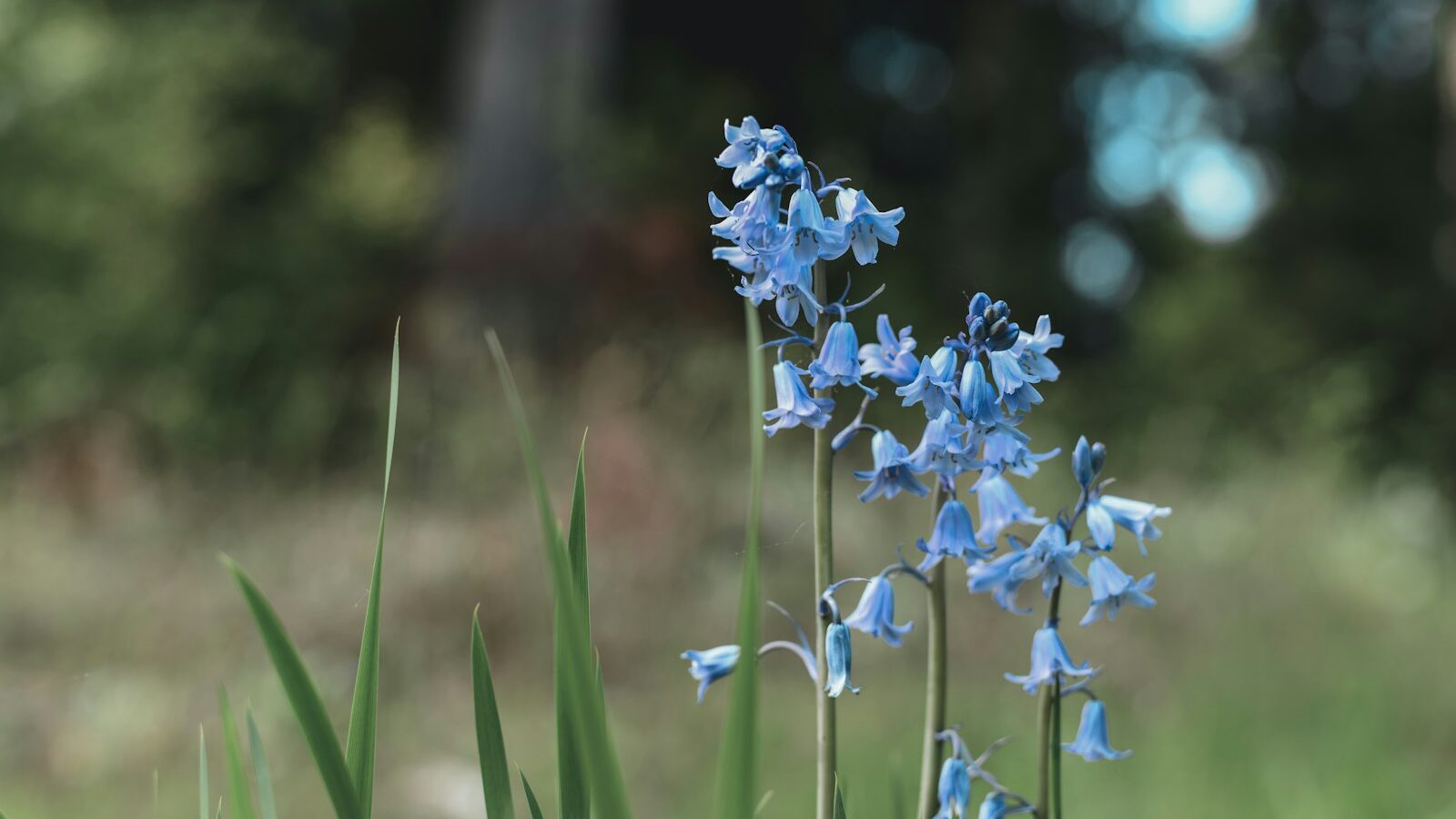
Spanish bluebells (Hyacinthoides hispanica) are among the easiest spring bulbs you can plant, throwing up upright stems lined with nodding, bell-shaped flowers in blue, pink, or white during mid-to-late spring. They naturalize beautifully in the dappled light beneath deciduous trees, shrug off deer, and ask almost nothing of you once they are in the ground. That ease is exactly why you need to plant them with your eyes open: Spanish bluebells spread aggressively, and in the wrong spot they go from charming to a genuine nuisance. This guide walks you through how to grow Spanish bluebells well, where to put them, and how to keep their enthusiasm in check.
Key Takeaways
- Plant bulbs in fall, 4 inches deep and 4 to 6 inches apart, pointed end up, in well-drained soil.
- Hardy in USDA zones 3 to 8; they thrive in full sun to part shade and excel under deciduous trees.
- Bloom mid-to-late spring on upright stems, a couple of weeks after Scilla finishes.
- They are deer and rabbit resistant and naturalize with almost no care.
- Invasiveness caution: Spanish bluebells spread fast by bulb offsets and self-seeding, can escape into woodlands, and hybridize with threatened native English bluebells. Site them only where spreading is welcome, and deadhead to limit seeding.
- Let foliage die back fully before removing it; lift and divide congested clumps in summer.
Choosing the Right Spot
Spanish bluebells are forgiving about light. They flower well in full sun and equally well in part shade, which is what makes them such a natural fit beneath deciduous trees. In early spring the leafless canopy lets plenty of light reach the ground, the bulbs do their growing and blooming, and by the time the tree leafs out the bluebells are winding down for the season. That same logic applies to the north side of a fence, the edge of a woodland border, or a shrub bed that gets thin morning light. If you are weighing exposure for a mixed planting, our guide on full sun vs. part shade will help you read your site.
Soil matters more than light. These bulbs want well-drained ground above all else; they rot in heavy, waterlogged clay over winter. Average garden soil enriched with a little compost is plenty. They are not fussy about pH and tolerate both slightly acidic and slightly alkaline conditions. Avoid low spots where water pools after rain, and if your soil is dense, dig in coarse grit or compost to open it up before planting.
When and How to Plant
Plant Spanish bluebell bulbs in fall, generally September through November, while the soil is still workable but the heat of summer has passed. Fall planting gives the bulbs time to set roots before winter so they can bloom the following spring. Buy firm, plump bulbs and plant them promptly; unlike tulips, bluebell bulbs lack a papery tunic and dry out fast, so do not leave them sitting in a warm shed for weeks.
Depth and Spacing
Set each bulb about 4 inches deep, measured from the base of the bulb to the soil surface, with the pointed growing tip facing up and the flatter root plate facing down. Space bulbs 4 to 6 inches apart. For a naturalized look, scatter a handful gently across the area and plant them where they land rather than lining them up in rows. Water well after planting to settle the soil, then leave them be. There is no need to feed at planting time, though a light scatter of bulb fertilizer or compost over the area never hurts.
Bloom Time and What to Expect
Spanish bluebells flower in mid-to-late spring, typically April into May depending on your climate. They pick up the baton just as the earliest small bulbs are fading; if you grow Scilla, expect the bluebells to bloom a couple of weeks later, extending the blue season in your borders. Each bulb sends up one or more sturdy, upright stems, 12 to 18 inches tall, lined with a dozen or more bell-shaped flowers that face outward and slightly down.
The classic color is a clear soft blue, but you will also find named selections in pink and white. The flowers have very little scent, which is one of the easiest ways to tell them apart from true English bluebells. Blooms last two to three weeks, and a generous planting reads as a haze of color from across the yard. For more spring bulb and perennial ideas to pair with them, browse our plants & flowers hub.
The Honest Truth About Spreading and Invasiveness
This is the section to read twice. Spanish bluebells are vigorous to the point of being a problem. They multiply two ways at once: underground, each bulb produces offsets that build into dense clumps within a few years, and above ground, spent flowers ripen into seed capsules that scatter seedlings well beyond the original planting. Left alone, a tidy clump becomes a sprawling colony, and the colony jumps into lawns, beds, and any adjacent rough ground. They are difficult to remove once established because the bulbs sit deep and snap easily, leaving fragments that resprout.
The bigger concern is ecological. Spanish bluebells readily escape gardens into woodlands, and they hybridize with the native English bluebell (Hyacinthoides non-scripta), producing fertile crosses that dilute and threaten wild populations. In parts of the UK this is a recognized conservation issue, and the warning travels: if you garden near natural woodland anywhere, do not plant Spanish bluebells where they can spread into it.
None of this means you cannot grow them; it means you grow them deliberately. Site them only where spreading is genuinely wanted, such as a contained shady bed, a strip along a driveway, or under a specimen tree in a managed lawn. Deadhead the flower stems as soon as blooms fade, before seed sets, to shut down self-seeding; this single habit makes the biggest difference. Keep them out of beds that border wild areas, and if you ever want to remove a colony, dig out every bulb you can find and stay on top of resprouts for a couple of seasons.
Naturalizing Under Trees
When you put their vigor to work in the right place, Spanish bluebells are hard to beat for filling the difficult ground beneath deciduous trees. That zone is dry, shaded for much of the year, and full of competing roots, yet bluebells handle it because their whole growth cycle happens in the bright, moist window of early spring before the canopy closes. Plant them in drifts among hostas, ferns, hellebores, or epimedium for a layered woodland-garden look that needs almost no maintenance.
For a natural effect, plant in irregular sweeps rather than blocks, and mix in a few extra bulbs at the edges so the colony fades out softly. Because the bulbs will multiply on their own, you can start with fewer than you think and let them fill in over three or four years. Just remember the deadheading rule still applies even in a naturalized setting if there is any wild ground nearby.
Care, Foliage, and Dividing
Day-to-day care is minimal. The bulbs are reliably hardy in USDA zones 3 to 8 and need no winter protection. They draw enough moisture from spring rains in most regions; water only during an unusually dry spring while they are actively growing. A spring topdressing of compost feeds them and the surrounding plants, but heavy fertilizing is unnecessary and just encourages floppy foliage.
Let the Foliage Die Back
The most common mistake is cutting the strappy green leaves too soon. After flowering, the foliage spends several weeks photosynthesizing to recharge the bulb for next year. Cutting, mowing, or tying it off while it is still green starves the bulb and weakens future blooms. Resist the urge: let the leaves yellow and collapse naturally, usually by early-to-mid summer, then remove them. This is the trade-off for their spring show, and interplanting with later-emerging perennials hides the messy dieback.
Dividing Congested Clumps
After a few years, clumps grow so dense that flowering thins out in the crowded center. To divide, wait until the foliage has died back in summer, lift the clump with a fork, gently pull the bulbs apart, and replant them at the standard 4-inch depth and 4-to-6-inch spacing in a new spot or share them with a friend. Dividing also doubles as population control, since it is the perfect moment to discard excess bulbs rather than letting the colony keep expanding.
Growing in Containers
Containers are an excellent way to enjoy Spanish bluebells while sidestepping their spreading habit entirely. A pot physically contains the bulbs and offsets, and any self-sown seedlings stay where you can pull them. Use a deep container with good drainage holes, plant bulbs about 4 inches deep in a free-draining potting mix, and set them slightly closer together than in the ground for a fuller display. Overwinter the pot somewhere it will get cold enough to satisfy the bulbs’ chilling needs but will not freeze solid for weeks; an unheated garage or a sheltered spot against the house works in colder zones. Refresh the top inch of mix each spring and divide the bulbs every two or three years when the pot gets crowded.
Spanish vs. English Bluebells and Common Problems
It is worth knowing exactly what you are planting. True English bluebells (Hyacinthoides non-scripta) have narrow leaves, deep violet-blue flowers all hanging down one side of an arching, nodding stem, and a strong sweet fragrance. Spanish bluebells have broader leaves, paler flowers arranged all around an upright, stiff stem, and little to no scent. Most plants sold simply as “bluebells” in garden centers are Spanish or hybrids, not the true English species. If your goal is conservation or you live near native woodland, this distinction is the whole ballgame.
Problems are few. The biggest is bulb rot from poor drainage, solved by planting in well-drained soil and avoiding soggy sites. Slugs may nibble emerging foliage but rarely cause lasting harm. Deer and rabbits generally leave them alone, which is a real bonus in browse-prone gardens. Sparse flowering almost always traces back to one of three causes: too much shade once trees have matured, foliage that was cut too early, or clumps that have grown too congested. Each has a straightforward fix covered above. Beyond that, the main “problem” with Spanish bluebells is the one this guide keeps returning to, which is keeping them where you want them.
Frequently Asked Questions
Are Spanish bluebells invasive?
They can be. Spanish bluebells spread aggressively by bulb offsets and self-seeding and can escape into woodlands and lawns. They are not formally banned in most U.S. areas, but they are widely considered a nuisance once established. Plant them only where spreading is wanted and deadhead to limit seeding.
How deep and far apart do I plant the bulbs?
Plant bulbs 4 inches deep with the pointed tip up, spaced 4 to 6 inches apart, in fall in well-drained soil. Water well after planting and leave them to root before winter.
When do Spanish bluebells bloom?
They flower in mid-to-late spring, roughly April into May, a couple of weeks after Scilla finishes. Blooms last two to three weeks on upright 12-to-18-inch stems.
Will deer eat Spanish bluebells?
Rarely. Spanish bluebells are considered deer and rabbit resistant, which makes them a dependable choice for gardens with browsing pressure. Slugs may nibble young foliage but seldom cause real damage.
What is the difference between Spanish and English bluebells?
English bluebells have narrow leaves, fragrant deep-blue flowers hanging down one side of an arching stem. Spanish bluebells have broader leaves, paler scentless flowers all around an upright stem, and spread more aggressively. The two also hybridize, which threatens native English populations.