

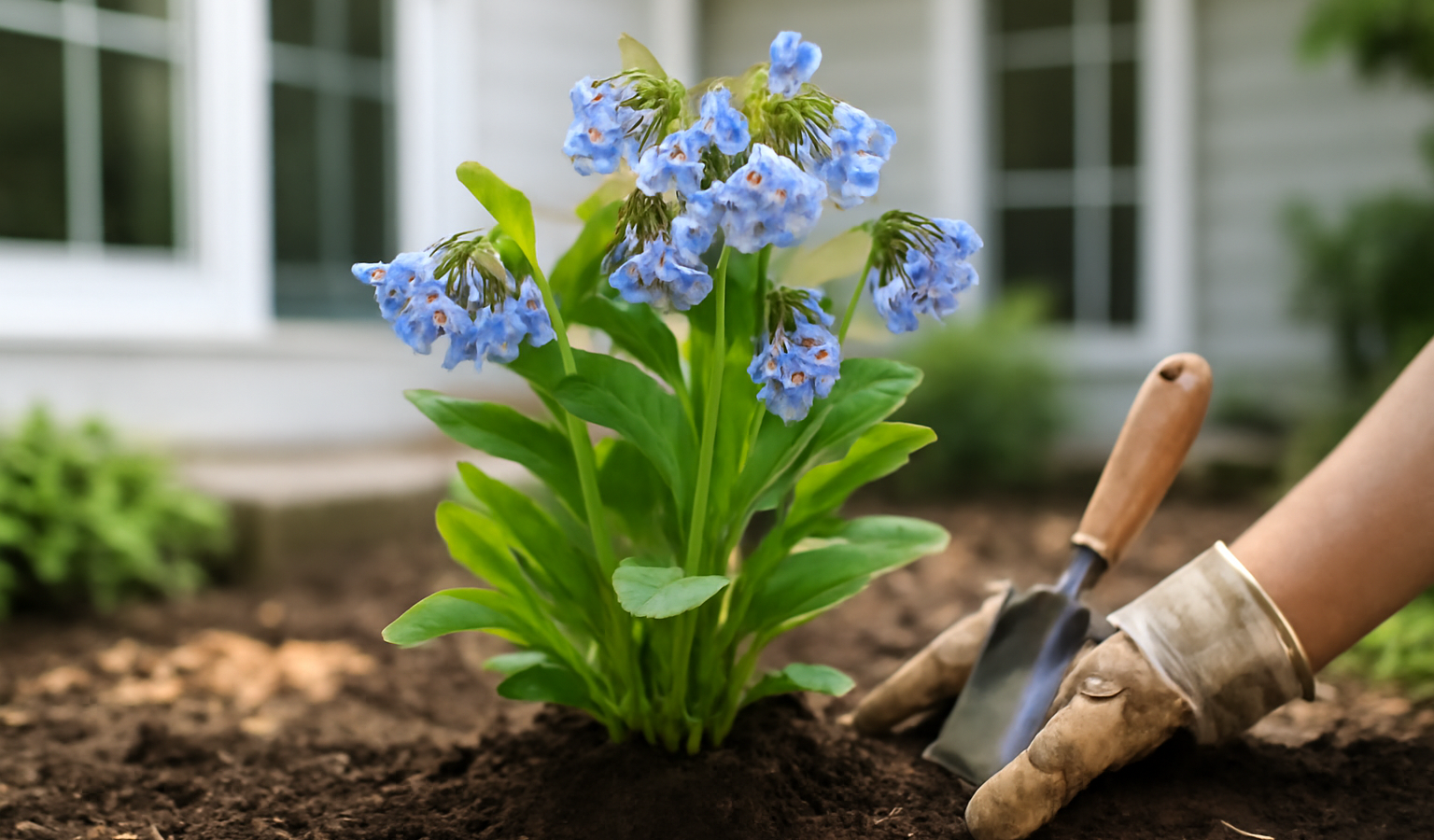
Virginia bluebells (Mertensia virginica) deliver one of the loveliest sights in the spring shade garden: clusters of pink buds that open to nodding, sky-blue, trumpet-shaped flowers above smooth, blue-green oval leaves, carpeting the woodland floor in a haze of color for a few magical weeks. Growing them is easy if you give them what they want — plant the rhizomes 1–2 inches deep in moist, rich, woodland soil under part to full shade, in fall, and let them naturalize. This native eastern North American wildflower is hardy across USDA zones 3–8 and, like trillium, is a spring ephemeral: it bursts into bloom in early to mid-spring, sets seed, and then the entire plant yellows and vanishes underground by early summer, going completely dormant until the next year. That disappearing act surprises new growers but is perfectly natural. Bluebells self-seed freely and slowly form ever-larger colonies, making them ideal for naturalizing under deciduous trees alongside daffodils, ferns, and other shade plants that fill the gap they leave. This guide covers planting, care, the all-important dormancy, and how to spread Virginia bluebells through your shade beds.
Key Takeaways
- Light: Part to full shade, ideally under deciduous trees where they get spring sun before leaf-out and shade in summer.
- Soil: Moist, rich, humusy, well-drained soil; slightly acidic to neutral. Spring moisture is essential.
- Zones: Hardy in USDA zones 3–8; very cold-tolerant and reliably perennial.
- Native status: Native to eastern and central North America — a superb pollinator and native woodland plant.
- Dormancy: A spring ephemeral — blooms in spring, then dies back completely and goes dormant by early summer. The disappearance is normal.
- Spreading: Self-seeds freely and forms expanding colonies; excellent for naturalizing. Plant rhizomes 1–2 inches deep in fall.
Where to Plant Virginia Bluebells
Virginia bluebells grow wild in moist deciduous woodlands, floodplains, and along stream banks, and recreating that setting is the secret to success. The ideal site offers part to full shade — most perfectly, the understory of deciduous trees, where bluebells soak up bright sunshine in early spring before the canopy leafs out (which powers their bloom) and then enjoy cool shade through the summer. A north- or east-facing bed, or any spot shielded from hot afternoon sun, also suits them well. They will take more sun in cool northern climates if the soil stays consistently moist, but in hot, dry, sunny positions they fail.
The soil should be moist, rich, and high in organic matter — the soft, humusy ground of a forest floor — and well-drained yet moisture-retentive, slightly acidic to neutral in pH. Before planting, work in plenty of compost or leaf mold to enrich and loosen the bed. Because bluebells vanish in summer, plant them where their absence won’t leave an obvious hole: interplanted with ferns, hostas, wild ginger, or among later-emerging perennials that expand to cover the gap. They naturalize beautifully under trees and along shady borders, mingling especially well with spring bulbs like daffodils. For companion ideas, see our guide to growing trillium, which thrives in the same woodland conditions.
How to Plant Virginia Bluebells
Virginia bluebells are usually planted from bare rhizomes in fall, which is the ideal time — the dormant rhizomes settle in over winter and burst out the following spring. The rhizome is a knobby, blackish, somewhat brittle root; handle it gently. You can also plant container-grown bluebells in spring, though they’re often only available, and best transplanted, while dormant.
Depth and spacing
Plant the rhizomes 1–2 inches deep, with the growth buds (eyes) facing up and the roots spread downward, in the enriched woodland soil. Space them about 12–18 inches apart; this looks sparse at first, but bluebells self-seed and clump up to fill the space over a few years, so leave room for the colony to develop. Firm the soil, water in well, and top with a 2–3 inch mulch of shredded leaves or leaf mold to conserve moisture and mimic the natural forest litter. Because the rhizomes vanish completely in summer, it’s wise to mark their position so you don’t accidentally dig into them while they’re dormant. Don’t expect a big show the first spring — newly planted bluebells often need a year to establish before they bloom freely, after which they improve steadily.
Spring Ephemeral: The Summer Disappearing Act
The most important thing to understand about Virginia bluebells is that they are spring ephemerals, just like trillium. Their entire above-ground life happens in a brief spring window: the plant emerges, the foliage often flushed purple at first, then greening; clusters of pink buds appear and open into nodding blue bells in early to mid-spring; the flowers fade and set seed; and then, as summer heat arrives, the leaves yellow and the whole plant dies back to the ground, going fully dormant by early summer. By the time most gardens are in full summer swing, there is no sign of the bluebells at all.
This catches nearly every new grower off guard — the plant looks like it has died, when in fact the rhizome is alive and resting underground until next spring. Do not dig it up, and do not assume the spot is empty. The practical responses are the same as for any ephemeral: mark the location so you don’t disturb the dormant rhizomes, and interplant with companions — ferns, hostas, late-emerging perennials — that leaf out and fill the void as the bluebells fade, keeping the bed looking full all season. Resist the temptation to cut back the yellowing foliage too early; let it die down naturally, because those leaves are storing energy in the rhizome for next year’s flowers.
Spreading and Naturalizing
Virginia bluebells are wonderful naturalizers, spreading mainly by self-seeding. After flowering, each plant scatters seed that germinates in the cool, moist soil and slowly builds an expanding colony, so a few plants today can become a breathtaking blue drift across the woodland floor in a few years. They also increase modestly by their rhizomes. This generous, well-behaved spreading is a feature to embrace — bluebells are native and not invasive, so let them roam through a shaded naturalized area.
To encourage colonies, simply leave the spent flowers in place to set and drop seed rather than deadheading, and avoid heavy mulching right after bloom so the seed can reach the soil. You can also collect the ripe seed and sow it fresh in fall — it needs a cold-moist period to germinate, so fall sowing in the garden is the easiest route. To move or multiply established plants, divide the rhizomes in late summer or early fall while the plant is dormant, lifting clumps carefully (the rhizomes are brittle), separating sections with buds and roots, and replanting at the same 1–2 inch depth. Dividing during active spring growth is best avoided. For more on letting native plants self-sow into drifts, see our native woodland gardening guide.
Care, Pests, and Troubleshooting
Once established in the right spot, Virginia bluebells are low-maintenance and reliably perennial. The main care need is consistent moisture during the active spring growing season — water if spring turns dry, since drought-stressed bluebells go dormant prematurely and may bloom poorly. Keep the leaf-mold mulch topped up each year; that annual organic mulch supplies essentially all the feeding the plants require, as bluebells are not heavy feeders. There’s no need to fertilize rich woodland soil, though a light compost topdressing helps in poorer ground. Cleanup is minimal: the foliage disappears on its own, so there’s little to cut back.
Pests and diseases are few. The flowers are an important early nectar source for bees, butterflies, and hummingbirds, and the plant is generally fairly deer-resistant, though hungry deer may still browse it. Slugs and snails can chew the soft spring foliage in wet gardens. Most troubleshooting comes down to siting and the ephemeral cycle. A plant that vanishes in early summer is dormant, not dead — the commonest false alarm. Poor flowering usually means too much shade (paradoxically — they need that bright spring window before trees leaf out), too little spring moisture, or a plant still establishing. Yellowing too early can signal drought stress or simply the normal onset of dormancy. Give Virginia bluebells moist spring shade, patience, and the freedom to self-seed, and they’ll reward you with one of spring’s great displays year after year. Explore more spring shade plants on our plants and flowers hub.
Frequently Asked Questions
Why did my Virginia bluebells disappear after flowering?
They haven’t died — Virginia bluebells are spring ephemerals. They bloom in early to mid-spring, set seed, and then the foliage naturally yellows and dies back completely, with the plant going fully dormant underground by early summer until the next spring. Mark the spot so you don’t disturb the dormant rhizomes, and interplant with ferns or hostas to fill the gap.
How much sun do Virginia bluebells need?
They thrive in part to full shade, ideally under deciduous trees where they receive bright sun in early spring before the canopy leafs out — which fuels their bloom — and then cool shade through summer. They tolerate more sun in cool climates with moist soil but fail in hot, dry, sunny spots.
Do Virginia bluebells spread?
Yes, happily. They self-seed freely and also increase by rhizomes, forming expanding colonies that can become a stunning blue carpet over a few years. This makes them excellent for naturalizing in shade. They are native and not invasive, so let them roam — leave spent flowers to set seed to encourage new plants.
How deep do you plant Virginia bluebell rhizomes?
Plant the rhizomes 1–2 inches deep in fall, with the growth buds facing up and roots spread downward, in moist, rich, humusy soil. Space them 12–18 inches apart to allow colonies to develop, water in well, and mulch with leaf mold. Mark the location since the plants vanish entirely in summer.
When can I divide Virginia bluebells?
Divide them in late summer or early fall while the plant is dormant, not during active spring growth. Lift the brittle rhizomes carefully, separate sections that each have buds and roots, and replant immediately at the same 1–2 inch depth. Often it’s easier simply to let them self-seed into new colonies on their own.