

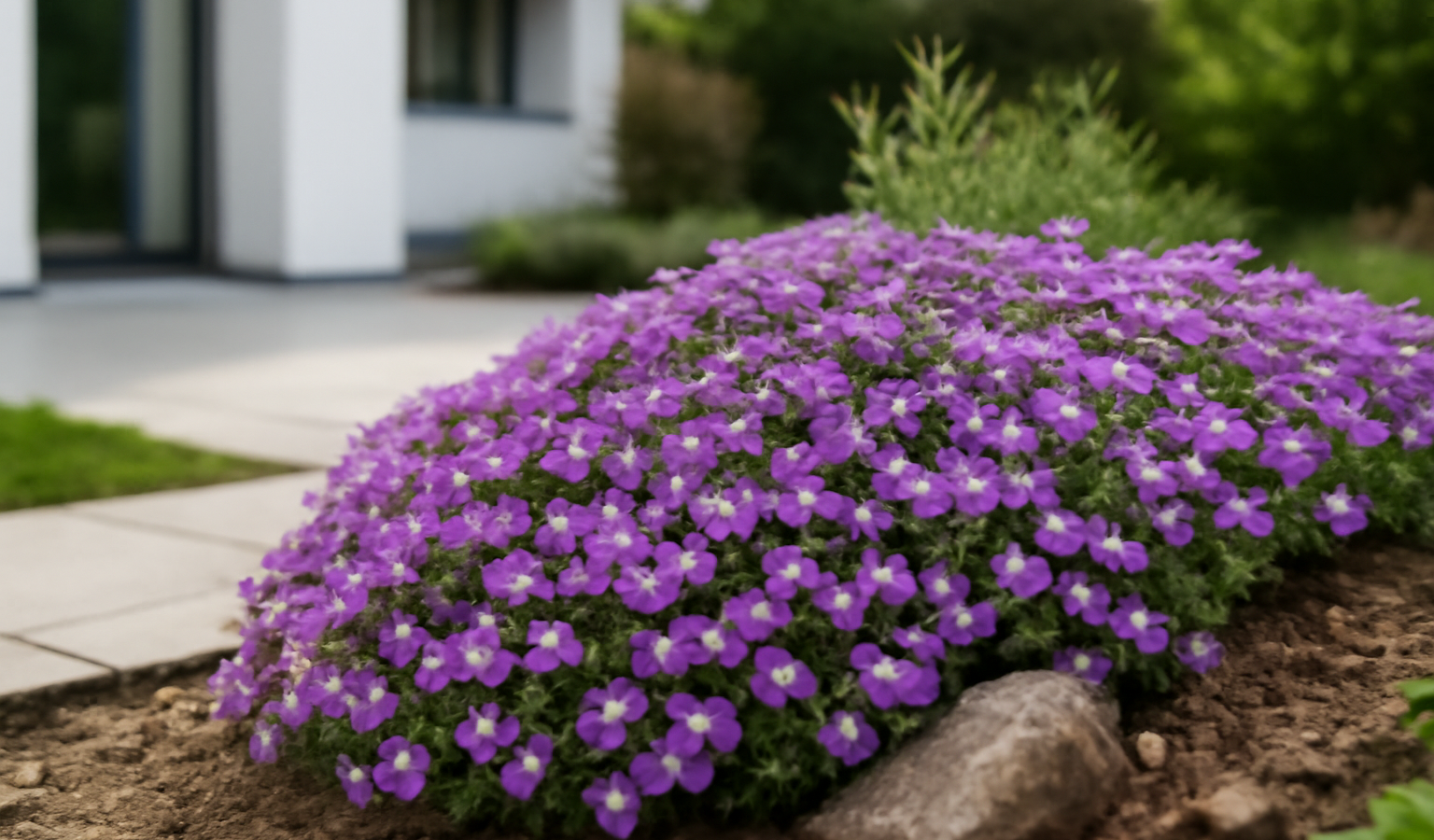
Rock cress (Aubrieta) is the plant that turns a dull stone wall or a bare slope into a sheet of purple every spring. A low, spreading, mat-forming perennial, it smothers itself in tiny four-petaled flowers—usually violet, but also blue, pink, and rose—from early to mid-spring, then settles into a tidy green carpet for the rest of the year. It is tough, drought-tolerant once established, evergreen in mild climates, and ideal for the hard spots most perennials hate: rock gardens, wall crevices, gravel edges, and dry sunny banks. This guide covers zones, siting, the lean well-drained soil it insists on, watering, the all-important post-bloom shearing, and how to use it as a groundcover. (Note: true rock cress also includes the genus Arabis; this guide focuses on the most common garden species, Aubrieta, with care notes that apply broadly to both.)
Key Takeaways
- Hardy in USDA zones 4–8; evergreen in milder zones, semi-evergreen in cold ones.
- Full sun (6+ hours) for the densest mats and heaviest bloom; tolerates very light shade.
- Lean, gritty, sharply drained, neutral-to-alkaline soil. Rich, wet soil rots it—this is the opposite of a “feed me” perennial.
- Spreads 12–24 inches wide at just 4–6 inches tall, forming a dense weed-suppressing carpet.
- Blooms early to mid-spring; shear back hard right after bloom to keep mats compact.
- Excellent for walls, rock gardens, slopes, and edging; drought-tolerant once established.
- Non-toxic and pollinator-friendly—an early nectar source for bees.
Zones, Sun, and Where It Shines
Rock cress is hardy in USDA zones 4 through 8. In zones 7–8 it usually stays evergreen through winter; in colder zones it may die back to semi-evergreen tufts and rebound in spring. It performs best where summers are not brutally hot and humid—in the hot, muggy Deep South it tends to be short-lived because the combination of heat, humidity, and damp soil rots the crowns. In those areas, plant it in the leanest, fastest-draining, most sun-baked spot you can find and treat it as a short-term performer.
Give rock cress full sun—at least six hours of direct light. Sun is what keeps the mat tight and the bloom heavy; in shade it gets leggy, sparse, and flowers poorly. The classic uses play to its strengths: cascading over a retaining wall, tucked into the joints of dry-stacked stone, spilling down a sunny slope, edging a path, or filling the gaps in a rock garden. Because it tolerates the dry, alkaline conditions near masonry, it actually likes the spots—wall tops and gravel margins—where lime leaches in and other plants struggle.
Soil: Lean and Sharply Drained
If Japanese iris is a moisture lover, rock cress is the opposite: it demands sharp drainage and actively dislikes rich, wet soil. Aim for a gritty, well-drained medium with a neutral to slightly alkaline pH (6.5–7.5). Heavy clay is its enemy—it holds water around the crown over winter and causes rot, the number-one killer of rock cress.
Before planting in anything but naturally gritty soil, work in coarse sand, fine gravel, or grit to open up the drainage. Building a raised berm, a gravel garden, or planting on a slope all help shed water. A topdressing of gravel or grit around the crowns keeps the base of the plant dry and discourages rot. If your soil is acidic, a light dusting of garden lime nudges the pH toward what rock cress prefers. For background on choosing the right gritty amendments, see our comparison of perlite vs vermiculite—for rock cress you want the drainage-boosting, water-shedding type, not the water-holding one.
Planting Rock Cress
Set out transplants in early spring or fall. To plant in wall crevices and rock joints, choose small plants or rooted divisions whose roots fit into the gaps, tuck them in with a little gritty soil, and water gently until established—this is how you get that signature cascade of bloom over stonework.
- Space plants 12 to 18 inches apart as a groundcover; they will knit together within a season or two.
- Plant at the same depth as the nursery pot—do not bury the crown, which invites rot.
- Backfill with gritty soil and firm lightly.
- Topdress with gravel around the crown to keep it dry.
- Water in and keep lightly moist only until roots establish, then back off.
You can also grow rock cress from seed sown in spring, though named cultivars with the best colors are usually bought as plants. Established clumps are easy to propagate by division in early fall or by cuttings taken after the post-bloom shearing.
Watering and Feeding
Water new plantings regularly through their first growing season to establish roots. After that, rock cress is genuinely drought-tolerant and needs little supplemental water except in extended dry spells—overwatering is far more dangerous than underwatering. Let the soil dry between waterings, and never let the crown sit wet.
Feeding is minimal. Rock cress evolved on lean, rocky ground, and rich feeding produces soft, floppy growth and fewer flowers. A single light application of balanced fertilizer in early spring, or a thin scattering of compost, is plenty. Skip the rich annual mulches and bloom boosters; this is a plant that thrives on neglect. If you want to understand why a lean feeding regimen suits some plants, our overview of organic vs synthetic fertilizer explains how feeding strategy changes plant growth.
The Most Important Job: Shearing After Bloom
The single practice that separates a lush, long-lived rock cress from a ratty, open one is shearing right after the spring flowers fade. Once bloom finishes, take hedge shears or grass shears and cut the entire mat back by about one-third to one-half. This sounds drastic, but it forces dense, compact regrowth, prevents the centers from going woody and bare, and often coaxes a light rebloom. Skip the shearing and within a couple of years the plant sprawls open, flowers thin out, and the center dies back.
Shearing also keeps the plant in bounds where it’s used as edging or in a wall, and the trimmings can be used as cuttings to start new plants. Aside from this one annual chore, rock cress is close to maintenance-free.
Using Rock Cress as a Groundcover
Rock cress excels as a low groundcover in the right setting—dry, sunny, sharply drained ground where you want spring color and season-long greenery. At 4 to 6 inches tall and spreading 12 to 24 inches, a planting knits into a continuous mat that suppresses weeds and helps hold soil on slopes. It is one of the best plants for the awkward strip between a sidewalk and a wall, the top edge of a retaining wall, or a hot gravel bank where turf won’t grow.
It pairs naturally with other sun-loving mat formers and rock-garden plants—creeping phlox, candytuft, sedums, dianthus, and especially basket of gold (Aurinia), whose brilliant yellow blooms at the same time create the classic purple-and-gold spring combination on walls and slopes. Plant the two together for a striking early-season display. Because rock cress stays low, it won’t crowd out taller perennials behind it, making it a tidy front-of-border edger as well as a groundcover.
Pests, Disease, and Troubleshooting
Rock cress is largely pest-free, and its real problems trace back to soil and water rather than bugs:
- Crown and root rot: The most common killer, caused by wet, heavy, or poorly drained soil—especially over winter. Improve drainage, topdress with grit, and never bury the crown.
- Open, bare centers: Almost always from skipping the post-bloom shear. Cut back hard right after flowering to force dense regrowth.
- Leggy, flowerless growth: Too much shade or too rich a soil. Move to full sun and stop feeding heavily.
- Aphids and flea beetles: Occasional and minor; a strong spray of water usually handles them.
- Decline in heat and humidity: In hot southern climates rock cress is simply short-lived. Replant periodically or treat it as a spring annual.
Overwintering
Rock cress is hardy and needs little winter care in zones 4–8. In milder zones the foliage stays evergreen and looks good through the cold months; in colder zones it may brown back partly and regreen in spring. The chief winter risk is not cold but wet—soggy soil around the crown during freeze-thaw cycles causes rot and heaving. A gravel topdressing and a well-drained site solve most of this. Avoid piling heavy, moisture-trapping mulch over the crowns; rock cress prefers to overwinter dry and exposed rather than smothered. In spring, a quick cleanup of any winter-burned foliage gets the plant ready for its big bloom. For more low-maintenance perennials, browse the Plants & Flowers hub.
Frequently Asked Questions
Why is my rock cress dying or rotting?
The overwhelming cause is wet, poorly drained soil—rock cress will not tolerate damp feet, especially over winter. Plant it in lean, gritty, sharply drained soil, topdress the crown with gravel, avoid overwatering, and never bury the crown. In hot, humid southern climates, it is also simply short-lived and may need periodic replanting.
When and how do I cut back rock cress?
Shear the entire mat back by one-third to one-half immediately after the spring flowers fade. This single chore forces compact, dense regrowth, prevents bare woody centers, and often triggers a light rebloom. Use hedge or grass shears, and you can root the trimmings as cuttings.
Does rock cress make a good groundcover?
Yes, in dry, sunny, well-drained spots. It forms a dense 4–6 inch mat spreading up to two feet wide that suppresses weeds, holds soil on slopes, and delivers a sheet of spring bloom. It’s ideal for walls, rock gardens, gravel banks, and front-of-border edging, but not for shady or wet areas.
Is rock cress toxic to pets?
No—rock cress is considered non-toxic to people and pets, and it’s a valuable early nectar source for bees and other pollinators. That makes it a safe, family-friendly choice, unlike some other spring perennials.
How much sun does rock cress need?
Full sun—at least six hours of direct light daily. Sun keeps the mat tight and the flowering heavy. In shade, rock cress grows leggy and sparse and blooms poorly. A bit of light afternoon shade is tolerable in very hot climates, but full sun is the goal.