

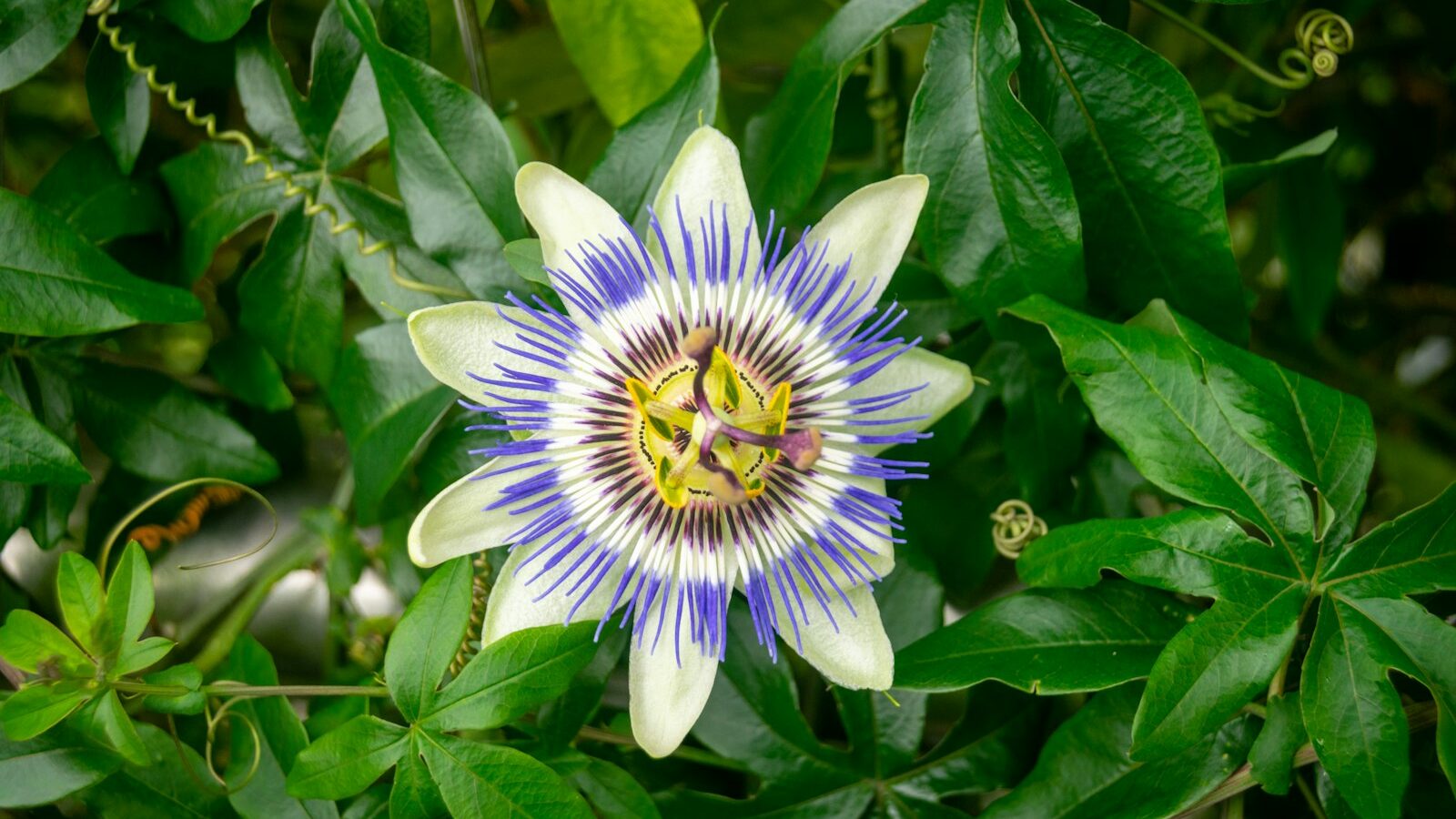
To grow passionflower, give it full sun, well-drained soil, and a sturdy vertical support its tendrils can grab, then plant it after your last frost once the soil has warmed. Passiflora is a fast, vigorous climber that rewards almost no effort with some of the most intricate flowers in the garden. The catch is matching the species to your climate: Passiflora incarnata (the native maypop) is winter-hardy in USDA zones 6 to 9 and dies to the ground each year, while showy tropical hybrids like P. caerulea and P. edulis want zones 9 to 11 or a pot you can overwinter indoors. Get the support, the sun, and the species right and the rest is mostly cleanup.
Key Takeaways
- Hardiness: P. incarnata survives zones 6 to 9 and returns from the roots; tropical species need zones 9 to 11 or winter protection.
- Sun: Full sun (6+ hours) for the heaviest bloom; tolerates part shade in hot southern zones.
- Support: Tendrils climb thin structures best, give it a trellis, wire grid, netting, or strings on a fence.
- Bloom: Exotic purple, blue, or white flowers from early summer into fall; many produce edible fruit (maypop, passionfruit).
- Pruning: Cut back hard in late winter or early spring; expect runners and suckering, especially in warm climates.
- Spacing: Set plants 36 to 48 inches apart along a support.
Choosing the Right Passionflower for Your Zone
Passiflora is a huge genus, more than 500 species, and the single most important decision you make is which one to plant. The species determines whether your vine is a perennial that shrugs off winter or an annual you replace every spring.
Passiflora incarnata (maypop): The native eastern North American species, hardy in USDA zones 6 to 9. It dies completely to the ground after frost and re-emerges late, often not until late May or even June, so do not assume it is dead. It produces lavender-and-white flowers and egg-sized green fruits called maypops. This is the toughest, most forgiving choice for cold-winter gardeners, and also the most aggressive (more on that below).
Passiflora caerulea (blue passionflower): The classic blue-and-white bloom seen in garden photos. Hardy to roughly zone 7 with a sheltered wall and mulch, reliably perennial in zones 8 to 11. In zone 7 it may die back and return; colder than that, treat it as an annual or container plant.
Passiflora edulis (passionfruit): The commercial passionfruit vine, strictly tropical to subtropical, zones 9 to 11. Below that, grow it in a large pot and bring it into a bright, frost-free space for winter.
If you garden in zone 6 or colder, P. incarnata is effectively your only in-ground perennial option. Everywhere else you can branch into the showier tropical species. If you love fast vertical color, browse the wider plants and flowers hub for companion climbers and bloomers that pair with passionflower.
Sun, Soil, and Site Selection
Plant passionflower in full sun for the strongest growth and the most flowers, that means at least six hours of direct light per day. In the hot lower South (zones 8 to 11), a little afternoon shade keeps foliage from scorching and actually extends the bloom, so part shade is acceptable there. In cooler zones, do not compromise on sun, it directly drives flower production.
Soil should be well-drained above all else. Passiflora tolerates a range of soil types, from sandy to loamy, but it will rot in soggy ground. Aim for a slightly acidic to neutral pH, roughly 6.0 to 7.0. Work a few inches of compost into the planting hole to give the roots an organic-rich, moisture-retentive but free-draining medium. Avoid low spots where water pools after rain.
Choose a site protected from harsh wind, the long stems and large leaves catch the wind and can tear or whip off a support. A south- or west-facing wall or fence is ideal: it gives warmth, shelter, and a ready-made anchor for the vine to climb. In borderline-hardy zones, that radiated wall heat can be the difference between a vine that overwinters and one that does not.
Support Structures: Give the Tendrils Something to Grab
Passionflower climbs by tendrils, thin coiling threads that wrap around anything narrow enough to grip. This is the key to supporting it well: tendrils cannot wrap a thick post or a smooth flat wall. They need slim structures, wire, string, netting, lattice slats, or thin trellis members.
Good support options include:
- Wooden or metal trellis with openings of a few inches, set against a wall or freestanding.
- Wire grid or stock fencing stretched between posts, the squares are perfectly sized for tendrils.
- Plastic or jute garden netting tacked to a fence or wall, an inexpensive solution that disappears under foliage.
- Vertical strings or wires running from the ground to an overhead anchor, useful on a porch or pergola.
Install the support before or at planting time so the young vine starts climbing immediately. For the first few weeks, gently tie or weave the leading stems onto the structure to point them in the right direction, after that the tendrils take over. A single mature plant can cover an 8- to 12-foot span of fence in one season, so give it room. If you like the idea of a flowering screen, compare passionflower with other vigorous vines such as trumpet vine for hummingbird appeal or sweet autumn clematis for late-season fragrance.
When and How to Plant
Timing
Plant passionflower in spring after all danger of frost has passed and the soil has warmed, generally April or May in zones 6 to 8, earlier in the frost-free zones 9 to 11. Passiflora is a warm-season grower and will sulk or rot if planted into cold, wet spring soil. In tropical zones you can plant nearly year-round, though spring still gives the longest establishment window before flowering.
Spacing and Depth
Space plants 36 to 48 inches apart along a support, closer for a dense screen, wider if you want each plant to spread freely. Dig a hole twice the width of the root ball and the same depth, so the crown sits level with the surrounding soil, never bury it deeper. Backfill with the compost-amended soil, firm gently, and water in thoroughly to settle the roots and remove air pockets.
Containers
For tropical species in cold climates, use a pot at least 16 to 18 inches across with drainage holes, a quality potting mix, and a trellis anchored in the container. Container plants need more frequent watering and feeding, but they let you overwinter tender species indoors near a bright window.
Watering and Feeding
Keep the soil evenly moist during the first growing season while roots establish, about an inch of water per week including rainfall. Once established, passionflower is moderately drought-tolerant but blooms and fruits best with consistent moisture through the summer. Mulch with 2 to 3 inches of bark or compost to conserve water and moderate soil temperature, but keep it pulled back from the stems.
Feed lightly. Passiflora that gets too much nitrogen produces lush leaves and few flowers. Use a balanced or slightly phosphorus-forward fertilizer in spring as growth resumes, and again in early summer if growth is weak. Skip feeding in late summer and fall so the plant can harden off before cold weather. Container plants benefit from a dilute liquid feed every few weeks during active growth.
Bloom Time and the Famous Flowers
Passionflower blooms from early summer through early fall, typically June into September in temperate zones, and nearly continuously in the tropics. The flowers are the whole point: three to four inches across with a flat ring of petals and sepals topped by a striking fringed corona of filaments, often in contrasting purple, blue, and white. Above that sit the prominent reproductive parts the species is named for. Each individual bloom usually lasts only a day or two, but a healthy vine produces them in steady succession for months.
If flowering is sparse, the usual culprits are too much shade, too much nitrogen, or a young plant still putting energy into roots and vine. Give it a full season or two; passionflower often flowers more freely in its second and third years.
Edible Fruit: Maypops and Passionfruit
Several passionflowers bear edible fruit. P. incarnata produces maypops, egg-sized green fruits with a sweet-tart pulp that ripen in late summer to fall, they are ripe when they wrinkle slightly and drop. P. edulis is the true passionfruit of the grocery store, purple or yellow and intensely aromatic. Note that not every ornamental species produces palatable fruit, and some require cross-pollination between two plants to set fruit at all. The flesh of P. caerulea fruit is bland and not worth eating, though not harmful in small amounts. When in doubt, identify your species before sampling, and keep unripe fruit and other plant parts away from children, since unripe fruit of some species can cause stomach upset.
Pruning and Managing a Vigorous Grower
Prune passionflower in late winter or early spring, before new growth begins. For perennial vines, cut the previous year’s stems back hard, you can take them down to within a foot or two of the main framework or, for P. incarnata, simply clear away the dead top growth since it dies to the ground anyway. This hard cut encourages strong, flower-bearing new shoots and keeps the plant from becoming a tangled mass of bare old wood.
During the growing season, do light maintenance pruning to keep the vine in bounds, snip wayward stems and thin congested growth to improve air circulation. Flowers form on new wood, so summer trimming will not cost you the whole bloom show.
Be aware that passionflower can be aggressive, especially P. incarnata. It spreads by underground runners and can send up suckers several feet from the parent plant, popping up in lawns and beds. In warm zones (8 and warmer) it can colonize an area and become a nuisance if unchecked. To control it, install a root barrier at planting, grow it in a container, or commit to pulling suckers as they appear. Tropical species are generally less of a spreading threat in cold climates because winter knocks them back. For another well-behaved-by-comparison climber, the self-clinging climbing hydrangea is worth considering where passionflower would overrun the space.
Overwintering Tender Species
In zones at the edge of hardiness, mulch the root zone heavily (4 to 6 inches of straw or shredded leaves) after the first hard frost to insulate the crown, and cut back the dead top growth. A sheltered, south-facing wall greatly improves overwintering odds for borderline species like P. caerulea.
For tropical species in cold regions, bring containers indoors before the first frost. Place them in the brightest spot available, reduce watering, and stop feeding, the plant will idle through winter. Expect some leaf drop, that is normal. Move it back outside after the last spring frost, hardening it off gradually over a week to avoid sunburn.
Pests and Problems
Passionflower is largely trouble-free, but a few issues come up:
- Caterpillars: Passiflora is the host plant for several fritillary butterflies (notably Gulf fritillary). Their caterpillars chew the leaves, sometimes heavily. Most gardeners tolerate this as the cost of supporting pollinators; the vine almost always recovers.
- Aphids and spider mites: Common on stressed or indoor plants. Blast them off with water or treat with insecticidal soap. Spider mites thrive in hot, dry indoor air over winter, so watch overwintered containers.
- Scale and whitefly: Occasional on container plants; treat with horticultural oil or soap.
- Fungal leaf spot and root rot: Usually a symptom of poor drainage or crowding. Improve airflow, water at the base rather than overhead, and never let the vine sit in wet soil.
With the right species for your zone, full sun, a tendril-friendly support, and a hard spring pruning, passionflower is one of the most rewarding fast vines you can grow, exotic enough to stop visitors in their tracks, tough enough to thrive on minimal fuss.
Frequently Asked Questions
How long does it take for passionflower to bloom?
A healthy plant often flowers in its first summer if planted in spring, but expect heavier bloom in the second and third years once the root system is established. Sparse flowering usually points to too much shade or too much nitrogen.
Will passionflower survive winter outdoors?
It depends on the species. Passiflora incarnata is hardy in USDA zones 6 to 9 and returns from the roots each spring. P. caerulea handles zones 7 or 8 and up with a sheltered wall and mulch. Tropical species like P. edulis need zones 9 to 11 or must be overwintered indoors in a pot.
Is passionflower invasive?
It can be aggressive, especially the native P. incarnata, which spreads by underground runners and suckers far from the parent plant in warm zones. Control it with a root barrier, container growing, or regular sucker removal. Cold winters keep tropical species in check.
Can you eat passionflower fruit?
Yes for some species. P. edulis is the true passionfruit, and P. incarnata produces edible maypops. Other ornamental species, such as P. caerulea, have bland or unpalatable fruit, and unripe fruit of some species can cause stomach upset. Identify your species before eating and keep unripe fruit away from children.
What kind of support does passionflower need?
It climbs by tendrils, which need something thin to wrap around, wire, string, netting, lattice, or a trellis with small openings. Tendrils cannot grip a thick post or a flat wall, so add netting or wires there. Install support at planting and guide the first stems by hand.